Our verdict
In Miyazaki's Awakigaharacho district, 燠火kawaguchi∴ operates in a register that rewards patience and local knowledge over tourist traffic. The name itself — combining kanji for glowing embers with a mathematical symbol — signals a venue that takes its own vocabulary seriously. Those who return do so because the experience is calibrated, not performed.

Pearl is the En Primeur Club membership app — saves, bookings, and concierge access live there. Same editors, same standards.
- Address
- Maehama-4276-1255 Awakigaharacho, Miyazaki, 880-0835, Japan
- Phone
- +81985692821
- Hours
- Mon–Fri 6:30–9 PMSat–Sun 8–10:30 PM
- Website
- okibi.co.jp
- Directions
- Get directions
- Booking
- Book on the venue's website
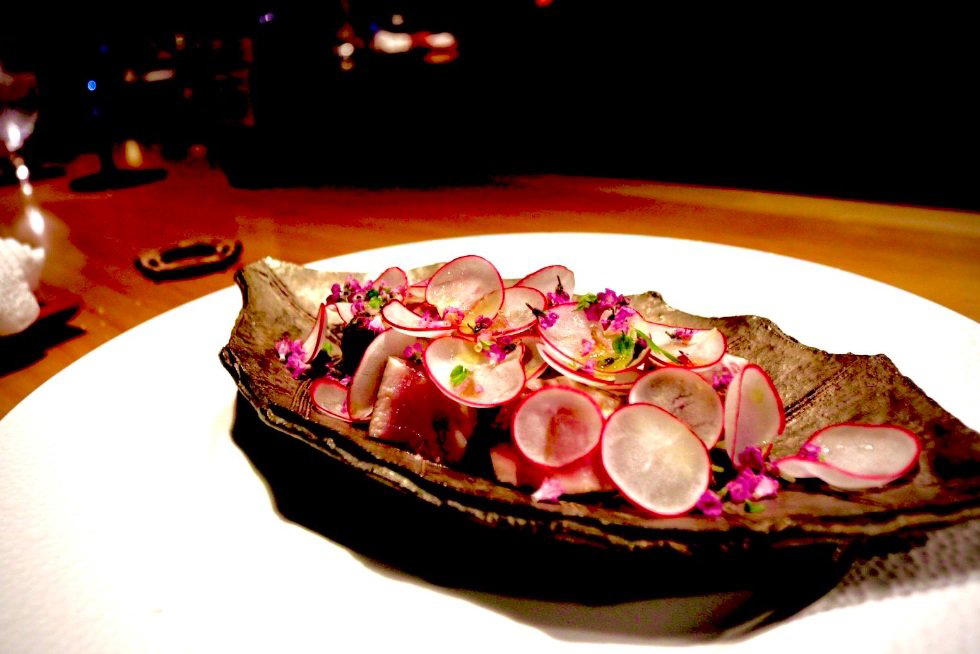
Embers and Precision in Miyazaki's Quieter Register
There is a particular kind of restaurant that resists easy categorisation — not because it is deliberately obscure, but because it has built its identity around a logic that only becomes clear to those who return more than once. 燠火kawaguchi∴, addressed in the Awakigaharacho neighbourhood of Miyazaki city, operates in that register. The name layers glowing-ember kanji (燠火) with a therefore symbol (∴) borrowed from formal logic, a combination that hints at something reasoned and heat-driven in equal measure. Whether that translates as a philosophical flourish or a structural clue about the cooking, it sets an expectation that the room intends to follow through on its own terms.
Miyazaki as a dining city occupies an interesting position in Japan's broader food conversation. It produces some of the country's most respected agricultural ingredients — Miyazaki wagyu, Hyuga natsu citrus, local chicken breeds, and has enough pride in those products to sustain restaurants that treat sourcing as the primary argument. Yet it rarely features in the same breath as the marquee dining cities. That gap between ingredient quality and national profile creates room for venues like 燠火kawaguchi∴ to develop without the performance pressure that comes with heavy tourist circulation. The regulars here are, in the main, local.
What Keeps the Regulars Coming Back
The most reliable signal of a restaurant's actual quality is what its repeat visitors return for, not what first-timers photograph. In a city without the dense media attention of Osaka or Tokyo, word travels through professional networks, neighbourhood conversations, and the kind of recommendation that carries social weight because the recommender has skin in the game. Venues that survive in that environment do so because something specific pulls people back: a particular textural consistency, a reading of local produce that shifts with the season, or a format that feels considered rather than assembled.
Across Miyazaki's mid-to-upper dining tier, where Chinese Sen sits in the JPY 10,000-14,999 bracket and Ranpu Tei occupies the JPY 8,000-9,999 range with its yoshoku-European format, the restaurants that hold repeat custom tend to be those with a clear point of view on the prefecture's agricultural identity. 燠火kawaguchi∴'s name suggests that fire and heat technique sit at the centre of its approach, which, if accurate, positions it in a category of cooking that rewards experience over novelty. Ember and flame cooking done seriously requires calibration accumulated over many services, and regulars at such restaurants often describe noticing the incremental refinements that a first-time visitor would have no frame of reference to perceive.
That cumulative experience, the sense that the kitchen knows you have been before, even if nothing is said, is part of what drives loyalty at smaller Japanese restaurants in prefectural cities. It is less about the theatrical recognition of a named regular and more about the way a meal adjusts, almost imperceptibly, when the kitchen is cooking for someone it understands. The unwritten menu at such a place is not a secret list; it is the confidence to let the kitchen read the table.
Miyazaki in the Context of Japan's Regional Dining
Japan's regional dining scene has matured considerably over the past decade, partly because chefs with training at high-level urban establishments have returned to their home prefectures, and partly because the Michelin Guide's expansion into regional Japan has given national visibility to prefectures that previously relied on word-of-mouth alone. Venues like Goh in Fukuoka and akordu in Nara represent the pattern of destination-level cooking taking root outside the traditional trinity of Tokyo, Osaka, and Kyoto. At the more intimate end, restaurants like 一本木 in Nanao and 湖隣庵 in Takashima suggest that the model scales down to very small operations in provincial settings without losing its integrity.
Miyazaki sits at an earlier stage of that visibility curve than Fukuoka or Nara. The prefecture's restaurants do not yet draw the same volume of dining-focused travel, which has the practical effect of keeping tables more accessible and the atmosphere less self-conscious. For the kind of diner who finds the performance of Tokyo's most-covered omakase counters, counters like Harutaka in Tokyo, less interesting than the cooking itself, a venue operating below that visibility threshold can be genuinely preferable. The cooking has to justify itself to the room, not to an expectant audience who arrived knowing the reputation.
That said, lower visibility is not the same as lower ambition. The restaurants holding Miyazaki's serious dining clientele are doing so against the same competitive pressure that operates in any market: if the food does not justify the price and the trip across town, the regular does not return. The standards are maintained by local demand, not external validation.
Where 燠火kawaguchi∴ Sits in Miyazaki's Dining Tier
What the name, format signals, and Awakigaharacho address suggest is a venue operating somewhere in the deliberate, considered tier of Miyazaki dining, neither the approachable neighbourhood end nor the full kaiseki formality. That positioning is common for fire-focused restaurants in regional Japanese cities, where the technique demands premium ingredients but the format often stops short of the full multi-course ceremony. Comparison with peers in other cities, Gion Sasaki in Kyoto, HAJIME in Osaka, is useful primarily to illustrate the range of ambition that regional Japanese cooking now encompasses, not to imply direct equivalence.
For those exploring Miyazaki's wider dining scene, Hitotsu, Isshinzushi Koyo, and Il Sorriso each occupy distinct positions across cuisine type and format. Chinese Sen and Fujiyama Pudding Miyazaki extend the picture further. The full Miyazaki restaurants guide maps these options with more granularity for readers planning around a specific budget or cuisine type.
Planning a Visit
Awakigaharacho is a residential-leaning address within Miyazaki city, not a central dining strip, which suggests that 燠火kawaguchi∴ draws its clientele on reputation rather than foot traffic. Visits should be planned in advance: contact via direct inquiry is advisable given the absence of a publicly listed booking platform, and the address at Maehama-4276-1255 Awakigaharacho is specific enough to locate on mapping applications. Miyazaki city is accessible by air from Tokyo Haneda and Osaka Itami, and by the JR Nichinan Line and Nippo Main Line from Fukuoka. For context from comparable restaurant experiences outside Japan, Atomix in New York and Le Bernardin in New York illustrate how tightly managed, reservation-only formats operate at the international level. At 燠火kawaguchi∴, the analogous signal is the specificity of the address and the absence of walk-in infrastructure: this is a restaurant that expects you to have made a decision before you arrive.
Frequently asked questions
Where exactly is 燠火kawaguchi∴?
燠火kawaguchi∴ is located at Maehama-4276-1255 Awakigaharacho, Miyazaki, 880-0835, Japan, Miyazaki.
What kind of dining experience does 燠火kawaguchi∴ offer compared to other Miyazaki restaurants?
Miyazaki's regional dining scene has grown more technically ambitious over the past decade as chefs return from high-level urban kitchens, and 燠火kawaguchi∴ — with its ember-referencing name and off-centre Awakigaharacho address — fits a format more common to that serious, counter-oriented tier than to casual city-centre options. The restaurant does not appear to compete on visibility or volume. For Miyazaki, that positions it closer to a destination-specific visit than a walk-in neighbourhood option.
What's the must-try dish at 燠火kawaguchi∴?
What the name communicates directly — 燠火 means ember or live coals — points toward fire-driven cookery as the defining technique. Visiting without a fixed expectation of one dish is almost certainly the right approach here.
How hard is it to get a table at 燠火kawaguchi∴?
燠火kawaguchi∴ is located at a residential-leaning address in Awakigaharacho, Miyazaki, well off the central dining strip, which typically means a venue draws by word of mouth rather than foot traffic. That dynamic tends to compress availability faster than capacity alone would suggest. No booking contact or reservations platform is publicly listed, so reaching the restaurant directly through local channels is the practical route.
Style and Standing
Comparable venues nearby, for context on price, style, and recognition.
| Venue | Cuisine | Price | Awards | Notes |
|---|---|---|---|---|
| 燠火kawaguchi∴This venue — the venue you are viewing | Charcoal-Grilled Miyazaki Omakase | Not listed | Not listed | Not listed |
| ä¸å¿é®¨ å æ´ | Traditional Japanese Sushi Omakase | $200–300 | Tabelog Bronze #139 | Not listed |
| Teppanyaki Fukami | Modern teppanyaki focused on Miyazaki beef | $150–200 | Tabelog 100 #73 | Hamayama, Yamasakicho |
| 幸魚 | Kaisen Kaiseki (Seafood Kaiseki) | $100–150 | Not listed | central Miyazaki |
| Il Sorriso | Regional Japanese-Italian Fusion with Handmade Pasta | $100–150 | Tabelog 100 #94 | Tachibanadori Higashi |
| Soba ya Tesshin | Japanese Soba | $20–30 | Tabelog 100 #40 | Tachibanadori Higashi |
Continue exploring
More in Miyazaki
Details
- Intimate
- Elegant
- Sophisticated
- Special Occasion
- Date Night
- Chefs Counter
- Open Kitchen
- Private Dining
- Sake Program
- Local Sourcing
- Omakase
- Counter Dining
- Sake
- Shochu
- Wine
Current opening hours
- Monday
- 6:30–9 PM
- Tuesday
- 6:30–9 PM
- Wednesday
- 6:30–9 PM
- Thursday
- 6:30–9 PM
- Friday
- 6:30–9 PM
- Saturday
- 8–10:30 PM
- Sunday
- 8–10:30 PM
Hours can change for holidays and private events. Last verified .
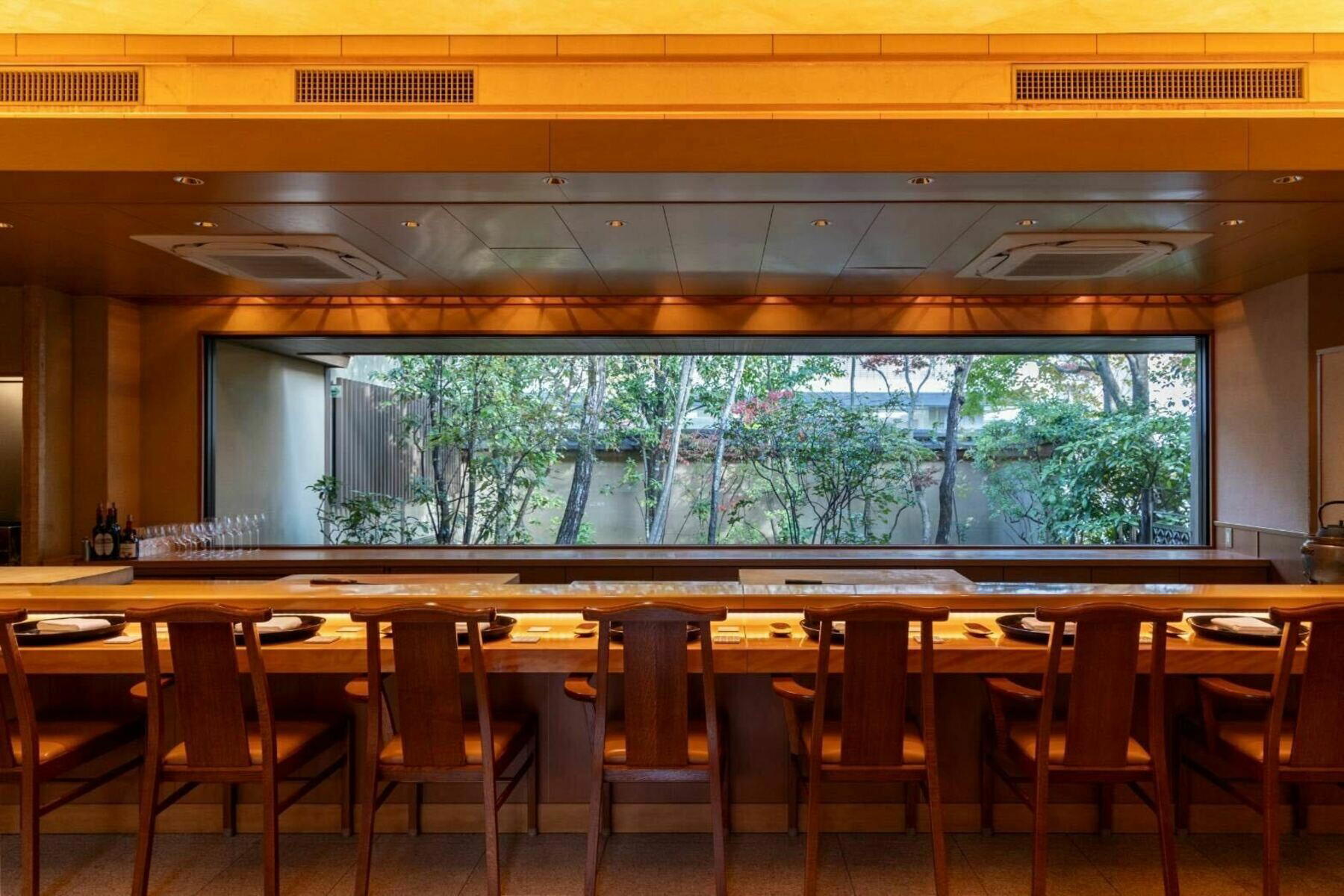
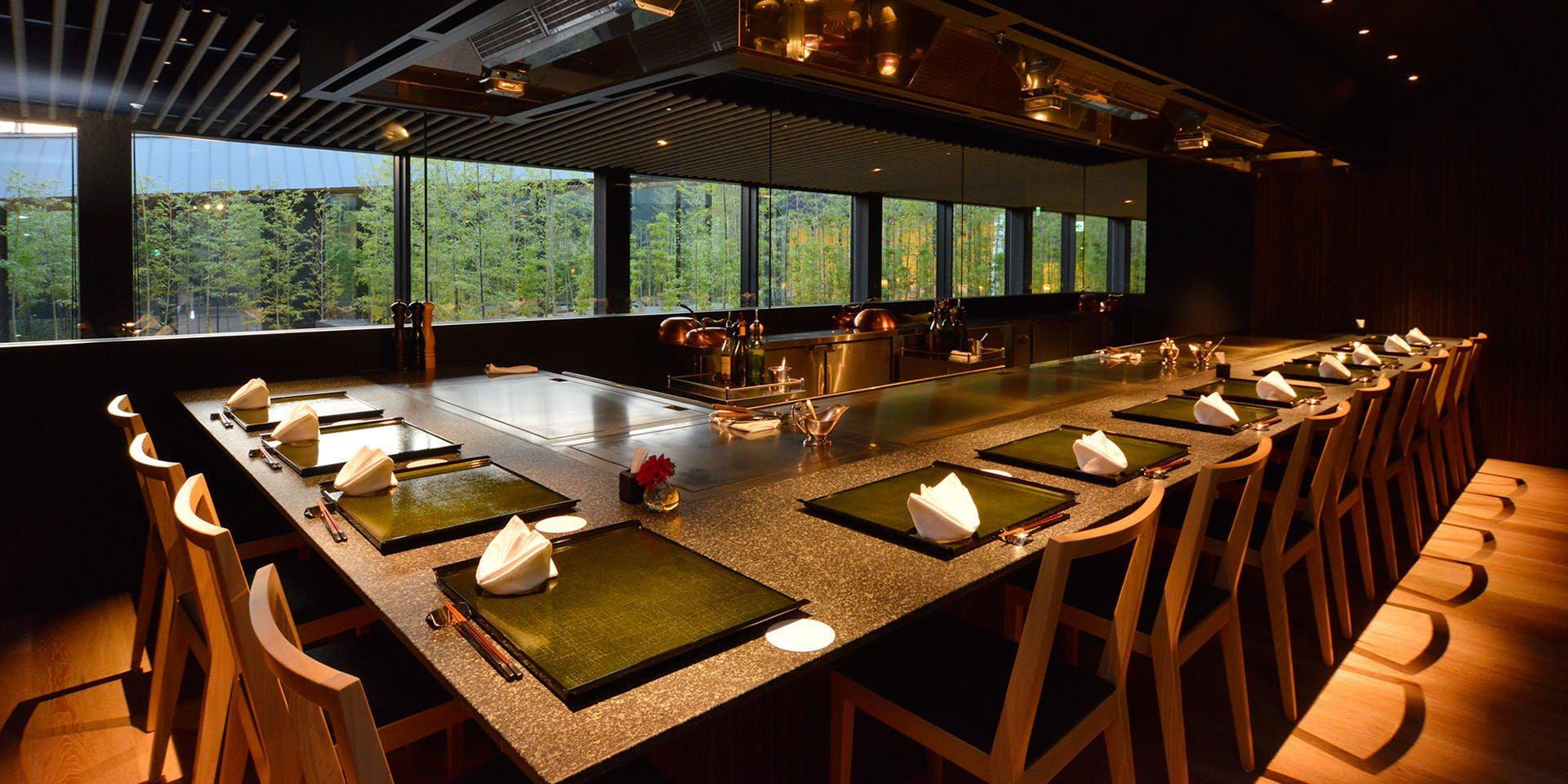
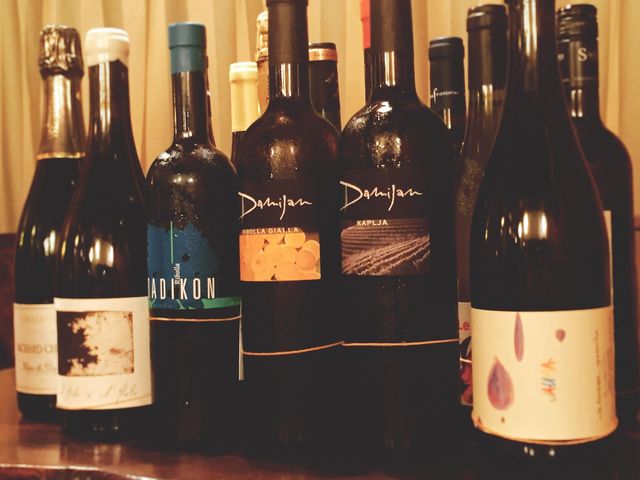
Stylish and relaxing counter seating environment with a hideout-like, exclusive atmosphere designed for an intimate culinary experience.