
Meguro Hiiragi Himonya kouen doori ten belongs to Tokyo’s small-format wagashi culture rather than its restaurant-theatre circuit. The Gakugei Daigaku setting, take-out format, and Tabelog 100 selection for Tokyo Japanese sweets place it in a practical neighbourhood category where precision matters more than ceremony.
Pearl is the En Primeur Club membership app — saves, bookings, and concierge access live there. Same editors, same standards.
- Address
- 3 Chome-18-3 Takaban, Meguro City, Tokyo 152-0004, Japan
- Phone
- +81 3-6412-7945
- Website
- mgrhrg.base.shop
 Saves & bookings on Pearl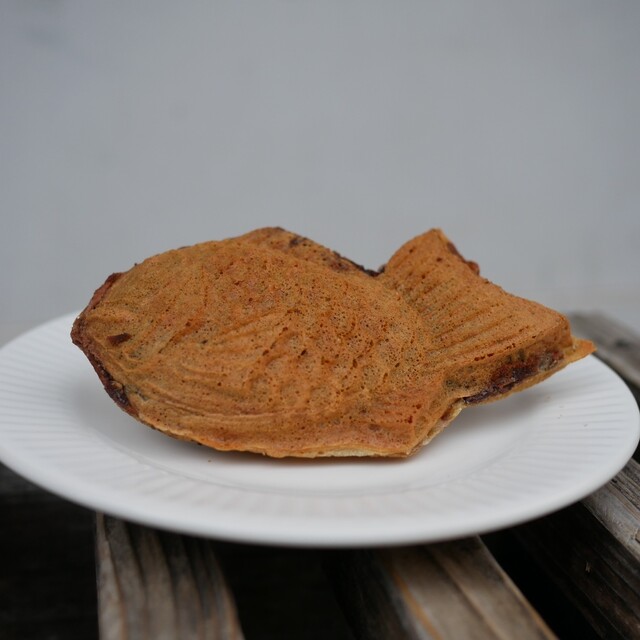
Approaching the west side of Gakugei Daigaku, the mood shifts from Tokyo’s destination-dining choreography to something more local and transactional: station traffic, shopping-street errands, and small counters built for regular use. In that setting, Japanese sweets are not treated as a grand finale to a tasting menu. They function as a daily purchase, a seasonal pause, or a quick detour before the train. Meguro Hiiragi Himonya kouen doori ten fits that rhythm: compact, take-out led, and tied to the kind of neighbourhood commerce that gives Tokyo’s outer wards their dining character.
Tokyo’s wagashi scene has two parallel identities. One is formal, attached to tea service, department-store gift culture, and the old Kyoto-influenced codes of presentation. The other is street-level and immediate: taiyaki, obanyaki, kakigori, and other sweets that rely on repetition, temperature, batter, filling, and timing rather than luxury signalling. This address sits in the second camp. Its inclusion in the Tabelog 100 list for Tokyo Japanese traditional sweets and Japanese sweets cafes in 2023 gives it a useful credential, but the category itself is the point: recognition here tends to reward consistency in modest formats, not elaborate dining-room performance.
Gakugei Daigaku gives wagashi a neighbourhood tempo
Gakugei Daigaku is not Ginza, Omotesando, or the hotel corridor around Marunouchi, and that matters. The area’s food culture leans toward everyday specialists: bakeries, soba shops, curry counters, izakaya, and small sweet shops that serve residents as much as destination diners. Against nearby comparison venues, the pricing and format tell the story. MATTERHORN and TRASPARENTE Gakugei daigaku ten occupy a similar casual sweets-and-bakery orbit, while RUE DE PASSY moves into a slightly higher spend bracket. Teuchi Soba Yakko and Spice Kurashi sit in a fuller meal category, with budgets several bands above the low-cost sweets tier. The result is a useful map of the neighbourhood: not one luxury strip, but a cluster of specialists operating at different degrees of commitment.
That is why the venue reads better as part of a walk than as a stand-alone expedition. In Tokyo, some meals justify crossing the city and building a day around the reservation. A small wagashi counter asks for a different kind of attention. It rewards a traveller who understands that a city’s food intelligence often appears in low-ticket categories: the snack eaten standing up, the sweet bought for later, the shop whose value lies in repeatable craft rather than a long narrative. For a broader citywide frame, Our full Tokyo restaurants guide is the natural starting point, while nearby dining contrasts can run from 124. KAGURAZAKA (Yakitori) to 3 Chome no Curry Ya San or . 鮪と炭火焼き うお炭 秋葉原店.
The format belongs to Tokyo's low-ceremony sweets tradition
The categories attached to Meguro Hiiragi Himonya kouen doori ten are revealing: taiyaki, obanyaki, kakigori, and Japanese traditional sweets. These are not neutral menu labels. Taiyaki and obanyaki belong to Japan’s griddled-sweets vocabulary, where batter and filling create an accessible, portable format; kakigori brings a seasonal association, especially in warmer months, even when shops may treat it as part of a broader sweets repertoire. The shared logic is immediacy. Unlike a kappo counter or kaiseki room, the craft is compressed into a short exchange.
The small scale reinforces that reading. A three-seat storefront bench and a take-out service model place the experience closer to a specialist food stall than a cafe designed for lingering. That can disappoint travellers expecting a seated dessert course, but it is exactly what gives the place its local clarity. Tokyo has countless venues where the room is part of the bill; here, the room is secondary to the category. Payment flexibility, including major cards, transit IC, and QR code options, also signals a practical shop rather than a cash-only nostalgia act.
Tabelog score of 3.72 is meaningful within this category because Japanese review culture tends to be conservative, especially for everyday formats. The Tabelog 100 selection adds a stronger editorial marker: the venue was chosen within Tokyo’s Japanese sweets and sweets-cafe field, a competitive category that includes shops with longer histories, more polished rooms, and broader gift-box appeal. That recognition does not turn a neighbourhood counter into a formal destination restaurant. It places it in a narrower and more useful bracket: a low-spend specialist with enough consistency to be separated from the general field.
How to place it within a Tokyo itinerary
Smart use case is a daytime stop in Meguro rather than an evening anchor. The shop’s format suits a short sweets break, a takeaway purchase, or a neighbourhood food crawl that pairs Gakugei Daigaku with other casual Tokyo addresses. Travellers planning a wider eating day might compare the low-ceremony pace here with the more graphic cafe staging at 2D Cafe, the urban dinner rhythm around 12/10 Shinjuku ten, or a more substantial meal outside Tokyo such as -Grilled beef Sukiyaki- KAMAKURA TANUKIAN 鎌倉 たぬき庵 in Kamakura.
For visitors building a Japan itinerary around small food formats, this kind of shop is a useful corrective to trophy dining. It sits closer in spirit to regional and diaspora specialists than to luxury restaurants:.cafe in Osaka.know in Kumamoto, (Shoku) Vietnam in Kawasaki, [Curry Senmon Ten] Maruyama Kyoju. in Sapporo, and [ki:] in Kyoto all show how focused formats can define a stop without needing ceremony. For a cross-Pacific comparison in Japanese casual food culture, Jōdo Saké Bar in Los Angeles and Onigiri Time in Pasadena point to how portable Japanese formats translate outside Japan.
The editorial verdict is simple: this is not the address for a long, theatrical night. It is a Tokyo sweets stop whose value lies in place, category, and discipline. In a city where international visitors often over-index on omakase counters and hotel bars, a Gakugei Daigaku wagashi specialist offers a sharper lesson in how Tokyo actually eats between formal meals. For trip planning beyond restaurants, use Our full Tokyo hotels guide, Our full Tokyo bars guide, Our full Tokyo wineries guide, and Our full Tokyo experiences guide.
Compact Comparison
Comparable venues by cuisine and price in the same metro.
| Venue | Cuisine | Price | Notes |
|---|---|---|---|
| Meguro Hiiragi Himonya kouen doori tenThis venue — the venue you are viewing | Meguro, Taiyaki & Japanese Wagashi Shop | $ | Not listed |
| Mendokoro Bigiya Gakugei daigaku honten | Meguro, Classic Tokyo shoyu ramen shop | $ | Not listed |
| BERG | Shinjuku, Beer Cafe | $ | Not listed |
| 福田家 | Chiyoda, Japanese Conveyor Belt Sushi | $ | Not listed |
| Shina Soba Tantantei | Not listed | $ | Suginami, Classic Tokyo Shina Soba & Wonton Ramen |
| Tempura Takashichi | Shinjuku, Traditional Tempura | $ | Not listed |
Recognition history
Dated appearances from independent guides and award organizations, with the underlying list record or original source where available.
Tabelog 100 #23 · No. 23
Tabelog · Tabelog 100 - Japanese traditional sweets / Japanese sweets cafe - TOKYO - 2023












At a Glance
- Cozy
- Classic
- Solo
- Family
- Casual Hangout
- After Work
- Standalone
- Local Sourcing
- Street Scene
Current opening hours
- Monday
- 11 AM–5 PM
- Tuesday
- 11 AM–5 PM
- Wednesday
- 11 AM–5 PM
- Thursday
- 11 AM–5 PM
- Friday
- 11 AM–5 PM
- Saturday
- 11 AM–5 PM
- Sunday
- 11 AM–5 PM
Hours can change for holidays and private events. Last verified .
Tiny wagashi shop with just a small storefront bench, focused on takeout; atmosphere is simple and traditional, centered on the aroma of freshly baked taiyaki rather than interior design or long stays.