
Tabelog 100 #33
Our verdict
Mitsubachi belongs to Kyoto’s quieter sweets circuit: a small Kamigyo cafe focused on Japanese sweets and kakigori rather than temple-district spectacle. Its Tabelog 100 selection for Japanese traditional sweets and Japanese sweets cafes in WEST 2023 puts it in a serious regional peer group, while the format remains modest, table-based, and built for a short afternoon pause.

Pearl is the En Primeur Club membership app, where members save venues, book tables and use the concierge.
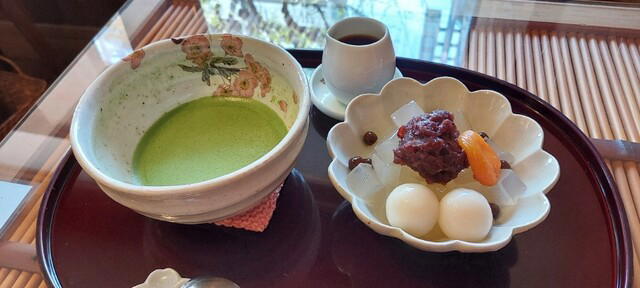
The menu
What to order
- Anmitsu
- Mamekan
- Kakigori (shaved ice)
- Anmitsu set
Kyoto’s sweets culture speaks in a different register from the city’s formal dining rooms. Across the city, the mood can be domestic rather than ceremonial: people moving through daily routes, families cutting through shopping streets, and cafes where Japanese sweets and kakigori carry the role pastry shops play elsewhere. Mitsubachi belongs to that tradition: not a grand destination restaurant, but a Japanese sweets cafe whose appeal comes from restraint, category focus, and Kyoto’s habit of treating tea-time sugar with the seriousness of a meal.
That distinction matters. Kyoto is often sold through temple views and multi-course cuisine, but its sweet shops make seasonality everyday rather than theatrical. Kakigori and cafe-style Japanese sweets form a separate map from dinner reservations, judged by patience, balance, and reliability rather than luxury cues. Mitsubachi’s recognition in the Tabelog Hyakumeiten context for 2023 places it in that regional conversation, within a wider western Japan sweets culture where cafe formats can carry real authority beside larger, more visible dining rooms.
Kyoto sweets without the dinner-room choreography
The appeal is format. A sweets cafe changes the pace: not counter omakase, not a hotel lounge, and not a dessert cart attached to a restaurant. It belongs to the Japanese sweets cafe category, with kakigori named as part of the offering, giving the visit a clear place in the day. Read it as an afternoon stop, especially for travellers who want Kyoto’s food culture without assigning every serious meal slot to formal dining.
Compared with Kyoto’s formal dining rooms, the sweets cafe carries a lighter social contract. Oryori Hayashi represents the city’s more formal dining grammar, where sequence and season unfold through a full meal. Mitsubachi works in a narrower register, and that is the point: sweets, shaved ice, cafe service, and a pause that fits between walking and an early dinner. Sabo Isehan and Demachi Futaba sit in the same broader Kyoto sweets orbit, useful for readers mapping the city by afternoon cravings rather than dinner reservations.
Kyoto’s premium food scene rewards travellers who look beyond price as the only signal. A modest sweets budget can still meet serious local recognition, and the Tabelog context separates this category from casual dessert browsing. The recognition does not make the room a luxury restaurant; it clarifies that Japanese sweets cafes are assessed by their own standards, audience, and repeat-visit culture.
The sensory register is quiet, focused, and seasonal by category
Japanese sweets cafes use a different sensory logic from Western patisserie. The visual field is often controlled rather than abundant: bowls, trays, tea cups, and shaved ice or sweets presented as focused orders, not display-case performance. Sound matters too. In cafe rooms, atmosphere comes from low conversation, chair movement, and the pause between ordering and eating, not open-kitchen theatre. This is why such addresses can feel revealing: they show how Kyoto treats sweetness as a calibrated interval in the day.
Kakigori changes the seasonal reading of a Kyoto itinerary. Summer is humid and heavy, and shaved ice has long served as relief as much as dessert. In cooler months, Japanese sweets can shift the emphasis toward texture, tea, and a slower table. Without overstating the menu, the category gives travellers a reason to time the visit around daylight and walking routes rather than late-night dining. This is a daylight genre, strongest when treated that way.
The cafe format sets expectations. This is not the natural choice for a long, sprawling meal. It suits travellers who understand that Kyoto’s better casual food experiences often operate with a narrower rhythm than international visitors expect. The core pleasure is the short pause: a bowl, a sweet, a cup, and the city briefly slowing around the table.
How it fits into a sharper Kyoto itinerary
Mitsubachi makes most sense between daytime movement and a more formal dinner. Kyoto rewards slow routing: river walks, quiet streets, shopping corridors, and transit links that pull travellers away from the most overworked sightseeing circuits. The cafe suits readers building a Kyoto day around texture rather than monuments, giving shape to the afternoon without dominating the schedule.
For contrast, a Kyoto food day could move from casual daytime eating to a sweets pause here, then into a more composed dinner elsewhere. Readers tracking the city’s range can compare more formal Kyoto dining, French-leaning cooking, or beef-focused restaurants without treating any one format as the whole story. For deeper sweets lineage, other Kyoto confection stops point toward long local traditions rather than cafe service.
The wider EP Club map keeps the city in proportion. Use Our full Kyoto restaurants guide for dining context, Our full Kyoto hotels guide for base selection, Our full Kyoto bars guide for the post-dinner plan, Our full Kyoto wineries guide for wine-led detours, and Our full Kyoto experiences guide for cultural structure around the meal schedule. Travellers extending the Japan food route can compare regional casual formats through other dining in Japan, while international examples show how Japanese formats shift when translated abroad.
The editorial case for Mitsubachi is simple: Kyoto’s sweets culture deserves the same itinerary discipline as its dinner reservations. A recognized Japanese sweets cafe in Kyoto will not replace a formal meal, but it gives the day a local rhythm larger restaurants cannot supply. For travellers who care about how a city eats between lunch and dinner, that is the more interesting measure.
Frequently asked questions
Where is Mitsubachi in Kyoto?
Kyoto.
What price level is Mitsubachi?
Pricing at Mitsubachi is listed as Dinner: JPY 1,000 - JPY 1,999; Lunch: JPY 1,000 - JPY 1,999.
What are the opening hours for Mitsubachi?
Opening hours for Mitsubachi are not provided here; confirm directly before visiting.
What makes Mitsubachi worth seeking out?
Mitsubachi is included in the Tabelog Hyakumeiten context for 2023, with a listed score of 3.70. The format is tight and specific: a Kyoto cafe featuring Japanese sweets and kakigori.
Is Mitsubachi allergy-friendly?
Mitsubachi is a sweets cafe in Kyoto.
Side-by-Side Snapshot
Nearby venues at a similar price tier for orientation.
| Venue | Cuisine | Price | Awards | Notes |
|---|---|---|---|---|
| MitsubachiThis venue (the venue you are viewing) | Traditional Japanese sweets café (anmitsu & kakigori) | $10–20 | Tabelog 100 #33 | Not listed |
| Demachi Futaba | Traditional Kyoto wagashi & mochi shop | $1–10 | Tabelog 100 #53 | Kamigyō |
| Matsuya Tokiwa | Traditional Japanese Wagashi | $1–10 | Tabelog 100 #60 | Nakagyō |
| Nijo Wakasaya Teramachi ten | Traditional Kyoto wagashi & kakigori cafe | $10–20 | Tabelog 100 #79 | Nakagyō |
| Honke Funahashiya | Japanese traditional sweets | $1–10 | Tabelog 100 #35 | Nakagyō |
| Jinba Do | Traditional Japanese Yaki-Mochi & Wagashi | $1–10 | Tabelog 100 #57 | Kita |
Recognition history
Dated appearances from independent guides and award organizations, with the underlying list record or original source where available.
Tabelog 100 #33 · No. 33
Tabelog · Tabelog 100 - Japanese traditional sweets / Japanese sweets cafe - WEST - 2023
Continue exploring
More in Kyoto
Restaurants in Kyoto
All restaurants in Kyoto →

Bars in Kyoto
All bars in Kyoto →



Hotels in Kyoto
All hotels in Kyoto →



Wineries in Kyoto
Browse all →
Details
- Quiet
- Cozy
- Classic
- Intimate
- Solo
- Casual Hangout
- After Work
- Brunch
- Standalone
- Design Destination
- A La Carte
- Tea
- Coffee
Current opening hours
- Monday
- Closed
- Tuesday
- 11 AM–6 PM
- Wednesday
- 11 AM–6 PM
- Thursday
- 11 AM–6 PM
- Friday
- 11 AM–6 PM
- Saturday
- 11 AM–6 PM
- Sunday
- Closed
Hours can change for holidays and private events. Last verified .
An intimate, old-school Japanese sweets parlor with just a handful of tables, soft and quiet atmosphere, and a relaxed, unhurried feel suited to savoring traditional wagashi and tea.