Mista Oh
Mista Oh occupies a Flatiron address at 41 W 24th Street, positioning itself within one of Manhattan's most competitive mid-district dining corridors. The restaurant draws from a Korean-inflected culinary tradition at a moment when progressive Korean cooking has become one of New York's most closely watched categories, with venues like Atomix and Jungsik setting the critical benchmark for the form.
Pearl is the En Primeur Club membership app — saves, bookings, and concierge access live there. Same editors, same standards.
- Address
- 41 W 24 St, New York, NY 10010
- Phone
- +16465598858
- Website
- mistaoh.com
- Directions
- Get directions
 Saves & bookings on Pearl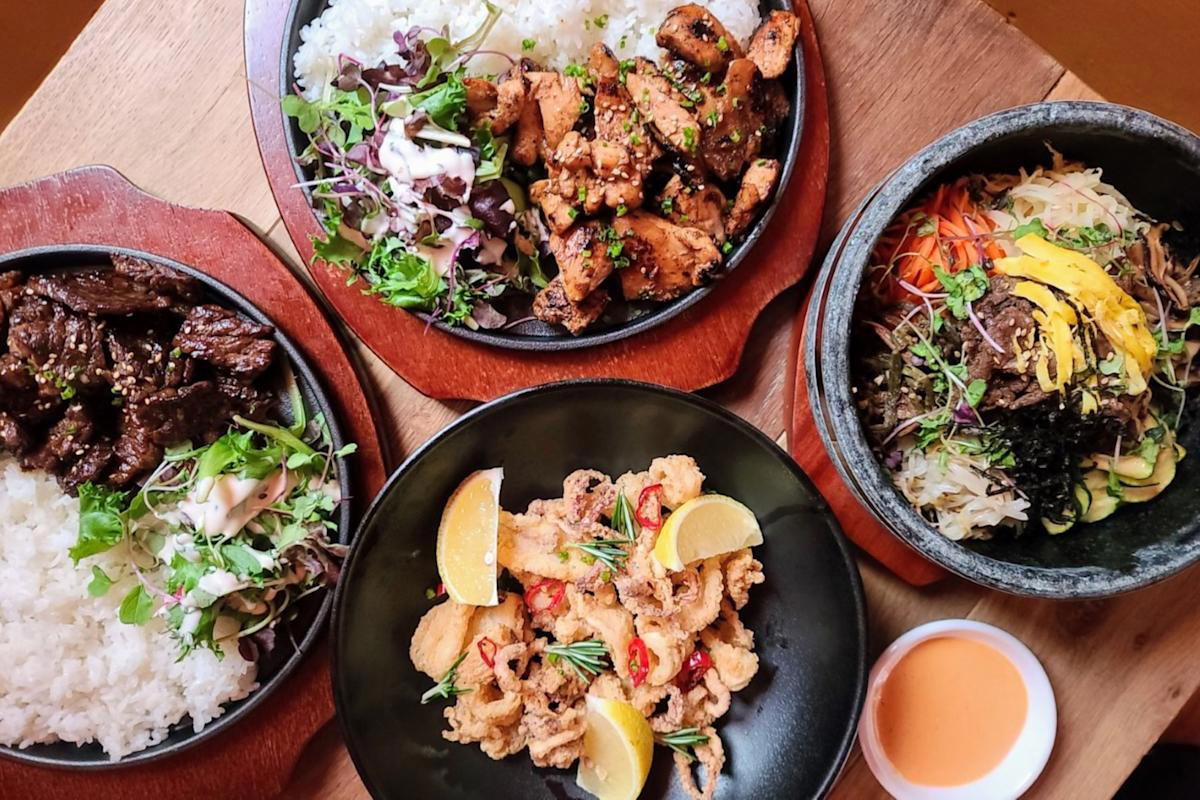
Flatiron's Korean Dining Moment and Where Mista Oh Sits
Mista Oh is a Korean BBQ & Comfort Food restaurant in New York City's Flatiron district. What began as a handful of ambitious tasting-menu experiments has consolidated into a recognized category, with Atomix and Jungsik New York holding Michelin stars and operating at price points that compete directly with the city's French fine-dining establishment. The interesting pressure point right now is the middle tier: restaurants that draw from Korean culinary logic without committing to the full tasting-menu architecture, and that price accordingly. Mista Oh, at 41 W 24th Street in the Flatiron district, occupies a position in that conversation.
The Flatiron address matters as a contextual signal. The neighborhood has historically attracted a different dining profile than Midtown's power-lunch circuit or the West Village's chef-driven independents. It sits close enough to both to pull from each, and its restaurant density has increased steadily as rents in lower Manhattan pushed operators northward. Placing a Korean-concept restaurant here, rather than in Koreatown's 32nd Street corridor, is itself a positioning statement about intended audience and price expectations.
Menu Architecture as Editorial Argument
One instructive way to read any restaurant is through the structure of its menu, before a single dish arrives at the table. Menu architecture reveals what a kitchen believes about the dining experience: how long it wants to hold you, how much it trusts you to follow its logic, and where it draws the line between accessibility and ambition. At the upper end of New York's dining market, Masa operates on pure omakase logic, no choices, total submission to the chef's sequence, while Per Se offers a tasting menu with the illusion of selection built into its structure. Le Bernardin presents a more conventional à la carte framework dressed in formal service codes.
What can be said with confidence is that Korean barbecue and comfort food are a natural fit for a casual dining room, where accessibility matters as much as ambition. The restaurants in this city that have earned sustained critical attention, Atomix being the clearest example, have resolved that tension by building menu structures that feel internally coherent rather than borrowed.
The Flatiron Dining Context in Seasonal Terms
Spring and early autumn are the periods when Flatiron dining operates at its highest pressure. The neighborhood's office density returns, outdoor seating becomes viable on 24th Street's corridor, and reservation windows at newer openings compress. For a restaurant still building its booking profile, this seasonal rhythm matters: early-month reservations in April and September tend to fill faster than winter slots, when the neighborhood quiets and walk-in availability increases at many addresses in the district.
This seasonal pattern is consistent across the Flatiron and Chelsea overlap zone. Restaurants that opened in the prior twelve months often find their first test in the spring rush, when the city's dining press catches up with openings that survived the winter. Reservations are recommended, especially on Friday and Saturday evenings. Across the wider American fine-dining circuit, from Single Thread Farm in Healdsburg to Blue Hill at Stone Barns in Tarrytown, the off-peak visit is nearly always the richer one.
What the Address Implies About Price and comparable set
41 W 24th Street is not a location associated with entry-level dining. The Flatiron district's commercial rents structure the economics of any restaurant operating there, and those economics filter upward to the menu. Comparable Korean-concept restaurants in Manhattan that have drawn serious critical attention operate at the $$$$ price tier, with tasting menus typically ranging from $175 to over $300 per person before beverage. The restaurant is priced around $30 per person, placing it in price tier 2.
For reference, the wider American premium dining market shows a consistent pattern: restaurants in high-rent urban corridors that position around a distinct national culinary identity, whether Korean in Manhattan, Japanese-Californian at Providence in Los Angeles, or French-American at The French Laundry in Napa, tend to price against their format peers rather than their geographic neighbors. A Korean tasting menu in Flatiron competes for the same dining budget as Alinea in Chicago or Addison in San Diego, not against the Korean barbecue houses twenty blocks north.
Planning Your Visit
The restaurant's address at 41 W 24th Street places it within easy reach of the 23rd Street subway stations on both the N/R/W and the F/M lines, making it accessible from most Manhattan neighborhoods without a cab. The Flatiron district offers limited street parking, so ground transit is the practical default for most visitors. The restaurant is open Monday through Thursday from 11 AM to 10 PM, Friday and Saturday from 11 AM to 11 PM, and closed on Sunday.
Comparable Spots
Comparable venues nearby, for context on price, style, and recognition.
| Venue | Cuisine | Price | Notes |
|---|---|---|---|
| Mista OhThis venue — the venue you are viewing | Korean BBQ & Comfort Food | $$ | Not listed |
| The Kunjip | Authentic Korean BBQ | $$ | Midtown South-Flatiron-Union Square |
| MONO+MONO | Modern Korean Fusion | $$ | East Village |
| Kimganae | Korean Bunsik Comfort Food | $$ | Flushing-Willets Point |
| Momofuku Ssam Bar | Modern Korean Fusion | $$$ | Financial District-Battery Park City |
| Dean Fryer | British Seafood Pub | $$ | New York City |
Continue exploring
More in New York City
Restaurants in New York City
Browse all →
Bars in New York City
Browse all →

Hotels in New York City
Browse all →





At a Glance
- Cozy
- Modern
- Intimate
- Casual Hangout
- Group Dining
- Family
- Open Kitchen
- Sake Program
Current opening hours
- Monday
- 11 AM–10 PM
- Tuesday
- 11 AM–10 PM
- Wednesday
- 11 AM–10 PM
- Thursday
- 11 AM–10 PM
- Friday
- 11 AM–11 PM
- Saturday
- 11 AM–11 PM
- Sunday
- Closed
Hours can change for holidays and private events. Last verified .
Cozy and warm with friendly family service and a homey atmosphere.