Meson Jesus sits on a narrow lane in the Gothic Quarter, steps from La Boqueria, operating in the register of Barcelona's traditional mesones rather than its Michelin-chasing restaurant scene. It represents a category of dining that the city's rapid transformation has placed under pressure: affordable, unfussy Catalan and Spanish home cooking in a room that feels indifferent to trends.
Pearl is the En Primeur Club membership app — saves, bookings, and concierge access live there. Same editors, same standards.
- Address
- Carrer dels Cecs de la Boqueria, 4, Ciutat Vella, 08002 Barcelona, Spain
- Phone
- +34666617396
- Website
- covermanager.com
- Directions
- Get directions
 Saves & bookings on Pearl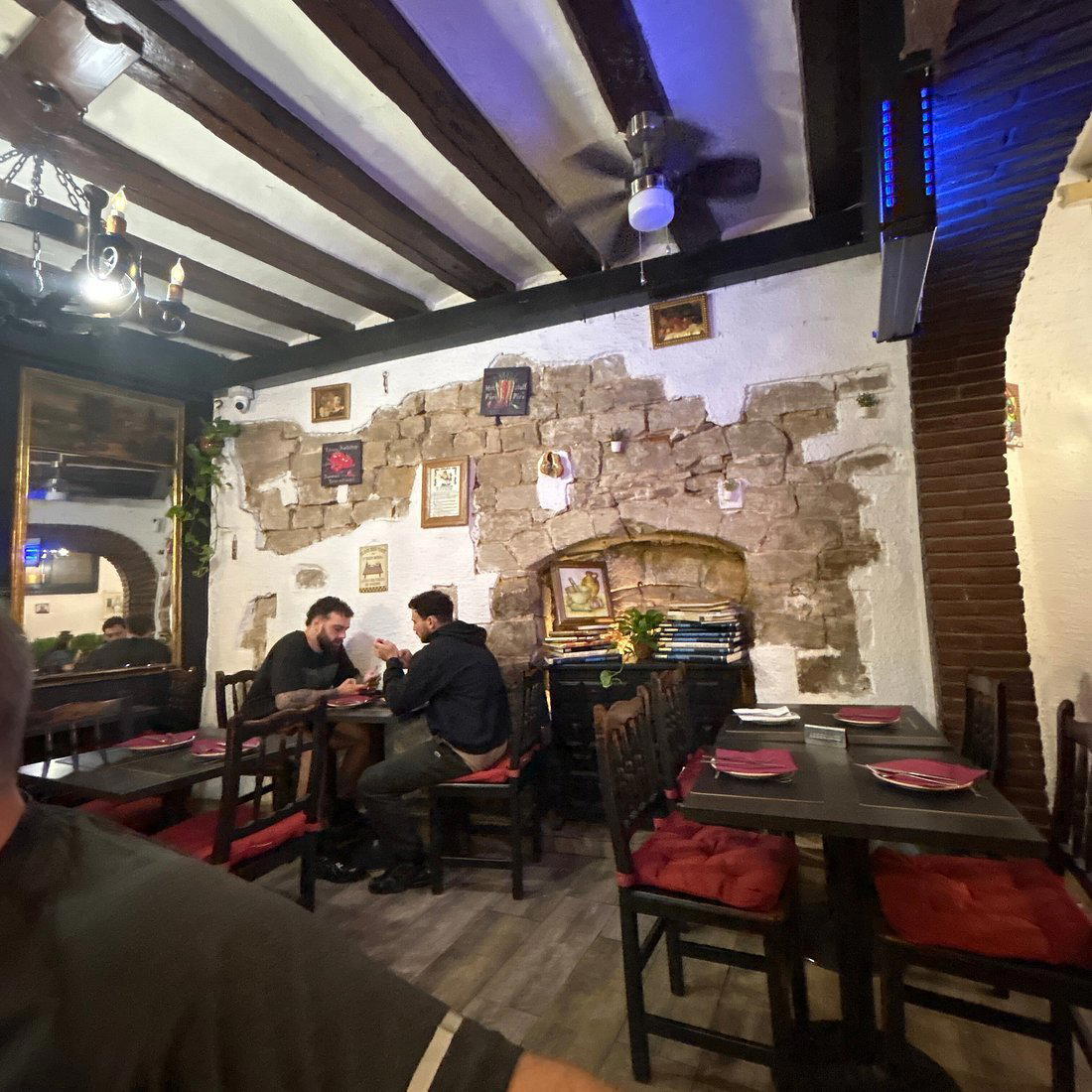
A Lane That Resists the Tourist Current
Carrer dels Cecs de la Boqueria is narrow enough that two people walking abreast will brush shoulders with anyone coming the other way. The street runs just off the edge of La Boqueria market's gravitational pull, in the part of Ciutat Vella where the flagstone underfoot is worn smooth and the buildings press close enough to keep the air cool even in August. This is the physical register Meson Jesus occupies: the older, quieter city that persists in its margins.
Barcelona has two parallel dining stories running at once. The first involves a cluster of creative restaurants, Disfrutar (Progressive, Creative), Cocina Hermanos Torres (Creative), ABaC (Creative), Lasarte (Progressive Spanish, Creative), and Enigma (Creative), that have made the city one of Europe's most significant addresses for contemporary Spanish cooking. The second story, less photographed and less discussed in international press, involves the neighbourhood dining rooms that feed people who actually live here. Meson Jesus belongs to the second story.
What a Mesón Is, and Why It Matters
The word mesón carries a specific cultural weight in Spanish urban life. It describes a category of eating house rooted in the tradition of the roadside inn: uncomplicated food, a short menu, a room that prioritises function over atmosphere design, and prices that make daily visits possible. In Madrid and Seville, the form is well documented. In Barcelona, where the pace of tourism-driven transformation has been especially intense over the past two decades, surviving mesones in the historic centre have become something of a rarity.
The Catalan and broader Spanish home-cooking tradition that mesones carry includes dishes that rarely appear on the menus of the city's creative tier: slow-cooked lentils with chorizo, salt cod preparations in the Catalan style, grilled meats served with alioli, and the kind of rotating daily specials that track what the nearby market had to offer that morning rather than a fixed seasonal concept. At a remove of a few hundred metres, La Boqueria supplies the raw material for a significant portion of central Barcelona's cooking, including the kind of ingredient-driven simplicity that a mesón format is positioned to express.
The Sensory Register of the Gothic Quarter
Walking toward Carrer dels Cecs de la Boqueria from Las Ramblas, the sensory shift is quick. The noise compresses and then fades. The air smells of stone rather than sunscreen. Inside a room like Meson Jesus, the cues are familiar to anyone who has spent time eating in Spain's older neighbourhood restaurants: the sound of plates being moved without ceremony, conversations conducted at a volume that assumes the next table can hear anyway, and the faint smell of olive oil that has been doing serious work all morning.
This sensory environment is not constructed for effect. It is the residue of use. The walls carry the particular patina of a room that has been full at lunchtime for many years. In a city where restaurant design has become increasingly self-conscious, from the cave-like formality of some tasting-menu rooms to the curated industrial-rustic of the mid-market tier, the absence of designed atmosphere is itself a form of authenticity that is harder to replicate than it looks.
Where Meson Jesus Sits in Spain's Broader Dining Conversation
Spain's most discussed restaurants are concentrated in a creative fine-dining tier that stretches from Barcelona to the Basque Country and south to Andalusia. El Celler de Can Roca in Girona, Arzak in San Sebastián, Mugaritz in Errenteria, Martin Berasategui in Lasarte-Oria, Azurmendi in Larrabetzu, Quique Dacosta in Dénia, Aponiente in El Puerto de Santa María, DiverXO in Madrid, Ricard Camarena in València, and Atrio in Cáceres all represent the tier that international food media returns to. That conversation is real and worth having. But it has a tendency to crowd out the equally serious question of where and how everyday Spanish cooking is being maintained in the country's most visited cities.
Internationally, the analogy is familiar. Comparable conversations have played out in Paris around the survival of the bistrot de quartier, in Tokyo around the shrinking number of independently operated shokudō, and in New York around the economics of neighbourhood restaurants that cannot raise prices at the rate of their overhead. Across all of these cities, the dining rooms that seem most ordinary are often the ones whose loss would most alter the character of a neighbourhood. For readers more familiar with the New York context, the peer tension between formal precision and daily-use dining can be seen at work between places like Le Bernardin in New York City and Atomix in New York City at the leading end, and the broader ecosystem they coexist within.
Know Before You Go
- Address: Carrer dels Cecs de la Boqueria, 4, Ciutat Vella, 08002 Barcelona
- Neighbourhood: Gothic Quarter, steps from La Boqueria market
- Ideal time to visit: Weekday lunch, when the traditional Spanish midday service is in full effect
- Booking: Reservations are recommended
- Price range: About $25 per person
Booking and Cost Snapshot
Comparable venues nearby, for context on price, style, and recognition.
| Venue | Cuisine | Price | Notes |
|---|---|---|---|
| Meson JesusThis venue — the venue you are viewing | Not listed | $$ | Not listed |
| Can Culleretes | Barri Gotic, Traditional Catalan | $$ | Not listed |
| Casa Delfin | Not listed | $$ | Sant Pere, Santa Caterina i la Ribera, Traditional Catalan Tapas |
| Candela en Rama | Not listed | $$ | Sant Antoni, Modern Spanish Tapas with Ember-Grilled Flavors |
| El Glop Gaudí | la Sagrada Familia, Traditional Catalan | $$ | Not listed |
| Tantarantana | Not listed | $$ | Sant Pere, Santa Caterina i la Ribera, Traditional Spanish Tapas & Catalan |
Continue exploring
More in Barcelona
Restaurants in Barcelona
Browse all →
Bars in Barcelona
Browse all →
Hotels in Barcelona
Browse all →
At a Glance
- Rustic
- Cozy
- Classic
- Group Dining
- Family
- Casual Hangout
- Historic Building
Current opening hours
- Monday
- 12 PM–12 AM
- Tuesday
- 12 PM–12 AM
- Wednesday
- 12 PM–12 AM
- Thursday
- 12 PM–12 AM
- Friday
- 12 PM–12 AM
- Saturday
- 12 PM–12 AM
- Sunday
- 12 PM–12 AM
Hours can change for holidays and private events. Last verified .
Informal, traditional, and rustic atmosphere with gingham tablecloths, oak barrels, and cartwheels, offering a cozy, home-like escape from the bustling streets.