A fixture on the Rue des Porcelets in Arles's old town, Mesa draws a loyal local following that returns not for novelty but for consistency and a sense of place. Set within the dense medieval fabric of a city that balances Roman heritage with a live contemporary arts scene, Mesa occupies a tier of neighbourhood dining where the room and the regular clientele define the experience as much as the plate.
Pearl is the En Primeur Club membership app — saves, bookings, and concierge access live there. Same editors, same standards.
- Address
- 12 Rue des Porcelets, 13200 Arles, France
- Phone
- +33610856984
- Website
- instagram.com
- Directions
- Get directions
 Saves & bookings on Pearl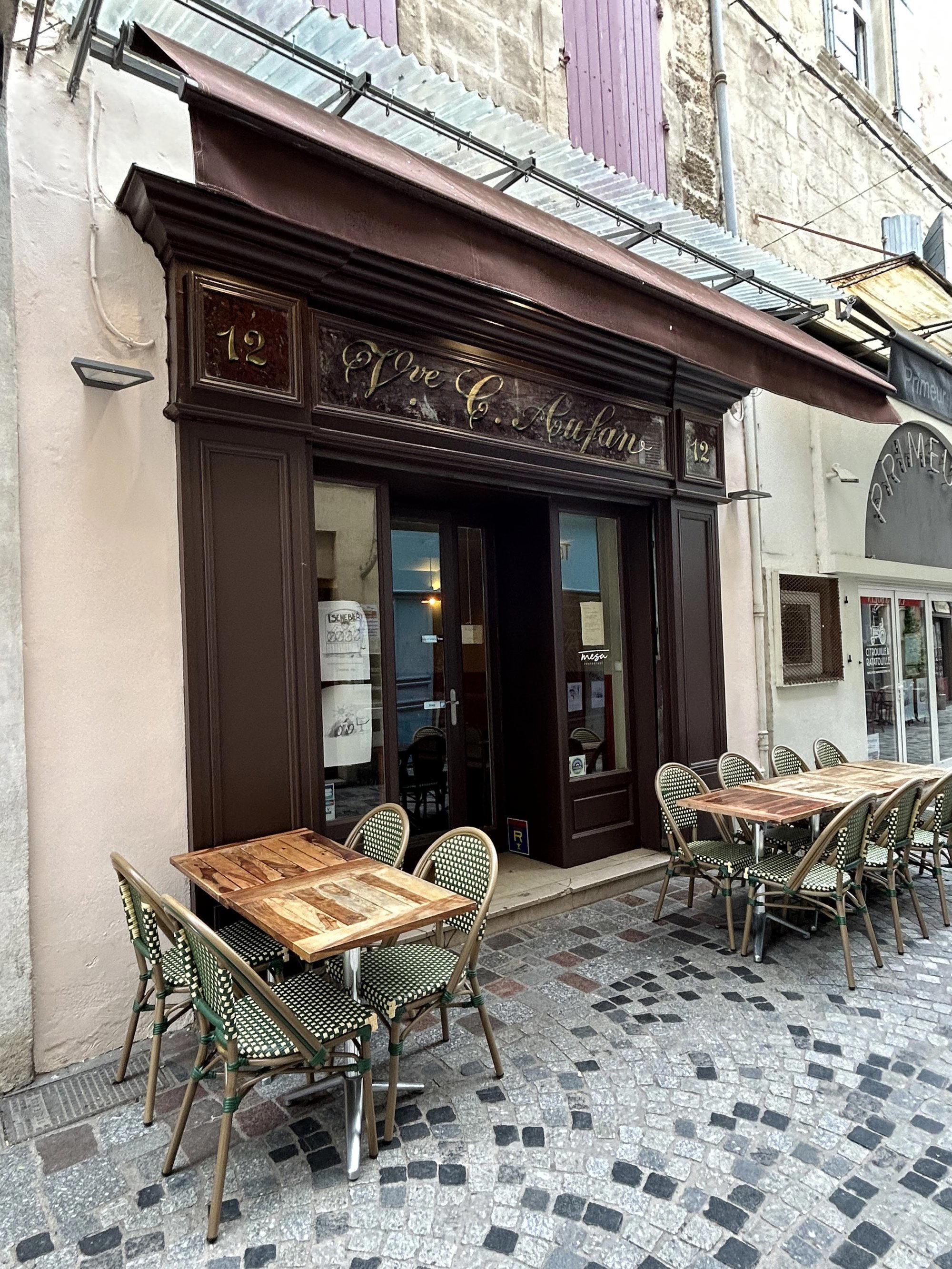
Why Regulars Keep Coming Back
In a city as layered as Arles, dining loyalty is earned differently than in larger French urban centres. The crowds that descend for the Rencontres de la Photographie each summer, or the visitors tracking the Roman amphitheatre and Van Gogh trail, cycle through quickly. The restaurants that survive on that traffic alone tend to plateau. The ones that build a local following, week after week, across seasons, operate by a different logic: consistency over spectacle, familiarity over novelty, a room that feels like it belongs to the people who eat there regularly rather than to the people passing through.
Mesa, at 12 Rue des Porcelets in the heart of Arles's old town, sits in that second category. The address places it within the dense medieval street network between Place du Forum and the northern quartiers, a part of the city where foot traffic is local rather than tourist-directed and where a restaurant earns its reputation table by table over years rather than through a single review cycle. For visitors trying to read Arles through what its residents actually eat, this is the more instructive neighbourhood to pay attention to.
The Arles Dining Context
Arles sits at an interesting intersection in the French dining map. It is close enough to Marseille (roughly an hour west) to feel the influence of southern Mediterranean cooking, close enough to the Camargue to have access to serious local produce including rice, bull, and flamingo-pink salt, and embedded deeply enough in Provence to carry the weight of that culinary tradition. Yet it has never positioned itself as a gastronomic destination in the way that a city like Menton has with Mirazur, or that Laguiole has with Bras.
That relative absence of internationally recognised fine dining, compared to destinations like Alléno Paris au Pavillon Ledoyen or Flocons de Sel in Megève, is partly what makes the mid-tier dining scene here more interesting to observe. The city's most discussed table at the leading end is Les Maisons Rabanel, which operates in a creative, tasting-menu format at the €€€€ price point. Below that, a cluster of restaurants compete in the €€ to €€€ range, each carving a slightly different niche: Chardon with a modern cuisine approach, Drum Café operating on farm-to-table principles, Allora covering Italian-inflected territory, and Gaudina and Chez Bob holding their own distinct positions in the local hierarchy. Mesa sits within this competitive set rather than above it, which is precisely why its regulars matter as an indicator of quality.
In French provincial cities, the regulars are one reliable signal. They are not swayed by a single season's menu or a well-placed feature in a Paris-based publication. They return because the kitchen is steady, because the room feels right, and because they know they will leave satisfied rather than surprised.
The Room and the Street
Rue des Porcelets is a narrow old-town street that does not announce itself loudly. The scale of the buildings, the stone underfoot, the compressed proportions of the block: all of this places you clearly inside the medieval city rather than on its more tourist-trafficked perimeter around the arena. Restaurants on streets like this one succeed or fail based on what happens inside rather than on passing footfall. There is no terrace-theatre of café culture to carry a mediocre kitchen. The trade is quieter, more deliberate, and more dependent on word of mouth.
For context on what serious French dining looks like elsewhere in the country, the full range stretches from three-Michelin houses like Paul Bocuse - L'Auberge du Pont de Collonges and Troisgros - Le Bois sans Feuilles to long-established regional institutions like Auberge de l'Ill in Alsace and Au Crocodile in Strasbourg. Mesa is operating at a different register entirely, and that difference is not a deficit. It is a different function: the neighbourhood anchor rather than the destination table.
What the Unwritten Menu Looks Like
Regular diners at any serious provincial French restaurant develop what amounts to a parallel menu: dishes they order without looking, timing adjustments based on the season, and a clear sense of which items benefit from the kitchen's particular strengths. That accumulated knowledge, built over multiple visits, is what distinguishes the experience for a local from the experience for a first-timer. The visitor sees a menu; the regular reads a kitchen.
In Provence, that kind of loyalty tends to cluster around technique applied to local produce: the way a kitchen handles the gamey richness of Camargue bull, or the precision it brings to a fish from the Rhône delta, or whether its use of Provençal herbs reads as confident or reflexive. These are the tests a returning clientele applies without consciously articulating them. The verdict is expressed simply: they come back, or they do not.
For comparative reference in the broader French south, AM par Alexandre Mazzia in Marseille operates at the far technical end of southern French cooking, and Assiette Champenoise in Reims represents the northern pole of ambitious French regional dining. Mesa is not in that conversation, but understanding where those markers sit clarifies the tier Mesa occupies and why its regulars value it on different terms.
Planning Your Visit
Mesa is located at 12 Rue des Porcelets in central Arles, within walking distance of most of the old town's key sites. Arles is served by TGV from Marseille Saint-Charles (around 45 minutes) and by direct trains from Paris Gare de Lyon via Avignon, making it accessible as a day trip from Marseille or as part of a longer Provence itinerary. Given the reservation policy, booking ahead is recommended for dinner; lunch at a table this locally embedded may allow for more flexibility, but confirming in advance avoids the risk of a full house.
Category Peers
Comparable venues nearby, for context on price, style, and recognition.
| Venue | Cuisine | Price | Awards | Notes |
|---|---|---|---|---|
| MesaThis venue — the venue you are viewing | Seasonal French Bistro | $$$ | Not listed | Not listed |
| Chez Bob | Traditional Provençal French | $$$ | Not listed | Camargue |
| L'Oriel | Modern French Fine Dining | $$$$ | Not listed | Place du Forum |
| L'Antonelle | Modern French Bistro | $$ | Not listed | Roquette |
| Chardon | Modern French Chef-in-Residence Bistro | $$$ | Michelin Plate | Centre Historique |
| Lou Marques | Refined French Camargue Cuisine | $$$$ | Not listed | boulevard des Lices |
Continue exploring
More in Arles
Restaurants in Arles
Browse all →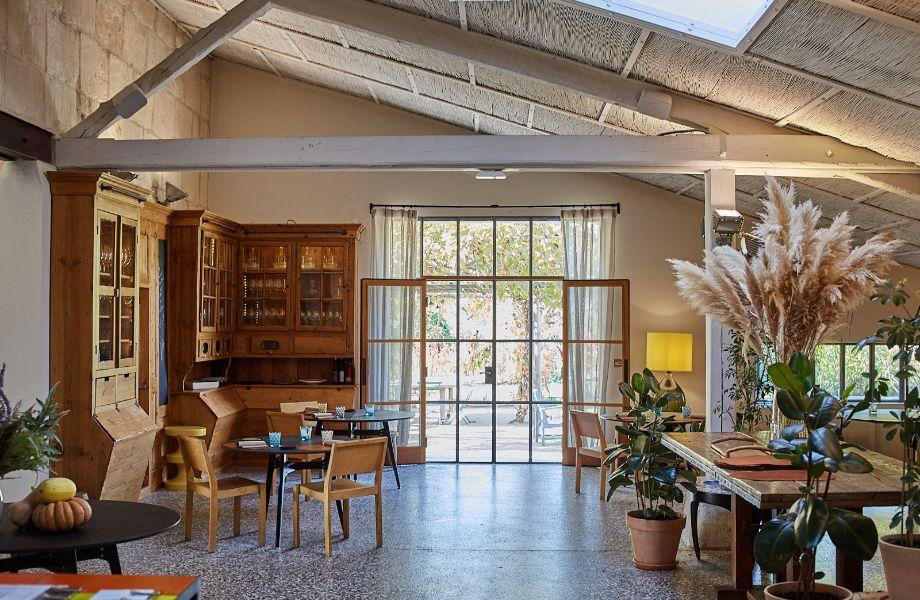
Bars in Arles
Browse all →
Hotels in Arles
Browse all →
At a Glance
- Trendy
- Cozy
- Rustic
- Date Night
- Casual Hangout
- Open Kitchen
- Terrace
- Natural Wine
- Local Sourcing
Current opening hours
- Monday
- 12:30–1:30 PM, 7:30–9 PM
- Tuesday
- Closed
- Wednesday
- 12:30–1:30 PM, 7:30–9 PM
- Thursday
- 12:30–2 PM, 7:30–9 PM
- Friday
- 12:30–2 PM, 7:30–9 PM
- Saturday
- 7:30–9 PM
- Sunday
- 12:30–1:30 PM, 7:30–9 PM
Hours can change for holidays and private events. Last verified .
Long dining room with spotted mural, bistro furniture, and views of the spectacular open kitchen, creating a trendy yet cozy historic atmosphere.