Lou Marques sits on the Boulevard des Lices in the heart of Arles, placing it at the intersection of Provençal culinary tradition and the city's Roman-era civic life. The address alone positions it within a dining corridor that has long served as the social spine of this UNESCO-listed city. For visitors cross-referencing Arles against France's broader fine-dining map, Lou Marques offers a grounded regional alternative worth understanding on its own terms.
Pearl is the En Primeur Club membership app — saves, bookings, and concierge access live there. Same editors, same standards.
- Address
- 9 Bd des Lices, 13200 Arles, France
- Phone
- +33490525252
- Website
- restaurantsandbars.accor.com
- Directions
- Get directions
 Saves & bookings on Pearl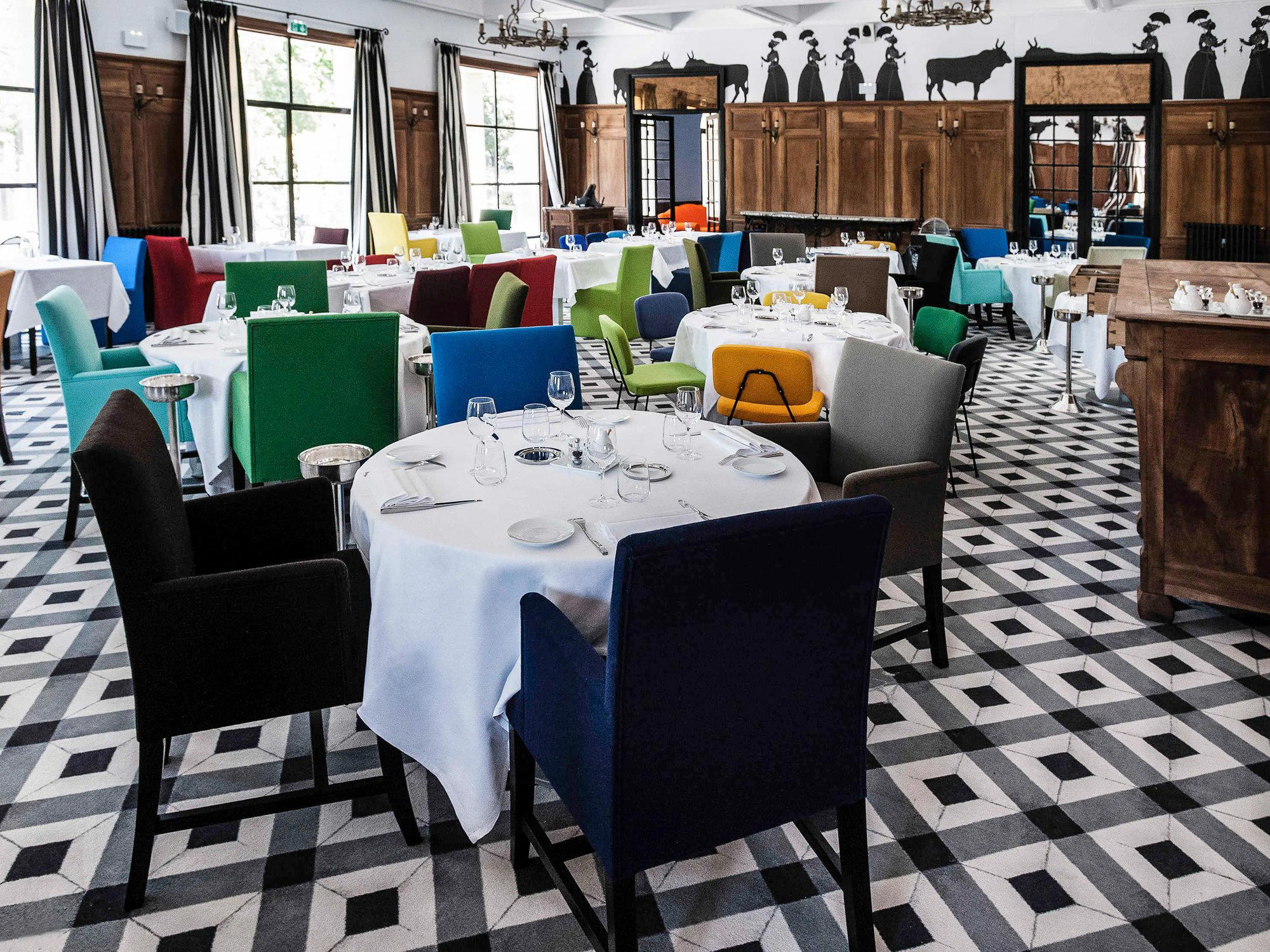
A Table on Arles' Most Storied Boulevard
Boulevard des Lices is not a side street. It is the civic artery of Arles, a broad, plane-tree-lined avenue that has functioned as the city's social and commercial backbone since the 19th century. On Saturday mornings, the Marché d'Arles spreads across it in full colour. On other days, the boulevard retains the particular quality of southern French public space: unhurried, lit by a specific quality of Provençal light that Van Gogh painted obsessively during his time in the city. Lou Marques is a restaurant in Arles serving refined French Camargue cuisine. Lou Marques, at number 9 on this boulevard, occupies a position that carries its own meaning before you cross the threshold. In Arles, address is argument.
This matters for how the restaurant functions within the city's dining structure. Arles sits in a tier of medium-sized French cities where fine dining and serious regional cooking coexist without the density of Paris or Lyon. The city's restaurant scene runs from farm-to-table formats like Drum Café and Chez Bob through Mediterranean-inflected mid-range tables such as Gaudina and contemporary Italian like Allora, up to modern cuisine at Chardon (Modern Cuisine). Lou Marques anchors itself within this range from a position of geographic and architectural weight that few other addresses in the city can match.
What the Menu Structure Reveals
In southern France, a restaurant's menu architecture is often the clearest signal of its allegiances: whether it is reaching toward Parisian fine dining conventions, anchoring itself in regional product, or attempting a more personal synthesis. The menu structures that define cooking in this corridor of Provence tend to draw from the Camargue's distinctive larder, the Rhône delta's fish and rice, the Alpilles' lamb and olive oil, and the broader Mediterranean pantry of aubergine, tomato, and fresh herbs. A table positioned on Boulevard des Lices, serving a clientele that mixes art world visitors (Arles hosts the Rencontres de la Photographie each summer, drawing international crowds from July through September), local professionals, and cultural tourists, must make choices about how formally to frame that regional inheritance.
The decision about whether to offer a prix-fixe structure, à la carte flexibility, or a hybrid signals something about who the restaurant believes it is talking to. Premium French regional tables, from Bras in Laguiole to Auberge de l'Ill in Illhaeusern, have built their identities around tightly constructed menu formats that communicate terroir with architectural precision. At the other end of the spectrum, the more casual regional tables of Provence treat the menu as a daily conversation with the market rather than a curated statement. Where a given Arles restaurant sits on this axis shapes everything from portion weight to wine list depth to the pacing of a meal.
For context within France's broader fine-dining register, the gap between a serious Arles table and the three-star tier is substantial. Mirazur in Menton and Alléno Paris au Pavillon Ledoyen in Paris operate in a different competitive universe, as do Troisgros - Le Bois sans Feuilles in Ouches and Flocons de Sel in Megève. That tier demands a menu programme of considerable ambition and consistency. What a well-positioned regional table in a city like Arles can offer instead is a more immediate relationship with local produce and a sense of place that destination restaurants sometimes sacrifice in pursuit of technical ambition. AM par Alexandre Mazzia in Marseille, the closest high-profile reference point geographically, demonstrates how southern French terroir can be pushed toward conceptual cooking without losing its Mediterranean rootedness.
The Provençal Context Lou Marques Inhabits
Understanding the restaurant requires understanding what Arles demands of its restaurants. The city receives visitors from across Europe and beyond, particularly during the summer photography festival and the broader tourist season that runs from April through October. These visitors arrive with calibrated expectations shaped by Paris, by the Côte d'Azur, and increasingly by a generation of food media that has made Provençal cooking globally familiar. The challenge for any serious Arles table is to present that regional tradition with enough substance to reward the informed diner without alienating the visitor who simply wants a well-executed meal with a glass of Costières de Nîmes or Coteaux d'Aix-en-Provence.
The cuisine of this part of France is not monolithic. The Camargue, immediately south of Arles, produces gardian bull, a protected designation beef that features in the area's most assertively local cooking. Rice from the Camargue delta has its own AOC status. Tellines, the small local clams, are a regional touchstone. The olive oils of the Vallée des Baux hold PDO status and represent particularly characterful cold-pressed oils in the Mediterranean. Any restaurant at Lou Marques' address and positioning is surrounded by this abundance, and the choice of which elements to foreground, and how, tells you a great deal about the kitchen's point of view. Compare this to the approach of classic French regional houses like Paul Bocuse - L'Auberge du Pont de Collonges in Collonges-au-Mont-d'Or or Assiette Champenoise in Reims, where the relationship between a defined regional larder and a structured menu format has been refined over decades.
Among Arles' current restaurant tier, the directly comparable positioning to the restaurant appears to sit alongside Les Maisons Rabanel at the creative end and a mid-range cluster that includes L'Arlatan's Mediterranean cooking. The boulevard address, however, gives the restaurant a distinct civic weight that shapes the dining experience even before the first course arrives. Internationally oriented visitors who have recently eaten at Le Bernardin in New York City, Atomix in New York City, or Au Crocodile in Strasbourg will find the register here different in scale but not disconnected in seriousness of purpose.
Planning Your Visit
The restaurant is located at 9 Boulevard des Lices, Arles, placing it within easy walking distance of the Roman amphitheatre, the Place de la République, and the majority of the city's cultural sites. The location makes it a natural choice for a lunch or dinner that anchors a full day in the city, particularly during the summer festival months when demand for quality tables in central Arles is at its highest. Visitors during the Rencontres de la Photographie (July to September) should factor in competition for reservations across all serious Arles tables during this period.
Recognition, Side-by-Side
Comparable venues nearby, for context on price, style, and recognition.
| Venue | Cuisine | Price | Notes |
|---|---|---|---|
| Lou MarquesThis venue — the venue you are viewing | Refined French Camargue Cuisine | $$$$ | Not listed |
| Greenstronomie - Jean-Luc Rabanel | Greenstronomie Fine Dining | $$$$ | Arles |
| Le Greeniotage | Provençal Bistro | $$$ | Historic Center |
| L Autruche | Modern Southern French Market Bistro | $$ | Historic Center |
| La Gueule du Loup | Modern Provençal Bistro | $$$ | Historic Center |
| Allora | Authentic Italian Trattoria | $$$ | Arles City Center |
Continue exploring
More in Arles
Restaurants in Arles
Browse all →
Bars in Arles
Browse all →
Hotels in Arles
Browse all →
At a Glance
- Elegant
- Classic
- Intimate
- Date Night
- Special Occasion
- Business Dinner
- Terrace
- Historic Building
- Hotel Restaurant
- Private Dining
- Extensive Wine List
- Local Sourcing
- Street Scene
Current opening hours
- Monday
- 12–1:30 PM, 7:30–9:30 PM
- Tuesday
- 12–1:30 PM, 7:30–9:30 PM
- Wednesday
- 12–1:30 PM, 7:30–9:30 PM
- Thursday
- 12–1:30 PM, 7:30–9:30 PM
- Friday
- 12–1:30 PM, 7:30–9:30 PM
- Saturday
- 12–1:30 PM, 7:30–9:30 PM
- Sunday
- 12–1:30 PM, 7:30–9:30 PM
Hours can change for holidays and private events. Last verified .
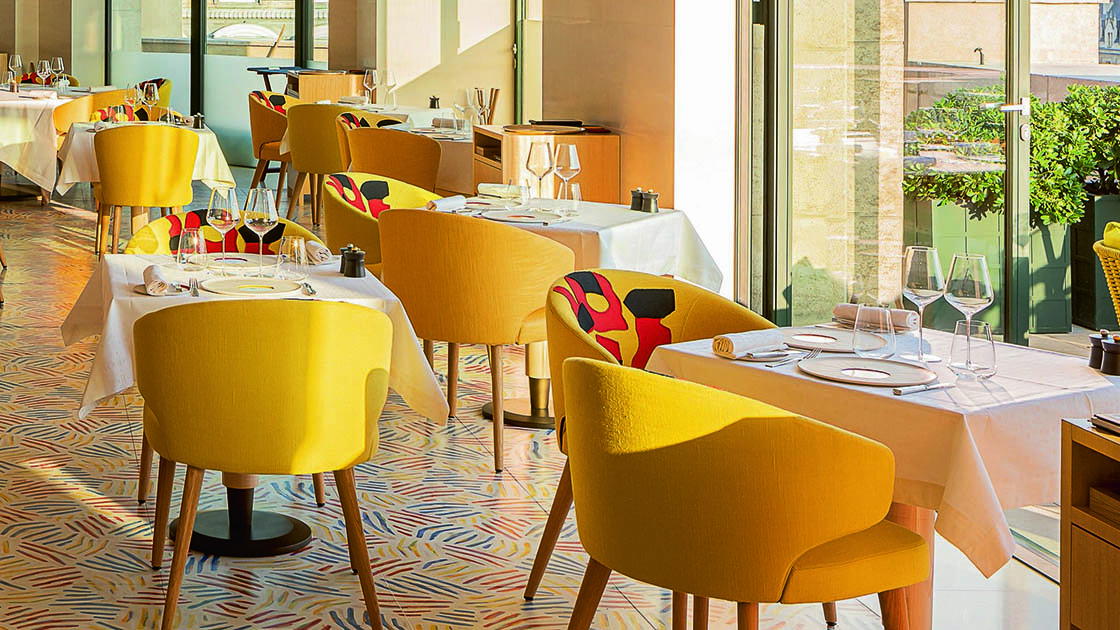
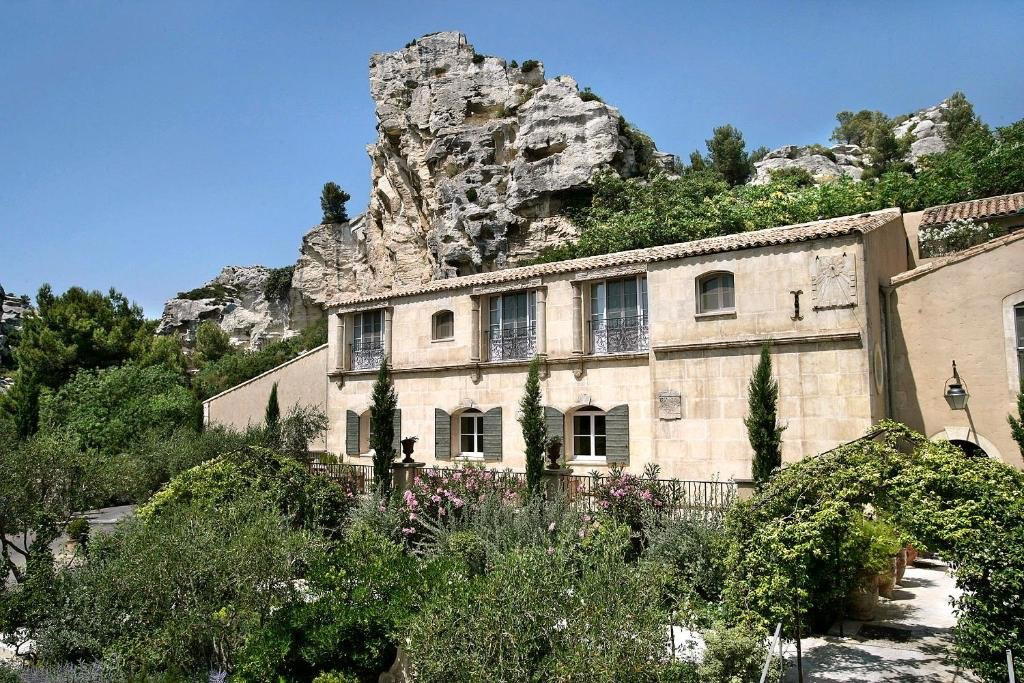
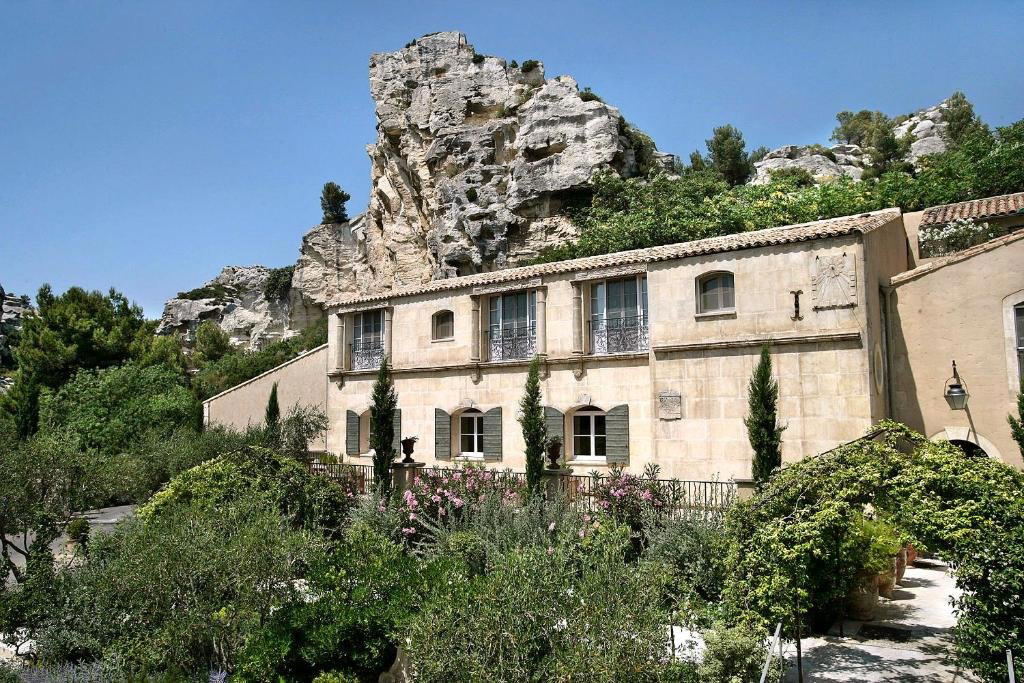
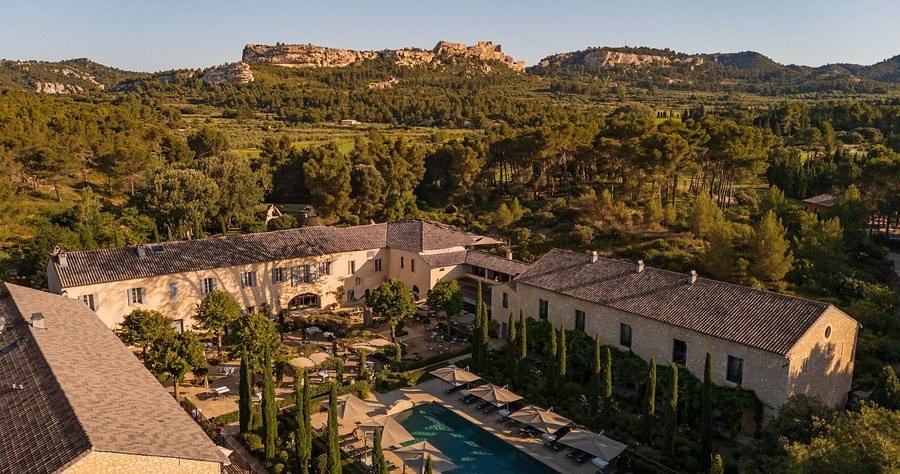
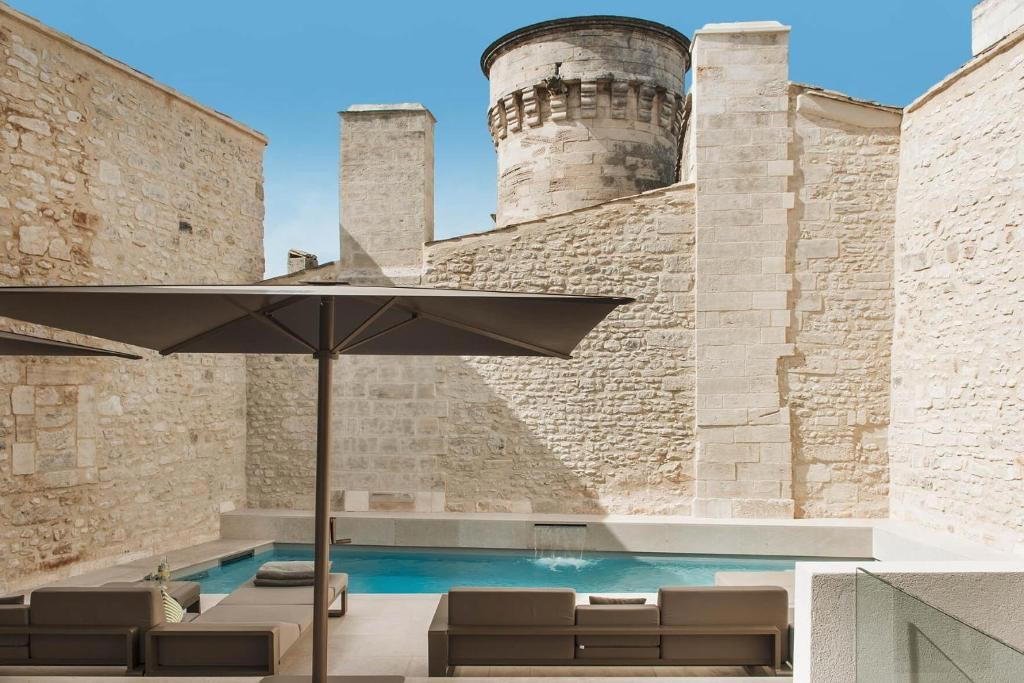
Welcoming historic setting with refined, colorful Provençal atmosphere and terrace for sun-lit summer meals.