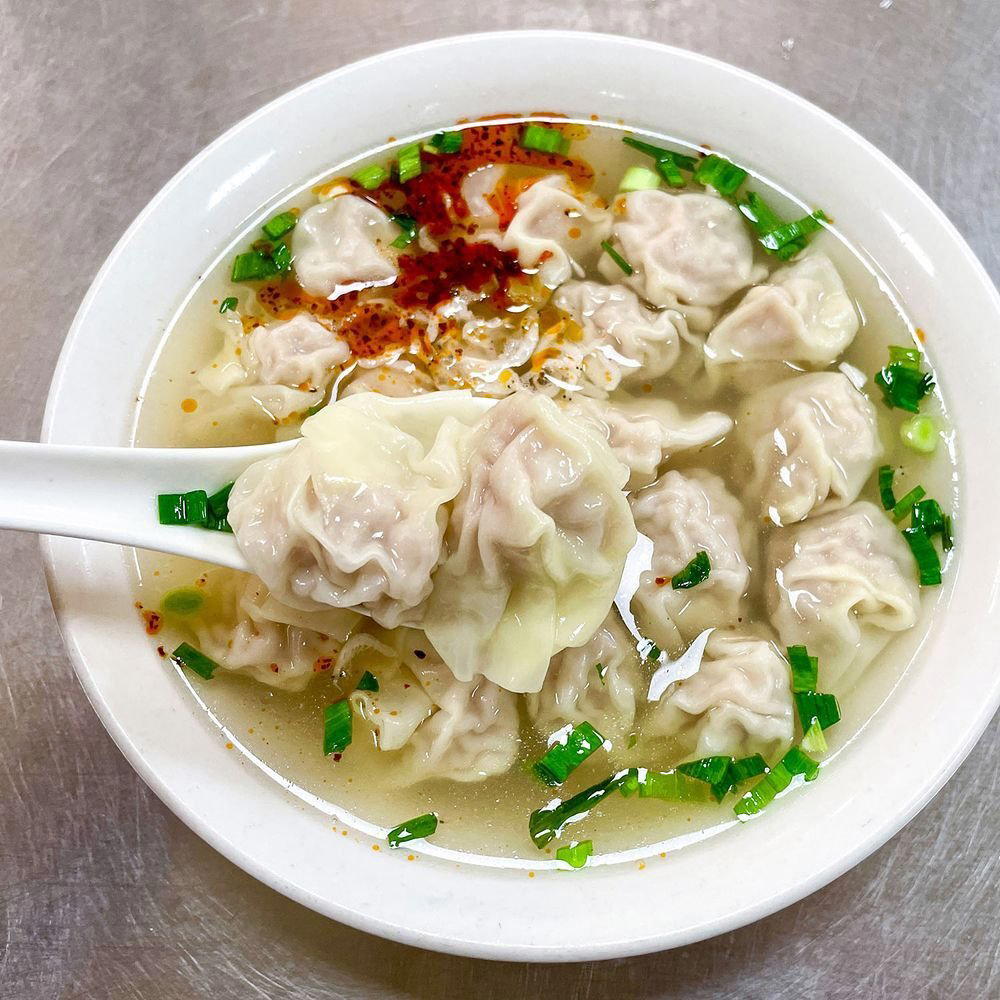
Michelin Bib Gourmand
Our verdict
A Michelin Bib Gourmand–recognised noodle shop on Changhong Road in Nanjing's Jianye district, San Bai Wan Bao Ying Chang Yu Mian sits at the affordable end of the city's noodle scene without sacrificing the credentials that bring serious eaters across town. The ¥ price point makes it one of the most accessible Michelin-rated eating experiences in eastern China.

Pearl is the En Primeur Club membership app — saves, bookings, and concierge access live there. Same editors, same standards.
- Address
- China, 197, Changhong Rd, 197号CN 江苏省 南京市 建邺区 南湖东路 邮政编码: 210017
- Phone
- +86 135 0525 7633
- Directions
- Get directions
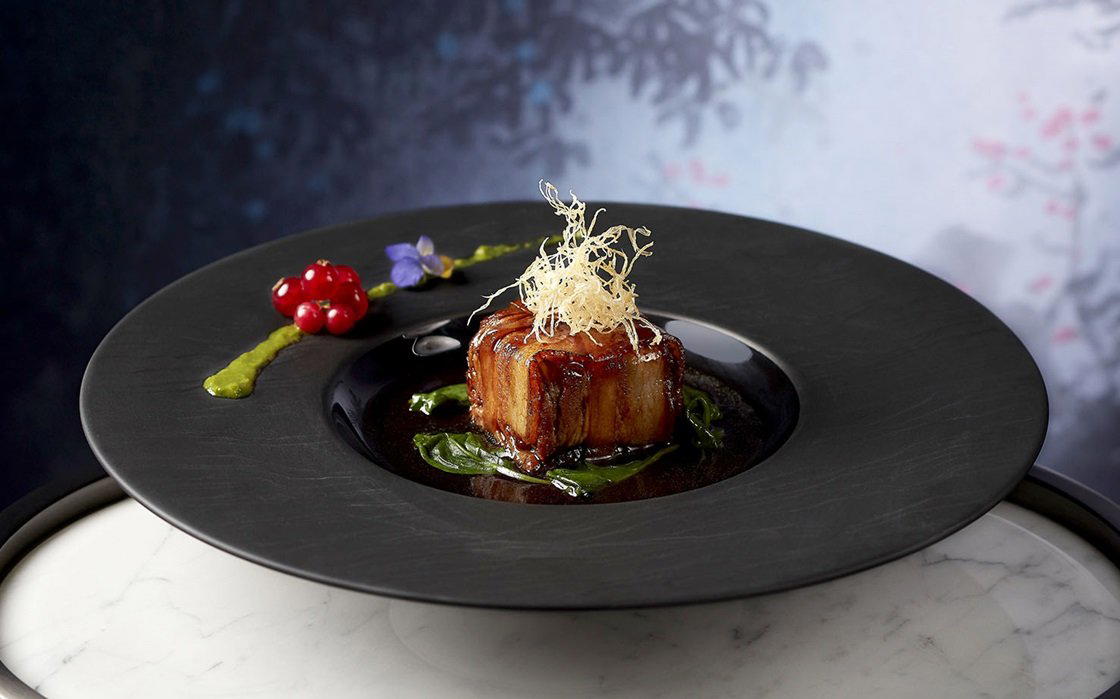
The menu
What to order
- Fried eel noodles
- Milky eel soup noodles
- Clear broth eel noodles
Where Nanjing's Noodle Culture Earns Its Stripes
Changhong Road in Jianye district is the kind of address that doesn't appear in hotel concierge handouts. The neighbourhood runs south of the Yangtze ferry terminals and west of the old city core, a residential grid where the ground-floor eating options are chosen by locals on commute schedules rather than by visitors with itineraries. Walking into a noodle shop here, the signals are immediate and consistent: laminated menus on the wall, steam from a back kitchen, the particular acoustics of a room where people are eating efficiently and well. San Bai Wan Bao Ying Chang Yu Mian sits inside that template — and then distinguishes itself from it through a Michelin Bib Gourmand awarded in 2025.
The Bib Gourmand Standard and What It Signals at This Price
Michelin's Bib Gourmand designation exists specifically to mark restaurants where the value ratio outperforms the price tier. It is not a consolation prize for places that fall short of starred status; it is a separate recognition for a separate category of dining. At the ¥ price point — the lowest tier on any Chinese urban restaurant scale, earning that designation in 2025 places San Bai Wan Bao Ying Chang Yu Mian in a small group of Nanjing restaurants where the inspectors found quality worth endorsing without the spend that typically accompanies formal recognition.
To understand why that matters, consider how Nanjing's recognised eating scene is weighted. Much of the city's Michelin attention sits further up the price ladder: Dai Yuet Heen (Cantonese) operates at ¥¥¥, and Jiangnan Wok · Yun (Huaiyang) at ¥¥¥¥. A noodle shop at ¥ holding a Bib Gourmand is a different proposition entirely, closer in spirit to the Taiwanese bowl-noodle tradition or the recognised street-noodle culture in cities like Hangzhou, where [A Bing Bao Shan Mian]() operates in a comparable register. The argument the award makes is simple: what you receive here justifiably exceeds what you pay.
Yu Mian: The Nanjing Noodle Tradition in Context
Yu mian, fish noodles, occupy a specific position in Jiangsu's noodle culture. Unlike the wheat-pulled formats common in northwestern China, or the thin dried noodles of Cantonese soups, yu mian are made by incorporating fish paste into the dough, producing a noodle with more body, a subtler marine note, and a texture that holds in broth without collapsing. The tradition connects to the broader Huaiyang culinary region, where freshwater fish from the Yangtze and its lakes has shaped cooking for centuries. Nanjing, positioned on the river, has its own local noodle vocabulary, one that the city's food culture treats as seriously as the duck preparations for which it is more frequently cited externally.
Within that local context, Nanjing's noodle scene has a competitive mid-tier: Xi Bei Qiao Tou La Mian Da Wang represents the pulled-noodle format at the other end of the city's bowl spectrum, while You Mian and Xiao Pan Ji Ya Xie Fen Si Tang extend the range of recognised inexpensive noodle options worth tracking. San Bai Wan Bao Ying Chang Yu Mian's distinction within that set is the specific fish-noodle focus, a narrower specialisation that tends to attract more consistent execution than restaurants spreading effort across a longer menu.
Planning Your Visit: Logistics and Timing
The address is 197 Changhong Road, Jianye district, postal code 210017. The location in Nanhu, a residential sub-area of Jianye, means it is not on the path between major tourist sites. Visitors coming from the city centre or from the lakeside areas near Xuanwu should allow time to reach it deliberately rather than treating it as a detour. Local noodle shops at this price tier typically operate on tight morning-to-early-afternoon windows, and peak hours at recognised spots can move fast; arriving early in a service window reduces friction. The ¥ pricing means the transaction is low-commitment in financial terms, which lowers the stakes of an exploratory trip to a less-familiar neighbourhood.
Jianye district has developed considerably in recent years as a commercial and residential expansion zone west of the old city, and the eating options in its residential grid skew toward functional, neighbourhood-serving formats. For visitors who have covered the obvious central stops, Changhong Road represents the kind of address where Nanjing's everyday eating quality operates, away from tourist-facing formatting and closer to the standards that sustain a regular local clientele. For those planning a broader Nanjing visit, the [full Nanjing restaurants guide]() maps the city's recognised options across price tiers, and the [Nanjing hotels guide](), [bars guide](), [wineries guide](), and experiences guide complete the picture for a multi-day stay.
How It Sits Within China's Broader Bib Gourmand Noodle Scene
Michelin's Bib Gourmand tier in Chinese cities has increasingly become a meaningful map of where serious eating happens outside formal dining rooms. [A Kun Mian in Taichung]() demonstrates how the designation functions for noodle specialists across the region: a narrow format, consistent execution, and a price point that removes hesitation. Across mainland China, comparable logic applies in cities where noodle culture is central to local eating identity. The contrast with higher-spend options in other cities, Xin Rong Ji in Chengdu, Xin Rong Ji on Xinyuan South Road in Beijing, or fine dining formats like Chef Tam's Seasons in Macau and Imperial Treasure Fine Chinese Cuisine in Guangzhou, underlines that Michelin's Nanjing coverage spans a genuine range. A Bib Gourmand noodle shop and a four-symbol formal restaurant can both carry credible recognition; they are simply answering different questions. San Bai Wan Bao Ying Chang Yu Mian answers the question of where Nanjing's fish-noodle tradition reaches a quality threshold that an external inspector found worth marking. That is a specific, verifiable answer, and at ¥, it carries weight. For eastern China regional comparisons, Ru Yuan in Hangzhou and 102 House in Shanghai represent different points on the same regional dining map.
Frequently asked questions
Is San Bai Wan Bao Ying Chang Yu Mian good for families?
The price range sits at the budget end of the scale (¥), which removes any barrier for families ordering across the table without anxiety. The Bib Gourmand designation confirms Michelin inspectors found consistent value here, and a noodle format is inherently accessible for different ages. The Nanhu residential setting on Changhong Road means the surrounding area is a neighbourhood rather than a tourist corridor, which tends to suit a more relaxed, family-oriented pace.
What's the overall feel of San Bai Wan Bao Ying Chang Yu Mian?
This is a residential-district noodle shop in Jianye, not a formal dining room. The address on Changhong Road places it in Nanhu, a working neighbourhood south of the city centre, so expect a local, utilitarian atmosphere rather than anything curated for visitors. The Michelin Bib Gourmand recognition in 2025 signals the cooking clears a meaningful bar, but the setting is a straightforward counter-service or small-table operation consistent with Nanjing's everyday noodle culture.
What's San Bai Wan Bao Ying Chang Yu Mian known for in terms of accolades?
San Bai Wan Bao Ying Chang Yu Mian has received recognition including: Michelin Bib Gourmand (2025).
What do people recommend at San Bai Wan Bao Ying Chang Yu Mian?
The venue specialises in yu mian, the Jiangsu fish noodle format made with fish paste rather than wheat flour, which gives the noodle a softer, denser texture distinct from northern pulled or cut varieties. That is the dish to order here. Michelin's Bib Gourmand recognition in 2025 is attached to this single cuisine type, so the focus is narrow and the recommendation follows accordingly: come for the fish noodles.
What cuisine category does San Bai Wan Bao Ying Chang Yu Mian fall under?
Is San Bai Wan Bao Ying Chang Yu Mian more mid-range or high-end?
Pricing at San Bai Wan Bao Ying Chang Yu Mian is listed as ¥.
City Peers
Comparable venues nearby, for context on price, style, and recognition.
| Venue | Cuisine | Price | Awards | Notes |
|---|---|---|---|---|
| San Bai Wan Bao Ying Chang Yu MianThis venue — the venue you are viewing | Baoying Rice Paddy Eel Noodles | Not listed | Michelin Bib Gourmand | Not listed |
| Hou Pin Xiao Yuan | Huaiyang Cuisine | Not listed | Michelin Bib Gourmand | Jianye |
| Qiang Ye Fan Dian (Changbai Street) | Cantonese & Jiangsu Cuisine | $20–30 | Michelin Bib Gourmand | Qinhuai |
| Jin Ling Yang Jia Hun Tun Dian (Caodu Alley) | Traditional Chinese Wonton Soup | Not listed | Michelin Bib Gourmand | Qinhuai |
| Lantchen Reserve | Huaiyang Cuisine | $20–30 | Michelin Bib Gourmand | Qinhuai |
| Chi Man | Jiangzhe | Not listed | Michelin Bib Gourmand | Xuanwu |
Recognition history
Dated appearances from independent guides and award organizations, with the underlying list record or original source where available.
Michelin Bib Gourmand
Michelin