Our verdict
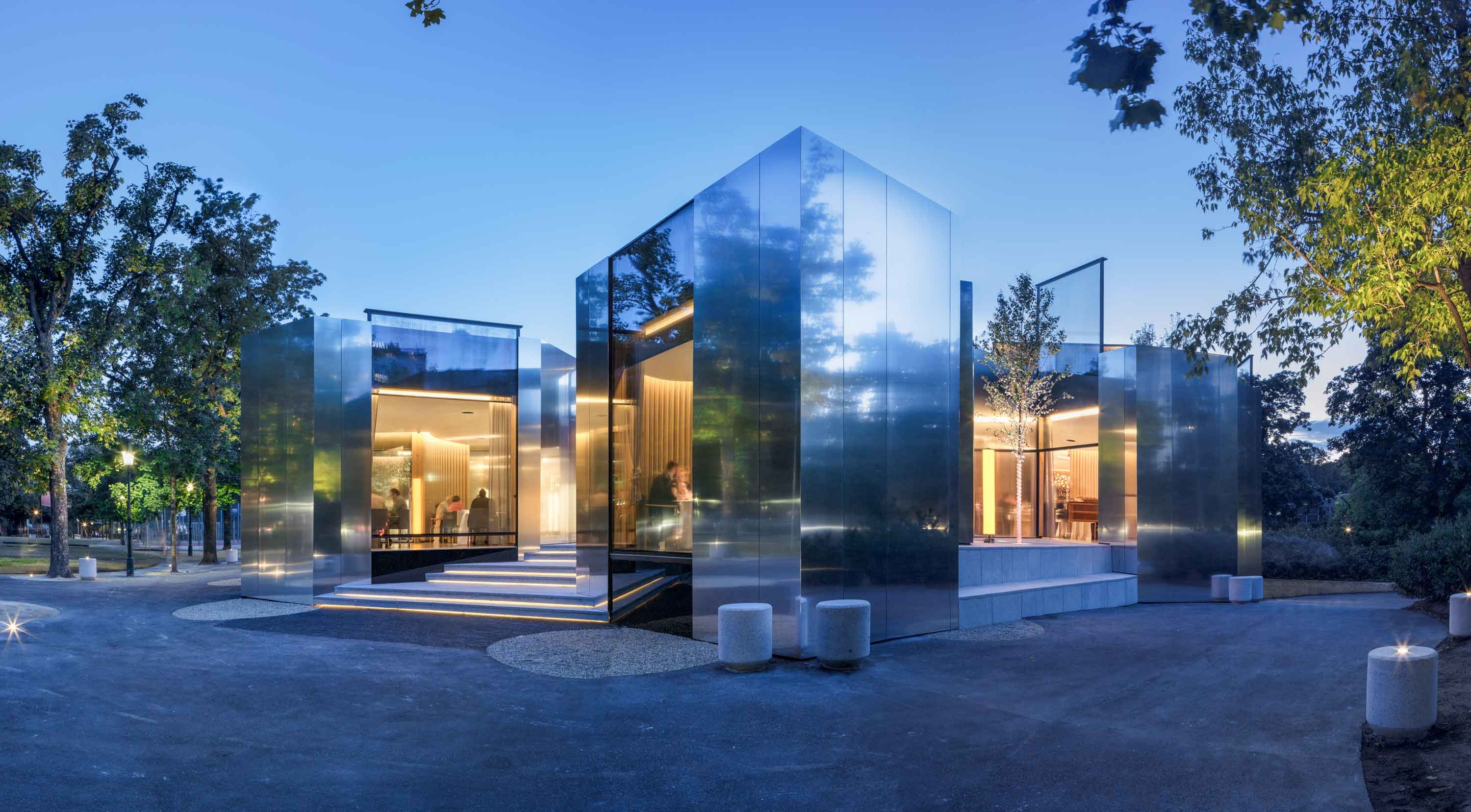
Meliá Vienna sits in Donau City, Vienna's purpose-built business district on the eastern bank of the Danube, placing it within a different architectural and urban register than the historic first district. The hotel addresses a traveller who wants proximity to the Austria Center and the UN campus without sacrificing the access to Vienna's broader restaurant scene that good transit connections provide.

Pearl is the En Primeur Club membership app, where members save venues, book tables and use the concierge.

The menu
What to order
- Beef tartare
- Iberico pork chops
- Chocolate dream
A Different Vienna: The Danube Side of the City
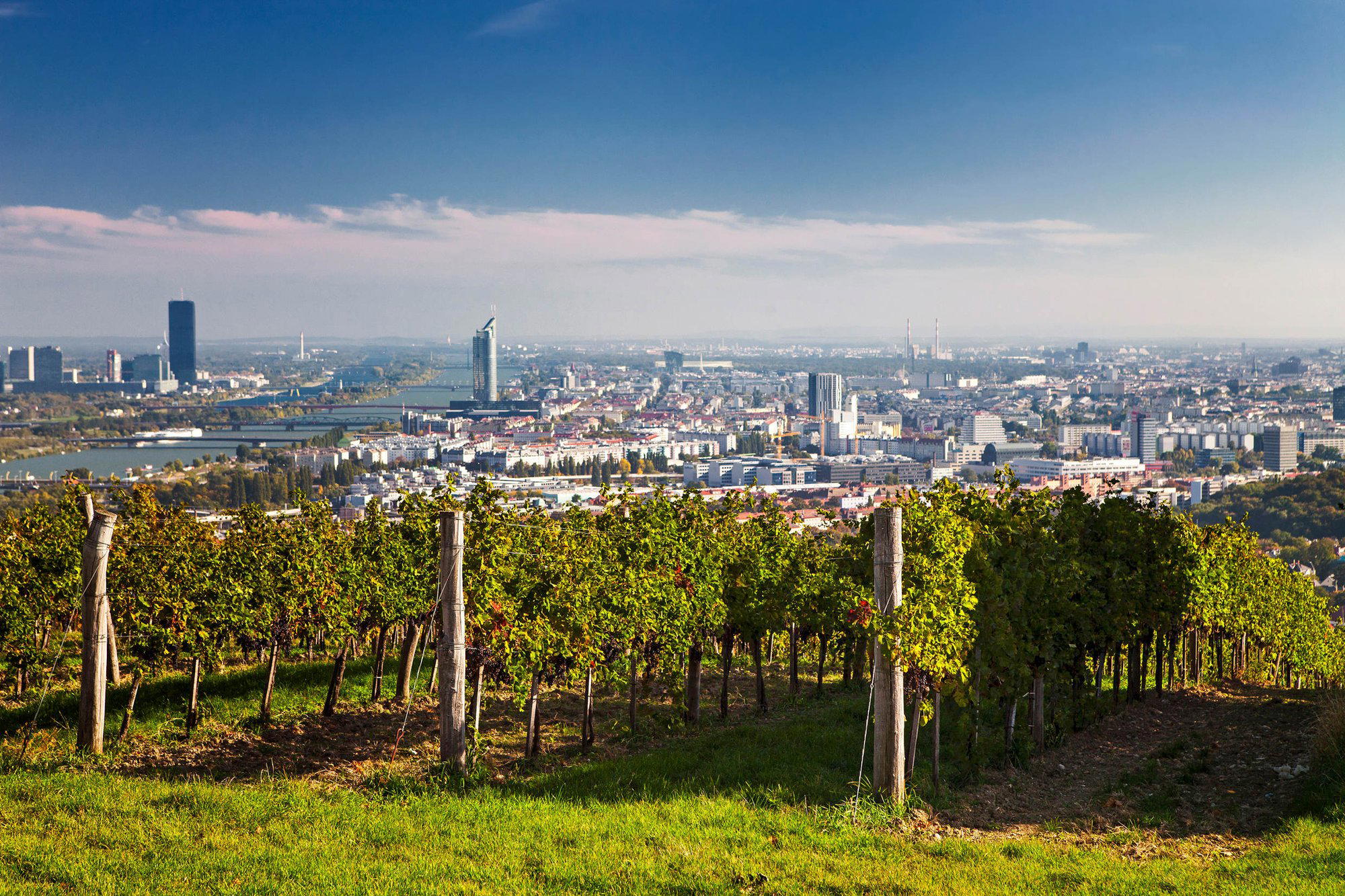
Vienna's hotel geography sorts itself along a familiar axis. The first district, the Ringstrasse, and the areas around the Naschmarkt pull the majority of luxury accommodation into a tight historic core. Donau City, where Meliá Vienna occupies an address on Donau-City-Straße 7 in the 22nd district, represents a deliberate counterpoint: a planned commercial and residential quarter that grew up around the Austria Center conference venue and the Vienna International Centre, home to several United Nations agencies. Arriving here, the visual language is towers and wide arterial roads rather than Baroque facades and cobblestones. That contrast is not a drawback for every traveller; it is the point.
The 22nd district sits on the left bank of the Danube, connected to the city centre by the U1 underground line, which runs directly to Stephansplatz in under fifteen minutes. The Donauinsel, a narrow recreational island running parallel to the river, is walkable from Donau City, and it functions as one of Vienna's primary outdoor spaces in summer, when the city's population migrates there on weekends. The physical relationship between the hotel's district and the Danube is not incidental: it frames a stay here as urban in character but at a remove from the concentrated pedestrian density of the historic centre.
What the Location Means in Practice
Hotels positioned in business districts tend to attract a specific travel pattern: conference delegates, extended corporate stays, and travellers whose primary Vienna anchor is an appointment at the Austria Center or one of the international organisations nearby. Meliá, as a brand, has built a global footprint across this kind of location, operating in commercial districts from Madrid to Kuala Lumpur. The Vienna property follows that template.
For travellers whose itinerary is not conference-driven, the calculus shifts slightly. The U1 connection resolves the distance to the historic centre efficiently, but the immediate neighbourhood around Donau City offers limited in-walking-distance dining depth compared to the first or seventh districts. That gap matters most for guests who want to end an evening without committing to a U-Bahn ride. It matters less for those planning ahead, since Vienna's serious restaurant scene is accessible by transit within a short window.
Vienna's current fine dining tier concentrates in the inner districts and along the Stadtpark. Steirereck im Stadtpark and Konstantin Filippou both operate at the €€€€ price point and represent the creative and modern European poles of what Viennese high-end dining has become. Mraz & Sohn and Amador occupy comparable territory. None of these are in Donau City, but all are reachable by U1 or a short taxi journey. For guests using Meliá Vienna as a base, the practical approach is to treat the hotel as transit-connected rather than walkably embedded in the dining scene. Doubek offers another option worth considering for evenings when a more relaxed format suits the plan.
The Austrian Context Beyond Vienna
Austria's restaurant culture extends well beyond the capital, and for travellers who pair a Vienna hotel stay with excursions into the broader country, the Meliá's location near the main rail connections makes it a functional staging point. The Alpine dining corridor that runs through Salzburg and into Tirol and Vorarlberg holds some of the country's most focused kitchen work. Ikarus in Salzburg operates an unusual rotating guest-chef format that makes it a recurring reference point in discussions of Austrian dining ambition. Further west, Griggeler Stuba in Lech and Gourmetrestaurant Tannenhof in Sankt Anton am Arlberg represent the mountain-resort tier of Austrian fine dining, where seasonal produce and local identity are handled with technical seriousness.
South of Salzburg, Döllerer in Golling an der Salzach has built a reputation around Alpine ingredients treated with precision, and Obauer in Werfen is one of the country's longer-running references in the serious-kitchen category. For those exploring the Wachau wine region, Landhaus Bacher in Mautern an der Donau pairs well with a day on the Danube west of Vienna. Smaller, less-trafficked addresses like Kräuterreich by Vitus Winkler in Sankt Veit im Pongau, Ois in Neufelden, Schwarzer Adler in Hall in Tirol, and Restaurant 141 by Joachim Jaud in Mieming round out a broader picture of Austrian kitchens operating at a serious level outside the capital's well-documented circuit.
For context on how Vienna's own scene compares internationally, the gap between the city's leading counters and reference-point restaurants like Le Bernardin in New York City or Atomix in New York City reflects different culinary traditions rather than simply different levels of ambition. Vienna's creative kitchens draw on Central European produce and technique in ways that have no direct New York equivalent. Our full Vienna restaurants guide maps those distinctions in detail.
Planning Your Stay
| Factor | Meliá Vienna (Donau City) | First-District Hotels | Seventh-District Hotels |
|---|---|---|---|
| Distance to historic centre | Under 15 min by U1 | Walking distance | 10-15 min by tram or U-Bahn |
| Austria Center / UN proximity | Walking distance | 30+ min by transit | 30+ min by transit |
| Immediate dining density | Lower | High | High |
| Danube/Donauinsel access | Walking distance | 30+ min | 30+ min |
| Typical guest profile | Conference, corporate, transit | Leisure, cultural | Leisure, design-focused |
Frequently asked questions
Is Meliá Vienna a family-friendly restaurant?
Meliá Vienna is a hotel, not a restaurant, located at Donau-City-Straße 7 in Vienna's 22nd district. The Donau City area is a modern business quarter, which shapes the property's primary guest profile toward corporate and conference travellers rather than leisure families. Families passing through Vienna can stay here, though the surrounding district lacks the proximity to historic sights that characterises first-district hotels.
What kind of setting is Meliá Vienna?
The hotel occupies the Donau City business district in Vienna's 22nd district, a purpose-built commercial zone adjacent to the United Nations headquarters and the Vienna International Centre. The setting is contemporary and urban rather than historic, with the Danube riverfront accessible nearby. This positions Meliá Vienna firmly within Vienna's modern corporate corridor, separate from the Ringstrasse hotel belt.
Is Meliá Vienna well connected to central Vienna and the UN district?
The hotel's address at Donau-City-Straße 7 in Vienna's 1220 postal district places it directly within the Donau City cluster, walking distance from the Vienna International Centre and UNO City. The U1 metro line connects this district to central Vienna, making the first-district sights reachable without a taxi. This access point is a functional advantage for delegates splitting time between the UN campus and the historic city.
What dish is Meliá Vienna famous for?
Meliá Vienna is a hotel property, not a venue defined by a signature dish. No specific culinary programme or chef is documented for the property. Travellers seeking Vienna's broader restaurant culture will find the Austrian capital's dining scene concentrated in the first district and Naschmarkt area, both accessible by public transport from Donau City.
Cuisine and Awards Snapshot
A quick peer check to anchor this venue’s price and recognition.
| Venue | Cuisine | Price | Awards | Notes |
|---|---|---|---|---|
| Meliá ViennaThis venue (the venue you are viewing) | Modern Mediterranean with Spanish Influences | $50–100 | Not listed | Not listed |
| Steirereck im Stadtpark | Modern Austrian Fine Dining | $200–300 | 3 Michelin Stars · World's 50 Best #33 | Creative |
| Konstantin Filippou | Modern Fish-Led Fine Dining | $200–300 | 2 Michelin Stars · La Liste Top Restaurants | Modern European, Modern Cuisine |
| Mraz & Sohn | Contemporary Austrian Fusion | $150–200 | 2 Michelin Stars · La Liste Top Restaurants | Modern Austrian, Creative |
| Silvio Nickol Gourmet Restaurant | Modern Austrian Fine Dining | $300–500 | 2 Michelin Stars · La Liste Top Restaurants | Modern Cuisine |
| APRON | Modern Austrian Fine Dining | $150–200 | 1 Michelin Star · Falstaff Restaurant - 95 Falstaff Points | Austrian, Creative |