Matsuri
Our verdict
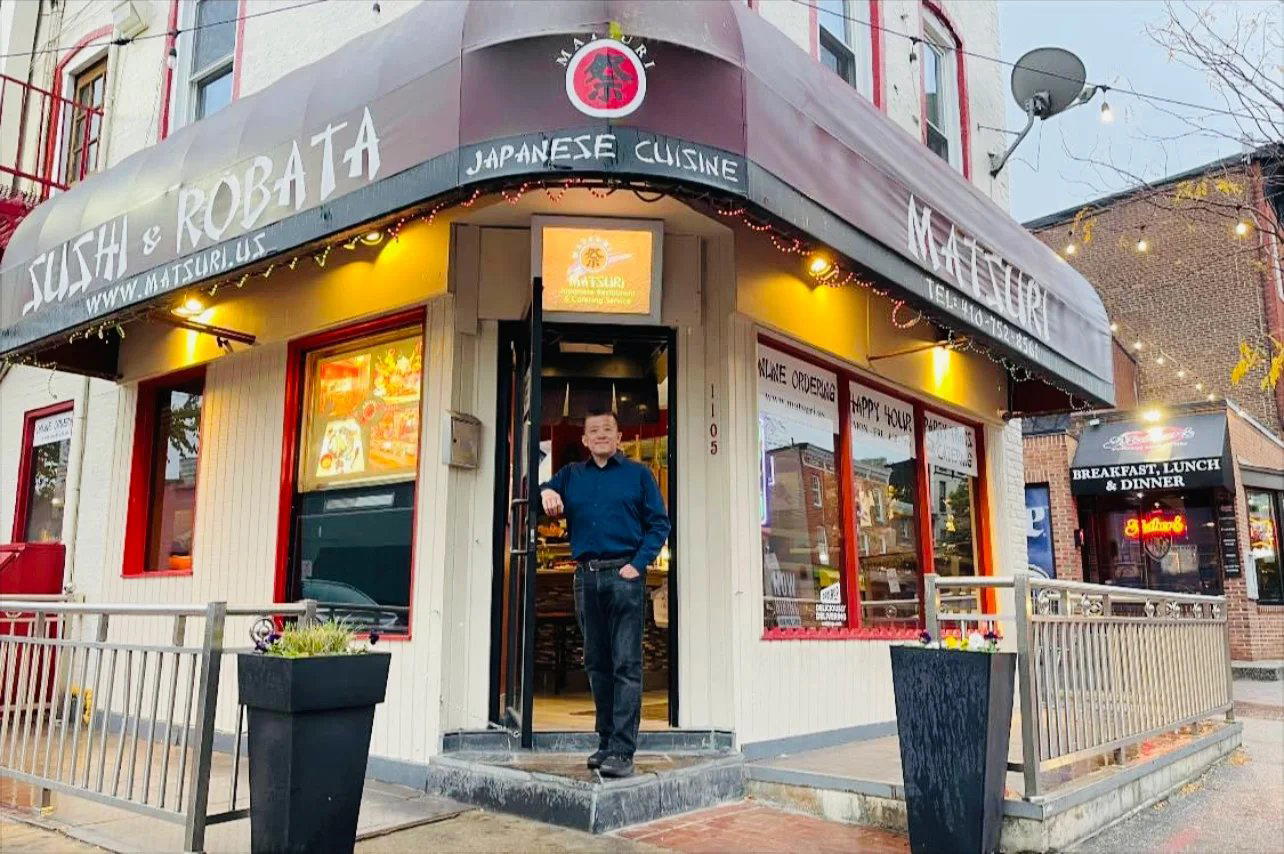
Matsuri occupies a quiet stretch of South Charles Street in Baltimore's Federal Hill, where Japanese dining in the city has long operated outside the national spotlight. The menu architecture here rewards attention: structure and sequencing matter as much as individual dishes, positioning Matsuri within a tier of Japanese restaurants that take format seriously rather than defaulting to the familiar sushi-and-teriyaki template.

Pearl is the En Primeur Club membership app — saves, bookings, and concierge access live there. Same editors, same standards.
- Address
- 1105 S Charles St, Baltimore, MD 21230
- Phone
- (410) 752-8561
- Hours
- Mon–Thu 11:30 AM–9:30 PMFri 11:30 AM–10:30 PMSat 12–10:30 PMSun 4–9:30 PM
- Website
- matsuri.us
- Directions
- Get directions
- Booking
- Book on OpenTable
The menu
What to order
- Fantasy Dragon Roll
- Salmon Skin Roll
- Spicy Shrimp Roll
- Dragon Roll
- Caribbean Roll
South Charles Street and the Shape of Japanese Dining in Baltimore
Federal Hill's restaurant corridor along South Charles Street runs quieter than the Inner Harbor blocks to the north, and that distance from tourist traffic shapes who eats here and why. Japanese restaurants in mid-sized American cities occupy an awkward middle position: too often caught between the fast-casual end of the market and the full omakase format that requires a critical mass of high-frequency diners to sustain. Baltimore's Japanese dining scene has historically leaned toward the accessible end of that spectrum, which makes a venue that takes menu structure seriously worth paying attention to. Matsuri, at 1105 S Charles St, sits in Federal Hill at a remove from the Inner Harbor's concentrated dining foot traffic, which tells you something about its likely customer base: the neighborhood regulars and returning visitors who seek it out rather than stumble upon it.
Menu Architecture as Editorial Statement
How a Japanese restaurant organizes its menu is, in most cases, its clearest statement of intent. The spectrum runs from purely transactional — long laminated lists where everything is available all the time — to highly sequenced formats like kaiseki or omakase, where the kitchen controls order and pacing. Most mid-market Japanese dining in American cities sits somewhere between those poles, offering izakaya-style breadth with sushi as the anchor category. What distinguishes venues that have earned sustained local recognition is usually found in the menu's internal logic: whether cold preparations are grouped to build toward warmer, cooked items; whether the kitchen treats sashimi and nigiri as separate experiences rather than interchangeable options; whether the drinks list is designed to accompany the food rather than compete with it.
That kind of structural thinking is rarer than it sounds. Across the American mid-market Japanese category, menus tend to be additive rather than compositional, more items read as more value, and the result is a kitchen pulled in too many directions. The restaurants that develop genuine local followings over time tend to be the ones that resist that logic and hold to a tighter range of preparations executed with consistency. In Baltimore's broader dining context, that discipline has a local precedent: Cindy Wolf's Charleston built its long-term reputation on a menu that is deliberately focused rather than encyclopedic, and dede (Turkish) has taken a similar approach with its format.
Positioning Against the Baltimore Dining Field
Baltimore's restaurant scene has developed unevenly across cuisine categories. Italian and pizza formats have a strong foothold, with venues like Angeli's Pizzeria representing consistent neighborhood-level execution. Indian dining operates in a different register, with Akbar anchoring the more formal end of that category. Casual dining formats like 16 On The Park fill the middle of the market. Japanese dining occupies a narrower slice of serious attention in the city than it does in coastal markets like New York or Los Angeles, which means a restaurant that commits to format discipline is playing to a smaller but more engaged audience.
That context matters because it sets the competitive peer group. Matsuri is not competing against the omakase counters of Manhattan or the kaiseki rooms of Kyoto-trained chefs in Los Angeles. It operates in a city where the bar for Japanese food is set by neighborhood sushi restaurants, and where the audience for a more considered format is real but not enormous. The venues that have navigated this positioning successfully elsewhere, and Baltimore is not unique in this dynamic, tend to do so by being legible to both the regular neighborhood diner and the more food-focused visitor who arrives with higher expectations.
For broader reference on what the serious end of American fine dining looks like across different cities, the EP Club restaurant series covers venues at the level of Le Bernardin in New York City, Alinea in Chicago, The French Laundry in Napa, Lazy Bear in San Francisco, Providence in Los Angeles, Addison in San Diego, Blue Hill at Stone Barns in Tarrytown, Single Thread Farm in Healdsburg, The Inn at Little Washington in Washington, and Emeril's in New Orleans. At the Korean end of the refined Asian dining spectrum, Atomix in New York City sets a reference point for how sequenced tasting formats can translate Korean culinary tradition into a contemporary fine-dining structure. And internationally, 8 1/2 Otto e Mezzo Bombana (Hong Kong) in Hong Kong demonstrates how European fine dining formats adapt to Asian metropolitan markets. These comparisons help locate where a Baltimore mid-market Japanese venue sits in the broader spectrum of American dining investment and expectation.
Federal Hill as a Dining Neighborhood
Federal Hill functions as a residential dining neighborhood more than a destination district. The clientele on South Charles Street skews local, and repeat business is the primary engine of survival for restaurants here. That dynamic tends to produce menus calibrated for familiarity and reliability rather than novelty, which cuts both ways: it rewards consistent execution but can work against the kind of kitchen risk-taking that generates critical attention. The neighborhood's dining character is quieter and more functional than the Harbor East blocks, and restaurant longevity here is a meaningful signal in itself. A Japanese restaurant that has maintained a presence on this street has done so by being useful to its immediate community, not by chasing the dining press.
For a fuller map of where Baltimore's dining options fall by neighborhood, cuisine type, and price tier, the full Baltimore restaurants guide provides the broader context.
Planning Your Visit
Matsuri is located at 1105 S Charles St in Federal Hill, walkable from the southern end of the Inner Harbor and accessible by the Charm City Circulator's Green Route, which runs along Charles Street. Federal Hill parking is street-level and more manageable than the Harbor blocks. For visitors staying near the waterfront, the walk south along Charles Street takes roughly ten to fifteen minutes.
Frequently asked questions
What part of town is Matsuri in?
Matsuri is located at 1105 S Charles St, Baltimore, MD 21230, Baltimore.
Is Matsuri in Baltimore good for a date night dinner in Federal Hill?
Federal Hill's South Charles Street corridor draws a predominantly local clientele, which gives Matsuri a neighborhood-restaurant quality distinct from the higher-volume venues near the Inner Harbor. Japanese dining formats — whether counter-style or table service — tend to suit lower-noise evenings better than many other cuisine categories. Matsuri's address at 1105 S Charles St puts it within walking distance of Federal Hill Park and the residential blocks that make the area a practical choice for an evening out.
What's the best thing to order at Matsuri?
Japanese restaurants along South Charles Street tend to anchor their menus around either sushi formats or cooked kitchen plates — the menu architecture section of this editorial addresses how Matsuri organizes its offering, which is the most reliable read of where the kitchen places its emphasis. Visit the restaurant directly for current menu details.
Can I walk in to Matsuri?
Federal Hill operates primarily as a residential dining neighborhood, where walk-in availability is generally more accessible than at destination-district venues. Matsuri sits at 1105 S Charles St, reachable on foot from the southern end of the Inner Harbor and via the Charm City Circulator. For weekend evenings, checking ahead is advisable regardless of neighborhood norms, as local regulars tend to fill rooms on a predictable weekly rhythm.
A Minimal comparable set
Comparable venues nearby, for context on price, style, and recognition.
| Venue | Cuisine | Price | Notes |
|---|---|---|---|
| MatsuriThis venue — the venue you are viewing | Modern Japanese Sushi & Robata | $30–50 | Not listed |
| Suzie's Soba | Asian Fusion with Korean Flair | $20–30 | Hampden, Asian Fusion Noodles with Korean Flair |
| Kona Grill - Baltimore | American Grill with Sushi | Not listed | Inner Harbor, American Grill with Sushi |
| Azumi | Contemporary Japanese Fine Dining | $100–150 | Harbor East, Contemporary Japanese Fine Dining |
| Sabatino's | Traditional Italian Trattoria | $30–50 | Little Italy, Traditional Italian Trattoria |
| Angie's Seafood | Maryland Seafood | $30–50 | Fells Point, Maryland Seafood |