Angie's Seafood
Our verdict
On East Pratt Street in Baltimore's working waterfront corridor, Angie's Seafood draws from the Chesapeake Bay tradition that defines the city's dining identity. The address places it squarely in a neighbourhood where seafood has always been currency, and the kitchen operates within a regional canon that rewards precision over novelty. A practical stop for anyone tracing Baltimore's coastal cooking from the market stalls to the table.

Pearl is the En Primeur Club membership app — saves, bookings, and concierge access live there. Same editors, same standards.
- Address
- 1727 E Pratt St, Baltimore, MD 21231
- Phone
- (410) 342-0917
- Hours
- Mon–Wed 12–10 PMThu 12–11 PMFri–Sat 12 PM–12 AMSun 12–10 PM
- Website
- angiesseafood.com
- Directions
- Get directions
- Booking
- Book on OpenTable
The menu
What to order
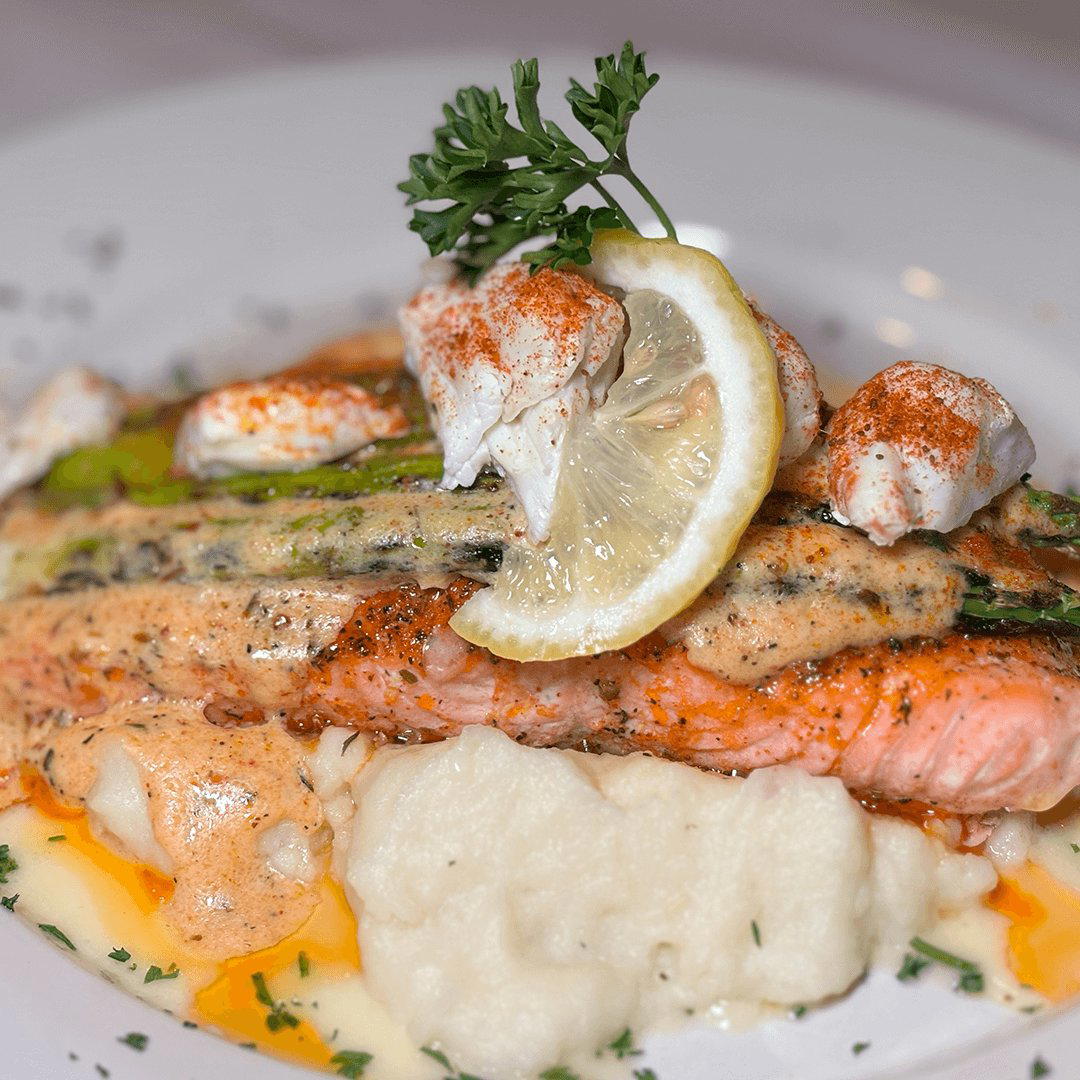
- Crab cakes
- Seafood-stuffed lobster tail
- Steamed blue crabs
East Pratt Street and the Chesapeake Continuum
Baltimore's relationship with seafood is not a recent editorial talking point. It is an operational fact baked into the city's geography: the Inner Harbour, the Patapsco River, the crab houses that line the waterfront from Fells Point to Locust Point. The address at 1727 East Pratt Street places Angie's Seafood inside that continuum, on a stretch of the city where the distance between the water and the kitchen has always been short. In Baltimore, that proximity carries meaning. It shapes supplier relationships, determines what lands on the menu in a given week, and sets the baseline expectation for freshness that the city's diners enforce without negotiation.
East Pratt Street itself runs parallel to the water, threading through neighbourhoods that retain the industrial grain of the old port city even as new development fills in around them. The dining scene along this corridor is not the curated restaurant row of Mount Vernon or the Federal Hill concentration, but something more embedded in the neighbourhood's working character. That context matters when reading a seafood address here: the audience is largely local, the stakes are set by comparison to Chesapeake Bay tradition, and there is little room for the kind of conceptual distance that works in other formats.
The Chesapeake Bay Seafood Tradition as Competitive Framework
Baltimore's seafood category is more layered than it appears from the outside. At one end sits the legacy counter format, represented most durably by Faidley's Seafood in Lexington Market, where the crab cake has been a civic reference point for decades. At the other end, the contemporary waterfront dining room positions Chesapeake product within a wider American fine-dining vocabulary, a mode that Cindy Wolf's Charleston has occupied at the higher price point. Between those poles, a range of neighbourhood seafood operations work the same regional sourcing tradition with varying levels of polish and price discipline.
Angie's Seafood operates in that middle register, on a street that connects the residential grid of Fells Point to the waterfront infrastructure further west. The relevant peer comparison is less the fine-dining tier and more the neighbourhood seafood house that treats Chesapeake Bay product as a given rather than a marketing angle. In that company, the differentiators tend to be consistency, sourcing transparency, and the degree to which front-of-house and kitchen operate as an integrated unit rather than parallel tracks.
What Team Coherence Means in a Seafood Kitchen
The editorial angle of team dynamic is particularly relevant to seafood restaurants, where the margin for error is narrow and the collaboration between sourcing, preparation, and service is direct. In a format built around perishable product with strong regional identity, the quality of communication between the kitchen and the floor shapes the guest experience more visibly than in cuisine categories where heavy technique or long preparation times buffer the connection. A server who understands the sourcing calendar, or who can move through the difference between a hard crab and a soft-shell with confidence, is a functional part of the kitchen's quality signal, not just a hospitality layer on top of it.
This matters in Baltimore specifically because the city's diners are, on average, more informed about Chesapeake Bay seafood than the tourist-facing restaurants sometimes assume. The blue crab season runs roughly May through November, with peak months in late summer; the softshell window is shorter and more volatile. A floor team that tracks those rhythms and communicates them clearly to guests is doing something substantively useful. The same applies to the oyster calendar, where Virginia and Maryland varieties shift in salinity and availability through the year. Restaurants that manage this communication well operate with a different kind of authority than those that treat the menu as static.
Baltimore's broader dining scene has examples of this integration working at different price points. dede (Turkish) brings a similar coherence to its Turkish format, and Angeli's Pizzeria demonstrates that tight team operation works as effectively in casual formats as in formal ones. The principle is consistent across categories: when kitchen and front-of-house share a working knowledge of the product, the guest receives something more reliable than hospitality alone can provide.
Baltimore in the Broader American Seafood Conversation
Positioning Baltimore seafood within the American coastal dining map requires some honesty about what the city is and is not. The Chesapeake tradition is not the austere technique-driven model of Le Bernardin in New York City, nor the farm-to-table integration of Blue Hill at Stone Barns in Tarrytown or Single Thread Farm in Healdsburg. It is not the produce-led California model that Providence in Los Angeles represents, or the tasting-menu formalism of Smyth in Chicago.
What Baltimore's seafood tradition does with some authority is direct regional sourcing at accessible price points, a seasonality that is visible rather than conceptual, and a cultural attachment to specific preparations, the steamed blue crab with Old Bay, the fried oyster sandwich, the lump crab cake, that function as benchmarks rather than nostalgia. Emeril's in New Orleans offers a useful regional parallel: a city where seafood is civic identity, and where local diners hold restaurants accountable to a known standard. The comparison is not about technique parity but about what regional seafood culture demands of its practitioners.
Other American restaurants operating at the intersection of regional identity and seafood precision include Addison in San Diego and The Inn at Little Washington in Washington, the latter geographically close enough to Baltimore that Washington-area diners often hold both cities' seafood reputations in the same frame. Further afield, Atomix in New York City and Atelier Moessmer Norbert Niederkofler in Brunico represent the European and Korean poles of the regional-ingredient fine-dining model, useful as context for understanding how Baltimore's more direct, less formal approach reads by comparison.
Neighbourhood Context and the Fells Point Approach
The East Pratt Street address situates Angie's Seafood on the western edge of the Fells Point catchment area, a neighbourhood that combines genuine historical texture with an active bar and restaurant scene. 16 On The Park and Akbar represent different facets of Baltimore's neighbourhood dining, and together with Lazy Bear in San Francisco and The French Laundry in Napa provide a wider frame for understanding how deeply local operations differ from destination dining in format and intent. Angie's Seafood belongs firmly to the local category. It is not a destination in the tourism-infrastructure sense, but a neighbourhood address with a specific community function in a city that takes its seafood seriously.
For visitors to Baltimore arriving with a serious appetite for the Chesapeake Bay tradition, the practical routing is worth thinking through. The concentration of seafood options in the Inner Harbour area is real, but the more interesting options tend to sit slightly off that tourist axis, along corridors like East Pratt Street where the audience and the sourcing logic align more naturally. Our full Baltimore restaurants guide maps these distinctions across the city's neighbourhoods and cuisine categories, providing the fuller picture for anyone planning time in the city around food.
Planning Your Visit
The East Pratt Street address is accessible from the Inner Harbour on foot or by a short drive east. The address itself, 1727 East Pratt Street in the 21231 zip code, is specific enough to locate reliably by map.
Frequently asked questions
Is Angie's Seafood suitable for children?
Baltimore's neighbourhood seafood houses on corridors like East Pratt Street tend to operate in the casual register, which generally makes them more accommodating for families than tasting-menu or counter-format venues. The address at 1727 E Pratt St places Angie's in a walkable, residential-leaning stretch of the city rather than a high-volume tourist strip. For confirmed seating policies or children's menu options, check the venue's official channels before visiting.
What's the vibe at Angie's Seafood?
The East Pratt Street address sits on the western edge of Fells Point, a Baltimore neighbourhood that combines working-class seafood house history with a more recent wave of independent restaurants. That geography tends to produce a grounded, unpretentious atmosphere rather than the polished dining room formats found closer to the Inner Harbour. Expect a setting oriented around the food rather than the room.
How does Angie's Seafood fit into Baltimore's broader Chesapeake seafood tradition?
Baltimore's seafood identity is grounded in the Chesapeake Bay catchment, a commercial and culinary ecosystem that has shaped the city's restaurant culture for generations. Venues on the East Pratt Street corridor, near the Fells Point boundary, tend to draw from that regional tradition rather than the nationally-marketed crab-deck format. Angie's Seafood sits within this civic seafood conversation at a street-level address that places it closer to neighbourhood institution than destination restaurant.
What's the signature dish at Angie's Seafood?
Confirmed menu data is not available for Angie's Seafood, so naming a specific dish would be inaccurate. Baltimore's seafood category is anchored by Chesapeake Bay staples: blue crab in season, steamed shrimp, and fried seafood platters that define the neighbourhood house format.
Cost Snapshot
Comparable venues nearby, for context on price, style, and recognition.
| Venue | Cuisine | Price | Awards | Notes |
|---|---|---|---|---|
| Angie's SeafoodThis venue — the venue you are viewing | Maryland Seafood | $30–50 | Not listed | Not listed |
| Baltimore Seafood | Cajun Seafood Boils | $20–30 | Not listed | Canton, Cajun Seafood Boils |
| The Urban Oyster | Black-Owned Chargrilled Oyster Bar | $20–30 | James Beard Award Semi Finalist | Hampden, Black-Owned Chargrilled Oyster Bar |
| Jimmy's Famous Seafood | Classic Maryland Seafood | $30–50 | Diners, Drive-Ins and Dives Featured Restaurant | Dundalk, Classic Maryland Seafood |
| Faidley’s Seafood | Classic Maryland Seafood | $20–30 | Not listed | Downtown, Classic Maryland Seafood |
| True Chesapeake | Chesapeake Seafood & Oysters | $50–100 | Wine Spectator Award of Excellence | Woodberry, Chesapeake Seafood & Oysters |
Continue exploring
More in Baltimore
Restaurants in Baltimore
Browse all →
Bars in Baltimore
Browse all →
Details
- Lively
- Cozy
- Classic
- Family
- Group Dining
- Casual Hangout
- Waterfront
- Local Sourcing
- Waterfront
- A La Carte
- Craft Cocktails
- Gluten Free Options
Current opening hours
- Monday
- 12–10 PM
- Tuesday
- 12–10 PM
- Wednesday
- 12–10 PM
- Thursday
- 12–11 PM
- Friday
- 12 PM–12 AM
- Saturday
- 12 PM–12 AM
- Sunday
- 12–10 PM
Hours can change for holidays and private events. Last verified .