Sabatino's
Sabatino's has held its corner of Baltimore's Little Italy since 1955, operating as one of the neighborhood's longest-running Italian-American dining rooms. The address on Fawn Street places it within walking distance of the waterfront, and the room itself — wood paneling, white tablecloths, booths worn smooth by decades of use — reads as a working record of the city's immigrant dining history rather than a curated recreation of it.
Pearl is the En Primeur Club membership app — saves, bookings, and concierge access live there. Same editors, same standards.
- Address
- 901 Fawn St, Baltimore, MD 21202
- Phone
- +14107272667
- Website
- sabatinos.com
- Directions
- Get directions
 Saves & bookings on Pearl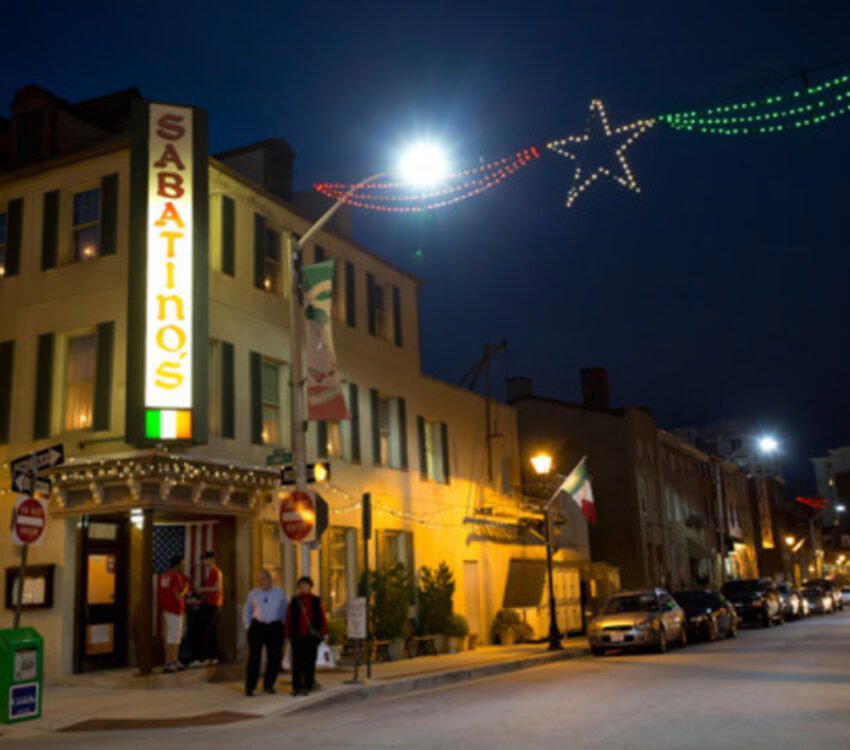
A Room That Doesn't Need to Explain Itself
Little Italy in Baltimore occupies a small but defined grid southeast of the Inner Harbor, bounded by streets that haven't changed their character much since the postwar decades when Italian-American families built the neighborhood's restaurant culture from scratch. Most cities have a district like this; few still have one where the dining rooms themselves remain continuous with that founding period rather than replaced by successors referencing it. Sabatino's, at 901 Fawn Street, is the clearest example of that continuity Baltimore has left.
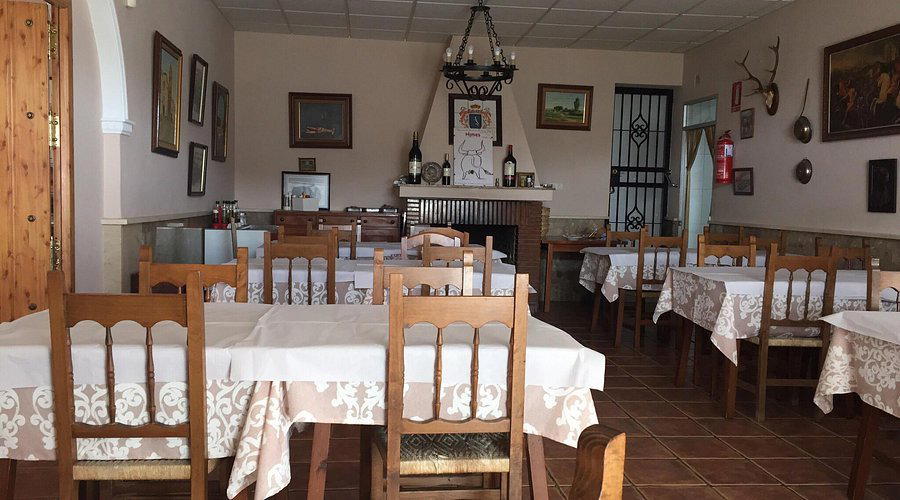
The physical room is the argument. Wood paneling that has absorbed sixty-plus years of conversation, white tablecloths that predate the era of exposed concrete and Edison bulbs, booth seating arranged for parties rather than solo diners at a counter. The design language is not retro — it was simply never updated, which is a different thing entirely. Where a retro restaurant performs a period, Sabatino's is the period, and that distinction registers the moment you're seated. There is no stage dressing here, no winking reference to mid-century Italian-American aesthetics. The aesthetics are original.
In the broader taxonomy of American dining rooms, this category — the unreconstructed red-sauce Italian, has largely collapsed. Chains absorbed the low end. Chef-driven trattorias with Italian wine programs and sourcing narratives absorbed the upper middle. What remained in between is rare, and Sabatino's sits squarely in that thinned-out tier: a full-service Italian-American room that has survived not by repositioning but by staying put.
Little Italy in Context
Baltimore's Little Italy is among the more coherent surviving Italian-American neighborhood dining clusters on the East Coast. Unlike the version in Manhattan, which has largely ceded ground to tourism economics, Baltimore's retained a residential base long enough for its restaurants to develop genuine local loyalty rather than visitor dependency. That loyalty is visible in the room at Sabatino's on any given weeknight, the crowd skews toward regulars who order without consulting the menu, parties celebrating occasions they've marked at the same table for years.
The neighborhood sits in useful proximity to the Inner Harbor, which means it draws a secondary visitor current alongside the local one. But the room doesn't bend toward either audience at the expense of the other. The format, tablecloth service, Italian-American menu built around pasta and meat rather than small plates, a wine list that doesn't demand expertise, works for both without performing for either. That balance is harder to sustain than it sounds. Plenty of legacy Italian rooms in American cities have lost it, tilting either into tourist-trap territory or into a kind of local-institution insularity that makes first-timers feel like they've walked into someone else's family reunion. Sabatino's manages something more neutral and more useful.
For a broader map of where Sabatino's sits within Baltimore's dining range, our full Baltimore restaurants guide covers the city's neighborhoods and price tiers in detail. The contrast between Little Italy's format and the contemporary Turkish approach at dede (Turkish) illustrates how wide Baltimore's current dining range runs. At the other end of the neighborhood-institution spectrum, Angeli's Pizzeria represents the more casual tier of Little Italy dining, while Cindy Wolf's Charleston and 16 On The Park represent what the city does at a more formal register. Akbar offers another long-running Baltimore dining-room tradition worth understanding alongside Sabatino's.
Italian-American as a Serious Category
The tendency to treat Italian-American cooking as a lesser cousin of regional Italian cuisine has softened in recent years, partly because food writers stopped conflating authenticity with origin and partly because the cooking itself, baked ziti, veal dishes, pasta with Sunday gravy logic, has earned a more serious critical reading. The format Sabatino's represents predates the farm-to-table movement, the small-plates format, and the tasting menu as default fine-dining structure. It developed in American cities through the mid-twentieth century and reached its peak institutional form in the 1960s and 70s: full-room table service, generous portions, wine by the carafe, dishes named after preparations rather than ingredients.
That format is now genuinely scarce in its original physical context. The high end of American Italian dining has moved decisively toward chef-driven contemporary formats, the kind of technical ambition you find at Le Bernardin in New York City, the ingredient-narrative approach of Blue Hill at Stone Barns in Tarrytown, or the tasting-menu discipline of Alinea in Chicago. Rooms like Sabatino's operate in a different register entirely, and the register has value precisely because it isn't trying to compete on those terms.
Nationally, the conversation around dining preservation has grown more pointed. Institutions that survived urban change, shifting demographics, and multiple economic disruptions carry a kind of documentary value that newer restaurants can't replicate. Sabatino's 1955 founding date places it in the same generational tier as other American dining institutions that have become reference points for their cities, restaurants like Emeril's in New Orleans represent a parallel kind of civic dining anchoring, even if the culinary register differs considerably.
Planning a Visit
Fawn Street sits in Little Italy proper, walkable from the Inner Harbor in under fifteen minutes depending on your starting point. The neighborhood is compact enough that parking on adjacent streets is workable in the evening. As a long-running Baltimore institution operating in a traditional Italian-American format, Sabatino's has historically maintained late hours compared to many contemporaries, a feature that makes it useful after theater or events at nearby venues, though current hours should be confirmed directly before visiting. Booking ahead is advisable for weekend evenings given the room's capacity and consistent local following; the booth configuration means larger parties are well accommodated but specific table requests benefit from advance notice.
For context on what the broader mid-Atlantic dining scene offers at the high end, The Inn at Little Washington represents the region's formal apex. Nationally, the tasting-menu tier runs from Lazy Bear in San Francisco to The French Laundry in Napa, Providence in Los Angeles, Atomix in New York City, Addison in San Diego, Single Thread Farm in Healdsburg, and internationally at 8 1/2 Otto e Mezzo Bombana in Hong Kong. Sabatino's belongs to none of those categories, which is precisely the point.
Continue exploring
More in Baltimore
Restaurants in Baltimore
Browse all →
Bars in Baltimore
Browse all →
At a Glance
- Classic
- Cozy
- Intimate
- Date Night
- Family
- Group Dining
- Special Occasion
- Historic Building
- Private Dining
Current opening hours
- Monday
- 11 AM–9 PM
- Tuesday
- 11 AM–9 PM
- Wednesday
- 11 AM–9 PM
- Thursday
- 11 AM–9 PM
- Friday
- 11 AM–10 PM
- Saturday
- 11 AM–10 PM
- Sunday
- 11 AM–9 PM
Hours can change for holidays and private events. Last verified .
Casual fine dining in an aged, honest rowhouse atmosphere with warm lighting.
Know Before You Go
- Getting there
- 901 Fawn St, Baltimore, MD 21202