Suzie's Soba
Our verdict
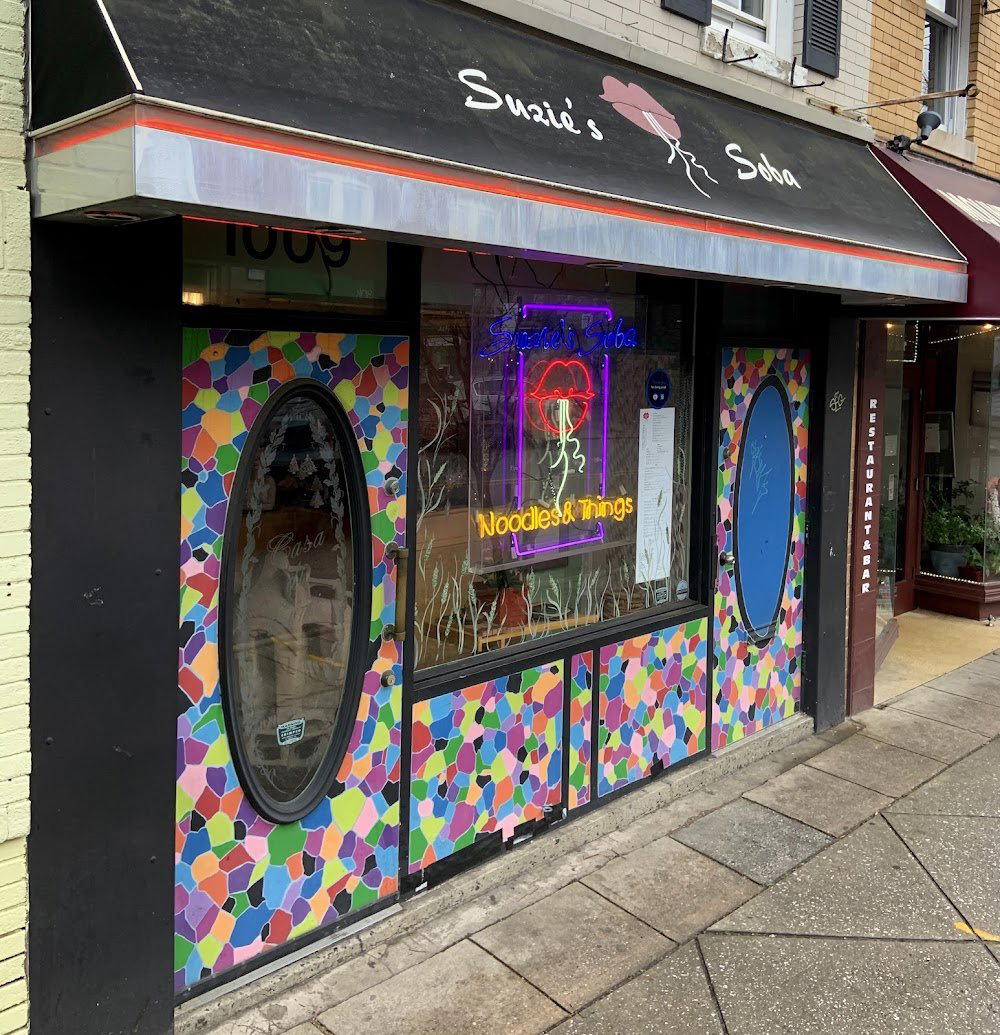
On the Hampden strip's 36th Street, Suzie's Soba brings soba noodle culture to a Baltimore neighbourhood better known for vintage shops and casual bars. The format suits both a quick weekday lunch and a more deliberate evening meal, with the daytime and evening services distinct enough in pace and intention to warrant separate consideration. A reliable neighbourhood address in a city still building its Japanese dining options.

Pearl is the En Primeur Club membership app — saves, bookings, and concierge access live there. Same editors, same standards.
- Address
- 1009 W 36th St, Baltimore, MD 21211
- Phone
- (410) 243-0051
- Website
- suzies-soba.com
- Directions
- Get directions
The menu
What to order
- Bibim Guksu
- Edamame Yaki Mandu
- Shui Mai
- Bubbling Seafood Hot Pot
Soba on The Avenue: What Hampden's Noodle Shop Says About Baltimore's Evolving Palate
West 36th Street in Hampden runs about six blocks of concentrated neighbourhood character: record shops, independent boutiques, and a dining strip that skews casual without being careless. Suzie's Soba sits at 1009 W 36th St, inside a stretch where the competition is measured less in Michelin stars and more in how well a kitchen understands its regulars. In that context, a soba-focused address is a considered choice, not an obvious one. Japanese noodle formats have struggled to find consistent footing in mid-Atlantic cities outside of Washington DC, making Baltimore's small cluster of Japanese-leaning spots worth tracking.
Soba as a category carries its own set of expectations shaped by decades of Tokyo counter culture: buckwheat noodles with precise texture, dashi broth built over hours, and a menu that respects the grain's natural nutty edge rather than masking it. In Japan, the lunch and dinner versions of a soba meal are often distinct exercises. Midday is transactional and focused, a bowl consumed with efficiency. Evening stretches toward something more relaxed, occasionally accompanied by small plates and cold sake. Whether that formal distinction survives translation to a Hampden side street is part of what makes addresses like Suzie's Soba worth assessing on their own terms.
The Lunch and Dinner Divide on 36th Street
The lunch-versus-dinner split matters more at a soba-focused restaurant than at most dining formats. Soba noodles are at their leading served cold or in a clean hot broth, and a midday crowd tends to gravitate toward that simplicity: a zaru soba, perhaps a side of tempura, done in under thirty minutes. That transactional pace is part of the format's appeal, and a well-run lunch service in a Japanese noodle shop should feel purposeful rather than rushed.
Evening service at a soba counter traditionally opens up to a different rhythm. Izakaya-adjacent small plates, a wider drink selection, and a slower pace shift the experience from fuel stop to something closer to dinner proper. In cities where Japanese dining is still defining its range, the evening at a neighbourhood soba shop also functions as a low-stakes entry point for diners who might feel priced out of the omakase tier or uncertain about larger format Japanese meals. Baltimore's Japanese dining scene remains thinner than comparable mid-Atlantic cities, so a restaurant that can hold its own across both day and evening registers occupies useful territory. For comparison, the ambition level at places like Atomix in New York City or The French Laundry in Napa operates in an entirely different register, but the soba counter's function as a democratic neighbourhood fixture is its own form of discipline.
Where Suzie's Fits in Baltimore's Dining Picture
Baltimore's restaurant scene has been sorting itself into clearer tiers over the past decade. At the higher end, addresses like Cindy Wolf's Charleston represent the city's fine dining anchor, a long-established American restaurant that has held its position through consistent standards rather than trend cycles. Turkish cuisine has found a foothold in two registers: dede (Turkish) occupies the premium tier, while Baba'de covers the more accessible end. Pizza, neighbourhood Italian, and Indian dining each have their own established presences, with Angeli's Pizzeria and Akbar representing those categories at the neighbourhood level. 16 On The Park rounds out the contemporary American side of the spectrum.
Japanese soba fits differently from all of these. It is neither fine dining nor purely fast casual, and the cuisine requires a specific technical commitment to buckwheat sourcing, noodle texture, and broth construction that distinguishes a serious operation from a noodle shop that happens to serve soba alongside a broader pan-Asian menu. In a city where ramen has largely claimed the Japanese noodle conversation, a restaurant organised specifically around soba is making a quieter, more specific argument about what Japanese food in Baltimore can be.
That specificity connects Suzie's Soba to a broader national pattern. Across American cities, Japanese dining has gradually split between high-formality omakase counters, which now operate at price points that align them with tasting menu peers like Le Bernardin in New York City or Alinea in Chicago, and casual noodle formats that serve a daily neighbourhood function. The soba counter occupies an interesting middle position: more technique-dependent than a ramen shop, less ceremonial than omakase, and genuinely useful at the neighbourhood scale in a way that destination dining rarely manages.
Planning a Visit to Suzie's Soba
Suzie's Soba sits on Hampden's main retail corridor, accessible by car with parking typical of the neighbourhood, and reachable from central Baltimore in under fifteen minutes. The address at 1009 W 36th St places it in the heart of the strip's pedestrian activity, which makes it a natural stop before or after browsing the surrounding shops. For visitors building a broader Baltimore itinerary, the full Baltimore restaurants guide covers the range from neighbourhood fixtures to destination addresses across the city. For context on what the wider American dining scene looks like at comparable or higher tiers, restaurants like Lazy Bear in San Francisco, Blue Hill at Stone Barns in Tarrytown, Single Thread Farm in Healdsburg, Providence in Los Angeles, Addison in San Diego, The Inn at Little Washington in Washington, and Emeril's in New Orleans represent the scale against which American regional dining continues to be measured. Suzie's Soba is not competing at that level, nor should it be: it operates as a neighbourhood anchor in a format that has its own set of standards, and those standards are worth applying seriously.
Frequently asked questions
What should I eat at Suzie's Soba?
What is Suzie's Soba known for?
What's the ideal way to book Suzie's Soba?
What if I have allergies at Suzie's Soba?
Is Suzie's Soba overpriced or worth every penny?
Is Suzie's Soba a good option for a solo diner in Baltimore?
In Context: Similar Options
A quick peer list to put this venue’s basics in context.
| Venue | Cuisine | Price | Awards | Notes |
|---|---|---|---|---|
| Suzie's SobaThis venue — the venue you are viewing | Asian Fusion with Korean Flair | $20–30 | Not listed | Not listed |
| dede | Turkish-Irish Fusion Fine Dining | $200–300 | 2 Michelin Stars · La Liste Top Restaurants | Turkish |
| Baba'de | Turkish | Not listed | Not listed | Not listed |
| Clavel | Authentic Sinaloan Taqueria & Mezcaleria | $30–50 | James Beard Award Semi Finalist | Mexican |
| LE COMPTOIR DU VIN | French-Inspired Bistro | $50–100 | Not listed | Wine Bar |
| Attman’s Delicatessen | Jewish Deli | $10–20 | Not listed | Jewish Delicatessen |
Continue exploring
More in Baltimore
Restaurants in Baltimore
Browse all →
Bars in Baltimore
Browse all →
Details
- Cozy
- Intimate
- Date Night
- Casual Hangout
- Solo
- Standalone
- Sake Program
- Local Sourcing
- Garden
- A La Carte
- Small Plates
- Vegetarian Friendly
- Pescatarian Friendly
Cozy and personal, with a neighborhood-restaurant feel and limited nightly seating rather than a high-volume dining room.