
Tabelog 100 #72
Our verdict
Marusan places Wakayama ramen in its practical, local register: compact, direct, and built around the city’s chuka soba culture rather than destination-dining ceremony. Its Tabelog Ramen WEST 100 selection in 2023, 2024, and 2025 gives it a clear trust signal, while the format remains casual enough for solo diners and small groups tracking Wakayama’s noodle scene seriously.

Pearl is the En Primeur Club membership app — saves, bookings, and concierge access live there. Same editors, same standards.
- Address
- 6 Chome-2-88 Shioya, Wakayama, 641-0054, Japan
- Phone
- +81 73-444-1971
- Hours
- Mon–Sat 11 AM–8 PMSun Closed
- Website
- tabelog.com
- Directions
- Get directions
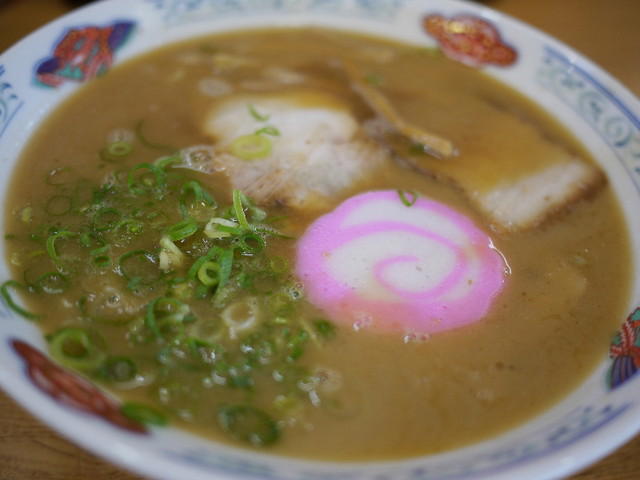
The menu
What to order
- Wakayama ramen
- Chinese soba
- Tonkotsu soy-sauce broth
Approach Wakayama ramen expecting less theatre than discipline. The city’s ramen culture is not built around long counter sermons or luxury ingredients announced one by one; it is a working local tradition, shaped by everyday routines, quick turnover, and regulars who know exactly how a bowl should land. Marusan sits inside that register: a ramen restaurant in Wakayama, presented less as a chef’s-counter performance than as a practical local stop.
That matters because Wakayama’s noodle identity is often misunderstood by visitors who arrive with Tokyo ramen expectations. The local frame is narrower and more specific. Ramen here often functions as everyday food rather than a tasting-menu object. The ingredient question is therefore less about luxury sourcing and more about balance: how broth, noodles, seasoning, and toppings work within a compact, casual format without turning blunt or heavy. In that sense, the useful comparison is not with rarefied ramen counters elsewhere in Japan, but with other Wakayama dining rooms where local habits shape the meal.
Wakayama ramen is a local grammar, not a national ramen checklist
The city’s ramen conversation tends to orbit local styles, and Marusan’s 2025 Tabelog Hyakumeiten recognition places it among the regionally recognized addresses in the ramen category. Tabelog’s Hyakumeiten lists are not Michelin stars, and they should not be read as luxury markers. They are more useful here as a signal of consistency within a category where many serious bowls are served in ordinary rooms, at ordinary tables, to people who are not treating lunch as an event.
Wakayama’s ramen culture rewards that kind of reading. The city has its own gravitational center at Chuka Soba Senmon Ten Ide Shoten, a reference point for the genre, while other local ramen rooms help show how broad the field can be without leaving Wakayama’s everyday noodle orbit. Against that backdrop, Marusan reads as part of the city’s ramen infrastructure rather than a self-conscious specialist designed only for culinary tourism.
The ingredient-sourcing angle in Wakayama ramen is grounded in pragmatism. This is a city where local food habits and small-restaurant traditions matter, but ramen shops do not always explain procurement with the transparency now common in high-end kitchens. The assessment has to come from format, category, and recognition rather than invented backstory: Marusan is listed as ramen, carries a 2025 Tabelog Hyakumeiten citation, and has a Tabelog score of 3.65. Those facts point to a shop that competes on repeatable execution, not rarity.
A casual room with serious regional credentials
The appeal is best understood before any menu language does too much work. Marusan belongs closer to a local meal than a destination counter. Solo dining may make sense, but the format also suits visitors who are comfortable with a ramen-shop rhythm. This is not the space for a long wine-led lunch or a formal tasting progression; Wakayama has other registers for that, including Hotel de Yoshino and other dining in the city.
That contrast is useful for planning a serious Wakayama food day. Ramen here performs a different role from more polished or higher-spend dining formats. It is fast, price-sensitive, and democratic. In the local comparison set, Tonkatsu So Fujimaru, Kissa Orino, and Shintaro point to other ways of eating in Wakayama, while Marusan belongs in the low-cost ramen lane, where the pressure is on balance, portion logic, and speed rather than ceremony.
Travelers building a broader Kansai or Japan dining map should resist flattening every casual room into the same category. A ramen stop in Wakayama is not interchangeable with casual dining elsewhere in Japan, nor with bar-led or café-led formats in other cities. The value lies in reading the local grammar correctly: Wakayama ramen is compact, rooted, and best judged against the city’s own standards.
How to fit it into a Wakayama itinerary
Marusan is in Wakayama, so timing and local movement matter more than treating it like a destination restaurant with a long booking strategy. For visitors pairing ramen with other city plans or a wider food crawl, this is the kind of address to place into the day as a focused meal rather than an evening anchor.
Payment and access details reinforce the casual ramen-shop profile. Budget planning is straightforward: Tabelog lists dinner at up to JPY 999 and lunch at JPY 1,000 to JPY 1,999. That places Marusan firmly in an everyday spending bracket, with the restaurant’s recognition doing the work of signaling reliability rather than luxury.
For a wider read on the city, use broader Wakayama dining, hotel, bar, winery, and experience resources as context, then return to the central point: Marusan’s strongest argument remains local. It is a Wakayama ramen address with 2025 Tabelog Hyakumeiten recognition, a listed score of 3.65, and a price profile that keeps it in the city’s practical everyday-food lane.
Frequently asked questions
Would Marusan be comfortable with kids?
Marusan is a casual ramen restaurant in Wakayama, so it should be approached as an everyday local meal rather than a formal dining room. Families can consider it in that practical context.
What's the vibe at Marusan?
It feels practical and unfussy: a ramen restaurant in Wakayama with regional credibility from its 2025 Tabelog Hyakumeiten recognition. The appeal is casual rather than ceremonial.
What should I budget for a meal at Marusan?
Pricing at Marusan is listed as dinner up to JPY 999 and lunch from JPY 1,000 to JPY 1,999.
What is Marusan known for?
Marusan is known as a ramen restaurant in Wakayama with 2025 Tabelog Hyakumeiten recognition and a listed Tabelog score of 3.65.
A Quick Peer Check
Comparable venues by cuisine and price in the same metro.
| Venue | Cuisine | Price | Awards | Notes |
|---|---|---|---|---|
| MarusanThis venue — the venue you are viewing | Wakayama Ramen | $1–10 | Tabelog 100 #72 | Not listed |
| Chuka Soba Hayami | Traditional Wakayama Ramen | Not listed | Not listed | Shingu |
| Nakakooriten Kakigori | Japanese Kakigori | $1–10 | Not listed | Shingu |
| Ideshouten Ramen | Wakayama Ramen | $10–20 | Not listed | Wakayama city |
| こってり和歌山らーめん 清乃 | Innovative Seafood Shoyu Ramen | $10–20 | Not listed | Wakayama City Center |
| Takehara | Traditional Tuna Specialist | $10–20 | Not listed | Katsuura |
Recognition history
Dated appearances from independent guides and award organizations, with the underlying list record or original source where available.
Tabelog 100 #72 · No. 72
Tabelog · Tabelog 100 - Ramen - WEST - 2025
Continue exploring
More in Wakayama
Restaurants in Wakayama
Browse all →

Bars in Wakayama
Browse all →
Hotels in Wakayama
Browse all →

Wineries in Wakayama
Browse all →
Details
- Classic
- Cozy
- Solo
- Group Dining
- Casual Hangout
- Standalone
- A La Carte
- Counter Dining
Current opening hours
- Monday
- 11 AM–8 PM
- Tuesday
- 11 AM–8 PM
- Wednesday
- 11 AM–8 PM
- Thursday
- 11 AM–8 PM
- Friday
- 11 AM–8 PM
- Saturday
- 11 AM–8 PM
- Sunday
- Closed
Hours can change for holidays and private events. Last verified .
Simple, house-like ramen shop atmosphere with a traditional, local feel.