Our verdict
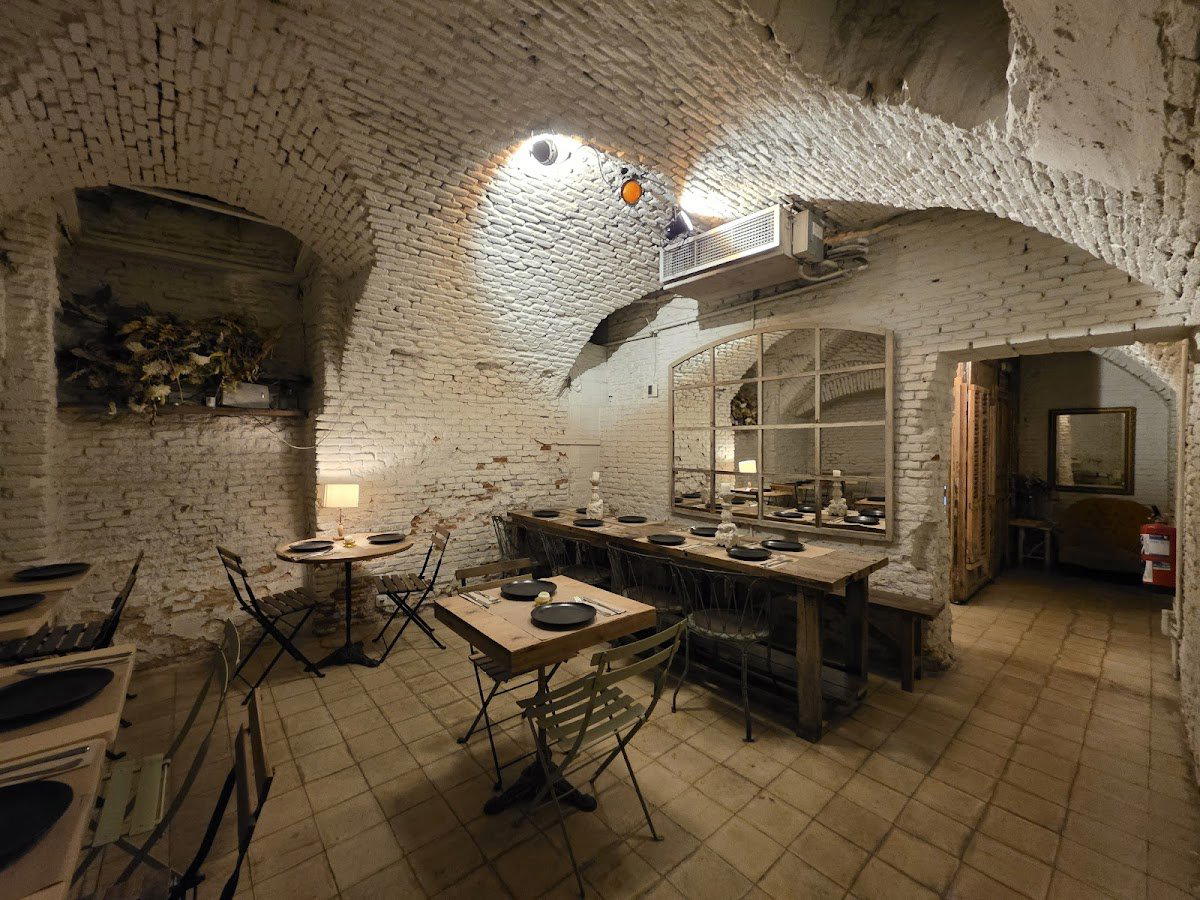
Maricastaña occupies a corner of Corredera Baja de San Pablo in Madrid's Centro district, a street where neighbourhood bars and late-night locals have coexisted for decades. The address places it inside the Malasaña-adjacent corridor that has quietly absorbed a generation of returning regulars, the kind who know what they want before they sit down. Visit for the atmosphere and the crowd as much as the food.

Pearl is the En Primeur Club membership app, where members save venues, book tables and use the concierge.
The menu
What to order
- Oxtail croquettes
- Green fried tomatoes
- Truffle tuna and egg
- Rocket salad with prawns
The Street Before the Room
Corredera Baja de San Pablo is one of those Madrid streets that resists clean categorisation. It runs through the southern edge of Malasaña, close enough to Chueca to draw a mixed crowd, old enough to carry a neighbourhood memory that predates the city's recent dining boom. The buildings are narrow and mid-century worn; the bars that line it tend toward the functional rather than the designed. It is precisely the kind of street where regulars form, because it has never fully submitted to the tourist circuit that now shapes so much of central Madrid's hospitality economy.
Maricastaña sits at number 12 on that street, in the postal district of 28004, a postcode that covers one of the densest concentrations of daily-use dining in the city. This is not the Madrid of DiverXO or Coque, where tasting menus run to dozens of courses and reservations open months in advance. The dynamic here is more immediate, more habitual, shaped by proximity and repetition rather than occasion.
Who Keeps Coming Back, and Why
The regulars' relationship with a place like this is built on a different set of criteria than the ones that drive first-time visitors. In Madrid's mid-tier neighbourhood dining, loyalty is earned through consistency: the table that is reliably available on a Tuesday, the dish that has not changed in three years, the server who does not need to ask. These are the unwritten contracts that sustain a local in a city that has seen enormous dining turnover since the mid-2010s.
Madrid's Centro district lost a significant number of neighbourhood restaurants during the consolidation years that followed the 2008 economic crisis and again during the disruption of 2020. The venues that survived that second period did so largely through their regulars, people whose patronage was less elastic than tourists or occasion diners. Maricastaña's position on Corredera Baja de San Pablo places it within walking distance of the dense residential blocks north of Gran Vía, a catchment area that sustains a different kind of diner than the visitor-heavy zones closer to Sol or the Prado.
That residential context matters when reading a room. The conversations here are not about the food in the way that critics or visitors talk about food. They are about everything else, with the food as reliable backdrop. That is, in many ways, the harder standard to meet than a Michelin inspection. It is also the reason that the restaurants earning attention at the award level, places like Deessa or DSTAgE, occupy a completely separate category in the minds of the people who eat at Maricastaña regularly. The comparison is not made because the frame of reference is different.
Madrid's Neighbourhood Dining Tier: What This Address Signals
Spain's most celebrated restaurants tend to cluster outside Madrid, in the Basque Country and along the Mediterranean coast. Arzak in San Sebastián, Azurmendi in Larrabetzu, El Celler de Can Roca in Girona, Mugaritz in Errenteria, Quique Dacosta in Dénia, Aponiente in El Puerto de Santa María. Madrid has built its own serious fine dining tier in recent years, with Paco Roncero and others holding firm in the capital's upper bracket. But the city's dining identity has always been as much about the neighbourhood bar and the mid-range local as it has been about tasting menus. That lower-profile tier is where most Madrileños actually eat, and it is where reputations are built through frequency rather than occasion.
For comparison, venues operating at the creative and fine dining end of the Madrid spectrum, including those listed on our full Madrid restaurants guide, serve a different function: the special dinner, the out-of-town guest, the anniversary. Maricastaña's function appears to be something else entirely. It is the kind of address you give someone when they ask where you actually eat, rather than where you go to be impressed.
That distinction carries across Spain's dining culture. Ricard Camarena in València and Cocina Hermanos Torres in Barcelona represent one mode of Spanish dining ambition; the Corredera Baja de San Pablo addresses represent another, one that is harder to review but easier to inhabit. Even internationally, the contrast holds: compare the format discipline of a Le Bernardin in New York City or the community-driven model of Lazy Bear in San Francisco with what a neighbourhood local does day after day, and the operational logic is completely different. Atrio in Cáceres and Martin Berasategui in Lasarte-Oria are destination dining; Maricastaña is the opposite of a destination by design.
Planning Your Visit
The address is Corredera Baja de San Pablo 12, in Madrid's Centro district. The nearest metro access points are Tribunal on Line 10 and Noviciado on Line 2, each a short walk from the door. Walk-ins are the norm for neighbourhood bars of this type in Madrid, though weekday evenings tend to be more reliably available than weekend dinner service in this part of the city. For visitors comparing options across Madrid's dining tiers, the full context is available in our Madrid restaurants guide.
Frequently asked questions
Where exactly is Maricastaña?
Maricastaña is located at Corre. Baja de San Pablo, 12, Centro, 28004 Madrid, Spain, Madrid.
Is Maricastaña a good option for a meal before or after visiting Malasaña's main cultural spots?
The location at Corredera Baja de San Pablo 12 places Maricastaña within walking distance of Malasaña's central grid, with metro access at Tribunal on Line 10 and Noviciado on Line 2. That positioning makes it a practical choice before or after time spent in the neighbourhood, though it functions as a local dining address rather than a tourist-circuit stop. Visitors approaching it with that expectation, a Madrid neighbourhood room, not a curated experience, are more likely to leave satisfied.
What do regulars order at Maricastaña?
What the address on Corredera Baja de San Pablo 12 does signal is a kitchen pitched at repeat visitors rather than one-time tourists, where returning guests shape ordering habits over time. The body of local knowledge around the place suggests a menu built for familiarity rather than spectacle.
Can I walk in to Maricastaña?
Reservation policy for Maricastaña has not been formally published. Given its position in the southern Malasaña corridor, where demand from local regulars is consistent rather than seasonal, walking in on a weekend evening carries more risk than a weekday lunch. Contacting the venue directly before arriving is the practical approach.
What is Maricastaña known for?
Maricastaña sits on Corredera Baja de San Pablo, a Madrid street that sits at the boundary of Malasaña and the broader Centro district, an address that positions it within the city's neighbourhood dining tier rather than the destination-restaurant circuit. Its reputation appears to rest on local consistency, the kind that sustains regulars rather than chasing awards cycles. This places it in a distinct category from the Basque or Mediterranean restaurants that dominate Spain's formal critical conversation.
What if I have allergies at Maricastaña?
No allergen menu or dietary accommodation policy has been publicly documented for Maricastaña. The standard approach at Madrid neighbourhood restaurants is to raise allergy requirements directly with staff at the time of booking or arrival. Given that the kitchen at Corredera Baja de San Pablo 12 serves a repeat local clientele, staff familiarity with individual needs is plausible, but nothing should be assumed without direct confirmation.
Pricing, Compared
Comparable venues nearby, for context on price, style, and recognition.
| Venue | Cuisine | Price | Awards | Notes |
|---|---|---|---|---|
| MaricastañaThis venue (the venue you are viewing) | Modern Spanish Fusion | $20–30 | Not listed | Not listed |
| Anda Jaleo | Modern Spanish Tapas | Not listed | Not listed | Palacio, Modern Spanish Tapas |
| La Tape | Spanish Tapas & Craft Beer | $30–50 | Not listed | Arapiles, Spanish Tapas & Craft Beer |
| Salamar | Spanish Seafood and Paella | $30–50 | Not listed | Prosperidad, Spanish Seafood and Paella |
| La Gran Pulpería | Authentic Galician Spanish | Not listed | Not listed | Piovera, Authentic Galician Spanish |
| Las Margaritas - Casa de Comidas | Traditional Spanish Casa de Comidas | $30–50 | Macarfi 7 Food Rating | El Plantio, Traditional Spanish Casa de Comidas |