
Macarfi 7 Food Rating
Our verdict
Las Margaritas - Casa de Comidas sits in the Moncloa-Aravaca district of Madrid, where the city's appetite for neighbourhood cooking with honest roots runs deep. The casa de comidas format - fixed menus, market-driven ingredients, and a room that feels lived in rather than designed - represents a counterpoint to the capital's high-concept tasting circuit. For readers tracking Spain's sustainability-conscious dining movement, this address belongs on the radar.

Pearl is the En Primeur Club membership app, where members save venues, book tables and use the concierge.

The menu
What to order
- Chuleta De Vaca Vieja
- Ensaladilla rota
The Neighbourhood That Shapes the Plate
Moncloa-Aravaca occupies Madrid's northwestern edge, where the dense grid of the city centre gives way to wider avenues, university buildings, and residential streets that locals treat as their own. Dining here follows a different logic than Salamanca or Chueca: fewer destination restaurants, more places where the kitchen answers to the neighbourhood rather than to a Michelin inspector's notebook. The casa de comidas tradition - literally, house of food - belongs to this register. It predates the word "concept." A room, a fixed menu, ingredients sourced close to the calendar, a price that assumes the guest will return on a Tuesday.
Las Margaritas - Casa de Comidas operates on Avenida de la Victoria, 29, within that residential grain. The address matters less as a destination than as a signal: this is a kitchen that has chosen a local clientele over a touring one, which in Madrid's current dining scene carries its own editorial weight.
What the Casa de Comidas Format Actually Means in 2024
Spain's casa de comidas model has attracted renewed critical attention in the years since the post-pandemic return to produce-led, lower-intervention cooking. Where Madrid's upper tier - represented by addresses like DiverXO, Coque, Deessa, DSTAgE, and Paco Roncero - builds menus around transformation, technique, and the theatre of the tasting format, the casa de comidas operates on opposite assumptions. The menu is shorter because the sourcing is tighter. The room is quieter because there is no performance to sustain. Waste reduction is structural rather than aspirational: when you cook to a fixed daily menu built around what arrived from the market that morning, you are not generating the surplus that larger, more complex kitchens accept as a cost of doing business.
This is the sustainability argument that rarely makes it into press releases, because it is embedded in the economics rather than the marketing. Smaller kitchens, shorter menus, and neighbourhood clientele create a closed loop that high-volume or high-concept restaurants find harder to achieve.
Sustainability as Structure, Not Statement
The Spanish dining scene's most documented sustainability efforts tend to cluster at the high end. Azurmendi in Larrabetzu built its kitchen around greenhouse growing and grey-water systems. Aponiente in El Puerto de Santa María has made marine by-product cookery central to its identity. Mugaritz in Errenteria has spent years interrogating what it means to cook with restraint. These are high-investment, high-visibility approaches to the same question.
The casa de comidas model answers differently. Sourcing decisions at this scale are made daily, not seasonally. The supplier relationships are typically local by necessity rather than by brand positioning. The fixed menu format means that ingredient volumes are projected accurately - a discipline that larger kitchens, which must accommodate à la carte variance across multiple services, cannot easily replicate. For the reader interested in how sustainability actually functions as kitchen practice rather than as communication strategy, the neighbourhood casa de comidas offers a more transparent view than the Michelin tier.
That same structural discipline is visible across Spain's mid-tier dining scene. Ricard Camarena in València has built a documented sourcing philosophy around hyperlocal producers. Cocina Hermanos Torres in Barcelona maintains kitchen gardens as part of its operational model. At Las Margaritas, the logic is older and less publicised, but it runs along the same axis.
Reading the Address Against Madrid's Broader Map
Madrid's dining conversation in 2024 is concentrated in a handful of central postcodes, with the Michelin-starred tier functioning almost as a parallel city: El Celler de Can Roca in Girona, Martin Berasategui in Lasarte-Oria, Arzak in San Sebastián, Quique Dacosta in Dénia, and Atrio in Cáceres all draw Madrid-based diners out of the city for destination meals. Within Madrid, the starred circuit sits mostly south and east of the Moncloa-Aravaca axis.
A venue on Avenida de la Victoria is, by geography, outside that orbit. This is not a liability; it is a different proposition. The Moncloa district's mix of university population, residential families, and professionals working near the campus creates a clientele that tends to eat on regularity rather than occasion. That shapes what a kitchen here needs to do: consistency, value calibration, and a menu that rewards repeat visits rather than one-time pilgrimage. The casa de comidas format was built for exactly this.
For comparison, the international tier offers its own framing: Le Bernardin in New York City and Atomix in New York City occupy a tasting-menu, destination-dining category that shares almost no operational logic with the neighbourhood fixed-menu model. The contrast is useful for understanding what Las Margaritas is and what it is not.
See our full Madrid restaurants guide for a mapped view of how the city's dining tiers distribute across districts.
Know Before You Go
| Address | Av. de la Victoria, 29, Moncloa-Aravaca, 28023 Madrid, Spain |
|---|---|
| District | Moncloa-Aravaca, northwestern Madrid |
| Format | Casa de comidas (neighbourhood fixed-menu dining) |
| Phone | Not publicly listed |
| Website | Not publicly listed |
| Booking | Contact directly via venue; no online reservation system confirmed |
| Price Range | Not confirmed; casa de comidas format typically positions below the city’s tasting-menu tier |
| Hours | Not confirmed; verify before visiting |
Frequently asked questions
What part of town is Las Margaritas - Casa de Comidas in?
Las Margaritas - Casa de Comidas is located at Av. de la Victoria, 29, Moncloa - Aravaca, 28023 Madrid, Spain, Madrid.
Is Las Margaritas - Casa de Comidas suitable for a solo diner visiting Moncloa-Aravaca?
The casa de comidas format at Av. de la Victoria, 29 in Moncloa-Aravaca is structurally well-suited to solo dining, counter seating and communal tables are common in this category, and the fixed menú del día removes any pressure around menu decision-making. Madrid's midday lunch hour, typically 2pm to 4pm, is when these venues are most animated and when the set menu is in full service. A solo visitor eating at the bar or a shared table is a completely standard arrangement in this part of the city.
What should I order at Las Margaritas - Casa de Comidas?
Confirmed menu details for Las Margaritas are not available, but the casa de comidas format at venues along Moncloa-Aravaca's residential avenues typically centres on a rotating daily menu driven by market produce. Expect a structured midday set: a first course, main, and dessert at a fixed price. The format prizes seasonal rotation over a static à la carte list, so the most sensible approach is to ask what arrived from the market that morning.
What's the best way to book Las Margaritas - Casa de Comidas?
No reservation system or phone number is confirmed in available data for Las Margaritas at Av. de la Victoria, 29. In Madrid's neighbourhood dining tier, particularly for menú del día service, walk-in is often the standard, tables turn at the lunch hour and advance booking, if accepted at all, is typically done by phone rather than online platform. Arriving at or just before the midday service opens is the practical strategy.
What is Las Margaritas - Casa de Comidas known for?
Las Margaritas operates within the casa de comidas tradition, a format that Madrid has sustained for generations as the working city's answer to midday eating: honest cooking, a short fixed menu, and prices calibrated for regulars rather than tourists. The Moncloa-Aravaca address places it in a residential and university-adjacent pocket of the city, where this kind of neighbourhood table tends to serve a repeat local clientele rather than the central dining circuit.
In Context: Similar Options
Comparable venues nearby, for context on price, style, and recognition.
| Venue | Cuisine | Price | Awards | Notes |
|---|---|---|---|---|
| Las Margaritas - Casa de ComidasThis venue (the venue you are viewing) | Traditional Spanish Casa de Comidas | $30–50 | Macarfi 7 Food Rating | Not listed |
| Bovia Del Viso | Modern Spanish Steakhouse | Not listed | Not listed | Aguilas |
| Café Comercial | Traditional Madrid Cuisine with Contemporary Touches | $30–50 | Macarfi 6.8 Food Rating | Trafalgar |
| Casa Larry | Spanish Grill | $20–30 | Not listed | Abrantes |
| Restaurante Urbieta 13 | Modern Spanish Tapas | $20–30 | Not listed | Pacifico |
| Alcaravea | Traditional Spanish | $30–50 | Not listed | Vallehermoso |
Recognition history
Dated appearances from independent guides and award organizations, with the underlying list record or original source where available.
Macarfi 7 Food Rating
Macarfi
Continue exploring
More in Madrid
Restaurants in Madrid
All restaurants in Madrid →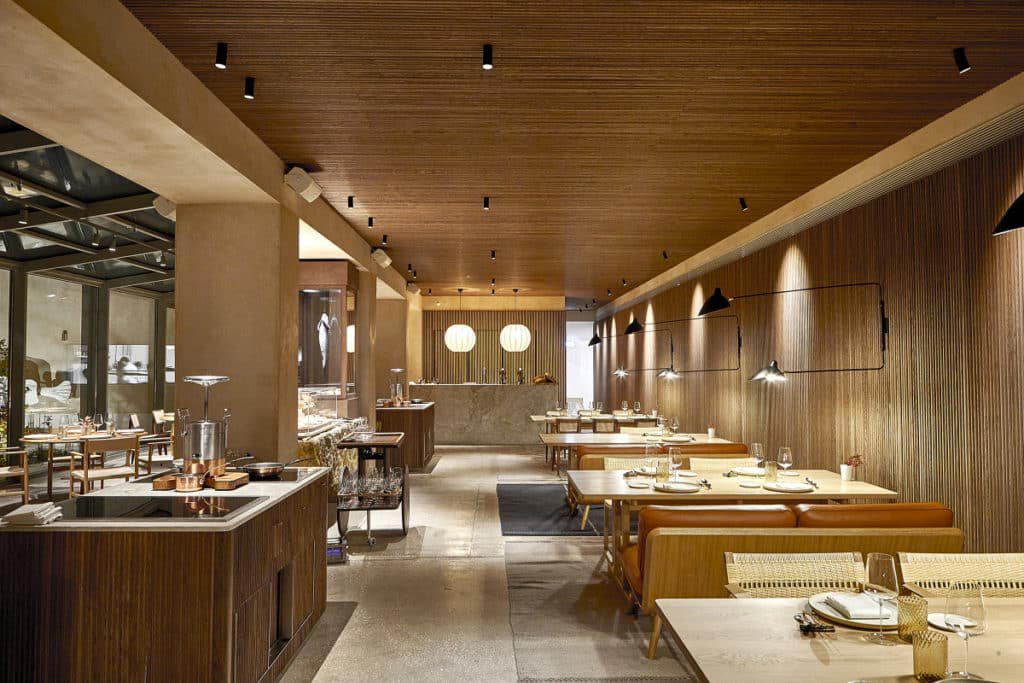
Bars in Madrid
All bars in Madrid →
Hotels in Madrid
All hotels in Madrid →

Details
- Classic
- Cozy
- Rustic
- Business Dinner
- Family
- Casual Hangout
- Terrace
- Garden
- Open Kitchen
- Live Music
- Local Sourcing
- Garden
- A La Carte
- Small Plates
- Vegetarian Friendly
Current opening hours
- Monday
- Closed
- Tuesday
- 12 PM–2 AM
- Wednesday
- 12 PM–2 AM
- Thursday
- 12 PM–2 AM
- Friday
- 12 PM–2:30 AM
- Saturday
- 12 PM–2:30 AM
- Sunday
- 12–5 PM
Hours can change for holidays and private events. Hours as of .
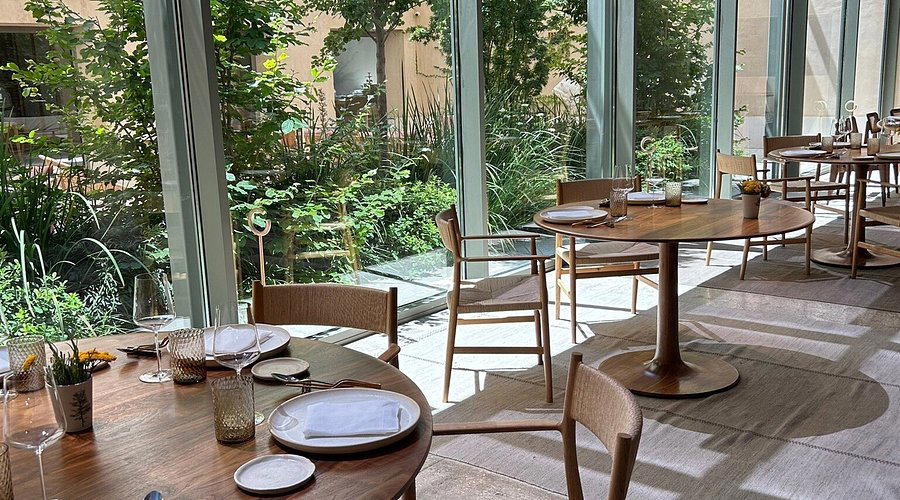
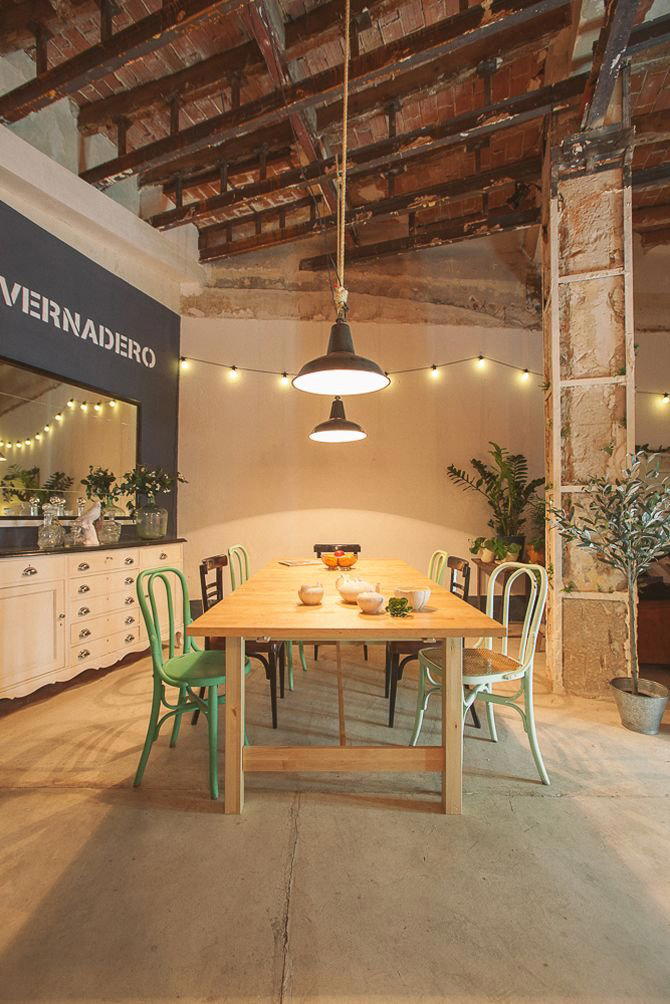
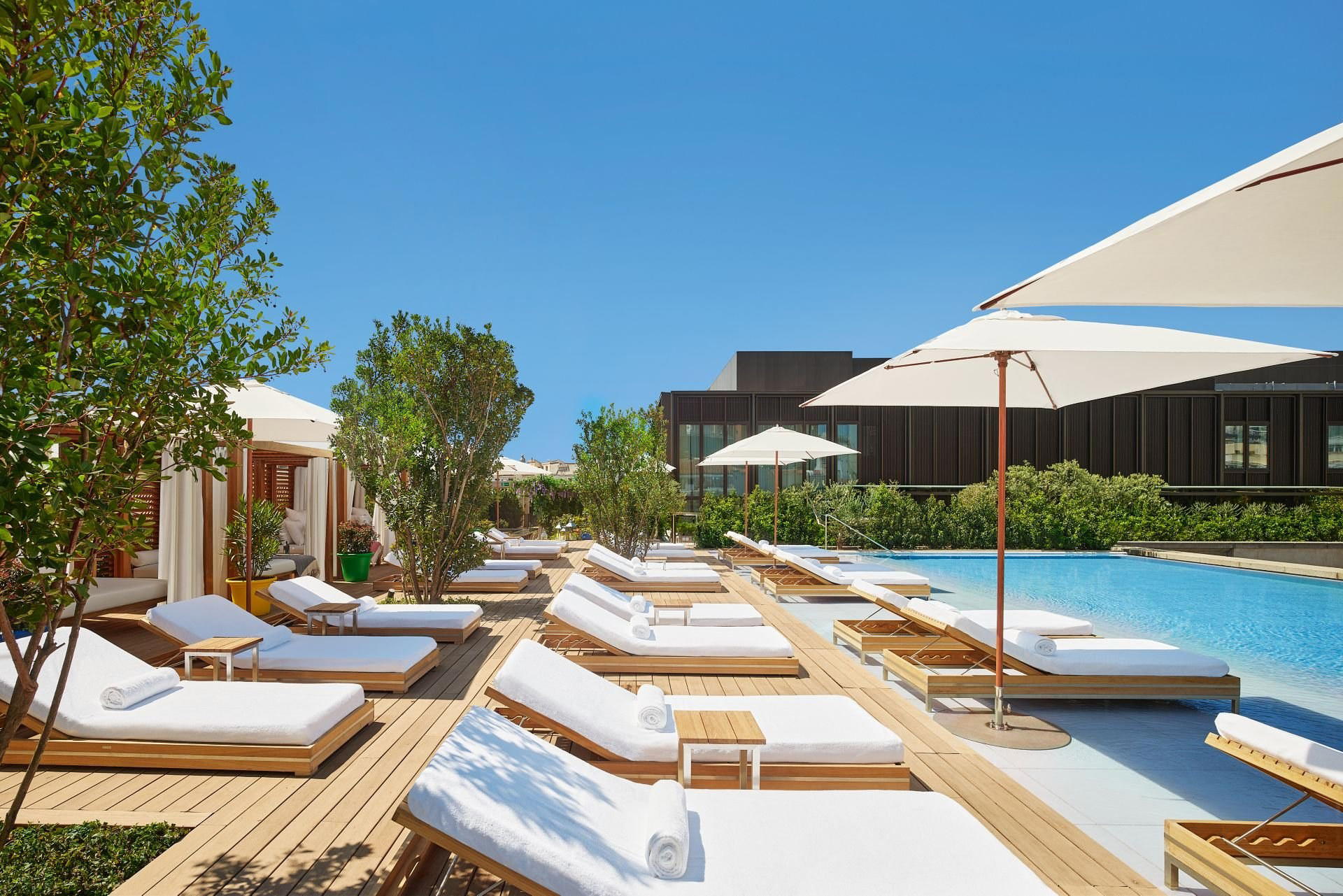
Tranquil garden atmosphere with vegetation-surrounded terraces, unpretentious and cozy traditional Spanish casa de comidas vibe.