In Signa, a small Florentine satellite town where the Arno bends west, MangiaRÈ Pizza & Schiaccia addresses the distinction between pizza and schiaccia with the seriousness that Tuscany reserves for its bread traditions. The format sits squarely in the everyday register of central Italian eating, where dough quality and ingredient sourcing matter more than ceremony. A practical stop for anyone moving between Florence and the Valdarno corridor.
Pearl is the En Primeur Club membership app — saves, bookings, and concierge access live there. Same editors, same standards.
- Address
- Via Roma, 242A, 50058 Signa FI, Italy
- Phone
- +393913855234
- Directions
- Get directions
 Saves & bookings on Pearl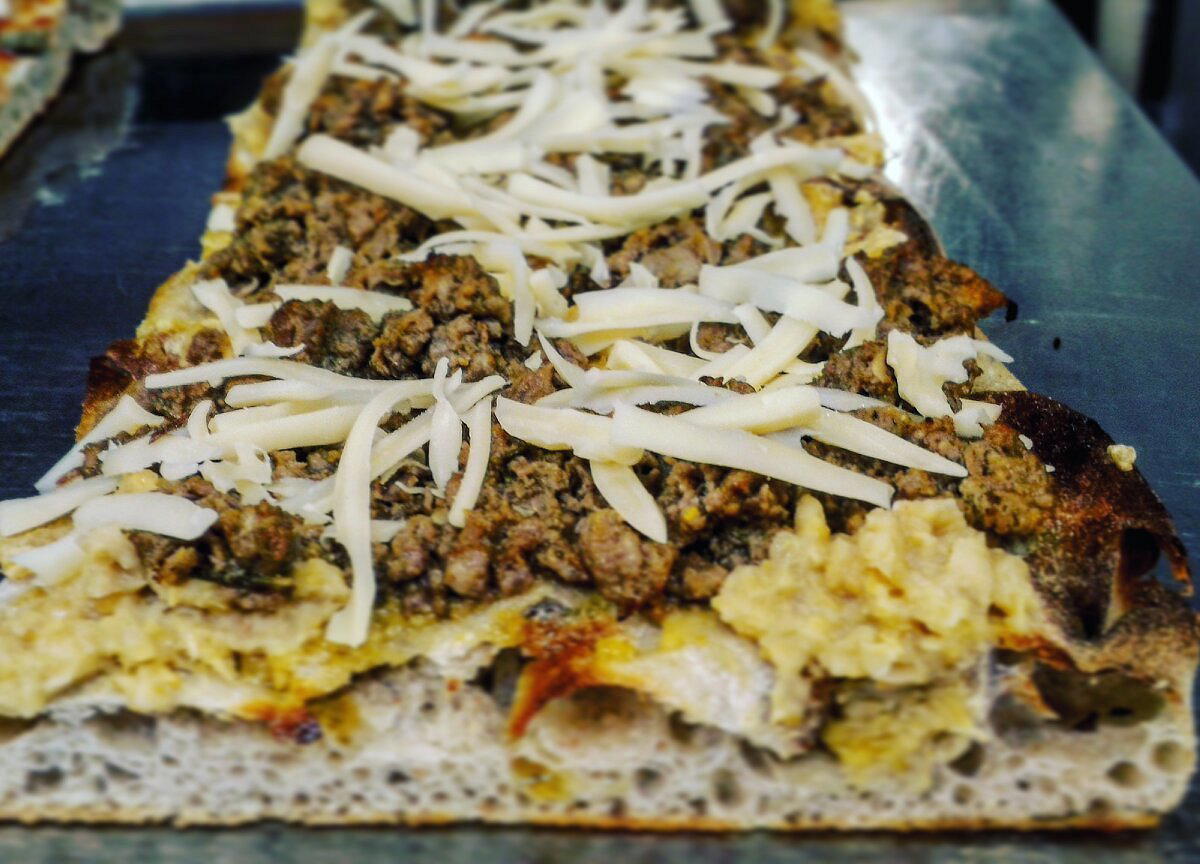
Where Signa's Bread Tradition Meets the Pizza Counter
Arrive on Via Roma in Signa on any given weekday and the scene outside number 242A will tell you something about how this part of Tuscany eats. Signa sits roughly eleven kilometres west of Florence along the Arno, close enough to the city to absorb its food culture, far enough that everyday eating here follows its own unhurried rhythm. This is not a dining destination in the way that Florence's historic centre functions as one. It is a working town, and MangiaRÈ Pizza & Schiaccia reads accordingly: a place built around the specific, practical pleasure of well-made dough rather than around spectacle or theatre.
The distinction the name draws, pizza on one side and schiaccia on the other, is worth pausing on. In Tuscany, schiaccia is not pizza's cousin so much as its older relative. The flatbread tradition here predates the tomato-and-mozzarella canon by centuries, rooted in the same peasant economy that produced the region's famously unsalted pane sciocco. Where pizza imports a Neapolitan logic of high heat, char, and moisture balance, schiaccia operates in a different register: olive oil-enriched, often thicker, sometimes topped with little more than rosemary and sea salt, and very much tied to local grain and milling practice. A venue that puts both names on its sign is making a statement about range and about the sourcing decisions that underpin both formats.
Ingredient Sourcing and the Tuscany Dough Question
The central argument of any serious pizza or schiaccia operation in this part of Italy is an ingredient argument. Tuscany does not have the volcanic-soil mythology of Campania or the tomato-growing infrastructure of the south, but it does have a flour culture with genuine depth. Artisan mills in the Valdarno and surrounding areas produce stone-ground flours from heritage wheat varieties, and the olive oil question in a region this well-planted is not trivial: the character of a schiaccia changes measurably depending on whether the oil comes from the hills above Impruneta, the Chianti ridge, or the coastal groves around Lucca.
For the visitor moving through Signa, the operative question is whether the dough at MangiaRÈ reflects that local ingredient culture or operates from a more generic central-supply model. In towns of this size and register, the answer often depends on proximity to producers rather than on formal sourcing commitments, and Signa's position in the lower Arno valley places it within reasonable reach of both the Florentine wholesale market at Novoli and the smaller Valdarno artisan producers. That geographic fact matters more than it might appear to: it sets the practical ceiling for what the kitchen can achieve without operating at a price point that would price out the local weekday trade.
This contrasts sharply with the operating logic of Tuscany's formal fine-dining circuit. At Enoteca Pinchiorri in Florence, sourcing narratives are a central part of the proposition and the price reflects that. Further north, operations like Atelier Moessmer Norbert Niederkofler in Brunico have made hyperlocal Alpine sourcing into the structural premise of the entire menu. MangiaRÈ operates in a different tier entirely, one where sourcing intelligence shows up not in tasting menu footnotes but in the texture of a crumb and the smell of oil on warm dough. Both approaches have their logic.
Signa as a Dining Context
Understanding what MangiaRÈ is requires understanding what Signa is not. The town does not appear on most Florence day-trip itineraries, does not have a Michelin-mapped restaurant scene, and does not compete for the tourist spend that floods the Piazza della Repubblica. What it has is a residential population that eats out with the regularity of Italian provincial life and a high bar for value, since locals who grew up eating good food have no patience for bad pizza at inflated prices.
That civic food culture produces a kind of informal accountability that formal fine dining does not always achieve. The comparison set for a place like MangiaRÈ is not Osteria Francescana in Modena or Le Calandre in Rubano or even the ambitious regional cooking at Piazza Duomo in Alba.
For the visitor arriving from Florence for the day, this context is useful. A town that does not trade on tourism tends to deliver better value at the everyday register. The same dynamic operates in other Italian provincial towns: Dal Pescatore in Runate is a world away in category, but the principle that locally rooted restaurants serve a more demanding baseline audience than tourist-circuit alternatives applies across the price spectrum.
Planning a Visit
Signa is accessible from Florence in under twenty minutes by regional train on the Pisa line, with the station roughly walkable from Via Roma depending on your tolerance for Italian provincial street grids. The venue address at 242A places it along the main commercial artery, which means daytime visits align with shopping-hour rhythms rather than a formal dinner service calendar. As with most Italian pizza and schiaccia operations in towns of this scale, lunchtime tends to be the higher-traffic window, with early evening representing either a second service push or a quieter interval depending on the day of the week.
Visitors planning a detour from Florence should treat this as a spontaneous addition to a westbound day rather than a reservation-dependent destination. The lack of formal booking infrastructure at venues in this category is itself a signal: the format is built for walk-in access, and the practical planning effort required is correspondingly low. For context on the broader Signa food scene, see our full Signa restaurants guide.
Those building a broader Tuscany itinerary around serious eating can map MangiaRÈ against the region's more formally recognised tables. Florence's own Enoteca Pinchiorri remains the area's reference point for formal dining. Beyond Italy, the EP Club covers a range of comparison points from Le Bernardin in New York City to Atomix in New York City, alongside Italian regional excellence at Uliassi in Senigallia, Reale in Castel di Sangro, Quattro Passi in Marina del Cantone, Casa Perbellini 12 Apostoli in Verona, Da Vittorio in Brusaporto, La Pergola in Rome, Villa Crespi in Orta San Giulio, Gambero Rosso in Marina di Gioiosa Ionica, and Enrico Bartolini in Milan. These are different animals entirely, but mapping the full spectrum of Italian eating is how a trip stops being a series of restaurants and starts becoming an education in what different regions value at the table.
How MangiaRÈ Pizza & Schiaccia Signa compares with similar nearby venues.
| Venue | Cuisine | Price |
|---|---|---|
| Da Burde | Tuscan | € |
| Il Piraña | Seafood | €€€ |
Continue exploring
More in Signa
Restaurants in Signa
Browse all →
Bars in Signa
Browse all →
Hotels in Signa
Browse all →
At a Glance
- Cozy
- Casual Hangout
Current opening hours
- Monday
- Closed
- Tuesday
- Closed
- Wednesday
- 6:30–9:30 PM
- Thursday
- 6:30–9:30 PM
- Friday
- 6:30–9:30 PM
- Saturday
- 6:30–9:30 PM
- Sunday
- 6:30–9:30 PM
Hours can change for holidays and private events. Last verified .
Cozy and welcoming atmosphere for enjoying pizza.
Know Before You Go
- Getting there
- Via Roma, 242A, 50058 Signa FI, Italy