Mamajuana Cafe Inwood
Mamajuana Cafe Inwood sits on Dyckman Street in upper Manhattan, where the neighborhood's Dominican and Latin American community has long anchored the block's social and culinary life. The cafe takes its name from the traditional Dominican herbal rum drink, signaling a clear cultural orientation. For travelers moving beyond midtown's well-documented restaurant circuit, this stretch of Inwood is worth understanding on its own terms.
Pearl is the En Primeur Club membership app — saves, bookings, and concierge access live there. Same editors, same standards.
- Address
- 247 Dyckman St, New York, NY 10034
- Phone
- +1 212 304 0140
- Website
- mamajuana-cafe.com
- Directions
- Get directions
 Saves & bookings on Pearl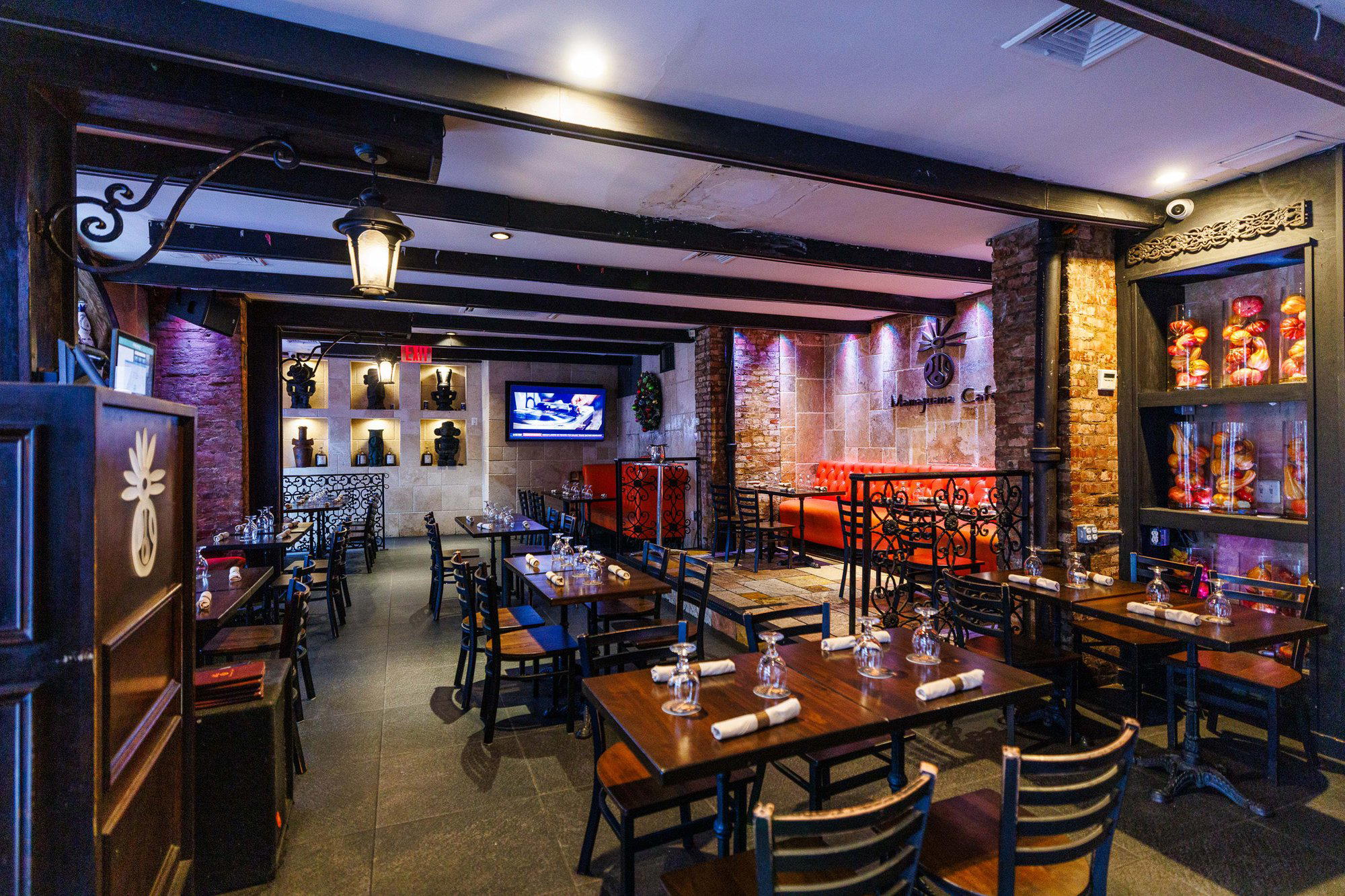
Dyckman Street and the Case for Inwood
Upper Manhattan's dining scene operates largely outside the reservation economy that defines restaurants like Le Bernardin, Atomix, or Per Se, places where lead times of weeks or months are the norm and the booking itself becomes a kind of planning ritual. Dyckman Street works differently. The strip running through Inwood is among the more culturally concentrated corridors of Dominican commercial life in New York City, and the venues along it, including Mamajuana Cafe at 247 Dyckman St, function more as community infrastructure than destination dining. That distinction matters when you're deciding how to plan a visit.
Inwood sits at the northern tip of Manhattan, above Washington Heights, and the character of the neighborhood reflects decades of Latin American settlement, particularly Dominican. Unlike the self-conscious food-destination branding that has reshaped parts of Brooklyn and lower Manhattan, Dyckman Street's restaurants exist primarily for the people who live within walking distance. Mamajuana Cafe draws its name from mamajuana, a traditional Dominican drink made by infusing rum, red wine, and honey with tree bark, herbs, and spices. The name signals what the venue is: a space rooted in Dominican cultural identity rather than one positioning itself for a broader New York food media audience.
The Booking Picture
For travelers accustomed to the booking mechanics of New York's high-end tier, the timed-release reservations at Eleven Madison Park or the allocation-style access at Masa, Mamajuana Cafe Inwood represents a different category entirely. Reservations are recommended, though the venue is not built around a formal advance booking system. Dyckman Street restaurants in this tier typically function as walk-in or same-day destinations, especially earlier in the evening. Weekend nights, when the strip comes alive and extends well past midnight, tend to be the busiest windows. If you are arriving with a group on a Friday or Saturday, factoring in some wait time is reasonable planning rather than a failure of preparation.
The contrast with the midtown and downtown reservation economy is instructive. At venues like Lazy Bear in San Francisco or The French Laundry in Napa, the booking process involves ticketing systems, credit card holds, and cancellation windows. Neighborhood restaurants on Dyckman operate closer to how most of the world's leading everyday dining actually works: you show up, you wait if necessary, you eat. The absence of that formal infrastructure is not a limitation, it reflects the venue's relationship to its primary audience.
Getting to Inwood
The practical case for making the trip uptown is stronger than many visitors expect. From the station, Dyckman Street is a short walk. The corridor itself is compact, most of the action between Tenth Avenue and the waterfront is walkable within a few blocks.
Visitors coming from the more formal end of New York's dining geography, from evenings at Blue Hill at Stone Barns or Smyth in Chicago, will notice that the frame of reference shifts almost completely. The editorial interest here is community, atmosphere, and a cuisine tradition with deep local roots.
Dominican Food on Dyckman: What the Tradition Covers
Dominican cuisine in New York City has a long and specific history, concentrated in Washington Heights and Inwood, and it operates largely outside the fine-dining coverage that shapes how most food publications discuss New York eating. The core of the tradition centers on rice and beans preparations, slow-cooked meat dishes, fried plantains in both their green (tostones) and ripe (maduros) forms, and stews built around goat, oxtail, or pork. Seafood preparations with Caribbean influence appear alongside dishes that reflect the island's Spanish colonial and African culinary inheritance.
Mamajuana Cafe operates within that tradition while also functioning as a nightlife venue, a combination common to Dyckman Street establishments, where the kitchen and the bar run in parallel. The mamajuana drink itself is worth understanding as more than a menu item: in the Dominican Republic, it is prepared at home and shared as a social ritual, often attributed with medicinal properties. Restaurants and cafes that serve it are making a specific cultural statement about their orientation and audience.
For travelers who have covered Latin American food more broadly, through stops at Emeril's in New Orleans or through the California lens of Providence in Los Angeles, Dominican cooking in Inwood represents a distinct register: less concerned with chef-driven narrative, more concerned with feeding a community according to long-established patterns. That is not a lower standard. It is a different one.
Planning Your Visit: What to Know
Reservations: Recommended. Dress: Casual. Budget: About $35 per person. Hours: Mon to Wed 2 PM to 2 AM, Thu 2 PM to 12 AM, Fri 2 PM to 4 AM, Sat 1 PM to 4 AM, Sun 12 PM to 2 AM.
For a broader map of where this fits within New York City's full dining range, from Dyckman Street to the formal tasting menu circuit, see our full New York City restaurants guide. Comparable neighborhood-rooted experiences elsewhere in the country include Frasca Food & Wine in Boulder for its community-embedded model, though the culinary tradition and price point differ substantially. For international comparison points in community-rooted fine dining, Dal Pescatore in Runate and Atelier Moessmer Norbert Niederkofler in Brunico illustrate how deeply place-rooted restaurants build long-term authority, a different scale, but a shared principle. Additional reference points for the broader American restaurant conversation include Addison in San Diego, Single Thread Farm in Healdsburg, and The Inn at Little Washington.
Pricing, Compared
Comparable venues nearby, for context on price, style, and recognition.
| Venue | Cuisine | Price | Notes |
|---|---|---|---|
| Mamajuana Cafe InwoodThis venue — the venue you are viewing | Inwood, Nuevo Latino & Dominican | $$ | Not listed |
| Cabana | Not listed | $$ | Forest Hills, Nuevo Latino Caribbean & Cuban |
| Lowerline | Not listed | $$ | Prospect Heights, New Orleans Creole Po'Boys & Oysters |
| Ajo y Orégano | Bronx, Traditional Dominican & Caribbean | $$ | Not listed |
| Counter & Bodega | Not listed | $$ | Chelsea-Hudson Yards, Authentic Puerto Rican & Pan-Latin Comfort Food |
| Paladar | Not listed | $$ | Lower East Side, Authentic Hispanic Latin Cuisine |
Continue exploring
More in New York City
Restaurants in New York City
Browse all →
Bars in New York City
Browse all →
Hotels in New York City
Browse all →




At a Glance
- Lively
- Energetic
- Romantic
- Date Night
- Group Dining
- Celebration
- Casual Hangout
- After Work
- Late Night
- Live Music
- Standalone
- Open Kitchen
- Craft Cocktails
- Beer Program
- Extensive Wine List
- Farm To Table
Current opening hours
- Monday
- 2 PM–2 AM
- Tuesday
- 2 PM–2 AM
- Wednesday
- 2 PM–2 AM
- Thursday
- 2 PM–12 AM
- Friday
- 2 PM–4 AM
- Saturday
- 1 PM–4 AM
- Sunday
- 12 PM–2 AM
Hours can change for holidays and private events. Last verified .