Cabana
Cabana operates out of Forest Hills, Queens, positioning itself at a remove from Manhattan's high-ticket dining corridor while serving a neighborhood that has historically demanded more from its restaurants than the outer boroughs tend to get credit for. Where comparable venues in the city's premium tier lean on awards and destination-dining theater, Cabana's Queens address signals a different set of priorities, proximity to community, accessibility, and a dining culture shaped by the neighborhood rather than by press cycles.
Pearl is the En Primeur Club membership app — saves, bookings, and concierge access live there. Same editors, same standards.
- Address
- 107-10 70th Rd, Forest Hills, NY 11375
- Phone
- +17182633600
- Website
- cabanarestaurant.com
- Directions
- Get directions
 Saves & bookings on Pearl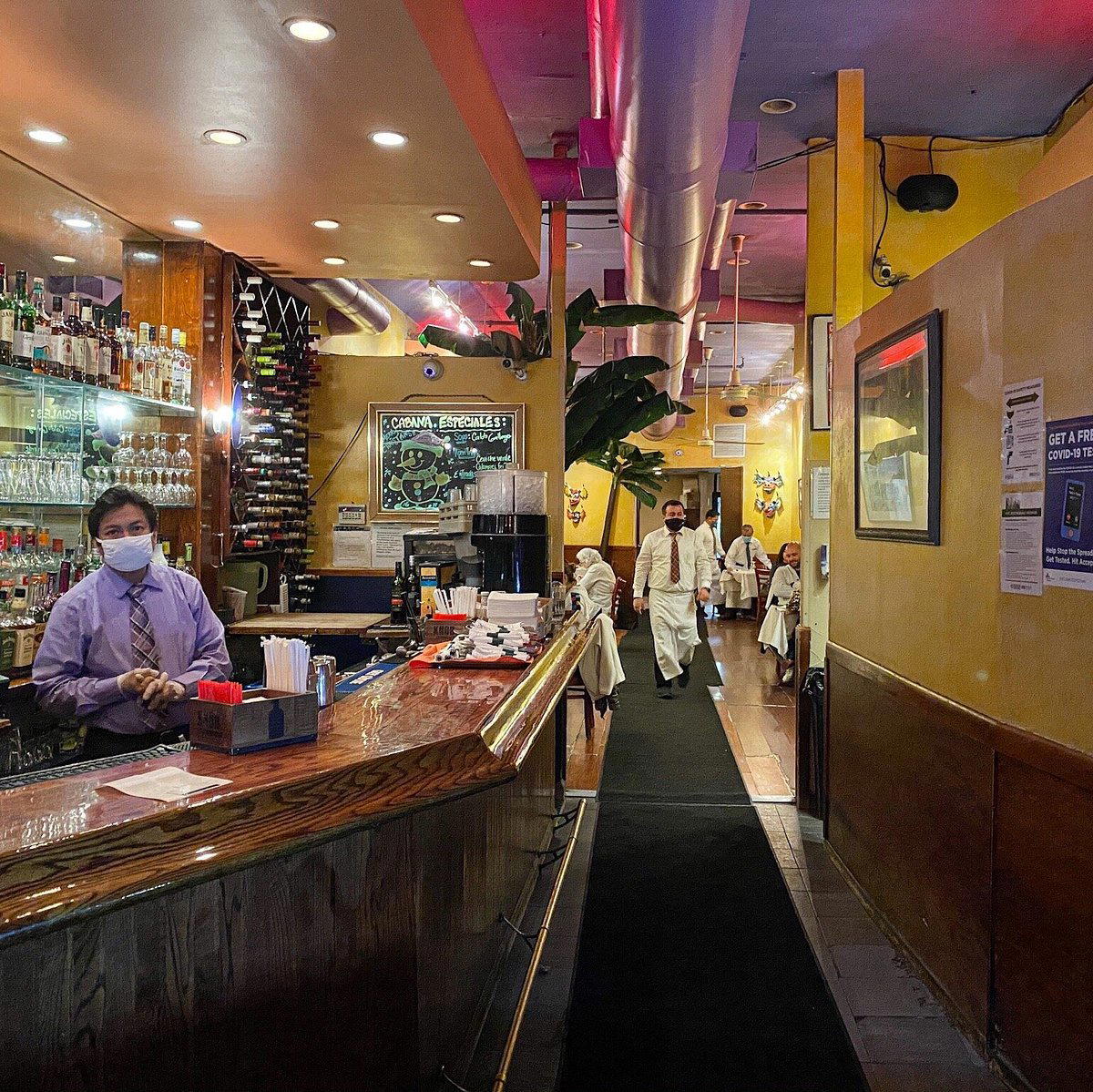
Queens, Sustainability, and the Case for Dining Outside the Manhattan Orbit
Cabana is a restaurant in Forest Hills, Queens, serving Nuevo Latino Caribbean & Cuban cuisine. One consequential shift in New York City's restaurant ecology over the past decade has not happened in Midtown or the West Village. It has happened in the outer boroughs, where a growing cohort of restaurants has quietly demonstrated that serious, considered cooking does not require a Manhattan zip code or a $400 tasting menu. Cabana, operating out of Forest Hills at 107-10 70th Rd in Queens, belongs to that cohort. Forest Hills is a neighborhood with real residential density, an active transit corridor along the LIRR and the E, F, M, and R subway lines, and a dining culture that reflects its population rather than its proximity to a hotel concierge desk.
In the premium Manhattan tier occupied by venues like Le Bernardin, Atomix, Eleven Madison Park, Masa, and Per Se, sustainability has increasingly become a formal program, documented sourcing relationships, publicized waste reduction targets, and environmental commitments that function partly as marketing. Outside that tier, in neighborhoods where margins are tighter and the clientele is local rather than destination-driven, sustainability tends to operate differently: as operational necessity rather than narrative, shaped by what the market actually requires.
Forest Hills and the Outer-Borough Restaurant Moment
Forest Hills sits roughly 40 minutes by subway from Midtown Manhattan, and that distance has historically meant that restaurants in the neighborhood operate for a genuinely local audience. The dining culture here is shaped by a mix of long-established residential communities, a significant South Asian and Latin American population, and a corridor along Austin Street that has supported independent restaurants for decades. That environment produces different restaurant instincts than those cultivated in neighborhoods where the primary customer is a tourist, a business expense account, or a destination diner chasing a reservation.
Blue Hill at Stone Barns in Tarrytown has documented its farm-to-table sourcing with unusual transparency. Single Thread Farm in Healdsburg integrates its restaurant with an on-site farm operation. Smyth in Chicago and Providence in Los Angeles have both built sourcing programs around seasonal availability and documented supplier relationships. The common thread is that particularly credible environmental commitments in American fine dining tend to come from restaurants where sourcing is structurally embedded, not bolted on as a communications strategy.
What the Queens Address Implies About Sourcing and Scale
Restaurants operating in outer-borough New York without national press profiles and without the capital infrastructure of destination-dining venues tend to source through tighter, more direct networks by default. The large distribution chains that supply high-volume Manhattan restaurants are less economically efficient at the neighborhood scale. That dynamic, smaller order volumes, more direct supplier relationships, shorter supply chains, produces sourcing practices that often align more closely with sustainability principles than those of larger, more institutionalized operations, even if those practices are never formally labeled as such.
This is the pattern that places like Lazy Bear in San Francisco, Frasca Food and Wine in Boulder, and Addison in San Diego have demonstrated in their respective markets: a restaurant's environmental footprint is often more a function of its operational structure than its public commitments. When a restaurant sources regionally because it is the practical choice, that tends to produce more consistent outcomes than sourcing regionally as a declared mission subject to the pressures of cost and availability.
Internationally, the comparison holds. Atelier Moessmer Norbert Niederkofler in Brunico and Dal Pescatore in Runate both operate with deep regional sourcing as a structural feature of their cooking, not a marketing overlay. The argument, in each case, is the same: proximity to supply is a precondition for genuine sustainability, not a supplement to it.
Practical Details for Visiting
Cabana is located at 107-10 70th Rd in Forest Hills, Queens, a neighborhood accessible by the E, F, M, and R trains to Forest Hills-71st Avenue, or by the Long Island Rail Road to Forest Hills station, which places the address well within reach from both Manhattan and the broader outer-borough transit network. Forest Hills is a neighborhood with enough independent character, the adjacent West Side Tennis Club, the Tudor-style residential blocks, and the Austin Street dining corridor to make the trip worth structuring as an afternoon or evening rather than a quick reservation. Phone, website, hours, and specific booking information are not confirmed in the current materials.
For reference points at the opposite end of the price and formality spectrum, Emeril's in New Orleans, The French Laundry in Napa, and The Inn at Little Washington each represent what the destination-dining model looks like when resourced at full scale, a useful contrast to what Forest Hills restaurants are actually building.
The Short List
Comparable venues nearby, for context on price, style, and recognition.
| Venue | Cuisine | Price | Notes |
|---|---|---|---|
| CabanaThis venue — the venue you are viewing | Not listed | $$ | Not listed |
| Counter & Bodega | Not listed | $$ | Chelsea-Hudson Yards, Authentic Puerto Rican & Pan-Latin Comfort Food |
| The International Brunch Series | Hell's Kitchen, Afro-Caribbean Brunch | $$ | Not listed |
| Pilar Cuban Eatery | Not listed | $$ | Bedford-Stuyvesant (West), Authentic Cuban |
| Cafe Con Leche | Not listed | $$ | Upper West Side (Central), Authentic Puerto Rican Criolla |
| Filé Gumbo Bar | Tribeca, Cajun & Creole Gumbo Bar | $$ | Not listed |
Continue exploring
More in New York City
Restaurants in New York City
Browse all →
Bars in New York City
Browse all →
Hotels in New York City
Browse all →




At a Glance
- Lively
- Energetic
- Group Dining
- Late Night
- Casual Hangout
Current opening hours
- Monday
- 11:30 AM–11 PM
- Tuesday
- 11:30 AM–11 PM
- Wednesday
- 11:30 AM–11 PM
- Thursday
- 11:30 AM–11 PM
- Friday
- 11:30 AM–11 PM
- Saturday
- 11:30 AM–11 PM
- Sunday
- 11:30 AM–11 PM
Hours can change for holidays and private events. Last verified .
Lively and friendly atmosphere with fresh, beautifully presented dishes in both indoor and outdoor seating areas.