Counter & Bodega
Counter & Bodega sits on 7th Avenue in Chelsea, occupying a corner of the neighbourhood where counter-service formats and neighbourhood-bodega culture have historically overlapped. In a New York dining scene that increasingly rewards format clarity, its dual identity positions it between the casual and the considered. Find it at 216 7th Ave in the heart of Chelsea.
Pearl is the En Primeur Club membership app — saves, bookings, and concierge access live there. Same editors, same standards.
- Address
- 216 7th Ave, New York, NY 10011
- Phone
- +16468700785
- Website
- counterandbodega.com
- Directions
- Get directions
 Saves & bookings on Pearl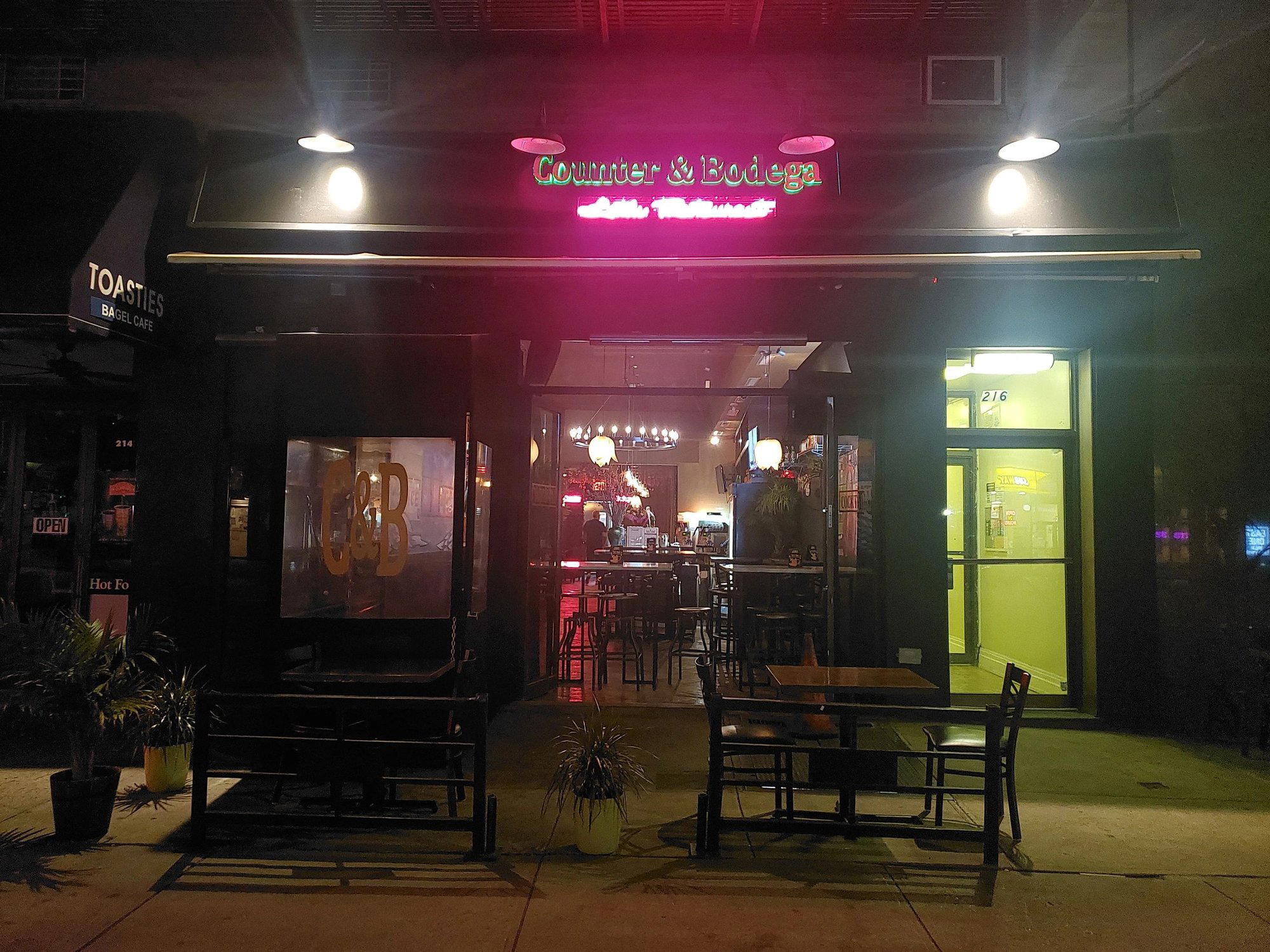
Chelsea's Counter Culture: Where the Ritual of the Everyday Meal Gets Serious
In New York City, one revealing thing about how a neighbourhood eats is not its tasting menus or its press-courted openings, but the places where locals return without thinking about it. Chelsea's 7th Avenue corridor has long supported exactly that kind of dining: formats that are fast enough for a weekday but deliberate enough to feel like a choice. Counter & Bodega, at 216 7th Ave, occupies that precise register. The name alone signals a dual inheritance, the counter as a dining posture, the bodega as a New York institution with its own grammar of hospitality.
That pairing is worth taking seriously. The American counter format carries a specific dining ritual: you sit facing a workspace or a bar, you engage with what's being made, and the pacing is set less by the kitchen's ambitions than by your own appetite. It strips the meal back to something more transactional but, done well, something more honest. The bodega strand adds another layer, the idea that a neighbourhood place should function as infrastructure, not occasion. These are not the premises of a destination restaurant. They are the premises of somewhere that earns its place by showing up consistently.
Format First: What the Counter Dining Posture Tells You
Counter dining has its own etiquette, distinct from the tasting-menu formats that dominate New York's upper tier. At venues like Atomix or Masa, the counter is a theatre: a deliberate stage for a choreographed progression of courses, where the diner's role is largely receptive. At the other end of the register, the counter is a working surface, a place where orders are placed, food arrives without ceremony, and the meal is measured in satisfaction rather than narrative arc.
Counter & Bodega's positioning at 216 7th Ave places it in Chelsea, a neighbourhood whose dining character has shifted noticeably over the past decade. The gallery district pulled in a certain kind of crowd: design-conscious, schedule-aware, interested in quality without the overhead of a formal dining room. That demand created space for a tier of venues that take ingredients and preparation seriously but package them in formats that don't ask much of the diner's time or patience. Counter service is one answer to that demand. It removes the table-turn pressure, shortens the transactional friction, and lets the food carry the argument.
Across American cities, the counter-and-casual format has gained ground as a credible alternative to both fast food and full-service dining. Lazy Bear in San Francisco approached the problem from the opposite direction, using counter and communal seating to frame a high-end tasting menu. Smyth in Chicago navigates a different tension, pairing a polished dining room with a more casual downstairs. The format question, how much structure does a good meal need?, is one that serious kitchens are actively working through, and the counter remains among the more direct answers.
The Bodega Logic and What It Means for a Dining Room
New York's bodega is a specific cultural object. It is not a corner shop in the generic sense. It is a neighbourhood node with a regular cast, a shorthand for the city's social fabric, and a kind of hospitality that operates entirely without flourish. The bodega remembers what you order. It is open when other things are not. It functions on trust built through repetition rather than occasion.
When a restaurant absorbs the bodega into its name, it makes a claim about its role in the neighbourhood. Not a destination, not a celebration venue, but a place with regular hours, regular faces, and a menu that earns loyalty through consistency rather than novelty. That is a specific kind of ambition, and in New York it is not a lesser one. The city's most durable dining institutions, the ones that outlast critical cycles and trend shifts, tend to be places with that kind of neighbourhood gravity.
Chelsea's eating scene has historically had a fragmented quality. The neighbourhood's commercial character, shaped by gallery openings and the High Line's tourism pull, has meant that plenty of venues target visitors rather than residents. A bodega-inflected format is, at least in principle, a counter-argument to that: a place that earns its audience block by block rather than column by column.
Placing Counter & Bodega in the New York Dining Spectrum
New York's dining spectrum runs from the city's most formally structured rooms, Le Bernardin, Eleven Madison Park, Per Se, to the neighbourhood formats that keep the city fed on ordinary days. Counter & Bodega sits toward the latter end of that spectrum, in a tier where the dining ritual is less about ceremony and more about the cumulative satisfaction of returning to somewhere that works.
That tier has its own competitive logic. At the $$$$ end, venues compete on credentials, tasting-menu innovation, and Michelin recognition. At the counter-and-casual end, the competition is local: proximity, consistency, value in the original sense of the word. The relevant comparable set for Counter & Bodega is not Atomix or Masa but the other 7th Avenue options within walking distance of Chelsea's working population.
It is worth noting that across American cities, the venues that have built the deepest community loyalty in this tier are those with clear format discipline. Emeril's in New Orleans and Frasca Food & Wine in Boulder have both built long-term local followings by knowing exactly what they are and not drifting from it. Providence in Los Angeles and Addison in San Diego occupy a more formal register but have similarly earned durability through format clarity. The lesson transfers downward: a counter place that knows its purpose is more durable than an ambitious one that doesn't.
- Pernil Platter
- Lomo Saltado
- Ropa Vieja
- Pollo Guisado
- Enchiladas con Salsa Verde
- Shrimp Ceviche
A Minimal comparable set
Comparable venues nearby, for context on price, style, and recognition.
| Venue | Cuisine | Price | Notes |
|---|---|---|---|
| Counter & BodegaThis venue — the venue you are viewing | Not listed | $$ | Not listed |
| Jasmine's Caribbean Cuisine | Not listed | $$ | Hell's Kitchen, Authentic Caribbean Cuisine |
| Cabana | Not listed | $$ | Forest Hills, Nuevo Latino Caribbean & Cuban |
| Cas West Indian & American Restaurant | Not listed | $$ | Crown Heights, Jamaican / West Indian |
| Ajo y Orégano | Bronx, Traditional Dominican & Caribbean | $$ | Not listed |
| El Castillo De Jagua Restaurant | Lower East Side, Authentic Dominican | $$ | Not listed |
Continue exploring
More in New York City
Restaurants in New York City
Browse all →
Bars in New York City
Browse all →


Hotels in New York City
Browse all →






At a Glance
- Cozy
- Lively
- Casual
- Casual Hangout
- Group Dining
- Family
- After Work
- Celebration
- Garden
- Private Dining
- Open Kitchen
- Craft Cocktails
- Beer Program
- Garden
Current opening hours
- Monday
- Closed
- Tuesday
- 2 PM–12 AM
- Wednesday
- 2 PM–12 AM
- Thursday
- 2 PM–1 AM
- Friday
- 2 PM–2 AM
- Saturday
- 2 PM–2 AM
- Sunday
- 12–11 PM
Hours can change for holidays and private events. Last verified .
Welcoming and stylish with a cozy garden setting; warm lighting and genuine hospitality create an inviting neighborhood atmosphere.