
MAISON LANDEMAINE Azabudai brings Paris-rooted boulangerie-patisserie culture into Minato’s café circuit, with bread, Western-style sweets, vegetarian options, takeout and delivery in a compact 12-seat format. Its Tabelog Bread TOKYO “Tabelog 100” selection in 2022 places it among Tokyo bakeries with public recognition rather than mere neighbourhood convenience.
Pearl is the En Primeur Club membership app — saves, bookings, and concierge access live there. Same editors, same standards.
- Address
- 3 Chome-1-5 Azabudai, Minato City, Tokyo 106-0041, Japan
- Phone
- +81 3-5797-7387
- Website
- hotpepper.jp
 Saves & bookings on Pearl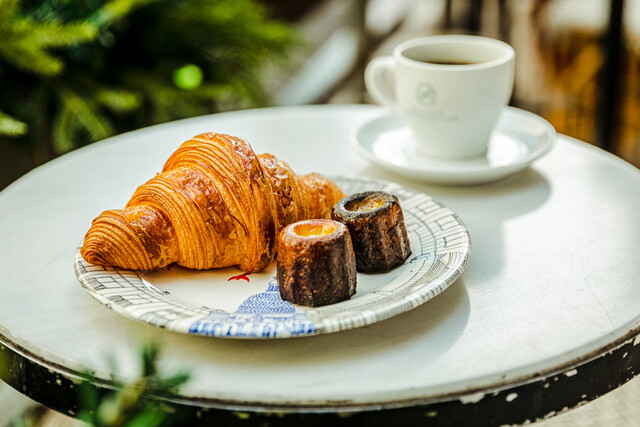
Azabudai’s bread culture is shaped by movement: office workers cutting through Minato in the morning, residents using cafés as small domestic extensions, and visitors moving between Roppongi Itchome, Iikura Katamachi and the wider Tokyo Tower side of the district. In that setting, the Paris-born boulangerie-patisserie format makes sense. It gives the neighbourhood something lighter than a full restaurant, more deliberate than a convenience-store bakery, and more flexible than a dessert salon.
Tokyo has long treated bread as a serious category rather than a supporting act. The city’s bakery scene absorbs French technique, Japanese precision and café pragmatism, then compresses them into daily routines: breakfast, takeaway, a small table between appointments, a box carried home. MAISON LANDEMAINE Azabudai sits in that practical middle tier, listed for Bread, Western-style sweets and café service rather than a single tasting-menu identity. Its selection for Tabelog Bread TOKYO “Tabelog 100” in 2022 gives it a public marker in a category where repeat local use matters as much as destination dining.
Paris-style bread culture, filtered through Minato's daily rhythm
The interesting point here is not novelty. Tokyo has many French-leaning bakeries, and the city understands laminated dough, baguette culture and café sweets without needing a foreign stamp to validate them. The sharper read is how this branch fits Azabudai’s changing appetite for useful premium casual formats. Nearby fine-dining rooms such as Series, Patous, Mētis Roppongi, Dining 33 and DepTH brianza occupy a more formal register; the bakery-café format answers a different need, built around short visits, portable purchases and low-commitment seating.
That difference matters for travellers. A bakery in this part of Tokyo can function as breakfast, a pause between appointments, or a low-friction alternative when a full lunch feels excessive. The 12-seat scale keeps the room compact, while takeout and delivery extend the format beyond the tables. This is where environmental consciousness becomes practical rather than slogan-led: bakery-café culture rewards smaller, targeted purchases, easy transport, and menus that can accommodate vegetarian choices and allergy information without turning the visit into a production.
The Paris connection also carries a useful constraint. French bakery tradition depends on daily repetition: dough, proofing, finishing, selling through the day. In Tokyo, that discipline meets a customer base accustomed to precision and packaging, and the result is often cleaner than the romantic idea of the neighbourhood boulangerie. The Azabudai branch belongs to that hybrid model: recognisably French in category, Japanese in operational neatness, and suited to a district where people often want quality without ceremony.
A compact café model with a lighter footprint than destination dining
Sustainability in restaurant writing is often reduced to farm names and moral language. A bakery-café offers a quieter version. Vegetarian options are listed, allergy information is available, smoking is not part of the room, and the service model includes takeaway. None of that turns a croissant counter into an environmental manifesto, but it does signal a contemporary casual format built around choice, moderation and reduced friction. For a city where premium dining can mean long menus and high resource intensity, this category offers a different kind of value.
The price band also shapes the decision. This is not trying to compete with the city’s grand French rooms or high-ticket counters. It belongs to the daily-use end of Tokyo’s quality spectrum, where the reader should judge by reliability, breadth and convenience rather than by ceremony. The Tabelog score of 3.77 and the 2022 Bread TOKYO “Tabelog 100” selection are useful signals because bread shops are judged repeatedly by local customers, not only by special-occasion diners.
Families are part of the equation, though the format remains compact. Children are welcome, but the room is not built around large-party comfort, and the seating cap makes this better for a brief café stop than a sprawling group meal. Terrace seating that allows pets adds another layer of neighbourhood utility. The smarter use is targeted: breakfast, takeaway pastries or bread, a short sit-down, or a stop folded into a Minato day rather than a standalone pilgrimage.
How to place it in a Tokyo food itinerary
For EP Club readers, the editorial question is where a bakery-café belongs in a Tokyo schedule dominated by sushi counters, kappo rooms, cocktail bars and hotel dining. The answer is between the headline meals. Bread in Tokyo is often strongest when treated as a morning or afternoon ritual, not as a replacement for the city’s formal restaurants. This address works particularly well when the day is anchored around Roppongi, Azabudai or central Minato and the plan needs a polished, unfussy stop.
Those building a broader dining map can use Our full Tokyo restaurants guide for the wider restaurant circuit, then compare mood and time commitment with places such as . 鮪と炭火焼き うお炭 秋葉原店, 12/10 Shinjuku ten, 124. KAGURAZAKA (Yakitori), 2D Cafe and 3 Chome no Curry Ya San. For city planning beyond restaurants, keep Our full Tokyo hotels guide, Our full Tokyo bars guide, Our full Tokyo wineries guide and Our full Tokyo experiences guide close.
The same casual-premium lens applies across Japan and beyond: -Grilled beef Sukiyaki- KAMAKURA TANUKIAN 鎌倉 たぬき庵 in Kamakura.cafe in Osaka.know in Kumamoto, (Shoku) Vietnam in Kawasaki, [Curry Senmon Ten] Maruyama Kyoju. in Sapporo and [ki:] in Kyoto each show how focused formats can carry a trip without requiring formality. For readers tracking Japanese food culture overseas, Jōdo Saké Bar in Los Angeles and Onigiri Time in Pasadena belong to that same conversation about everyday formats treated with care.
Cuisine and Recognition
Comparable venues to anchor price and recognition.
| Venue | Cuisine | Price | Notes |
|---|---|---|---|
| MAISON LANDEMAINE AzabudaiThis venue — the venue you are viewing | French Bakery-Cafe | $$ | Not listed |
| ラス | Modern French Omakase | $$ | Minato |
| Boule Beurre Boulangerie | French Bakery-Café | $$ | Hachioji |
| MAISON D'AHNI | Basque-style French patisserie | $$ | Minato |
| LE CAFE de Joel Robuchon Nihonbashi takashimaya ten | French café and patisserie by Joël Robuchon | $$ | Chūō |
| Liberte Patisserie Boulangerie Tokyo honten・kichijoji | French patisserie & bakery café | $$ | Kichijoji |
Recognition history
Dated appearances from independent guides and award organizations, with the underlying list record or original source where available.
Tabelog 100 #5 · No. 5
Tabelog · Tabelog 100 - Bread - TOKYO - 2022












At a Glance
- Quiet
- Cozy
- Scenic
- Modern
- Classic
- Solo
- Brunch
- Casual Hangout
- Family
- Group Dining
- Terrace
- Open Kitchen
- Standalone
- Beer Program
- Street Scene
Current opening hours
- Monday
- 8 AM–4 PM
- Tuesday
- 8 AM–4 PM
- Wednesday
- 8 AM–4 PM
- Thursday
- 8 AM–4 PM
- Friday
- 8 AM–4 PM
- Saturday
- 8 AM–6 PM
- Sunday
- 8 AM–6 PM
Hours can change for holidays and private events. Last verified .
A calm, Parisian-style bakery-cafe atmosphere with a terrace, visible bread production, and a relaxed setting slightly removed from the busiest streets.