Michelin Plate
Our verdict
A French restaurant in Osaka's Chuo Ward business district, macua holds consecutive Michelin Plate recognition for 2024 and 2025 and sits in the accessible tier of the city's French dining scene. The kitchen frames French technique through a philosophy of amplified enjoyment, with amuse-gueules built as individual narrative bites and dishes that draw on classical references, including a foie gras-inflected riff on the Rossini tradition.

Pearl is the En Primeur Club membership app, where members save venues, book tables and use the concierge.
French Dining in the Fushimimachi Grid
Osaka's Chuo Ward is not primarily a restaurant district. The blocks around Fushimimachi run on banking hours, and the streets between Yodoyabashi and Honmachi fill with suits at lunch and empty out by early evening. That rhythm shapes what the French restaurants here have to be: technically credible enough to justify the expense account, quiet enough for a working dinner, and specific enough to stand apart from the hotel dining rooms a few stops away. macua occupies this position in the ward's French tier, and the address, 2 Chome-2-3 Fushimimachi, places it squarely inside that professional dining corridor.
The broader French dining spectrum in Osaka runs from three-Michelin-star ambition at La Cime down through a well-populated mid-tier of technically trained kitchens. macua holds a Michelin Plate in both 2024 and 2025, a designation that signals consistent kitchen standards without the full star rating. That puts it in the same general tier as Différence and La Bécasse, and well below the ¥¥¥¥ bracket occupied by LE PONT DE CIEL on price. The ¥¥¥ pricing makes it one of the more accessible entry points into Michelin-recognised French cooking in the city.
The Room and What It Does to Dinner
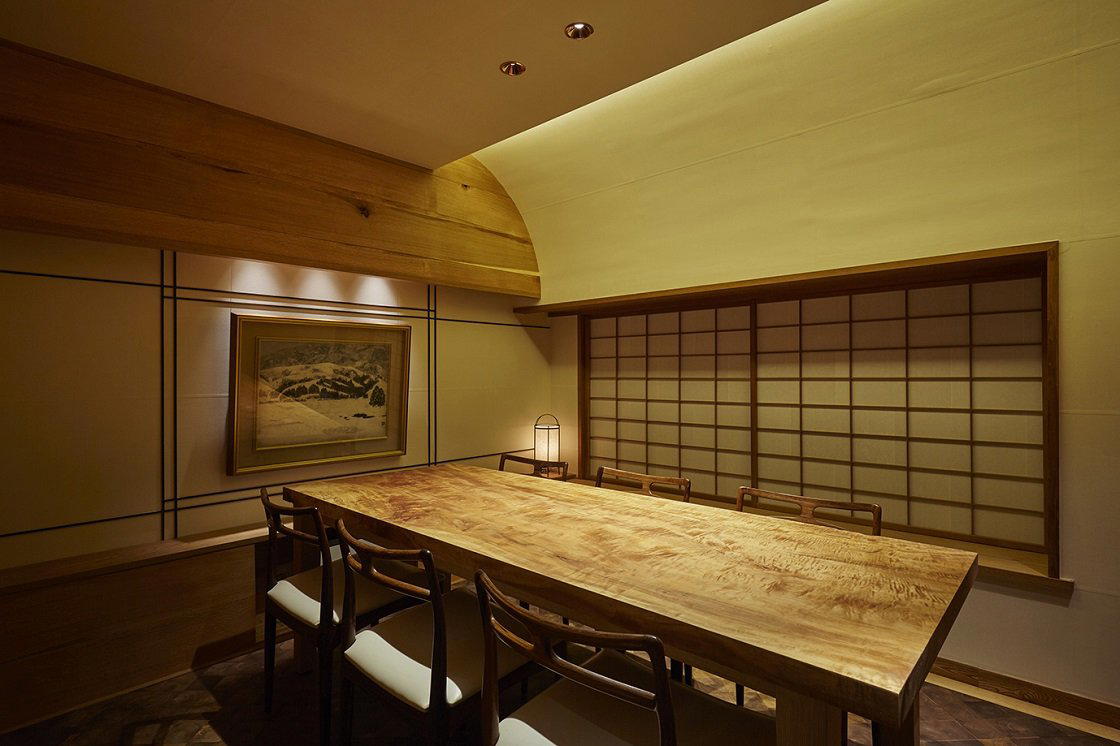
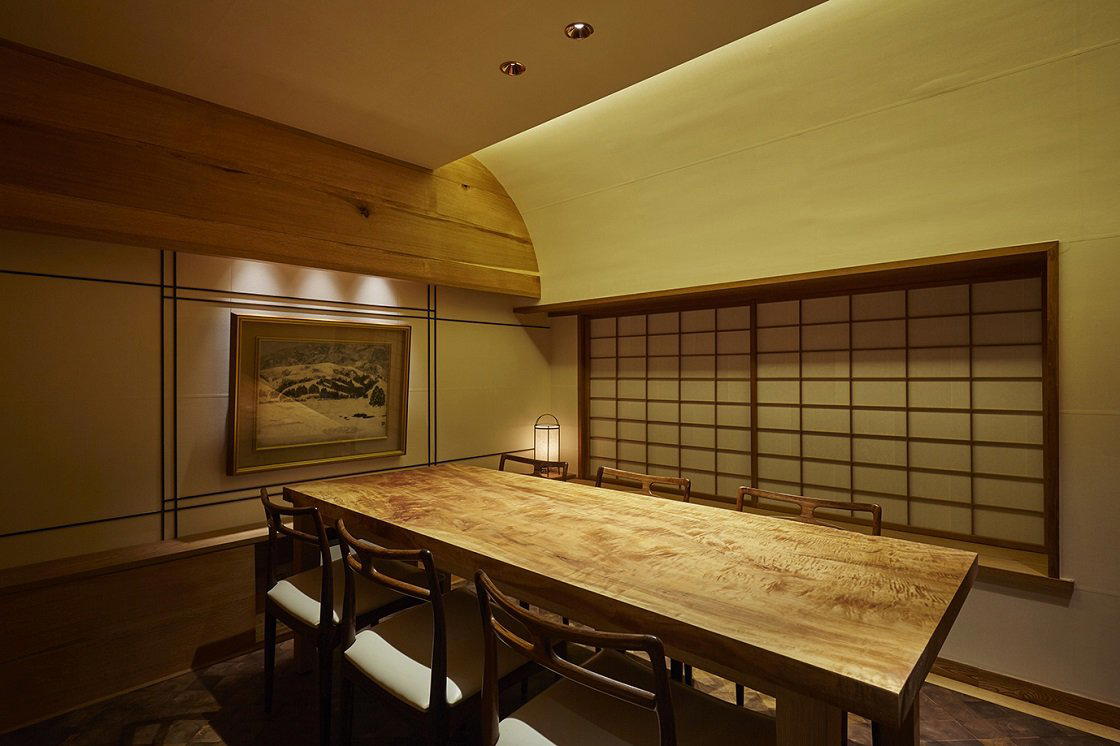
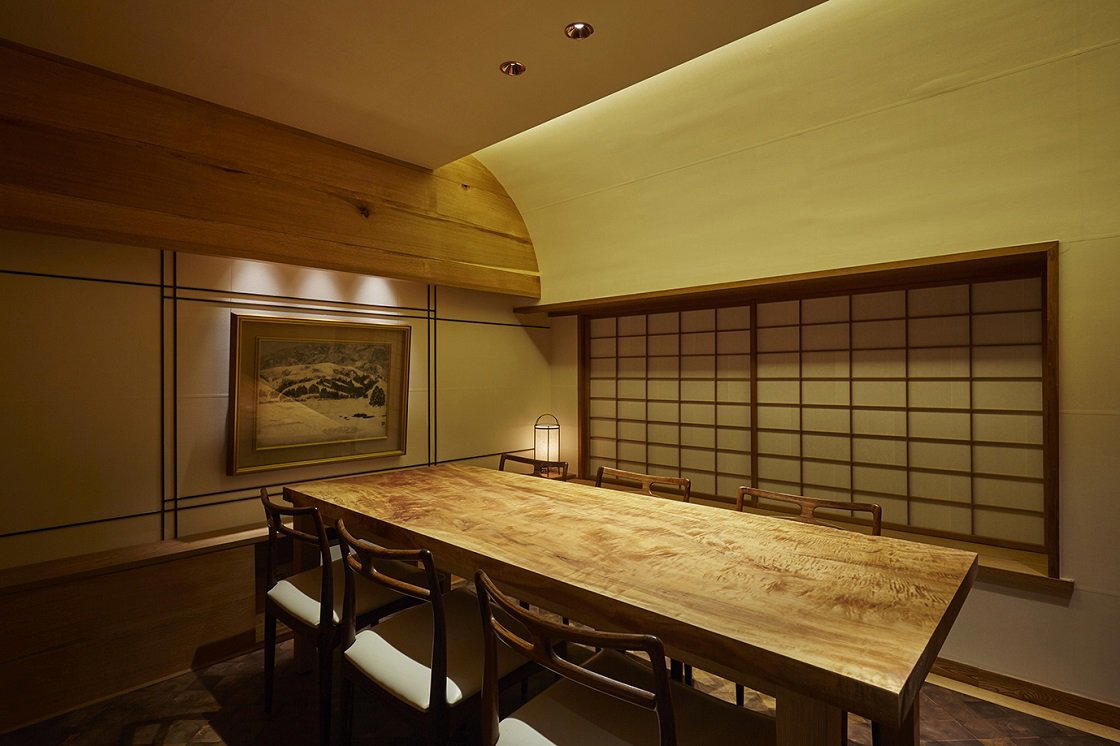
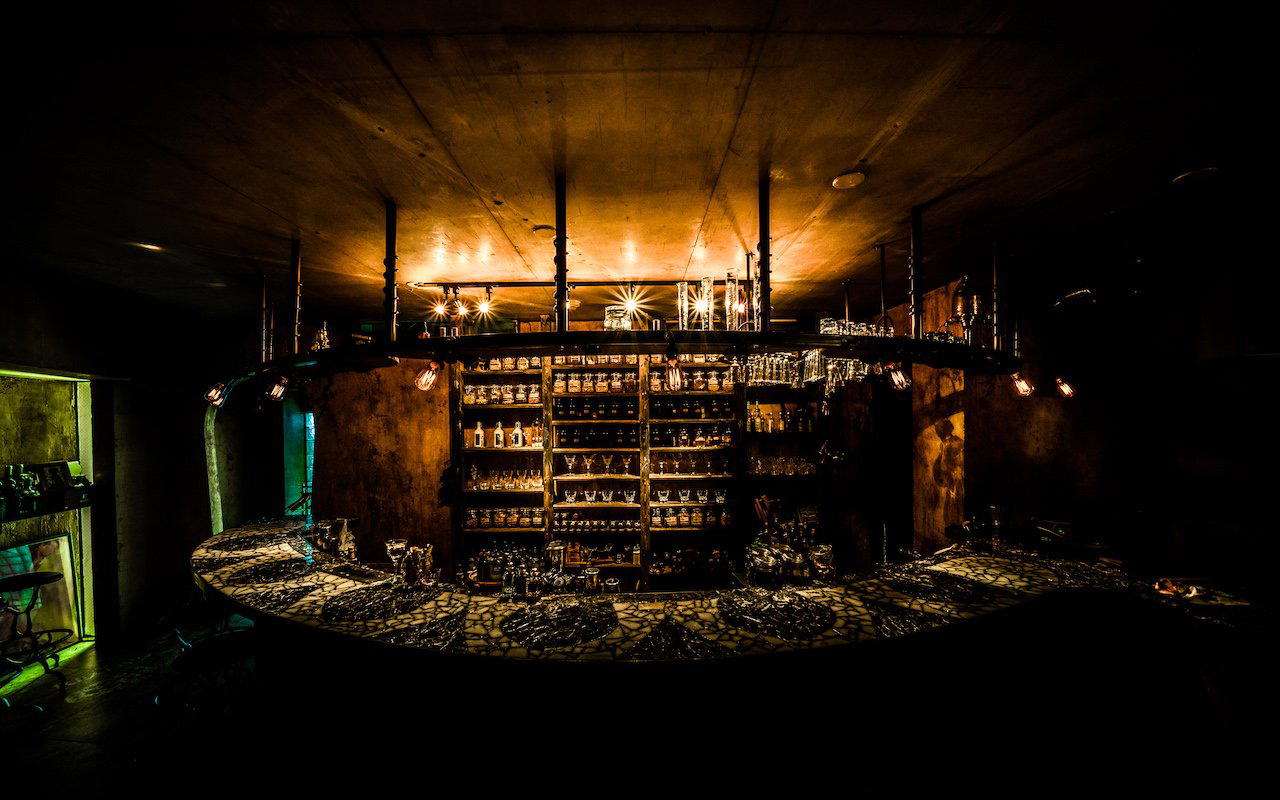
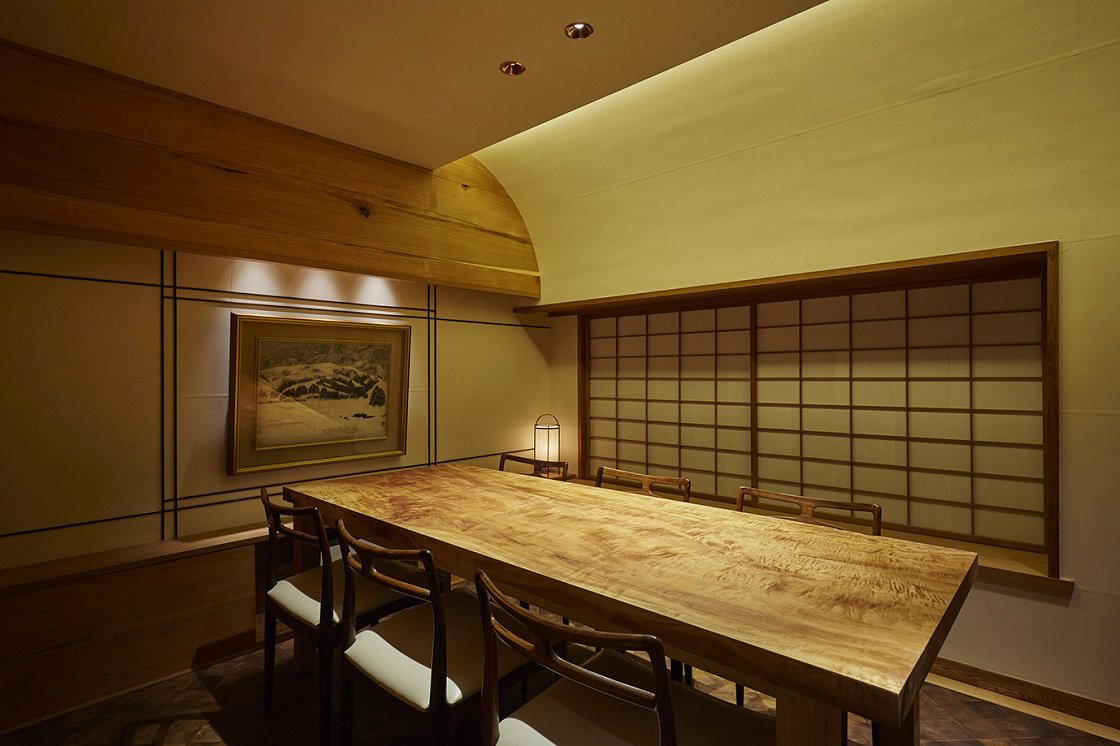
French restaurants in Japan's business districts tend toward interior restraint: dark wood, neutral stone, seating arrangements that give tables enough distance for conversation to stay private. That design language is deliberate. In a dining room serving corporate clients and anniversary reservations in the same service, the architecture has to do a lot of social work, creating enclosure without heaviness, formality without rigidity. The spatial logic at macua sits within that tradition. The Fushimimachi address, a second-floor position in a commercial building on a low-traffic block, already filters for a certain kind of diner before they've sat down.
The name itself is a constructed word: a contraction of the French magnifier (to make larger), cuisine, and agréable (enjoyable). The intended reading is cuisine that amplifies pleasure, and that framing shapes how the room is used. The amuse-gueule sequence arrives as a set of individual dishes rather than a single shared piece, each one designed to carry a discrete idea. This approach to the pre-meal course is common at serious French tables in Japan, where the kitchen's vocabulary gets established early before the main sequence builds on it.
The Kitchen's Reference Points
Classical French cuisine in Japan has a long and largely independent development. Where European kitchens have moved through successive waves of reaction, nouvelle cuisine, molecular, naturalist, French cooking in Japan absorbed those influences selectively and often preserved classical structures that French kitchens themselves had moved past. The result, in restaurants like macua, is a version of French technique that can feel simultaneously more conservative and more precise than its Parisian counterparts.
The Rossini reference in the kitchen's own description of its work is revealing. The original tournedos Rossini, beef fillet, foie gras, truffle, Madeira, is one of the most formally constructed dishes in the classical repertoire. Reworking it as a burger format is not ironic in the way a European kitchen might frame that move. In Japanese French cooking, the gesture tends to be more literal: the flavour logic of the original, rehoused in a form that has its own cultural weight. The foie gras and beef pairing survives; the formality of the presentation shifts.
Edible flowers as a visual element in plating have become standard at this tier of French dining across Japan, used for colour control rather than flavour contribution. What distinguishes kitchens at this level is whether the colour work extends the dish's argument or decorates over it. The Michelin Plate designation, held across two consecutive years, suggests the kitchen is operating with enough consistency that the answer tips toward the former.
For comparison across the Kansai region, Gion Sasaki in Kyoto and akordu in Nara represent adjacent French and European traditions working with the same regional produce base. Further afield, Sézanne in Tokyo and Hotel de Ville Crissier anchor the French fine dining reference set at a higher price point, providing the competitive ceiling against which Osaka's mid-tier French tables define their proposition.
Fushimimachi and the Business Dining Dynamic
The Chuo Ward French tier is not the only serious option in Osaka. nent operates in a different register entirely, and the kaiseki tradition that runs through the city's Japanese fine dining offers its own calibrated hospitality logic. But French cooking in the business district fills a specific function: it provides a shared formal language for tables where guests may not share a culinary culture. The classical French structure, amuse, first course, main, cheese, dessert, gives everyone at the table the same map.
An 83-review base at 4.1 suggests a stable, repeat-friendly operation rather than a destination that pulls tourist traffic.
For anyone building a broader Osaka dining week, the restaurant sits well as a mid-week dinner option, professional enough to wear your better jacket, accessible enough in price that you're not reserving it three months out. Our full Osaka restaurants guide maps the complete spectrum, from kaiseki to casual. If you're staying nearby, our Osaka hotels guide covers the Chuo Ward options. For post-dinner drinks, our Osaka bars guide covers the nearby Minami and Kitahama options. Wine-focused visitors may also want to consult our Osaka wineries guide or our Osaka experiences guide for the wider picture.
Comparable French Michelin Plate kitchens in other Japanese cities, Harutaka in Tokyo, Goh in Fukuoka, 1000 in Yokohama, and 6 in Okinawa, each reflect how French technique gets filtered through regional produce and local dining culture. macua's version is, above all, a Chuo Ward answer to that question.
Know Before You Go
- Address: 2 Chome-2-3 Fushimimachi, Chuo Ward, Osaka, 541-0044, Japan
- Price range: ¥¥¥ (mid-range for Osaka French dining)
- Recognition: Michelin Plate 2024 and 2025
- Nearest stations: Fushimi (Midosuji Line) and Honmachi (Yotsubashi/Chuo Lines) are both within the immediate area
- Hours: Not confirmed; verify before travelling
- Dress: Smart casual is standard for this address and tier
Frequently asked questions
Where do I go for macua?
macua is located at 2 Chome-2-3 Fushimimachi, Chuo Ward, Osaka, 541-0044, Japan, Osaka.
Is macua expensive?
Pricing at macua is listed as ¥¥¥.
Is macua Michelin-listed?
macua has received recognition including: ‘Macua’ is a contraction of three French words: magnifier, to make larger: cuisine; and agréable, enjoyable: cuisine that magnifies enjoyment. Amuse-gueules are enjoyed as a variety of dishes, each telling its own story. Rossini Burger, ins….
What should I eat at macua?
The kitchen structures meals around amuse-gueules served as a sequence of individual small dishes, each composed to stand on its own. The Rossini Burger reworks the classical beef-and-foie-gras combination into a format that reads as contemporary without abandoning the French reference. Colourful platings built around edible flowers are a consistent feature across courses.
What's the cuisine at macua?
Is macua reservation-only?
Macua sits in Osaka's Chuo Ward at 2 Chome-2-3 Fushimimachi, a district that runs largely on corporate schedules. French restaurants at the ¥¥¥ price point in this part of the city typically require advance booking, particularly for dinner seatings mid-week. No direct contact details are currently listed, so booking through a concierge or hotel desk is the practical first step.
What's the defining dish or idea at macua?
The name itself signals the intent: macua is a contraction of the French words magnifier (to enlarge), cuisine, and agréable (enjoyable), framing the kitchen's purpose as amplifying the pleasure of eating rather than chasing technical spectacle. That ethos shows most clearly in the Rossini Burger, where a historically weighted classical dish is reframed without losing its reference points. Macua has held the Michelin Plate in both 2024 and 2025, placing it within Osaka's recognised French tier.
Peers in This Market
A small set of peers for context, based on recorded venue fields.
| Venue | Cuisine | Price | Awards | Notes |
|---|---|---|---|---|
| macuaThis venue (the venue you are viewing) | Modern French Fine Dining | $150–200 | Michelin Plate | Not listed |
| HAJIME | Avant-Garde Japanese Fine Dining | $300–500 | 3 Michelin Stars · World's 50 Best #83 | French, Innovative |
| La Cime | Modern French with Japanese Ingredients | $150–200 | 2 Michelin Stars · World's 50 Best #13 | French |
| Kashiwaya Osaka Senriyama | Seasonal Kaiseki Omakase | $200–300 | 3 Michelin Stars · La Liste Top Restaurants | Japanese |
| Taian | Traditional Japanese Kaiseki Omakase | $150–200 | 3 Michelin Stars · La Liste Top Restaurants | Kaiseki, Japanese |
| Fujiya 1935 | Modern Japanese with European influences | $100–150 | 2 Michelin Stars · La Liste Top Restaurants | Innovative |
Recognition history
Dated appearances from independent guides and award organizations, with the underlying list record or original source where available.
Michelin Plate
Michelin
Full recognition history (3 entries)
Michelin Plate
Michelin
Michelin Plate
Michelin