
Michelin Plate
Our verdict
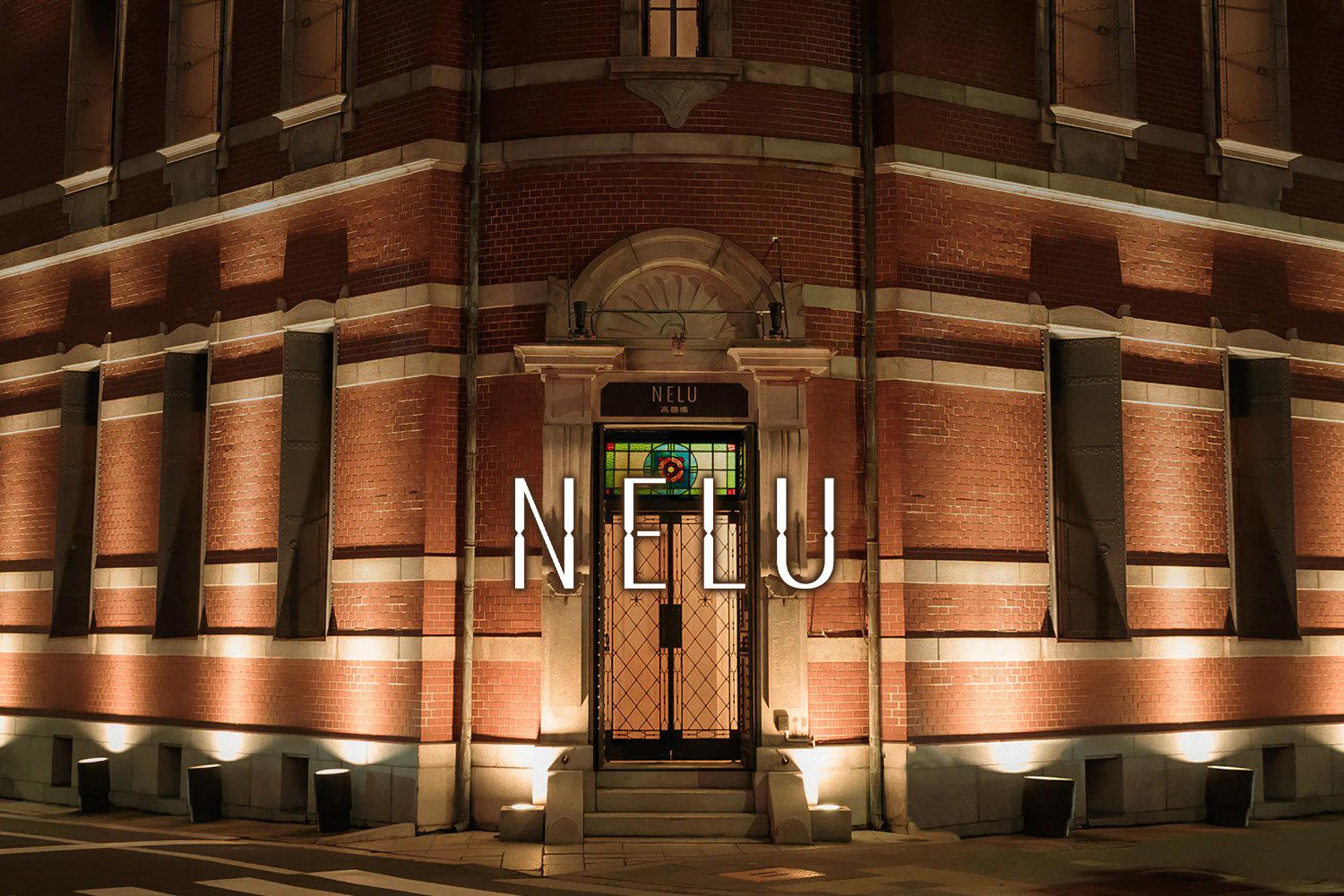
Inside a red-brick Western-style building that has stood in Osaka's Koraibashi district since the early twentieth century, NELU KORAIBASHI serves a prix fixe menu where French culinary tradition meets deliberate modern invention. Chandeliers and period architecture create a dining room closer in atmosphere to a European salon than a contemporary restaurant. The name itself encodes the kitchen's method: neru, to knead and temper, applied to technique as much as to pastry.

Pearl is the En Primeur Club membership app, where members save venues, book tables and use the concierge.
The menu
What to order
- Modern French Course
- Afternoon Tea with Matcha and Japanese Ingredients
A Red-Brick Room in Meiji-Era Osaka
Koraibashi has long been one of Osaka's more quietly serious business and cultural addresses, a street that accumulated Western-influenced architecture during the Meiji and Taisho periods when foreign capital and foreign ideas arrived together. The red-brick building that houses NELU KORAIBASHI dates from the dawn of the twentieth century, part of a wave of Western-style construction that followed the winds of modernisation through Japan's commercial cities. Walking toward it, the facade reads like an architectural document of that era: brick, proportion, a formality that most of Osaka's newer dining scene does not attempt to occupy.
Inside, the dining room amplifies that impression. Sparkling chandeliers cast light across a space that recalls the interiors of a European stately home, a deliberate aesthetic register that few restaurants in this city sustain with this degree of period coherence. The room is not a pastiche of European dining; it is a place where the physical memory of early twentieth-century modernisation remains legible in the walls and fittings, and where the table settings exist in genuine conversation with that architecture. Arriving here in autumn or winter, when Osaka's cooler evenings make the warmth of the room feel earned, the atmosphere carries a particular weight.
French Tradition in a Japanese Commercial City
Osaka's premium French dining operates in close competition with some of Japan's most decorated addresses. HAJIME and La Cime both work within the French framework at the upper price tier, alongside innovators like Fujiya 1935. The city's haute dining is not exclusively French; Kashiwaya Osaka Senriyama and Taian represent the kaiseki tradition at a comparable level of ambition. What NELU KORAIBASHI brings to this field is a specific register: French technique used as a framework for modern invention, situated inside a room that makes the long relationship between Japan and European culinary culture physically present rather than merely conceptual.
That relationship has a genuine history in Osaka. In the Meiji period, restaurants serving Western food opened in rapid succession in commercial districts like this one, partly as signals of modernity and partly as functional venues for a business class with new international connections. NELU KORAIBASHI's location and building place it inside that history rather than simply referencing it decoratively. The prix fixe format, the chandeliers, the architectural envelope: each element positions the meal as a continuation of something that started in this neighbourhood over a century ago, not as a novelty.
The Method Behind the Name
The restaurant's name carries an explicit statement of intent. Nelu derives from the Japanese neru, meaning to knead or temper, a term that applies to working dough, conditioning metal, or bringing disparate elements into a unified material through sustained pressure and attention. The first character of the word for brickwork is embedded in the name as well, linking the kitchen's method to the building's material. This is not incidental branding. The name describes what happens in the kitchen: French culinary tradition taken as a base, then worked and tempered through sustained creative pressure until something new but coherent emerges.
The prix fixe menu is built around that method, with abundant imagination applied to each course so that individual dishes function as arguments in a sequence rather than as stand-alone demonstrations. In the broader context of Japan's French-influenced fine dining, this approach places NELU KORAIBASHI in a lineage that runs from the country's early French technique adopters through to contemporary practitioners like those at akordu in Nara and Bleston Court Yukawatan in Nagano, each of whom treat French structure as a grammar rather than a finished language. For comparison outside Japan, the disciplined prix fixe sequencing at a restaurant like Le Bernardin in New York City illustrates how formally structured French menus can carry sustained creative ambition without losing compositional coherence.
Where This Sits in Osaka's Dining Picture
Osaka's dining identity is frequently described through its street-food culture, takoyaki, kushikatsu, the dense eating districts of Dotonbori and Shinsekai. That characterisation is accurate but incomplete. The city's fine dining tier has been building a credible track record over several decades, with Michelin recognition accumulating across Japanese, French, and innovative categories. NELU KORAIBASHI belongs to the more restrained, architecturally specific end of that scene: a restaurant whose setting is as much part of the experience as the plate, and where the physical environment carries information about culinary and cultural history that the food then develops.
For those moving between Kansai's premium dining addresses, NELU KORAIBASHI sits alongside but distinct from the kaiseki tradition centred in Kyoto, represented at its most ambitious by restaurants like Gion Sasaki. The French framework here marks a different point on the Kansai dining map, one shaped more by Osaka's commercial modernity than by Kyoto's ritual formalism. Travellers covering Japan's western regions who have already engaged with Goh in Fukuoka or giueme in Akita will recognise the pattern: regional cities developing distinctive fine dining voices that draw on European frameworks while remaining grounded in local ingredients and architectural character.
Similarly, Harutaka in Tokyo and Emeril's in New Orleans represent different national contexts where culinary tradition and local identity are held in productive tension, the kind of positioning that NELU KORAIBASHI occupies within its own city's dining history.
Planning Your Visit
The restaurant is at 2-6-4 Koraibashi, Chuo-ku, in central Osaka, within walking distance of the business and cultural addresses that define this part of the city. The prix fixe format means the experience is structured from arrival; going in without a confirmed reservation is unlikely to be productive, and booking ahead is the practical approach for any visit. Given the setting and format, the room carries particular atmosphere in the cooler months, when the interiors feel most consonant with the period architecture. Visitors building a broader Osaka itinerary can consult our full Osaka restaurants guide, our full Osaka hotels guide, our full Osaka bars guide, our full Osaka wineries guide, and our full Osaka experiences guide for broader planning context.
Frequently asked questions
Where is NELU KORAIBASHI in Osaka?
NELU KORAIBASHI is located at 2-6-4 Koraibashi, Chuo-ku, Osaka.
What distinctions does NELU KORAIBASHI have?
NELU KORAIBASHI has received recognition including: The red-brick Western-style building was constructed at the dawn of the 20th century. Restaurants opened one after the other in those days as the winds of modernisation blew through Japan. With its sparkling chandeliers, the dining room rec….
What should I eat at NELU KORAIBASHI?
The kitchen operates on a prix fixe format, so the choice is made for you: a set menu built around French technique applied with what the restaurant describes as abundant imagination, each dish constructed to tell a story. The menu is not à la carte, which means the full sequence is the intended experience. Specific current dishes are best confirmed directly with the restaurant before your visit.
Do they take walk-ins at NELU KORAIBASHI?
Given the prix fixe structure and the intimate setting inside a heritage building at 2-6-4 Koraibashi, Chuo-ku, walk-in availability is unlikely to be consistent. Restaurants of this format in Osaka's serious dining tier generally require advance booking. Contacting the venue ahead of your visit is the practical approach.
What has NELU KORAIBASHI built its reputation on?
The restaurant's identity rests on two things working together: the physical setting and the cooking philosophy. The red-brick Western-style building dates to the early 20th century, its chandelier-lit dining room a deliberate contrast to Osaka's contemporary restaurant culture. The name itself encodes the method, nelu drawn from the Japanese neru, meaning to knead or temper, signalling a cuisine that treats French tradition as material to be worked, not simply replicated.
Can NELU KORAIBASHI adjust for dietary needs?
The prix fixe format at NELU KORAIBASHI means the kitchen structures each course as a composed sequence, which typically requires advance notice for dietary adjustments rather than on-the-night substitutions. French restaurants of this type in Osaka generally accommodate requests when flagged at the time of booking. It is worth raising any requirements directly when you make your reservation.
What is the significance of NELU KORAIBASHI's name and how does it reflect the cooking style?
Nelu is drawn from the Japanese word neru, meaning to knead or temper, a term that describes the act of working a material until it becomes something more refined. The first character also carries the meaning of brickwork, tying the name directly to the building's Meiji-era red-brick architecture. In practice, this means the kitchen's approach to French cuisine is one of active shaping: established technique treated as a starting point, not a fixed destination.
Peers You’d Cross-Shop
Comparable venues nearby, for context on price, style, and recognition.
| Venue | Cuisine | Price | Awards | Notes |
|---|---|---|---|---|
| NELU KORAIBASHIThis venue (the venue you are viewing) | Modern French Cuisine | $50–100 | Michelin Plate | Not listed |
| Le Logis h | Modern French with Spices and Foie Gras | $100–150 | Michelin Plate | Kita |
| Kamekichi | French Country Bistro | $50–100 | Michelin Plate · Tabelog 100 #2 | Chūō |
| bistrot neuf | Modern French Bistro | $50–100 | Michelin Plate | Chūō |
| Wagyuchugokusai Kumanohanare | Chinese Wagyu Cuisine | Not listed | Michelin Plate · Tabelog 100 #82 | Kita |
| Hachi | Binchōtan-Grilled Wagyu Omakase | $150–200 | Michelin Plate | Kita |
Recognition history
Dated appearances from independent guides and award organizations, with the underlying list record or original source where available.
Michelin Plate
Michelin
Continue exploring
More in Osaka
Restaurants in Osaka
All restaurants in Osaka →


Bars in Osaka
All bars in Osaka →


Hotels in Osaka
All hotels in Osaka →


Wineries in Osaka
Browse all →
NELU KORAIBASHI
The wine
- Extensive wine list
- Sommelier-led
- Craft cocktails
Details
- Elegant
- Classic
- Sophisticated
- Romantic
- Date Night
- Special Occasion
- Celebration
- Business Dinner
- Private Event
- Private Dining
- Historic Building
- Design Destination
- Open Kitchen
- Extensive Wine List
- Sommelier Led
- Craft Cocktails
- Local Sourcing
- Prix Fixe
- Tasting Menu
- Wine
- Cocktails
Current opening hours
- Monday
- 11:30 AM–3 PM, 5:30–10 PM
- Tuesday
- 11:30 AM–3 PM, 5:30–10 PM
- Wednesday
- 11:30 AM–3 PM, 5:30–10 PM
- Thursday
- 11:30 AM–3 PM, 5:30–10 PM
- Friday
- 11:30 AM–3 PM, 5:30–10 PM
- Saturday
- 11:30 AM–3 PM, 5:30–10 PM
- Sunday
- 11:30 AM–3 PM, 5:30–10 PM
Hours can change for holidays and private events. Hours as of .
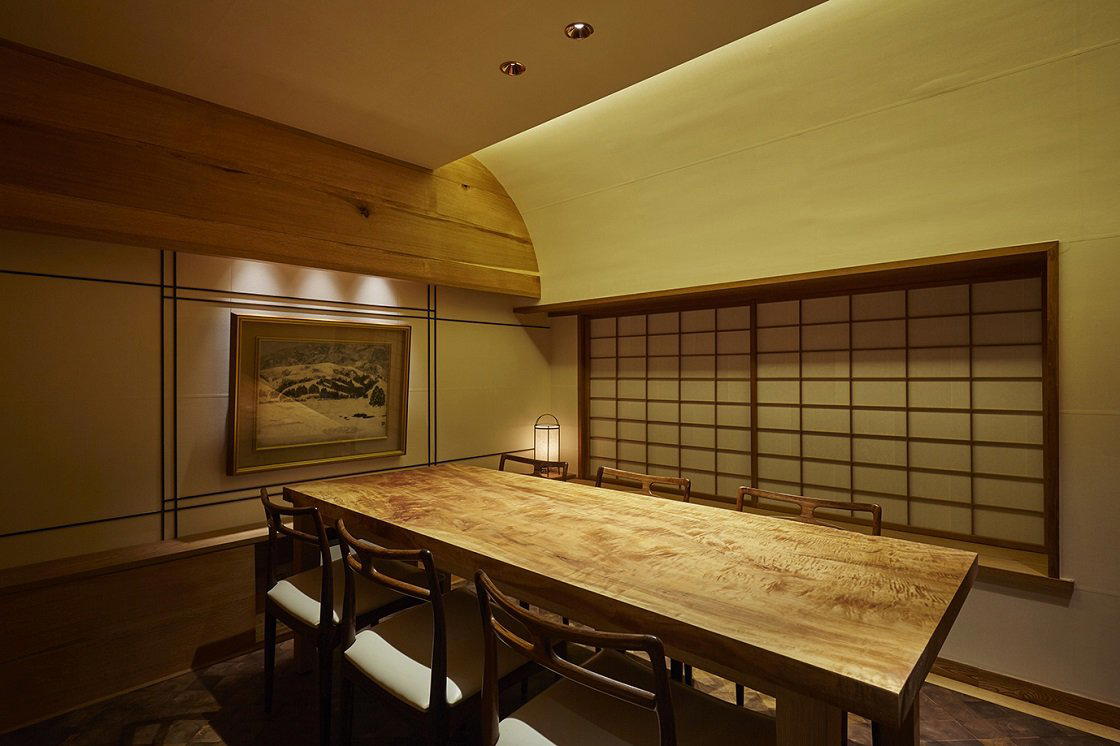
Sparkling chandeliers and stately European aristocratic aesthetic with high ceilings, antique furnishings by Børge Mogensen, seasonal floral arrangements, and a refined yet relaxed atmosphere that contrasts elegantly with the surrounding urban environment.