Michelin Plate
Our verdict
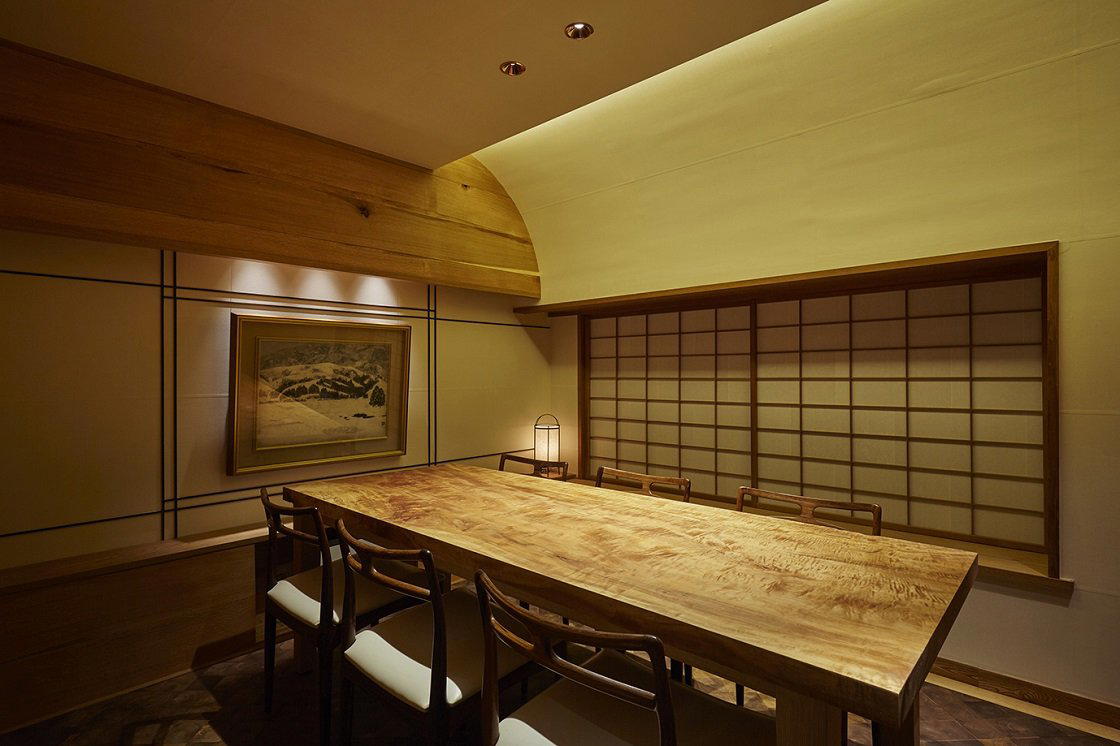
A Michelin Plate-recognised French table in Osaka's Uemachi district, Être à l'aise operates as a husband-and-wife venture where classic French technique, duck, lamb, patiently built consommé, meets a dedicated wine programme shaped by the sommelier at front of house. The format is intimate, the cooking rooted in rich sauce work, and the overall register closer to a serious neighbourhood bistro than to Osaka's trophy-dining tier.

Pearl is the En Primeur Club membership app, where members save venues, book tables and use the concierge.
Uemachi, Off the Prestige Circuit
Osaka's French restaurant scene divides sharply by altitude. At the leading, La Cime and Hajime occupy a two- and three-Michelin-star bracket at the ¥¥¥¥ price tier, where tasting menus run deep into five-figure yen territory and reservation windows stretch months ahead. Below that, a smaller cluster of ¥¥¥-tier French tables operates on a different logic: fewer covers, a more focused menu, and a format where the room itself does as much work as the kitchen. Être à l'aise belongs to this second tier, positioned in Uemachi, a quiet residential and office corridor in Chuo Ward that sits some distance from the Kitashinchi restaurant belt where most of the city's high-visibility French dining concentrates.
That address matters. Uemachi runs along a low ridge east of Shinsaibashi, lined with small apartment buildings, clinics, and the occasional neighbourhood restaurant that has no particular interest in tourist foot traffic. A French table here is not making a statement about location prestige; it is making a statement about the kind of guest it wants. The people who find Être à l'aise have looked for it.
The Format: Small Room, Defined Roles
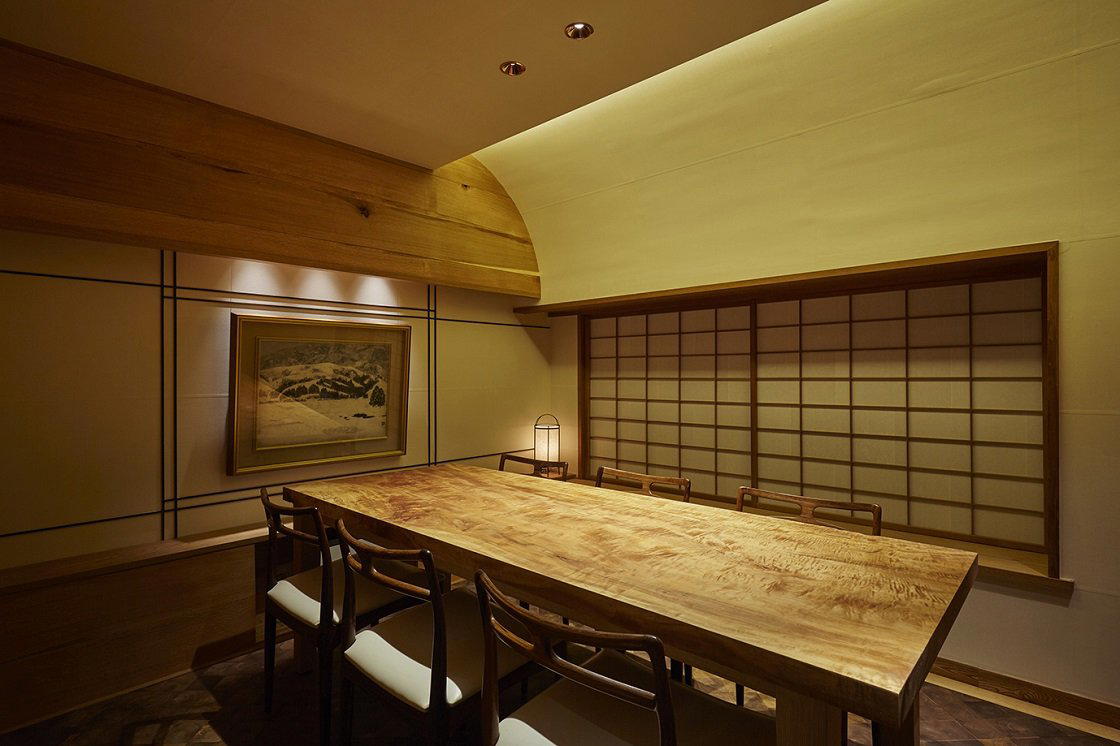
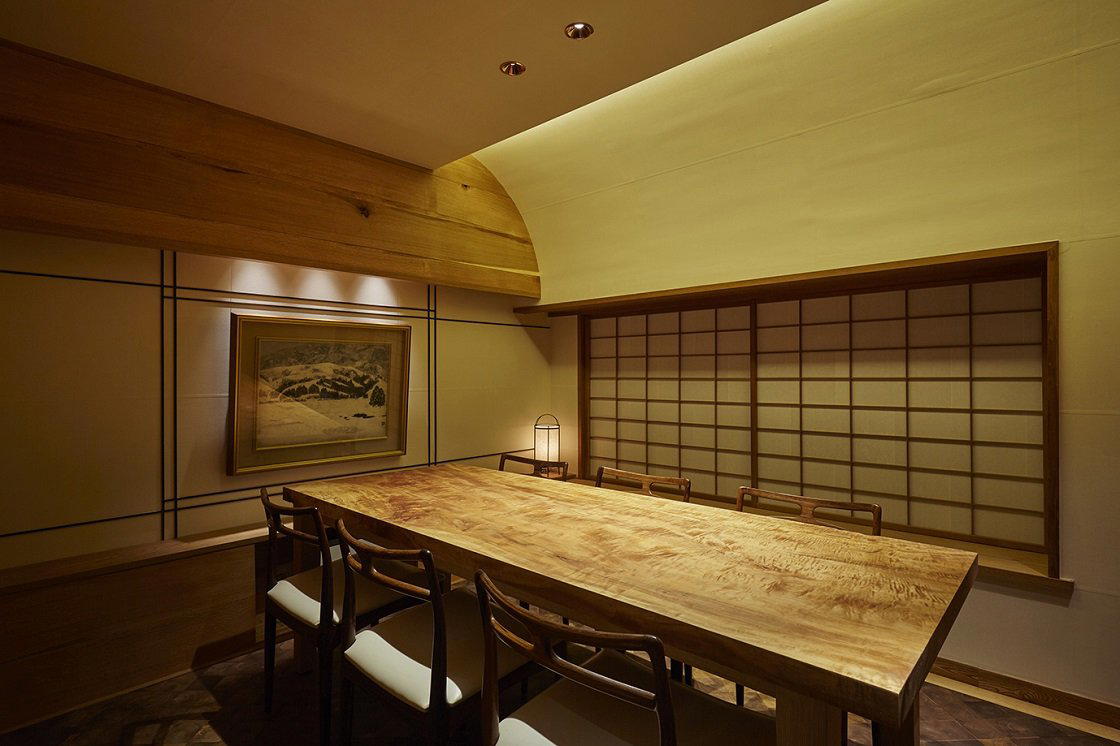
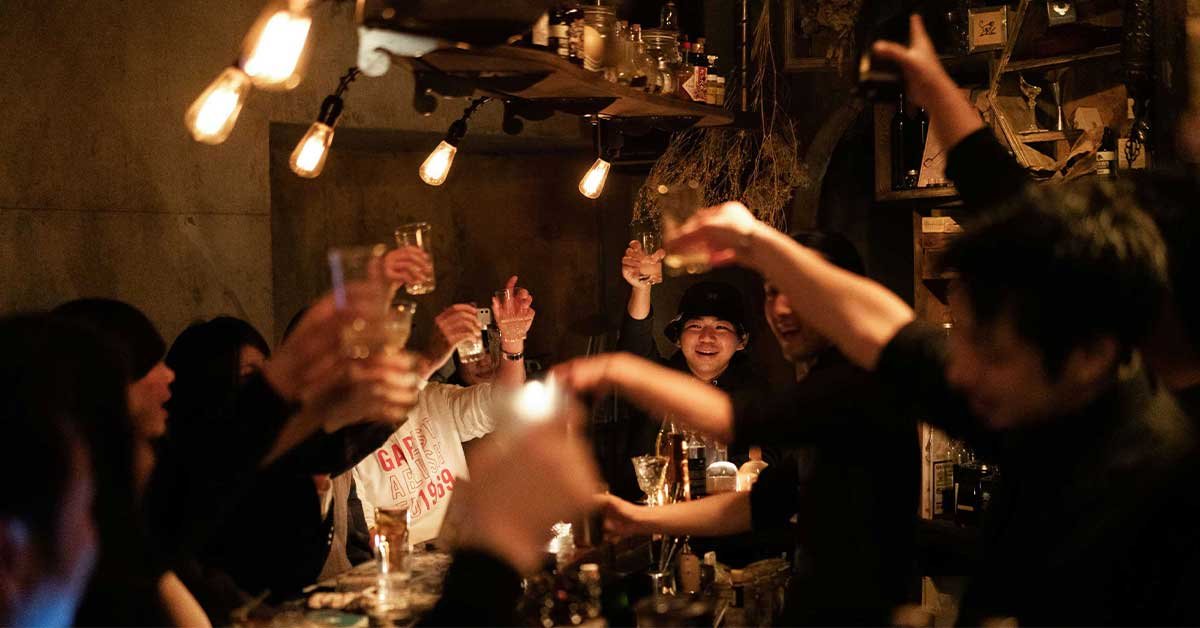
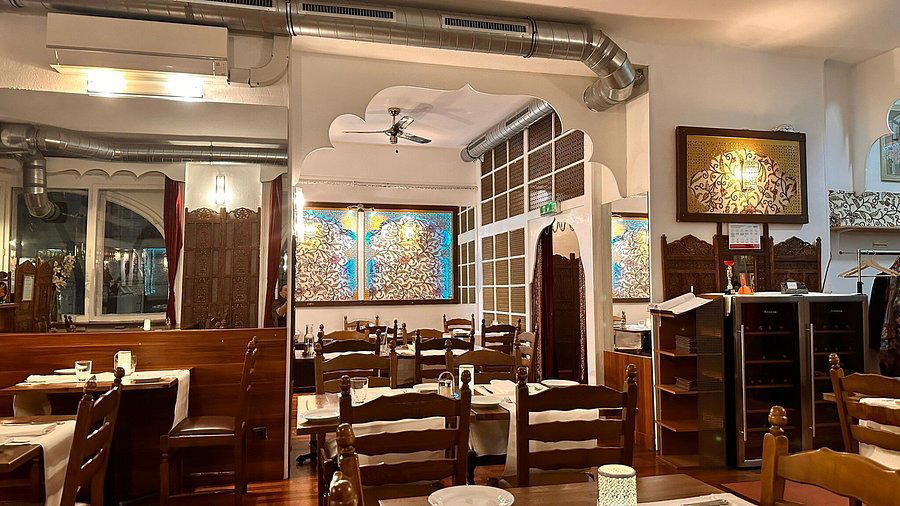
The dining room is intimate, the Michelin assessors who awarded the restaurant a Plate in both 2024 and 2025 described a space that communicates warmth from the moment guests arrive. Michelin's own published notes frame the experience around a couple working together: a chef in the kitchen and his wife managing the floor and the wine programme. That division of labour, chef and sommelier as a unit rather than two separate departments, gives the restaurant a coherence that larger, more staffed operations often struggle to replicate. The wine pairings are integral to the structure of a meal here, not an optional supplement.
This husband-and-wife format appears with some regularity at the ¥¥¥ tier of French dining across Japanese cities. The model tends to produce a particular atmosphere: decisions happen fast, communication between kitchen and floor is direct, and guests feel the attention that comes from a room with limited covers and two principals who know exactly what is supposed to happen at any given moment in service. For a comparison at a different price point, Différence and La Bécasse represent adjacent positions in Osaka's French mid-tier, each with their own structural logic.
The Cooking: Classic French Anchors
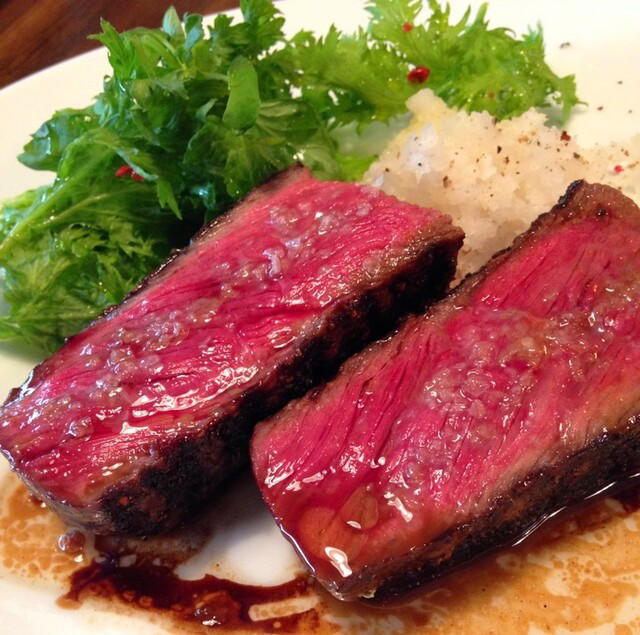
Michelin's characterisation of the menu centres on French duck and lamb served with rich sauces, supported by consommé and soup stock prepared over extended time. This is a classically oriented kitchen. The commitment to stock work, patiently built, used as a structural foundation rather than a shortcut, places the cooking in a lineage that runs back through French cuisine's foundational techniques rather than toward the contemporary Japanese-inflected French style that defines restaurants like LE PONT DE CIEL or the more experimental register at nent.
That distinction is worth holding. Osaka has French tables that absorb local ingredients and Japanese culinary logic into the French frame, producing something that reads as hybrid or fusion depending on your perspective. Être à l'aise, by contrast, appears to work in a more purely French idiom: the proteins are French-sourced (duck and lamb from France), the sauce register is classical, and the structural backbone of the menu is broth-based depth. In a city where this kind of rigour can get overshadowed by the novelty of fusion approaches, the commitment to French fundamentals at the ¥¥¥ price point is a legitimate differentiator.
For reference points further afield, L'Effervescence in Tokyo and Hotel de Ville Crissier in Crissier represent how French-rooted cooking can anchor itself differently at different tiers, the former absorbed into a Japanese seasonal logic, the latter as a European institution. Être à l'aise sits closer to the classical end of that spectrum, at a scale and price level that keeps it accessible relative to those comparisons.
Placing It in Osaka's French Tier
A 4.6 average at that volume suggests a high satisfaction rate rather than a score inflated by a large pool of casual visitors. That consistency correlates with what the format implies: guests who have sought out the address, understood the format, and arrived with appropriate expectations.
The Michelin Plate, held across two consecutive years (2024 and 2025), places Être à l'aise in a tier that Michelin defines as good cooking meriting attention, below star level, but above the anonymous. In Osaka, which holds one of the highest concentrations of Michelin-recognised restaurants of any city in the world, a Plate is a meaningful threshold, not a consolation. The restaurant earns its place on a serious French itinerary of the city, particularly for guests who want to step outside the Kitashinchi circuit and eat in a room that operates on smaller, quieter terms.
For those building a broader Kansai or Japan itinerary, the editorial context extends naturally: Gion Sasaki in Kyoto and akordu in Nara represent different approaches to serious dining within the region. Further afield, Harutaka in Tokyo, Goh in Fukuoka, 1000 in Yokohama, and 6 in Okinawa illustrate how Japan's serious restaurant tier distributes across cities at very different registers.
Planning a Visit
Être à l'aise is located at 1 Chome-26-2 Uemachi, Chuo Ward, Osaka, in a ground-floor space within the Dynastiy Shimizudani II building. The Uemachi address puts it a short walk from Tanimachi 4-chome station, which connects to both the Tanimachi and Chuo subway lines. The price tier sits at ¥¥¥, which in the Osaka French context places it meaningfully below the ¥¥¥¥ star-level tables but above casual bistro pricing. Given the intimate format and the integrated wine programme, a full evening with pairings is the appropriate approach rather than a quick dinner.
For a complete picture of dining in the city, see our full Osaka restaurants guide. For where to stay, drink, and spend time around any meal here, our Osaka hotels guide, bars guide, wineries guide, and experiences guide cover the surrounding terrain.
Frequently asked questions
Has Être à l'aise won any awards?
Être à l'aise has received recognition including: The intimate dining space wraps you in the warmth exuded by the couple at its heart. The chef’s cuisine and the wine pairings of his sommelier wife are a perfect match. French duck and lamb are dressed in rich sauces, their flavours support….
Where is Être à l'aise in Osaka?
Être à l'aise is located at Japan, 〒540-0005 Osaka, Chuo Ward, Uemachi, 1 Chome−26−2 ディナスティ清水谷 II1階, Osaka.
What's the must-try dish at Être à l'aise?
Michelin's assessors specifically cite the French duck and lamb as the anchors of the menu, served with rich sauces built on patiently prepared consommé and soup stock. Those two proteins are the clearest expression of what the kitchen does: classical French technique applied to premium product, with the sommelier's wine pairings calibrated around them. At ¥¥¥ pricing, the expectation is a full course format where those dishes appear as set pieces rather than à la carte options.
What style of cooking does Être à l'aise do?
In Context: Similar Options
| Venue | Cuisine | Price | Awards | Notes |
|---|---|---|---|---|
| Être à l'aiseThis venue (the venue you are viewing) | Authentic French Bistro | Not listed | Michelin Plate | Not listed |
| HAJIME | Avant-Garde Japanese Fine Dining | $300–500 | 3 Michelin Stars · World's 50 Best #83 | French, Innovative |
| La Cime | Modern French with Japanese Ingredients | $150–200 | 2 Michelin Stars · World's 50 Best #13 | French |
| Kashiwaya Osaka Senriyama | Seasonal Kaiseki Omakase | $200–300 | 3 Michelin Stars · La Liste Top Restaurants | Japanese |
| Taian | Traditional Japanese Kaiseki Omakase | $150–200 | 3 Michelin Stars · La Liste Top Restaurants | Kaiseki, Japanese |
| Fujiya 1935 | Modern Japanese with European influences | $100–150 | 2 Michelin Stars · La Liste Top Restaurants | Innovative |
Recognition history
Dated appearances from independent guides and award organizations, with the underlying list record or original source where available.
Michelin Plate
Michelin
Full recognition history (3 entries)
Michelin Plate
Michelin
Michelin Plate
Michelin