
Michelin Bib Gourmand
Our verdict
Inside the 798 Art District, Liu Ma Ma Dumplings signals its presence with an oversized dumpling sculpture jutting from an alley wall. The kitchen works with house-made wrappers and seasonal fillings sourced from the Jiaodong Peninsula, with Spanish mackerel and chive among the most requested. It is a compact, no-frills counter in one of Beijing's most design-conscious neighbourhoods.

Pearl is the En Primeur Club membership app, where members save venues, book tables and use the concierge.
The menu
What to order
- Spanish mackerel and chive dumplings
A Dumpling Counter in the Middle of an Art District
The 798 Art District in Chaoyang is more accustomed to installation art and gallery openings than to hand-pleated dough. That tension is part of what makes Liu Ma Ma Dumplings work as a proposition: a direct, craft-focused dumpling counter planted inside a converted factory complex where the surrounding context is almost entirely contemporary design. The approach here is not fusion or reinvention. It is the older northern Chinese logic of making dumplings carefully, sourcing specific ingredients, and letting the filling carry the argument.
You find it by following an alley until a large sculptural dumpling, clasped in a pair of oversized chopsticks and fixed to the wall above the entrance, makes the location unmistakable. That visual cue functions as both signage and editorial statement: this place is not trying to pass unnoticed. Through a street-facing window, the kitchen is in plain view, chefs working the dough and filling in an open preparation format that has become a quiet norm among Beijing's more confident dumpling houses, where the craft itself is treated as something worth watching.
The Northern Chinese Dumpling Tradition This Place Belongs To
Jiaozi, the boiled, pan-fried, or steamed dumplings that anchor northern Chinese cooking, carry a weight of cultural association that no other Chinese dish quite matches. They are the food of Chinese New Year reunions, of families gathering around a flour-dusted table, of the transition between the old year and the new. In Beijing, the dumpling tradition pulls from the broader North China Plain repertoire, with a particular lean toward strong, assertive fillings: pork and cabbage, lamb and scallion, leek and egg. The cooking philosophy is one of restraint at the wrapper level, thin, supple, translucent when cooked, and generosity at the filling level.
What differentiates the more serious Beijing dumpling operations from their casual counterparts is sourcing specificity. The Jiaodong Peninsula, which forms the eastern tip of Shandong Province and stretches into the Yellow Sea, is established as one of China's principal sources of seafood used in dumpling kitchens that want coastal ingredients with genuine provenance. Mackerel from this coastline has a distinct texture and fat content that holds up to the enclosing dough rather than turning dense under heat. That sourcing decision at Liu Ma Ma is the structural difference between what ends up on the plate and what you would find at a standard counter.
What to Order and Why It Matters
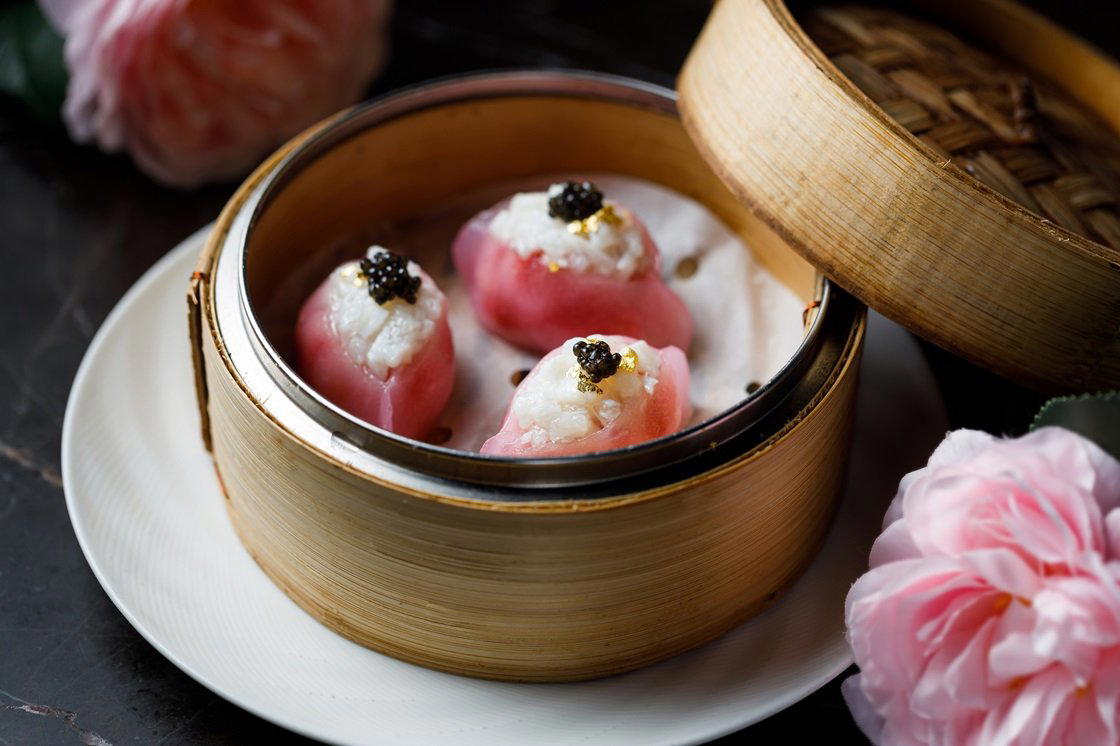
The Spanish mackerel and chive dumpling is the one the kitchen is known for. The combination is a classic of the Jiaodong coastal tradition: mackerel provides the fat and body, chive cuts through with its sharp, slightly sulphurous edge, and the house-made wrapper, thinner and more elastic than mass-produced versions, keeps the whole thing from feeling heavy. The filling arrives juicy rather than compact, which is partly a function of the wrapping technique and partly of the filling ratio the kitchen maintains.
Seasonal fillings extend the menu across the calendar. Kelp, dried shrimps, and shepherd's purse appear as the kitchen's way of tracking what the season offers rather than running a fixed menu year-round. Shepherd's purse, in particular, is a spring green with a mild, slightly nutty flavour that Beijing dumpling makers have used for generations. Its appearance on a menu is a seasonal signal worth reading: it indicates the kitchen is adjusting to the market rather than running on frozen stock.
The house-made wrappers are not incidental detail. Commercial wrapper production has flattened texture across much of the category, the dough becomes a neutral carrier rather than a contributor to the eating experience. Kitchens that maintain in-house wrapper production are making a time and labour commitment that shows up in the finished dumpling: more chew, more elasticity, a wrapper that holds its integrity through the cooking process without turning gummy or splitting.
Where This Sits in Beijing's Broader Eating Map
Beijing's restaurant culture in Chaoyang covers considerable range, from the Taizhou precision cooking at Xin Rong Ji (Xinyuan South Road) to the Chaozhou specialisms at Chao Shang Chao (Chaoyang) and the vegetable-forward cooking at Lamdre. Traditional Beijing cuisine finds a more formal expression at Jingji, while King's Joy applies high-end production values to vegetarian formats. Liu Ma Ma occupies a different register from all of these: low-ceremony, accessible in price, and focused on a single category executed with care. The price point and format sit well below the ¥¥¥¥ tier that defines much of Chaoyang's notable dining, which makes this one of the more direct ways to engage with Beijing's northern food heritage without a booking lead time or a significant outlay.
Across China's food cities, the dumpling and handmade noodle segment operates as the connective tissue between fine dining and street food: more disciplined than a sidewalk stall, less ceremonious than a full-service restaurant. In Shanghai, venues like 102 House and in Macau, the precision cooking at Chef Tam's Seasons show how Chinese culinary formats can absorb fine-dining production values. The Liu Ma Ma model runs in the opposite direction: it applies craft rigour to a format that is, by design, accessible. That is a different kind of ambition.
For further reference across the region, Ru Yuan in Hangzhou, Xin Rong Ji in Chengdu, Imperial Treasure Fine Chinese Cuisine in Guangzhou, and Dai Yuet Heen in Nanjing illustrate the range of registers in which Chinese culinary traditions are being presented to contemporary audiences. For those approaching Beijing from outside China's dining circuit, the scale of reference points at Le Bernardin in New York City or Emeril's in New Orleans belong to an entirely different grammar.
Getting There and Planning Your Visit
The address is Building 3818, 798 Art District, 2 Jiuxianqiao Road, Chaoyang. The 798 Art District is a self-contained former factory complex in northeast Chaoyang, navigable on foot once you are inside the gates. The dumpling counter is in an alley within the district; the sculptural sign is sufficient to locate it once you are in the approximate area. The 798 complex draws consistent foot traffic from gallery visitors, particularly on weekends, so arriving at off-peak hours is sensible if you prefer a quieter experience. For a broader orientation to the city's dining options, see our full Beijing restaurants guide, as well as our Beijing hotels guide, bars guide, wineries guide, and experiences guide.
Frequently asked questions
Is Liu Ma Ma Dumplings (Chaoyang) suitable for children?
Yes. The format is straightforward: dumplings in a casual counter setting inside the 798 Art District, with no complex tasting menus or dress expectations. The filled dumplings, including milder seasonal options alongside the seafood varieties, give younger diners accessible choices. The open kitchen window, where chefs can be watched making dumplings with house-made wrappers, tends to hold children's attention.
What should I expect atmosphere-wise at Liu Ma Ma Dumplings (Chaoyang)?
The setting is the 798 Art District, a repurposed Bauhaus factory complex in north Chaoyang, so the surroundings are industrial-gallery rather than traditional hutong. Liu Ma Ma itself is low-key by design: the entrance sits in an alley, announced by an oversized dumpling sculpture gripping the exterior wall. Through a front window, the kitchen is visible, chefs working dough and pleating wrappers, which gives the space more the feel of a craft operation than a formal restaurant.
What distinctions does Liu Ma Ma Dumplings (Chaoyang) have?
Liu Ma Ma Dumplings (Chaoyang) has received recognition including: Although the entrance is tucked away in an alley, it's hard to miss the giant dumpling held in a pair of chopsticks sticking out of the wall. Through a window, diners can see the chefs making dumplings with house-made wrapping. Those filled….
What's the must-try dish at Liu Ma Ma Dumplings (Chaoyang)?
The Spanish mackerel and chive dumpling is the one the kitchen is known for. The filling draws on the Jiaodong Peninsula seafood tradition from Shandong province, combining mackerel with chive in a pairing that local cooks have used for generations. Beyond that, seasonal fillings such as kelp, dried shrimps, and shepherd's purse rotate through the menu and are worth ordering if available.
What part of town is Liu Ma Ma Dumplings (Chaoyang) in?
Liu Ma Ma Dumplings (Chaoyang) is located at Buidling 3818, 798 Art District, 2 Jiuxianqiao Road, Chaoyang, Beijing.
Price and Recognition
Comparable venues nearby, for context on price, style, and recognition.
| Venue | Cuisine | Price | Awards | Notes |
|---|---|---|---|---|
| Liu Ma Ma Dumplings (Chaoyang)This venue (the venue you are viewing) | Jiaodong-Style Juicy Dumplings | Not listed | Michelin Bib Gourmand | Not listed |
| Fortune Long Beijing Bean Sauce Noodles (East Xinglong Street) | Authentic Beijing Zhajiangmian | $1–10 | Michelin Plate | Tuanjiehu, Authentic Beijing Zhajiangmian |
| Xiang Bin Xuan (Huayuan Road) | Authentic Hunanese | Not listed | Michelin Bib Gourmand | Beitaipingzhuang, Authentic Hunanese |
| Bao Bao Hao | Cantonese Claypot | Not listed | Michelin Bib Gourmand | Chaowai, Cantonese Claypot |
| Baiweiyuan Dumpling | Traditional Beijing Dumplings | $10–20 | Michelin Plate | Hujialou, Traditional Beijing Dumplings |
| Hong Fan Qie (Yuyuantan South Road) | Hubei Cuisine | Not listed | Michelin Bib Gourmand | Huichengmen, Hubei Cuisine |
Recognition history
Dated appearances from independent guides and award organizations, with the underlying list record or original source where available.
Michelin Bib Gourmand
Michelin
Continue exploring
More in Beijing
Restaurants in Beijing
All restaurants in Beijing →
Bars in Beijing
All bars in Beijing →

Details
- Cozy
- Casual Hangout
- Open Kitchen
- A La Carte
Casual and welcoming with an focus on the dumpling-making process visible through windows.