
Michelin Bib Gourmand
Our verdict
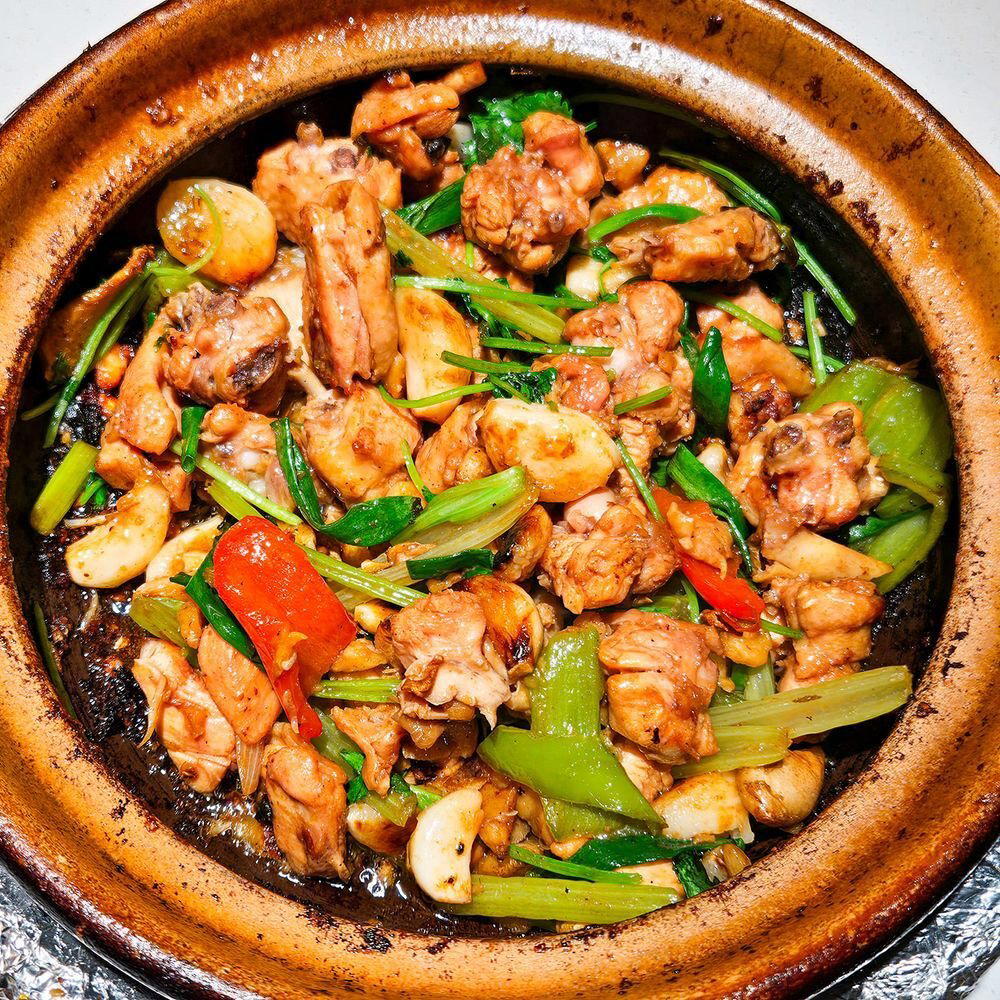
A fixture of Beijing's Cantonese dining scene since 2000, Bao Bao Hao in Chaoyang channels the atmosphere of Guangzhou's historic Xiguan trading district through dome awnings, faux stained glass, and vintage photography. The kitchen's reputation rests on sizzling claypot cookery, where ingredients hit scorching ceramic over direct flame to develop wok hei. The sand ginger chicken draws regulars back repeatedly.

Pearl is the En Primeur Club membership app, where members save venues, book tables and use the concierge.
The menu
What to order
- Sand ginger chicken
The Xiguan Aesthetic in a Northern Capital
Cantonese restaurants in Beijing occupy a specific position in the city's dining hierarchy. They serve a cuisine rooted in the Pearl River Delta, transplanted to a northern capital where the dominant culinary grammar runs toward wheat, fermented bean paste, and roasted meats. The better examples of the genre do something more than replicate southern techniques in a northern postcode: they carry an atmosphere, a visual argument for why Guangdong cooking belongs in Beijing's conversation. Bao Bao Hao, operating from its Chaoyang address at Building 12A, Chaoyangmen North Street, makes that argument through design before a dish arrives.
The interior references Xiguan, the historic trading hub of Guangzhou that gave the city much of its commercial identity in the nineteenth and early twentieth centuries. Dome awnings, faux stained glass panels, and walls lined with vintage photographs reconstruct something of that era's texture. The effect is deliberate historicism: Xiguan was the district where Cantonese merchant culture crystallised, where teahouse culture, claypot cooking, and the rhythms of dim sum became embedded in daily life. Setting a Beijing restaurant inside that visual vocabulary is a positioning choice, not mere decoration. It signals that the food here is rooted in a specific Cantonese tradition rather than the diffuse "Chinese cuisine" category that covers everything from Sichuan mala to Shanghainese red-braising.
Claypot Cooking and the Question of Wok Hei
The central technical commitment at Bao Bao Hao is claypot cookery over direct, high heat. This matters because wok hei, the smoky, slightly charred complexity that comes from extreme temperatures and rapid cooking, is among the most difficult qualities to achieve outside a professional Cantonese kitchen. Home equipment rarely reaches the flame intensity required. Many restaurant kitchens running at scale moderate their heat to manage throughput, losing the effect in the process. The claypot format partially sidesteps this problem: the ceramic vessel concentrates heat, the ingredients sear on contact with its surface, and the aromas that result are a direct product of Maillard reaction at high temperature rather than anything added after the fact.
Kitchen at Bao Bao Hao prepares each claypot to order, which sustains the integrity of the method. Batch cooking or pre-assembly would blunt the effect. That commitment to per-order production is also one reason the restaurant has remained consistently busy since opening in 2000, a run of more than two decades that filters out venues coasting on novelty.
Sand ginger chicken sits at the centre of the restaurant's reputation. Sand ginger, known in Cantonese as sa geung and botanically as Kaempferia galanga, delivers a flavour distinct from the common ginger used elsewhere in Chinese cooking: sharper, more aromatic, with a faint camphorous edge that amplifies rather than masks the character of the meat. In a claypot preparation, the heat drives the essential oils of the spice into the chicken as it cooks, producing a result that depends on technique and ingredient quality rather than heavy sauce work. It is a dish that rewards attention to sourcing and execution rather than invention.
Cantonese Claypot in Beijing's Restaurant Spectrum
Beijing's upper tier of regional Chinese restaurants has become considerably more competitive over the past decade. Taizhou cooking, as represented by Xin Rong Ji (Xinyuan South Road), and Chaozhou cuisine at Chao Shang Chao (Chaoyang) both occupy the premium end of the regional Chinese spectrum, at the ¥¥¥¥ tier, where ingredients sourcing and technique precision are the primary differentiators. Venues like Lamdre and King's Joy have brought vegetarian Chinese cooking into serious critical conversation at comparable price points, while Jingji anchors Beijing cuisine's own tradition in the same bracket.
Within this context, Bao Bao Hao occupies a different register: a Cantonese dining room that has built audience loyalty over more than twenty years through consistency rather than critical reinvention. That longevity is its own credential. In a city where restaurant turnover accelerates with every development cycle, a venue that has been drawing full houses since 2000 has answered questions about relevance repeatedly without needing to rebrand.
Elsewhere across mainland China and the wider region, the claypot and wok hei tradition appears in various forms. Imperial Treasure Fine Chinese Cuisine in Guangzhou operates closer to the source of the Cantonese tradition, while venues like Chef Tam's Seasons in Macau and Ru Yuan in Hangzhou demonstrate how southern Chinese culinary methods travel and adapt across different urban contexts. 102 House in Shanghai and Xin Rong Ji in Chengdu similarly show how premium regional cooking has consolidated around a small number of serious operators in each major city. Dai Yuet Heen in Nanjing rounds out a picture of Cantonese-influenced cooking spreading through cities well outside the Pearl River Delta.
Planning a Visit
Bao Bao Hao sits in Chaoyang, Beijing's main commercial and diplomatic district, which makes it accessible from most central and eastern parts of the city. The restaurant has maintained a consistent following since 2000, and the dining room fills quickly during peak meal periods, particularly weekend lunches and weekday evenings. Arriving early in a service or booking ahead where possible avoids the longest waits. The address, Building 12A, Chaoyangmen North Street, Chaoyang, is specific enough to locate via map applications.
For broader context on eating and drinking in the city, our full Beijing restaurants guide covers the range of options across cuisines and price points. Our Beijing hotels guide, bars guide, wineries guide, and experiences guide cover the wider picture for visitors planning time in the capital.
Frequently asked questions
How do I find Bao Bao Hao?
Bao Bao Hao is located at Building 12A, Chaoyangmen North Street, Chaoyang, Beijing.
What kind of recognition has Bao Bao Hao received?
Bao Bao Hao has received recognition including: Dome awnings, faux stained glass and vintage photos conjure up the golden age of Xiguan, Guangzhou's former trading hub. Since 2000, the place has been jam-packed with diners coming for its famous sizzling claypot dishes. All ingredients ar….
What do people recommend at Bao Bao Hao?
The sand ginger chicken is the dish most consistently cited by diners. It is prepared in a claypot over direct high heat, a method that produces the smoky wok hei character the restaurant has been known for since opening in 2000. The sizzling claypot format applies across the menu, but this particular dish is the one most visitors order first.
What's the best way to book Bao Bao Hao?
In Beijing's restaurant scene, venues of this type are often booked through local concierge services, the Chinese platform Dianping, or by walking in directly at Chaoyangmen North Street, Building 12A. Arriving early is advisable given the restaurant's consistent demand since 2000.
What has Bao Bao Hao built its reputation on?
Over two decades of Cantonese claypot cooking rooted in the culinary tradition of Guangzhou's Xiguan trading district. Open since 2000 at its Chaoyang address, the restaurant has held its focus on searing ingredients to order in claypots over scorching heat, a technically specific commitment that produces a smoky depth uncommon in northern Chinese cooking.
Is Bao Bao Hao allergy-friendly?
Guests with specific dietary requirements should raise them directly with staff at the Chaoyangmen North Street location before ordering.
Budget and Context
Comparable venues nearby, for context on price, style, and recognition.
| Venue | Cuisine | Price | Awards | Notes |
|---|---|---|---|---|
| Bao Bao HaoThis venue (the venue you are viewing) | Cantonese Claypot | Not listed | Michelin Bib Gourmand | Not listed |
| Hong Fan Qie (Yuyuantan South Road) | Hubei Cuisine | Not listed | Michelin Bib Gourmand | Huichengmen, Hubei Cuisine |
| My Soup | Cantonese Soup House | $10–20 | Michelin Bib Gourmand | Chaoyang, Cantonese Soup House |
| Qian Li | Traditional Peking Duck | $30–50 | Michelin Plate | Zhengyilu, Traditional Peking Duck |
| Blossom Vegetarian (Dongcheng) | Modern Chinese Vegetarian | $20–30 | Michelin Bib Gourmand | Dongzhimen, Modern Chinese Vegetarian |
| Baiweiyuan Dumpling | Traditional Beijing Dumplings | $10–20 | Michelin Plate | Hujialou, Traditional Beijing Dumplings |
Recognition history
Dated appearances from independent guides and award organizations, with the underlying list record or original source where available.
Michelin Bib Gourmand
Michelin
Continue exploring
More in Beijing
Restaurants in Beijing
All restaurants in Beijing →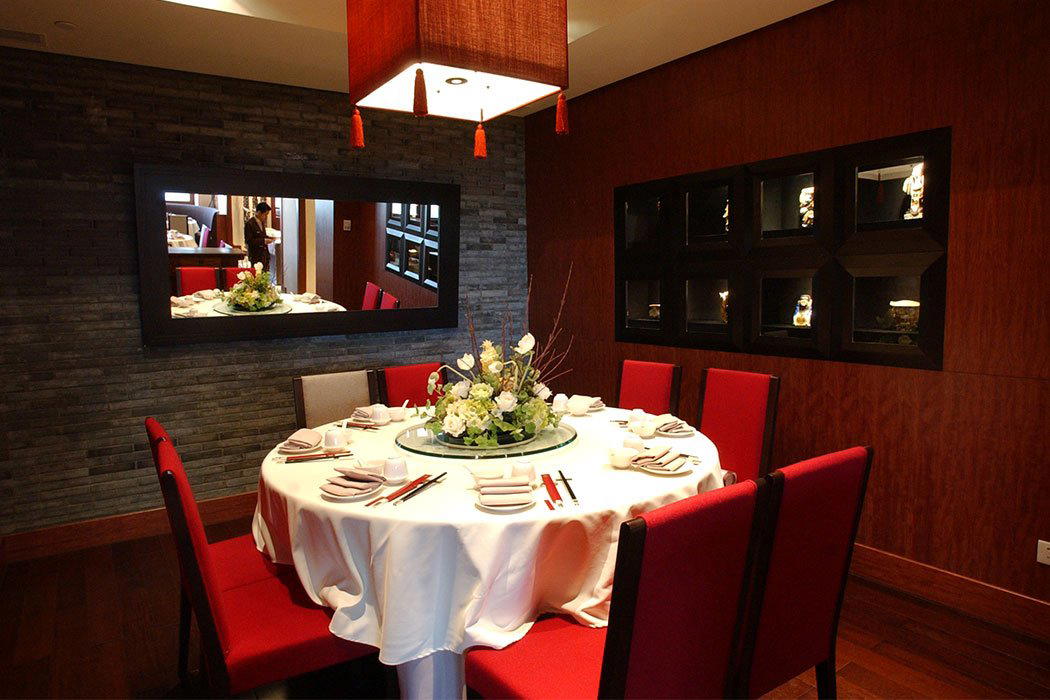
Bars in Beijing
All bars in Beijing →


Details
- Classic
- Cozy
- Family
- Casual Hangout
- Open Kitchen
- A La Carte
Dome awnings, faux stained glass and vintage photos conjure up the golden age of Xiguan, Guangzhou's former trading hub.