
Nagoya’s Izumi district gives Lilla a quieter frame than the city’s station-side dining corridors, and that matters: this is Italian cooking read through a compact, local-room format rather than hotel-restaurant scale. Tabelog selected it for Italian EAST Tabelog 100 in 2023 and 2025, with a small room and fish-led Italian, bistro, and pasta categories placing it in Nagoya’s more specialist bracket.
Pearl is the En Primeur Club membership app — saves, bookings, and concierge access live there. Same editors, same standards.
- Address
- Japan, 〒461-0001 Aichi, Nagoya, Higashi Ward, Izumi, 1 Chome−1−22 Studio Square泉 1F
- Phone
- +81 52-887-9998
- Website
- lilla-0501.com
 Saves & bookings on Pearl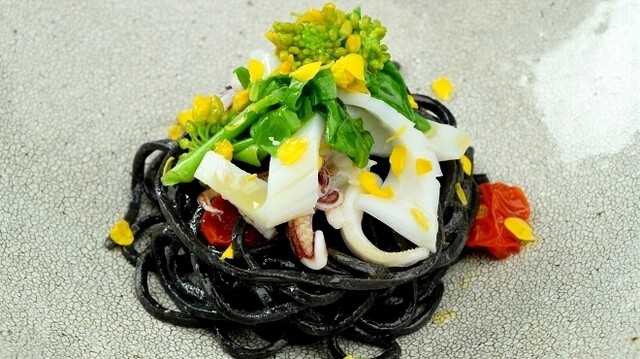
Izumi changes the tempo of Nagoya dining. The district sits close enough to the city’s central commercial gravity to feel connected, but its restaurant rhythm is smaller, more residential, and less dependent on station traffic. That setting suits Lilla: a compact Italian address where the room is limited to 14 seats, including 2 counter seats and 12 table seats, so the experience reads as a neighbourhood dining room rather than a grand occasion machine.
Nagoya’s serious restaurant culture is often discussed through its Japanese counters, kappo rooms, and beef traditions, but the city’s Italian tier has become a useful way to read local taste. The stronger rooms are not simply importing a Tokyo format at a lower price; they work in a city where guests often value intimacy, wine, and a clear sense of place. Here, the category matters. Italian, bistro, and pasta sit together, with an explicit emphasis on fish and wine, which places the restaurant closer to contemporary Japanese-Italian cooking than to red-sauce nostalgia or luxury hotel formality.
Izumi gives Nagoya Italian a quieter, smaller-room register
The location is not incidental. Izumi and the Hisaya Odori area carry a different dining signal from the city’s transport hubs: less hurried, more appointment-based, and more comfortable for restaurants that depend on repeat local demand rather than walk-in volume. In that context, a 14-seat Italian room can make sense. Scale becomes part of the editorial point. The smaller the room, the more the meal depends on pacing, wine service, and kitchen discipline, not architectural spectacle.
The competitive context is also tighter than it first appears. Nearby Nagoya dining at this level includes formats such as Teppan Izumi ~Sankai~, ふじ原, セッタンタ, toraneko, and L'atelier Izumi, each pulling a different kind of serious diner into the same broad central-city orbit. Against higher-budget rooms such as toraneko and L'atelier Izumi, Lilla occupies a comparatively accessible Italian bracket while carrying external recognition from Tabelog’s Italian EAST Tabelog 100 selections in 2023 and 2025. That combination, modest scale plus list recognition, is usually a stronger signal than size in Japan’s mid-to-premium restaurant market.
Tabelog’s score of 3.70 adds another useful clue for readers who understand Japanese restaurant-rating culture. Scores on the platform tend to cluster lower than international visitors expect, and a restaurant selected for a category list while operating at this scale is not competing on mass familiarity. It is competing inside a specialist audience that notices consistency, room control, and category execution.
Fish-led Italian, wine emphasis, and the bistro-pasta middle ground
The food description is deliberately narrow: particular about fish, with Italian, bistro, and pasta listed as the operating categories. That phrasing points to a style common in stronger Japanese Italian restaurants, where seafood technique, seasonal produce, and pasta craft often matter more than adherence to a regional Italian canon. The appeal is not a checklist of famous dishes. It is the way Japanese dining habits have absorbed Italian structure: courses may lean lighter, seafood can carry the meal’s identity, and wine becomes the bridge between bistro comfort and date-night polish.
This is where Nagoya differs from Tokyo in a useful way. Tokyo’s Italian rooms often sort themselves into extreme brackets: luxury tasting counters, trattoria-style neighborhood regulars, or celebrity-chef satellites. Nagoya’s stronger Italian dining can feel more compressed, with fewer seats, closer service, and a sharper relationship between local regulars and destination diners. The result is a scene where a restaurant can be serious without becoming theatrical.
That matters for reader expectations. A fish-leaning Italian restaurant in Japan is not necessarily seafood in the coastal-Italian sense, nor is “bistro” a promise of casual looseness. In this market, those words often mark a middle ground: enough structure for a planned dinner, enough flexibility for pasta and wine to remain central, and enough local adaptation to avoid becoming a museum piece of Italian regionalism. Lilla’s recognition in the Italian EAST list confirms that it is being read within that Japanese-Italian frame rather than as a generic Western restaurant.
How to place it in a Nagoya dining itinerary
The smart use case is a focused dinner in Izumi rather than a maximalist city tour meal. Visitors building a Nagoya itinerary often default to local staples, then add one serious non-Japanese table to understand how the city eats when it is not performing regional identity. This is that kind of address: compact, wine-oriented, and better suited to diners who care about the difference between a capable Italian kitchen and a restaurant using Italian as a broad international label.
Within the restaurant map, nearby and comparable Nagoya references include 1022, 451, Aaron, Alan., and All Day Dining Montmartre.
Readers extending the comparison beyond Nagoya can use other Japan and Japanese-adjacent pages as calibration points: -Grilled beef Sukiyaki- KAMAKURA TANUKIAN 鎌倉 たぬき庵 in Kamakura. 鮪と炭火焼き うお炭 秋葉原店 in Tokyo.cafe in Osaka.know in Kumamoto, (Shoku) Vietnam in Kawasaki, [Curry Senmon Ten] Maruyama Kyoju. in Sapporo, Jōdo Saké Bar in Los Angeles, and Onigiri Time in Pasadena. The useful comparison is not cuisine-for-cuisine; it is how small-format Japanese dining values precision, limited capacity, and a clear category promise.
The verdict is concise: Lilla is for diners who want Nagoya’s quieter Italian register, not a trophy-room spectacle. Its 2023 and 2025 Tabelog Italian EAST Tabelog 100 selections, 14-seat scale, fish emphasis, and wine orientation give it enough evidence to merit attention, especially for travelers who already understand the city’s local-food canon and want to see how Izumi handles a European vocabulary through a Japanese dining lens.
The Essentials
Comparable venues in the metro at similar price points.
| Venue | Cuisine | Price | Notes |
|---|---|---|---|
| LillaThis venue — the venue you are viewing | Higashi, Italian Fine Dining | $$$ | Not listed |
| Shokudo chisan | Not listed | $$$ | Nakamura, Modern local-sourcing Italian (pasta & steak) |
| Baci | Higashi, Italian Fine Dining | $$$ | Not listed |
| ミオオルト | Nishi, Authentic Italian Regional | $$$ | Not listed |
| オステリア リュウ | Chikusa, Northern Italian Osteria | $$$ | Not listed |
| Bottegon | Not listed | $$$$ | Higashi, Innovative Italian with a fish-focused tasting menu |
Recognition history
Dated appearances from independent guides and award organizations, with the underlying list record or original source where available.
Tabelog 100 #11 · No. 11
Tabelog · Tabelog 100 - Italian - EAST - 2025
Continue exploring
More in Nagoya
Restaurants in Nagoya
Browse all →
At a Glance
- Sophisticated
- Elegant
- Intimate
- Quiet
- Romantic
- Date Night
- Celebration
- Special Occasion
- Business Dinner
- Standalone
- Local Sourcing
Current opening hours
- Monday
- Closed
- Tuesday
- 6–10 PM
- Wednesday
- 11:30 AM–1 PM, 6–10 PM
- Thursday
- 11:30 AM–1 PM, 6–10 PM
- Friday
- 11:30 AM–1 PM, 6–10 PM
- Saturday
- 11:30 AM–1 PM, 6–10 PM
- Sunday
- 11:30 AM–1 PM, 6–10 PM
Hours can change for holidays and private events. Last verified .
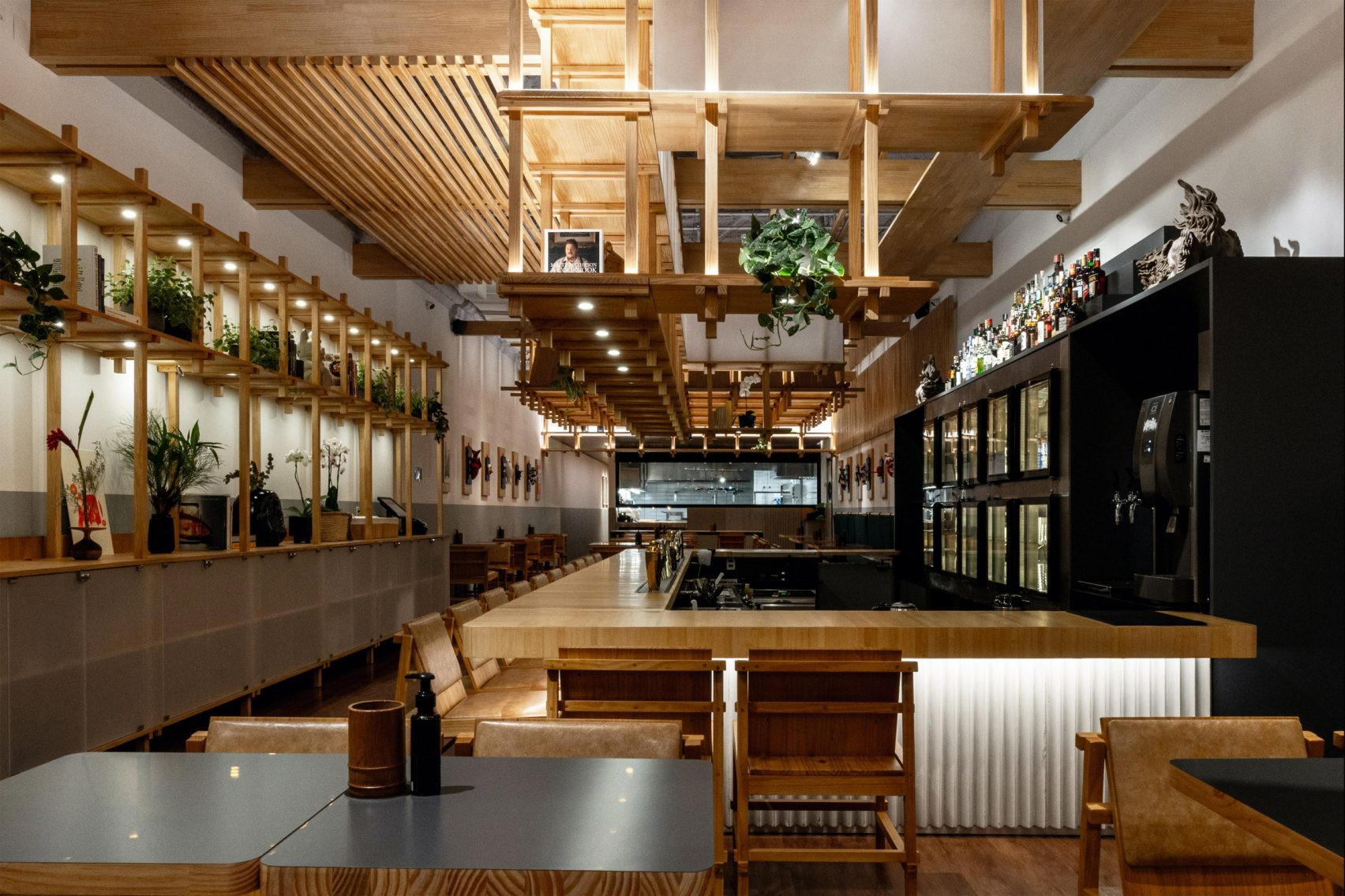
A calm, refined dining room with a quiet, sophisticated atmosphere suited to leisurely meals and intimate occasions.