Michelin Bib Gourmand
Our verdict
A Michelin Bib Gourmand recipient in both 2024 and 2025, Li Xiao Lou serves Taiwanese cuisine from a residential lane address in Xitun District, Taichung. The double recognition at an accessible price point places it among the city's most credentialed everyday dining options.

Pearl is the En Primeur Club membership app, where members save venues, book tables and use the concierge.
The menu
What to order
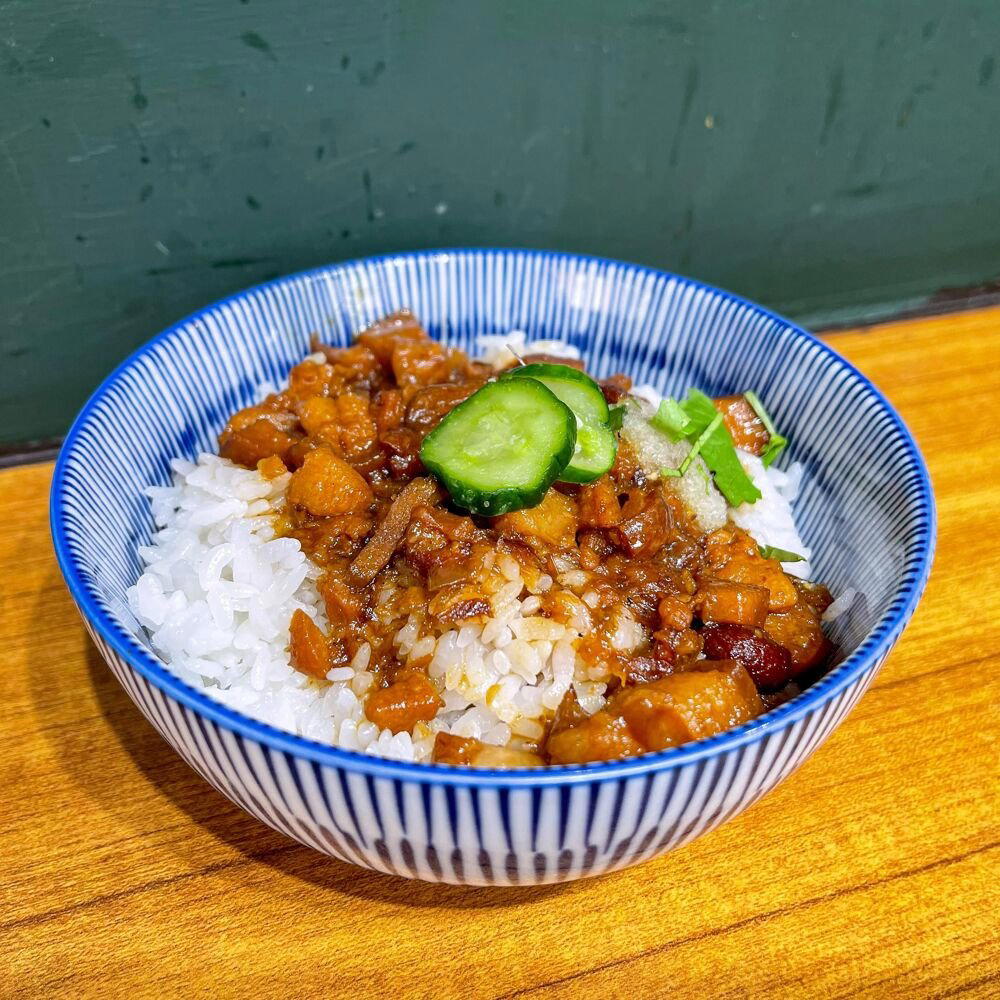
- Braised Pork Rice
- Garlic Butter Sea Bass Shrimp Rice
A Lane Address That Earns Its Michelin Recognition
Taichung's dining identity has long sat in the shadow of Taipei's headline restaurants, but the city's Michelin Bib Gourmand list tells a more useful story about where to eat well for reasonable money. The Bib Gourmand designation, awarded to restaurants offering good cooking at a moderate price, typically defined as a satisfying meal under a set threshold, functions as a different kind of quality signal than a star. It rewards consistency, value, and culinary honesty rather than fine-dining spectacle.
The address itself orients expectations correctly. Lane 293 is a residential-scale street, the kind of Taichung corridor where parking scooters outnumber tourists. This is not a restaurant built around a dining room designed to photograph well. The draw is what arrives at the table, which is Taiwanese cooking in a register that the Bib Gourmand committee has twice judged worth singling out from the city's broader field.
Taiwanese Cooking in Its Fujian-Inflected Form
Understanding what Taiwanese cuisine actually is requires some unpacking, because the label covers a wide range of cooking traditions. The dominant thread in Taiwanese home cooking and traditional restaurants traces directly to Fujian province, specifically to the Minnan-speaking communities that settled the island over several centuries. Hokkien technique, braising in soy and five-spice, working with preserved and fermented ingredients, emphasising pork offal, tofu, and seafood in mild, savoury broths, forms the baseline of what most Taiwanese would recognise as everyday food. This is distinct from the Sichuan heat, Cantonese refinement, or Shanghainese sweetness that arrived later with different waves of migration.
The Fujian connection explains the flavour architecture of classic Taiwanese dishes: the slow-braised pork belly known as lu rou fan, braised tofu preparations, oyster vermicelli, and milkfish soup all carry that Hokkien preference for soy-dark, gently spiced depth over high heat or pronounced acidity. Restaurants holding the Bib Gourmand in this tradition are usually judged on the quality of their braises, the richness of their stocks, and whether the fundamentals of technique, timing, seasoning, freshness of base ingredients, hold up across multiple visits. Consecutive recognition suggests they do at Li Xiao Lou.
For a broader view of how Taiwanese cooking sits across different price tiers and interpretations in Taichung, our full Taichung restaurants guide maps the field from Bib Gourmand to starred tables.
Xitun District: Domestic Taichung, Not the Tourist Circuit
Xitun is one of Taichung's newer administrative districts, developed largely in the post-war period and characterised by mixed residential and commercial blocks rather than the older street-market density of Central or South Districts. It lacks the tourist infrastructure of the area around the National Taiwan Museum of Fine Arts or the night-market circuits that draw visitors to Fengjia. What it has is a dense local dining ecosystem oriented toward residents rather than itineraries.
Eating in Xitun means operating closer to how Taichung's own population actually eats: neighbourhood restaurants with regular clientele, practical pricing, and kitchens that rely on repeat custom rather than foot traffic. A Michelin Bib Gourmand address in this context functions differently from the same award in a high-visibility area, it tends to reflect genuine neighbourhood standing rather than a restaurant that has positioned itself for the award.
Taichung's other Bib Gourmand and locally recognised Taiwanese restaurants offer useful comparison. Feng Chi Goose operates in a more specialist register focused on poultry. Chin Chih Yuan (Central) and Chef Ah-Hsi's Old Time Restaurant approach the traditional Taiwanese brief from different angles. At the higher end, YUENJI occupies the $$$$ tier, showing how far the same culinary tradition extends when applied to a formal tasting format. Chien Wei Seafood shifts the emphasis toward the coastal ingredient tradition that also runs through Taiwanese cooking.
Where Li Xiao Lou Sits in the Taiwan-Wide Taiwanese Dining Field
Taiwan's Michelin coverage now spans multiple cities, and comparing Bib Gourmand addresses across the island helps calibrate what the award means in practice. In Taipei, the traditional Taiwanese brief is handled across a wider range of formats and price points: Golden Formosa and Mipon represent the higher-end reinterpretation model, while Fujin Tree Taiwanese Cuisine & Champagne (Songshan) positions Taiwanese food against an international beverage pairing format. Li Xiao Lou's $$ pricing and residential Taichung address locate it at a different point on that spectrum: closer to the functional end of the tradition, where cooking quality rather than concept or setting is the primary differentiator.
Elsewhere in Taiwan, the range of what the country's food culture can produce becomes clear when you look at places like A Cun Beef Soup (Baoan Road) in Tainan, where a single-dish focus achieves a different kind of recognition, or Akame in Wutai Township, which draws on indigenous Paiwan ingredients in a format far removed from the Hokkien mainstream. For high-end creative cooking in Taipei, logy and GEN in Kaohsiung represent the contemporary restaurant tier. Li Xiao Lou's position within all of this is specific: it is a traditionally grounded, moderately priced Taiwanese restaurant in a mid-sized city that Michelin's inspectors have found worth returning to twice.
Planning a Visit
Li Xiao Lou sits on Lane 293 off Section 2, Xitun Road in Xitun District, an area leading reached by scooter, taxi, or the Taichung Bus Rapid Transit network. Consecutive Michelin recognition across 2024 and 2025 suggests the kitchen has maintained form, which is the relevant measure for a restaurant operating at this level.
For everything else Taichung has to offer, our guides cover hotels, bars, wineries, and experiences across the city. Volando Urai Spring Spa & Resort in Wulai District is worth considering if the trip extends to the Taipei metro region.
Frequently asked questions
What's Li Xiao Lou known for in terms of accolades?
Li Xiao Lou has received recognition including: Michelin Bib Gourmand (2025); Michelin Bib Gourmand (2024).
What's the pricing like at Li Xiao Lou?
Pricing at Li Xiao Lou is listed as $$.
What do people recommend at Li Xiao Lou?
Li Xiao Lou earned back-to-back Michelin Bib Gourmand recognition in 2024 and 2025 for its Taiwanese cooking, which in Taichung typically means Fujian-inflected home-style dishes rather than the fusion formats found in Taipei. The Bib Gourmand designation specifically flags good cooking at a price that doesn't strain the wallet, Li Xiao Lou's $$ pricing reflects that positioning.
What type of food is Li Xiao Lou known for?
What's the address for Li Xiao Lou?
Li Xiao Lou is located at No. 50號, Lane 293, Section 2, Xitun Rd, Xitun District, Taichung City, Taiwan 40747, Taichung.
How hard is it to get a table at Li Xiao Lou?
Two consecutive Michelin Bib Gourmand awards have raised Li Xiao Lou's profile beyond its lane address in Xitun District, which typically means demand has increased since the first listing in 2024. Bib Gourmand venues in Taiwanese cities often operate without advance reservations, running on a first-come basis, but that can mean waits at peak meal times. No booking phone or website is currently listed for Li Xiao Lou, so arriving early, particularly for lunch, is the practical hedge against a queue.
Booking and Cost Snapshot
| Venue | Cuisine | Price | Awards | Notes |
|---|---|---|---|---|
| Li Xiao LouThis venue (the venue you are viewing) | Taiwanese Home Cooking | $20–30 | Michelin Bib Gourmand | Not listed |
| JL Studio | Modern Singaporean Cuisine | $100–150 | 3 Michelin Stars · World's 50 Best #50 | Modern Singaporean, Singaporean |
| Sur- | Modern Taiwanese Fine Dining | $50–100 | 1 Michelin Star | Taiwanese contemporary |
| L'Atelier par Yao | Modern French Fine Dining with Eastern Fusion | Not listed | 1 Michelin Star | French Contemporary |
| Oretachi No Nikuya | Japanese Yakiniku | $50–100 | 1 Michelin Star | Barbecue |
| YUENJI | Modern Taiwanese Fine Dining | $100–150 | 1 Michelin Star | Taiwanese |
Recognition history
Dated appearances from independent guides and award organizations, with the underlying list record or original source where available.
Michelin Bib Gourmand
Michelin
Full recognition history (3 entries)
Michelin Bib Gourmand
Michelin
Michelin Bib Gourmand
Michelin