
1 Michelin Star
Our verdict
A Michelin-starred institution in Taipei's Tianmu neighbourhood, Golden Formosa has carried the same family recipes across three generations since the 1960s. Ranked among Opinionated About Dining's top restaurants in Asia in both 2024 and 2025, it earns its place through sharply seasoned Taiwanese cooking, twice-fried pork ribs, wok-fired bottarga rice, at a price point well below most starred addresses in the city.

Pearl is the En Primeur Club membership app, where members save venues, book tables and use the concierge.
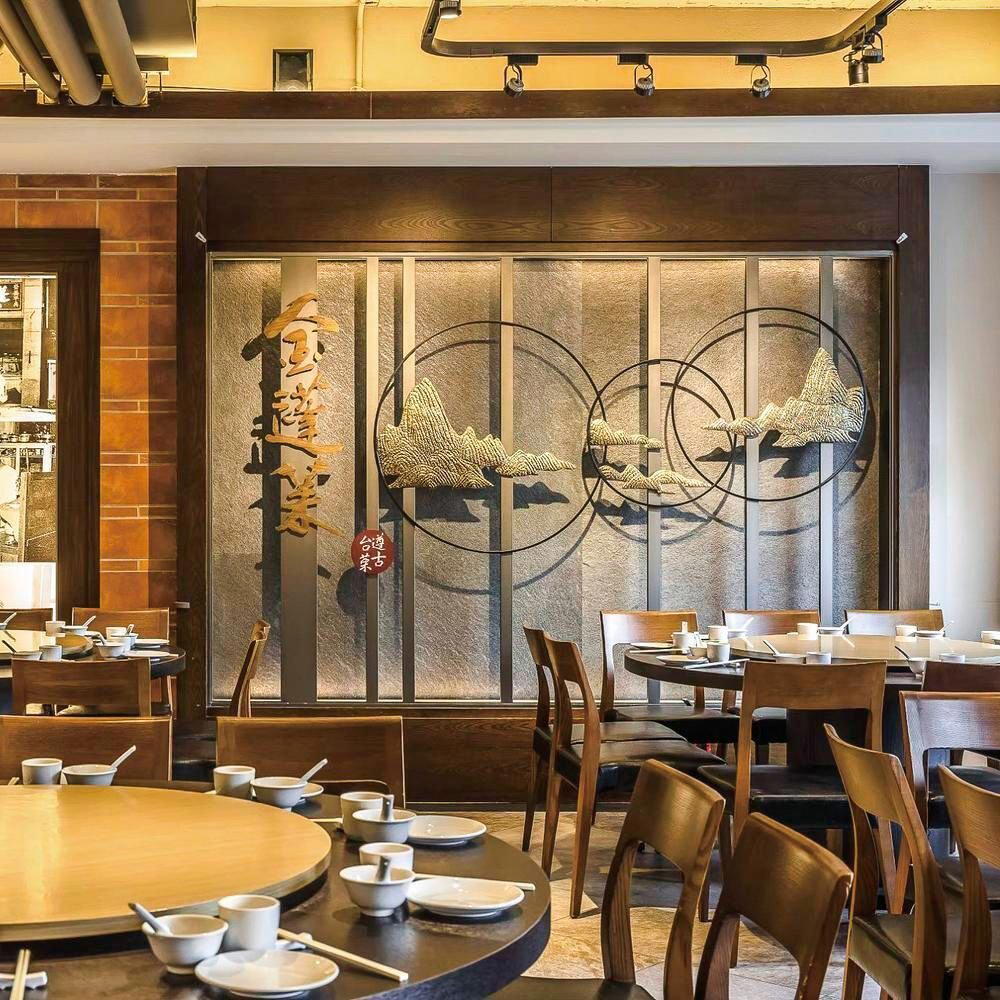
Where Tianmu's Dining Character Shows Up Most Clearly
Taiwanese restaurant neighbourhoods tend to split between the showcase districts of Da'an and Xinyi, where Michelin attention concentrates, and the quieter residential pockets further north. Tianmu sits in the latter category, a district long associated with expatriate communities and understated, family-run establishments that build reputations through repetition rather than press cycles.
That trajectory matters for understanding what kind of room this is. The energy here is not performative. Regulars return for food that has been made the same way for decades, and the service dynamic reflects that familiarity, a front-of-house that operates with the confidence of a team managing a known quantity rather than presenting a new concept. Where comparable Taipei addresses at the $$$$ tier, including Michelin two-star logy or three-star Taïrroir, stage elaborate choreography around the meal, Golden Formosa's floor moves at a pace set by the kitchen, which has been calibrating its rhythms since the 1960s.
Sixty Years of the Same Recipes, What That Actually Means
In 2025, Opinionated About Dining ranked Golden Formosa 425th among restaurants across Asia, a slight adjustment from its 386th position in 2024, and recommended it outright in 2023. That multi-year recognition pattern, across an assessment process that values consistency over novelty, is as telling as any individual ranking. OAD's methodology draws from a community of frequent travellers and critics, and a restaurant that sustains visibility across three consecutive cycles is demonstrating something most contemporaries cannot: that the food does not rely on a current chef's personal moment.
The third-generation owner at Golden Formosa operates within recipes that date to the 1960s, when the family began serving boldly seasoned food designed to accompany alcohol. That origin point, food built to hold its own against drink rather than to be the delicate centrepiece of a quiet meal, explains the assertive seasoning that runs through the menu. This is Taiwanese cooking in the register of confidence: deep flavour, high heat, techniques refined through volume and repetition rather than culinary school protocols. Chef Eric Chen leads the kitchen within that inherited framework, which positions the team dynamic differently from the developmental arcs common at younger establishments. The inheritance here is both constraint and competitive advantage, the family's recipes are not experimental material, they are the product.
The Menu Logic: Why the Twice-Fried Ribs Define the Room
The signature deep-fried ribs, made with local pork and fried twice to seal moisture and set the crust, are the clearest expression of the kitchen's technical approach. Double-frying as a technique is not uncommon in Taiwanese cooking, but the discipline required to execute it consistently across service, particularly at a restaurant holding Michelin recognition, speaks to the kitchen's focus. The ribs are not a concession to nostalgia; they are the reason the original clientele kept returning, and the reason the Michelin inspector added a star.
Prime mullet roe fried rice, with its measure of finely diced bottarga and the smoky residue of wok hei, represents the other register of the menu: ingredients with prestige associations, mullet roe, or wuyuzi, is one of Taiwan's more prized preserved seafood products, executed through the direct heat and speed of a professional wok station rather than through refined plating. Bottarga fried rice of this kind places the dish in a continuum of Taiwanese cooking that takes luxury ingredients seriously but does not ornament them unnecessarily. For readers exploring similar approaches to Taiwanese ingredient sourcing, Mountain and Sea House and Ming Fu offer useful points of comparison within Taipei's starred tier.
The Price Tier and What It Signals
Golden Formosa operates at a $$ price point, which places it in a different competitive conversation from Michelin-starred addresses such as de nuit or Mudan Tempura, both operating at $$$$. For Taipei, a Michelin star at the $$ tier is a meaningful signal: the recognition acknowledges quality without requiring the expenditure that the city's fine-dining corridor demands. This is not a compromise position, it reflects a kitchen that does not need premium presentation or lengthy tasting menus to justify inspector attention. Diners comparing Taiwanese options in the mid-range starred bracket may also find Shin Yeh Taiwanese Signature a useful reference, though the formats diverge considerably in scale and style.
The Taiwanese starred tier as a whole has expanded in recent years, and the restaurants earning recognition now span a wider range of formats and price points than the initial Michelin Taipei guide suggested. Golden Formosa's positioning within that expansion reflects a broader pattern in the guide's treatment of heritage-driven establishments: the recognition that technical skill expressed through long-established recipes carries as much weight as innovation.
Service Structure and the Team Dynamic
At a restaurant built on family recipes and generational continuity, the front-of-house and kitchen operate with a shared institutional memory that newer establishments have to construct deliberately. The team at Golden Formosa does not need to decode the menu for itself each season, the dishes are known quantities, and the service dynamic reflects that. Regulars are accommodated without the performance of explanation; first-time visitors receive orientation from a floor that has fielded the same questions for years.
This is distinct from the sommelier-forward, cross-departmental collaboration visible at Taipei's contemporary fine-dining addresses. There is no beverage program being presented as an equal partner to the kitchen here, the original concept was food built to go alongside alcohol, and that relationship remains practical rather than curatorial. What the team offers instead is command: a room managed by people who know exactly what the kitchen produces and how to pace a table through it.
Reaching Taipei's Broader Dining Scene from This Point
Tianmu's position in the north of Taipei makes it a natural base for exploring the city's less-discussed dining corridor. For readers building a wider Taipei itinerary, Fujin Tree Taiwanese Cuisine & Champagne in Songshan offers a contrast in format, contemporary Taiwanese with a beverage program that the original concept at Golden Formosa deliberately avoids, while Mipon represents the city's approach to refined Japanese-Taiwanese crossover. Across Taiwan, readers following the OAD-recognised tier will find JL Studio in Taichung and GEN in Kaohsiung among the addresses sustaining the island's broader recognition profile. For Taiwanese cooking positioned outside the island entirely, 886 in New York City and A Fung's Harmony Cuisine in Kaohsiung offer points of comparison across different diaspora and regional registers.
Our full Taipei restaurants guide maps the city's dining tiers and neighbourhoods in detail. Additional planning resources: Taipei hotels, Taipei bars, Taipei wineries, and Taipei experiences.
Planning Your Visit
Golden Formosa is located at No. 101, Tianmu East Road, Shilin District, Taipei. The restaurant is closed on Mondays and Tuesdays. Wednesday through Friday, service runs 11:30 AM to 2:00 PM for lunch and 5:30 PM to 9:00 PM for dinner. Saturday and Sunday extend slightly: lunch until 3:00 PM, dinner until 9:30 PM. The extended weekend service reflects the neighbourhood's rhythm, Tianmu is more active with leisure diners on Saturdays and Sundays, and the kitchen's schedule accommodates that. Given the Michelin recognition and the OAD ranking, dinner slots fill ahead of time, particularly on weekends; arriving without a reservation on a Saturday evening is inadvisable. The $$ price point means the total spend sits comfortably below what Taipei's starred fine-dining tier demands, which makes it accessible for multiple visits rather than a single set-piece meal. For readers extending their Taiwan itinerary beyond the capital, Akame in Wutai Township, A Cun Beef Soup in Tainan, and Volando Urai Spring Spa & Resort in Wulai District each represent distinct dimensions of the island's hospitality range. For Taichung's contemporary Taiwanese scene, YUENJI rounds out the picture.
Frequently asked questions
Who's behind the kitchen at Golden Formosa?
The chef associated with Golden Formosa is Eric Chen.
What time does Golden Formosa open and close?
Hours at Golden Formosa: Monday closed Tuesday closed Wednesday 11:30 AM-2 PM 5:30 PM-9 PM Thursday 11:30 AM-2 PM 5:30 PM-9 PM Friday 11:30 AM-2 PM 5:30 PM-9 PM Saturday 11:30 AM-3 PM 5:30 PM-9:30 PM Sunday 11:30 AM-3 PM 5:30 PM-9:30 PM.
What should I eat at Golden Formosa?
The twice-fried pork ribs are the kitchen's anchor dish, local pork fried twice to set the crust and lock in moisture, a recipe the family has held since the 1960s. The prime mullet roe fried rice, built around finely diced bottarga with wok hei, is the other order worth planning around. Opinionated About Dining ranked Golden Formosa 425th across Asia in 2025, and the Michelin star held through 2024, so both dishes carry external validation beyond the menu copy.
What cuisine category does Golden Formosa fall under?
Is Golden Formosa more mid-range or high-end?
Pricing at Golden Formosa is listed as $$.
What It’s Closest To
| Venue | Cuisine | Price | Awards | Notes |
|---|---|---|---|---|
| Golden FormosaThis venue (the venue you are viewing) | Traditional Taiwanese | $20–30 | 1 Michelin Star | Not listed |
| logy | Modern Japanese-Taiwanese Fusion Omakase | $100–150 | 2 Michelin Stars · World's 50 Best #22 | Modern European, Asian Contemporary |
| Le Palais | Fine Dining Cantonese | $150–200 | 3 Michelin Stars · La Liste Top Restaurants | Cantonese |
| Taïrroir | Taiwanese-French Fusion Fine Dining | $150–200 | 3 Michelin Stars · La Liste Top Restaurants | Taiwanese/French, Taiwanese contemporary |
| Mudan Tempura | Michelin-Starred Tempura | Not listed | 2 Michelin Stars · La Liste Top Restaurants | Tempura |
| de nuit | Contemporary French | $150–200 | 1 Michelin Star · Star Wine List | French Contemporary |
Recognition history
Dated appearances from independent guides and award organizations, with the underlying list record or original source where available.
Michelin 1 Star
Michelin
Opinionated About Dining Top Restaurants in Asia Recommended
Opinionated About Dining
Full recognition history (7 entries)
Michelin 1 Star
Michelin
Opinionated About Dining Top Restaurants in Asia Ranked #425
Opinionated About Dining
Michelin 1 Star
Michelin
Opinionated About Dining Top Restaurants in Asia Ranked #386
Opinionated About Dining
Opinionated About Dining Top Restaurants in Asia Recommended
Opinionated About Dining