
Michelin Plate
Our verdict
The kitchen operates at the affordable end of the city's dining spectrum, making it a practical reference point for understanding how everyday Taiwanese flavours sustain serious recognition.

Pearl is the En Primeur Club membership app, where members save venues, book tables and use the concierge.
The menu
What to order
- Roast goose
- Duck sausage
Where Beitun Keeps Its Taiwanese Cooking Honest
Zhongqing Road in Beitun District is not a street that courts food tourists. The neighbourhood sits north of Taichung's more visited corridors, and the buildings along Section 2 read as functional rather than fashionable. That ordinariness is precisely the point. In Taiwan, the restaurants that earn a following across decades tend to sit in places like this: residential, unglamorous, and entirely focused on what arrives at the table.
Taiwanese Cooking in Its Regional Context
To place the food at Chef Ah-Hsi's accurately, it helps to understand where Taiwanese cuisine sits within the broader map of Chinese regional cooking. The island's kitchen did not develop in isolation. Waves of migration from Fujian Province in southeastern China shaped the foundational flavour logic: restrained use of chilli heat, a preference for clear broths and steamed preparations, soy and rice wine as seasoning anchors, and an emphasis on seafood and pork that mirrors Fujianese coastal traditions. This is categorically different from the numbing spice of Sichuan cooking, the dark vinegar notes of Shanghainese cuisine, or the wok-intensity of Cantonese stir-fry technique.
What Taiwanese cooking added over generations was its own agricultural palette, the produce of the island's subtropical interior and its coastline, plus a Japanese colonial influence that introduced bento logic, pickled accompaniments, and a certain fastidiousness about ingredient freshness. The result is a table that feels simultaneously southern Chinese and distinctly its own. A restaurant calling itself an "old time" establishment is making a claim within that lineage: this is the food as it was cooked before fusion, before trend cycles, before the industry learned to present tradition as nostalgia-for-sale.
Taichung has its own inflection within this story. The city sits at the geographic and cultural centre of Taiwan, and its dining scene reflects that centrality. High-end Taiwanese cooking is represented by addresses like YUENJI, which operates at the $$$$-tier with a Michelin star, while the broader market sustains dozens of family-run operations that have never needed a star to fill their rooms. Chef Ah-Hsi's occupies the $$-price tier, a bracket where the value proposition depends entirely on the cooking rather than the setting.
The Michelin Plate and What It Signals
A Michelin Plate designation is not a star, and conflating the two misrepresents the Guide's own taxonomy. The Plate indicates that an inspector ate a meal of sufficient quality to list the address, without the consistency or ambition threshold that would qualify it for one star or above. In practical terms, it means the kitchen cleared a baseline that most restaurants in any city do not reach. In Taichung's 2024 Michelin listings, that puts Chef Ah-Hsi's in a different competitive bracket than starred peers like YUENJI but confirms it as a credible address rather than a casual suggestion.
For context on what Michelin recognition means across Taiwan's dining scene, the starred tier includes technically ambitious kitchens such as logy in Taipei and GEN in Kaohsiung, as well as tradition-rooted operations like A Cun Beef Soup in Tainan. The Plate tier tends to capture the addresses that do one thing well and do it with genuine conviction. At the $$-price point, that represents considerable value relative to the recognition.
Taichung's Broader Taiwanese Table
Any meal at an old-style Taiwanese restaurant in Taichung sits within a wider web of addresses worth understanding. The city's strength across traditional cooking shows up in its range: Chien Wei Seafood anchors the seafood end of the spectrum, while Feng Chi Goose represents the roasted and braised meat tradition that runs through Taiwanese street and restaurant cooking alike. Chin Chih Yuan and Fu Din Wang add further texture to the city's mid-market offering. Together they illustrate that Taichung's strongest dining identity is not in its fine-dining tier but in the density of its traditional operations.
That same tradition plays out differently across the island. Taipei's more commercial Taiwanese cooking tends toward refinement and presentation, as seen at Fujin Tree Taiwanese Cuisine, Golden Formosa, and Ming Fu. In Taichung, the register tends to stay closer to the domestic table. Chef Ah-Hsi's positioning in the name itself, with its invocation of an older time, is a statement about which register it occupies.
Planning a Visit
Chef Ah-Hsi's Old Time Restaurant is located at No. 706, Section 2, Zhongqing Road, Beitun District, Taichung. Beitun sits north of the city's central zone and is most practically reached by taxi or ride-share from central Taichung; the journey from the train station or Taichung's main hotel corridors typically runs fifteen to twenty minutes. The $$-price tier suggests per-head spend well within reach of most budgets, making it a low-friction addition to a day spent exploring the city's northern districts. Specific booking details and current hours are best confirmed directly before visiting. For those building a broader itinerary, the full Taichung restaurants guide covers the city's dining range in depth, and the Taichung hotels guide, bars guide, wineries guide, and experiences guide provide context for the full trip.
Frequently asked questions
What's Chef Ah-Hsi's Old Time Restaurant's location?
Chef Ah-Hsi's Old Time Restaurant is located at No. 706, Section 2, Zhongqing Rd, Beitun District, Taichung City, Taiwan 406, Taichung.
Is Chef Ah-Hsi's Old Time Restaurant expensive?
Pricing at Chef Ah-Hsi's Old Time Restaurant is listed as $$.
Has Chef Ah-Hsi's Old Time Restaurant won any awards?
Chef Ah-Hsi's Old Time Restaurant has received recognition including: Michelin Plate (2024).
What do people recommend at Chef Ah-Hsi's Old Time Restaurant?
The Michelin Plate recognition in 2024 confirms an inspector found the food worth noting. Reviewers point to the kind of home-style Taiwanese dishes that Beitun locals return to repeatedly, rather than set-piece showstoppers.
Should I book Chef Ah-Hsi's Old Time Restaurant in advance?
A Michelin Plate at $$ pricing creates a specific pressure point: the food is inspector-endorsed and affordable, which tends to fill tables faster than a fine-dining address would. Beitun is not a tourist corridor, so weekday lunches may be more forgiving, but arriving without a reservation at peak meal times carries real risk. Calling ahead is advisable.
What makes Chef Ah-Hsi's Old Time Restaurant worth seeking out?
The 2024 Michelin Plate places it in a small group of Taichung restaurants that cleared an inspector's threshold, and it does so from a neighbourhood address on Zhongqing Road with no headline-grabbing trappings. For anyone tracking where Taichung's traditional Taiwanese cooking holds its ground, Beitun is the answer, and this address is one of its clearest data points.
Cuisine and Recognition
Comparable venues nearby, for context on price, style, and recognition.
| Venue | Cuisine | Price | Awards | Notes |
|---|---|---|---|---|
| Chef Ah-Hsi's Old Time RestaurantThis venue (the venue you are viewing) | Taiwanese Roast Goose | $20–30 | Michelin Plate | Not listed |
| Ming Juan Lou | Contemporary Cantonese with Taiwanese Terroir | $50–100 | Michelin Plate | Zhongxing |
| No Name Noodles | Traditional Taiwanese/Shanghainese Noodles | $10–20 | Michelin Bib Gourmand | Gongyuan |
| Shoal Cuisine | Taiwanese Farm-to-Table Home-Style | $20–30 | Michelin Plate | Mingxin |
| Feng Chi Goose | Taiwanese Goose Specialist | $10–20 | Michelin Bib Gourmand | Shalu District |
| Chilliesine (West) | Authentic Indian | Not listed | Michelin Plate | Shengping |
Recognition history
Dated appearances from independent guides and award organizations, with the underlying list record or original source where available.
Michelin Plate
Michelin
Full recognition history (2 entries)
Michelin Plate
Michelin
Continue exploring
More in Taichung
Restaurants in Taichung
All restaurants in Taichung →
Bars in Taichung
All bars in Taichung →

Details
- Classic
- Rustic
- Family
- Casual Hangout
- A La Carte
Current opening hours
- Monday
- 10 AM–8 PM
- Tuesday
- 10 AM–8 PM
- Wednesday
- 10 AM–8 PM
- Thursday
- 10 AM–8 PM
- Friday
- 10 AM–8 PM
- Saturday
- 10 AM–8 PM
- Sunday
- 10 AM–8 PM
Hours can change for holidays and private events. Hours as of .
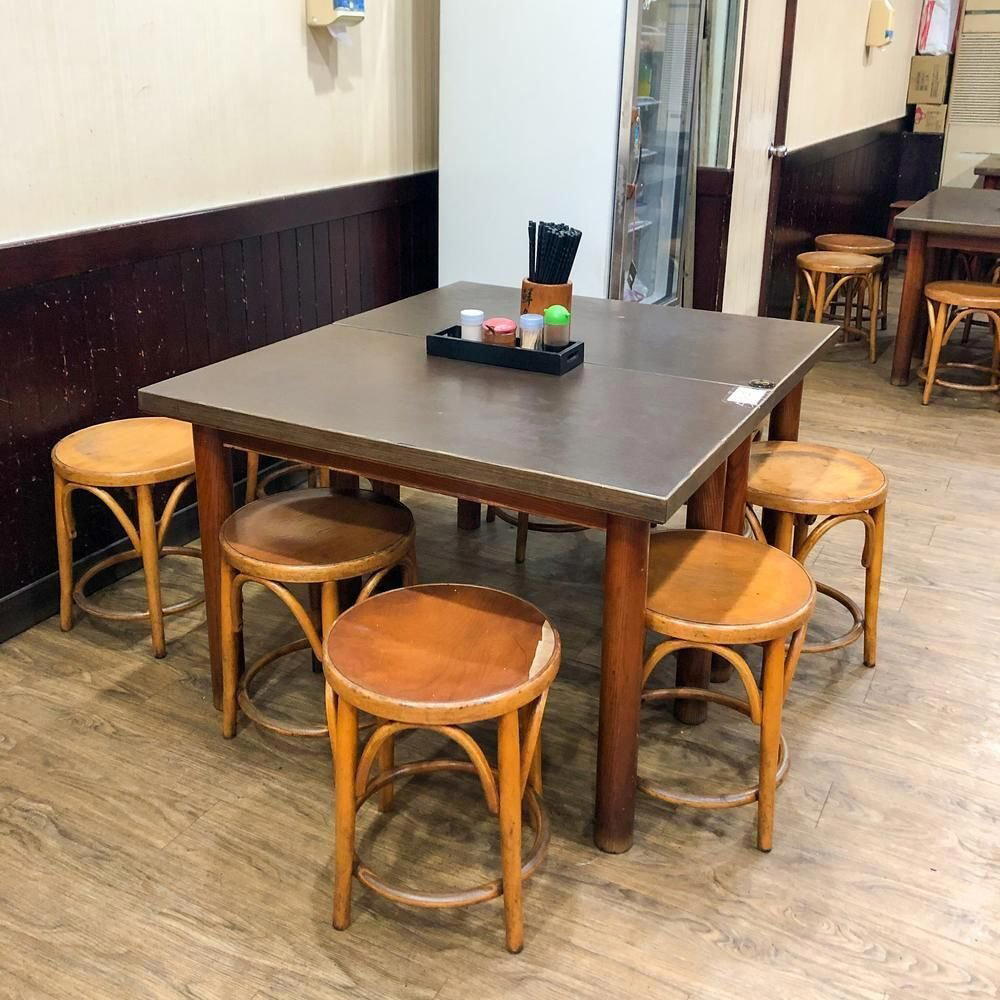
Classic Taiwanese setting focused on traditional cooking techniques.