On Avenue des Combattants in Gembloux, Les Terrasses du Prince occupies a position within Wallonia's mid-size town dining scene where local sourcing and French-inflected technique tend to define the better addresses. The setting signals a certain register: terraces suggest an outward-facing room, a place built around seasonal rhythm and the kind of Belgian produce that changes how a plate reads from one quarter to the next.
Pearl is the En Primeur Club membership app — saves, bookings, and concierge access live there. Same editors, same standards.
- Address
- Av. des Combattants 95, 5030 Gembloux, Belgium
- Phone
- +3281877008
- Website
- lesterrassesduprince.be
- Directions
- Get directions
 Saves & bookings on Pearl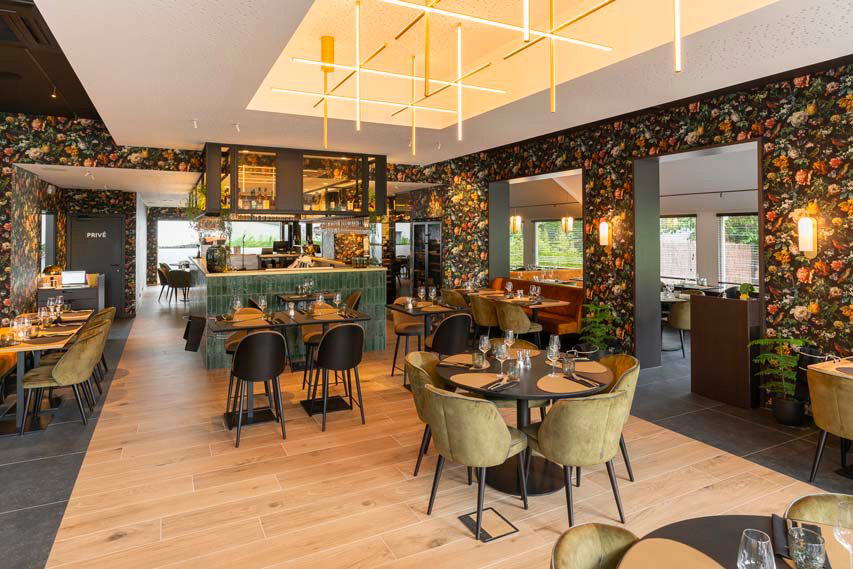
A Wallonian Address Built Around What Grows Nearby
Belgium's restaurant geography divides more cleanly than most visitors expect. The Michelin-heavy coastal and Flemish circuit, represented by counters like Bartholomeus in Heist and Zilte in Antwerp, operates on a different register from the quieter, often French-language dining rooms of Wallonia's agricultural heartland. Gembloux sits inside the latter zone: a university town surrounded by Hesbaye farmland, where the soil is among the most fertile in the country and the proximity to primary producers shapes what arrives on the plate before any kitchen philosophy enters the equation. Les Terrasses du Prince, at Avenue des Combattants 95, belongs to this tradition. The address signals something straightforwardly local: a room facing outward, a terrace name that implies seasonal use, and a position in a town where the agricultural calendar still dictates what serious kitchens can honestly offer.
What the Terrasse Format Says About the Food
Across Belgium and northern France, the terrace-anchored dining room has long been a specific typology: neither the formal grand salle nor the minimalist urban counter, but a hybrid space where the boundary between indoor dining and outdoor season becomes the design logic. In Wallonia particularly, this format tends to correlate with a certain kitchen approach — one that prizes the legibility of ingredients over technical complexity, where the pleasure comes from understanding exactly where something was grown or raised, and when. That orientation matters in a region like Gembloux, where the surrounding Hesbaye plateau produces white asparagus, endive, and sugar beet at a commercial scale, and where smaller farms supply the kind of herbs, vegetables, and game that appear on menus without needing provenance stories attached, because the sourcing geography is already understood locally. For visitors arriving from Brussels, roughly 40 kilometres to the northwest, or from L'air du temps in nearby Liernu, the register shifts noticeably: away from creative tasting-menu formalism, toward something more grounded in the agricultural present.
Belgian Ingredient Culture and Its Provincial Expressions
Belgium's fine dining conversation tends to be captured by its starred addresses. Hof van Cleve in Kruishoutem, Boury in Roeselare, and De Jonkman in Sint-Kruis collectively define the benchmark for what technically rigorous Belgian cooking looks like at the top of the market. But that conversation can obscure a second, equally coherent tradition: the provincial room that draws authority from its sourcing radius rather than from innovation per se. This tradition has deep roots in French-speaking Belgium, where the cooking vocabulary derives more directly from classical French cuisine — the same lineage that produces places like Le Chalet de la Forêt in Uccle or Bozar Restaurant in Brussels, filtered through the specific agricultural character of the immediate region. In Gembloux's case, that means produce from a plateau farming culture that has supplied Brussels and Liège markets for centuries. A kitchen that respects that supply chain doesn't need to invent its identity: the identity is already in the ground.
Placing Les Terrasses du Prince in the Gembloux Context
Gembloux is not a dining destination in the way that Ghent or Bruges draws international food tourists. It functions more as a regional service town with a strong agricultural faculty (the Gembloux Agro-Bio Tech, part of the University of Liège, has anchored the town's identity around agronomy for generations) and a resident population that supports honest, seasonal, mid-to-upper-range dining rather than the kind of destination tasting menus that require a two-hour detour to justify. Within that local ecosystem, Les Terrasses du Prince occupies a position at the higher end of what the town sustains. Baguettes et Fourchette represents another point on the Gembloux dining map, and together these addresses define the town's upper register without reaching for external validation. For anyone spending time in the Namur province or passing through between Brussels and the Ardennes, the address on Avenue des Combattants warrants attention, not as a detour, but as a reason to schedule a stop. See our full Gembloux restaurants guide for a wider picture of what the town supports.
Sourcing as Structure
The broader Belgian dining scene has, over the past decade, moved increasingly toward ingredient transparency as a primary value signal. At the market end, this shows up in chalkboard menus that change daily. At the starred end, it appears as hyper-local sourcing narratives attached to tasting courses. Provincial addresses like Les Terrasses du Prince tend to occupy a middle position in this spectrum: the sourcing is real and the seasonal rotation is genuine, but the presentation is less self-conscious about documenting it. This is, in many ways, the more honest version of the approach. In Wallonia's agricultural heartland, proximity to primary produce is structural rather than aspirational, it's a function of geography, not a marketing decision. Belgian kitchens that operate in this mode share a certain quality with addresses further afield that have made sourcing radius their central argument: Castor in Beveren, Maison Colette in Tongerlo, and La Table de Maxime in Our each represent a version of this provincial sourcing logic, applied to different corners of Belgium's agricultural map. The Hesbaye plateau gives Gembloux a specific raw-material advantage: rich loam soils, a tradition of market gardening, and proximity to game-producing forests that influence menus from late autumn through winter.
Planning a Visit
Les Terrasses du Prince is located at Avenue des Combattants 95, 5030 Gembloux. Gembloux is served by direct rail from Brussels-Central, with journey times typically under 40 minutes, making this a viable lunch destination from the capital without requiring a car. For visitors exploring Wallonia's dining circuit more broadly, the address fits logically alongside a visit to d'Eugénie à Emilie in Baudour or La Durée in Izegem as part of a wider regional itinerary. Current booking details, hours, and pricing are best confirmed directly with the venue, as specific operational information was not available at the time of publication. For international reference points on how provincial sourcing-driven rooms compare to more globally recognised formats, Le Bernardin in New York City and Atomix in New York City represent the opposite pole: urban destination restaurants where sourcing is one argument among many, rather than the primary structural one. The contrast clarifies what addresses like Les Terrasses du Prince are actually doing, and why that approach has durable value in a region where the land makes the argument for you.
How Les Terrasses du Prince Gembloux compares with similar nearby venues.
| Venue | Cuisine | Price |
|---|---|---|
| Hors-Champs | Organic | €€€ |
| Chai Gourmand | Modern Cuisine | €€€ |
Continue exploring
More in Gembloux
Restaurants in Gembloux
Browse all →
Bars in Gembloux
Browse all →
Hotels in Gembloux
Browse all →
Wineries in Gembloux
Browse all →

At a Glance
- Elegant
- Modern
- Cozy
- Date Night
- Business Dinner
- Group Dining
- Terrace
- Extensive Wine List
- Garden
Current opening hours
- Monday
- 12–2:30 PM, 6:30–10 PM
- Tuesday
- 12–2:30 PM, 6:30–10 PM
- Wednesday
- 12–2 PM, 6:30–10 PM
- Thursday
- 12–2:30 PM, 6:30–10 PM
- Friday
- 12–2:30 PM, 6:30–10 PM
- Saturday
- 6:30–10 PM
- Sunday
- 12–2:30 PM, 6:30–10 PM
Hours can change for holidays and private events. Last verified .
Warm and refined atmosphere with a convivial feel, enhanced by an open kitchen and verdoyant terrace.
Know Before You Go
- Getting there
- Av. des Combattants 95, 5030 Gembloux, Belgium