Our verdict
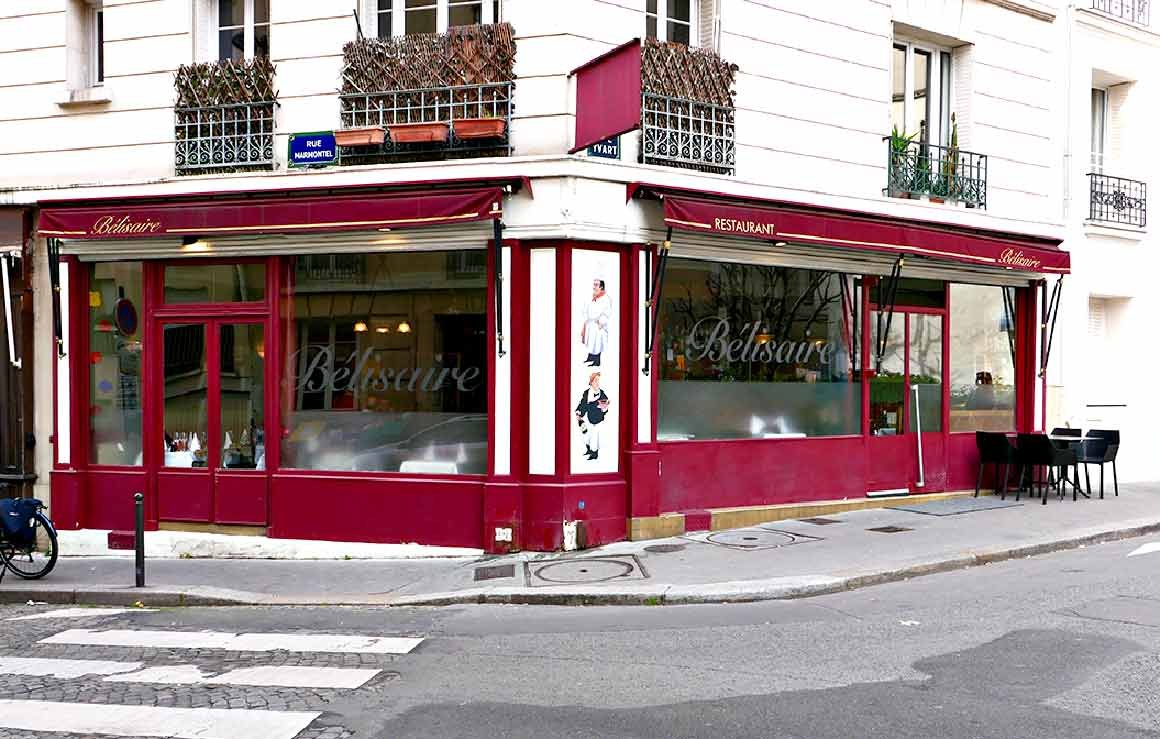
Le Bélisaire occupies a quiet address on Rue Marmontel in the 15th arrondissement, sitting at some distance from the grand-boulevard spectacle of Paris's more decorated dining rooms. Where the city's €€€€ tier — from Alléno Ledoyen to Le Cinq — trades in ceremony and prestige, this address represents a different register: the neighbourhood bistro as a sustained, considered act rather than an occasion event.

Pearl is the En Primeur Club membership app — saves, bookings, and concierge access live there. Same editors, same standards.
- Address
- 2 Rue Marmontel, 75015 Paris, France
- Phone
- +33148286224
- Hours
- Mon–Fri 12–2 PM, 7:30–9:30 PMSat–Sun Closed
- Website
- restaurant-belisaire.paris
- Directions
- Get directions
- Booking
- Book on Zenchef
The menu
What to order
- Huître à la japonaise
- Foie gras aux coques
- Pigeon à la polenta
- Lièvre à la royale
- Hummer Ravioli
- Cabillaud
The 15th and What It Signals
Paris dining splits along a fairly legible axis. On one side sit the grand rooms: the Alléno Paris au Pavillon Ledoyen tier, Le Cinq at the Four Seasons George V, L'Ambroisie on the Place des Vosges — rooms where the architecture and the price point conspire to make you feel the weight of occasion before the first course arrives. On the other side, in arrondissements like the 15th, sits a different kind of seriousness: the neighbourhood address that earns loyalty through repetition and consistency rather than spectacle. Le Bélisaire at 2 Rue Marmontel belongs to this second tradition, and understanding that tradition is the prerequisite for appreciating what this kind of table actually does.
The 15th arrondissement is one of Paris's most residential, a district of broad avenues and local markets where the dining culture tends toward the dependable rather than the fashionable. Restaurants here do not benefit from the foot traffic of the Marais or the tourist density of Saint-Germain. They survive on repeat custom, on the sustained confidence of a neighbourhood that returns. That selection pressure produces a specific kind of cooking: careful, unfussy, rooted in French technique without the self-consciousness of a destination restaurant trying to justify its prices through novelty.
The Architecture of a Bistro Meal
In France, the rhythm of a proper bistro lunch or dinner is itself a cultural artifact, as codified in its own way as the tasting-menu format at a table like Arpège or Kei. The pacing is unhurried but structured: an aperitif decision, a deliberate read of the handwritten or chalk-board menu, a conversation with the server that functions less as an order-taking transaction and more as a brief negotiation over what the kitchen has that day. Dishes arrive in sequence, each with its own pause. The cheese course is not a formality but a considered stage. Wine is ordered by the carafe or by the half-bottle, calibrated to the meal rather than to a prestige label.
This ritual is what French gastronomy built its reputation on long before the starred rooms absorbed all the international attention. The bistro format is, in some ways, the load-bearing structure of French dining culture — the format that Paul Bocuse and the Lyonnais tradition drew from, the one that informs the brasserie culture of Alsace at places like Au Crocodile in Strasbourg, and the rural auberge tradition that runs through Auberge de l'Ill in Illhaeusern and Auberge du Vieux Puits in Fontjoncouse. Le Bélisaire operates within that long continuum, at the urban, neighbourhood end of the spectrum.
Approaching a table like this requires a recalibration away from the habits that haute cuisine encourages. There is no amuse-bouche procession, no sommelier tableside narrative, no printed menu with a watermark. What there is, typically, is a room that has been doing this for long enough that the service carries its own quiet confidence, the confidence of a place that does not need to explain itself to you.
Within Paris, the market for this kind of table is genuinely competitive. The city has hundreds of bistros, and the ones that endure do so by developing a specific regulars-first culture that resists the instability of trend cycles.
That positioning is different from the starred competition. Mirazur in Menton, Bras in Laguiole, and Flocons de Sel in Megève operate as destination restaurants that justify travel on their own terms. Assiette Champenoise in Reims and AM par Alexandre Mazzia in Marseille anchor regional dining identities in their cities. Le Bélisaire competes on entirely different ground: not destination dining, but the kind of table that a Paris-based person counts on for the kind of meal that doesn't require an occasion to justify. That's a different value proposition, and a harder one to sustain, because it depends on consistency over years rather than a single transformative experience.
For comparison, the international equivalent of this format, the serious neighbourhood table that locals treat as a default rather than a treat, operates across most major dining cities. Le Bernardin in New York and Atomix occupy entirely different tiers of the same city's restaurant market, just as Paris has its own gradient from the Ledoyen to the Rue Marmontel. Understanding where a restaurant sits on that gradient is the first requirement for judging it accurately.
Planning a Visit
The 15th arrondissement is well served by Paris's metro network. Rue Marmontel is a short walk from Convention (line 12) and Vaugirard (line 12), making it accessible from most central arrondissements without requiring a taxi. The neighbourhood has a local character that rewards arriving early enough to walk the surrounding streets before the meal.
Know Before You Go
- Address: 2 Rue Marmontel, 75015 Paris, France
- Neighbourhood: 15th arrondissement (Convention / Vaugirard)
- Booking: Contact details not currently listed, check directly or via local booking platforms
- Dress code: No formal dress code; smart-casual is the standard for Paris bistro dining at this level
- Getting there: Metro line 12 to Convention or Vaugirard
- Full Paris guide: See our full Paris restaurants guide
Frequently asked questions
at Le Bélisaire?
Do I need a reservation at Le Bélisaire?
What makes Le Bélisaire worth seeking out?
Is Le Bélisaire good for vegetarians?
How does Le Bélisaire compare to other long-standing Paris bistros in the 15th arrondissement?
Just the Basics
Comparable venues nearby, for context on price, style, and recognition.
| Venue | Cuisine | Price | Notes |
|---|---|---|---|
| Le BélisaireThis venue — the venue you are viewing | French Bistronomie | $50–100 | Not listed |
| Laiterie Sainte-Clotilde | Traditional French Bistro | Not listed | 7th Arr. - Palais-Bourbon, Traditional French Bistro |
| Galinette Bistrot | French Bistro | $30–50 | 8ème arrondissement, French Bistro |
| Brasserie des Arts | Classic French Brasserie | $30–50 | Saint-Germain-des-Prés, Classic French Brasserie |
| Marcelle | Modern French Café & Brunch | $20–30 | Les Halles, Modern French Café & Brunch |
| Café de Luce | Classic French Bistro | $30–50 | Montmartre, Classic French Bistro |
Continue exploring
More in Paris
Restaurants in Paris
Browse all →
Bars in Paris
Browse all →
Hotels in Paris
Browse all →

Details
- Classic
- Cozy
- Romantic
- Date Night
- Business Dinner
- Group Dining
- Special Occasion
- Standalone
- Open Kitchen
- Local Sourcing
- A La Carte
- Prix Fixe
- Wine
- Vegetarian Friendly
- Gluten Free Options
- Allergy Accommodating
Current opening hours
- Monday
- 12–2 PM, 7:30–9:30 PM
- Tuesday
- 12–2 PM, 7:30–9:30 PM
- Wednesday
- 12–2 PM, 7:30–9:30 PM
- Thursday
- 12–2 PM, 7:30–9:30 PM
- Friday
- 12–2 PM, 7:30–9:30 PM
- Saturday
- Closed
- Sunday
- Closed
Hours can change for holidays and private events. Last verified .
Warm, old-fashioned bistro atmosphere with classic woodwork, red banquettes, Thonet chairs, parquet flooring, and an intimate counter; intimate and welcoming with attentive service.