On Rue de Monceau in the 8th arrondissement, Galinette Bistrot occupies a quietly serious position in a neighbourhood better known for grand hotel dining rooms than neighbourhood tables. The wine list drives the room's identity as much as the kitchen, with curation that rewards guests who read past the first page. For Paris bistrot drinking and eating at this address, the format is unhurried and the expectations are clear.
Pearl is the En Primeur Club membership app — saves, bookings, and concierge access live there. Same editors, same standards.
- Address
- 7 Bis Rue de Monceau, 75008 Paris, France
- Phone
- +33153764595
- Website
- galinettebistrot.fr
- Directions
- Get directions
 Saves & bookings on Pearl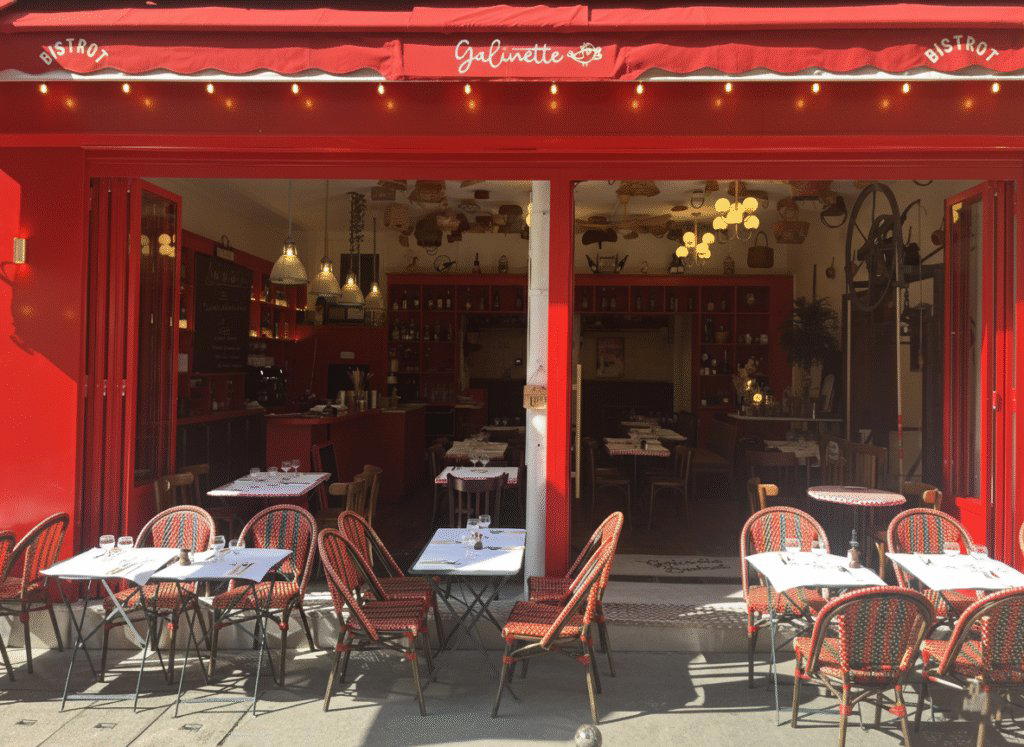
A Street That Earns Its Reputation Slowly
The 8th arrondissement is easy to misread. Parc Monceau draws the tourists, the avenue de Friedland pulls the business lunches, and the grand hotel dining rooms — Le Cinq at the Four Seasons George V being the obvious anchor — occupy the category of formal, multi-course French dining at its most ceremonially expensive. Against that backdrop, a bistrot at 7 Bis Rue de Monceau occupies a different register entirely. The building-line here is quieter than the avenues, and the format signals something more conversational than ceremonial.
This is the kind of address where the room does not announce itself. There is no valet theatre, no amuse-bouche trolley greeting you at the door. The experience is set by its neighbourhood positioning rather than in spite of it: a part of Paris where old money has long preferred substance over spectacle, and where a well-constructed wine list carries more social currency than a second dessert course.
The Wine List as the Room's Real Argument
In Paris, bistrot wine programs have split into two recognisable camps over the past decade. One leans natural and minimal-intervention, with lists that prioritise producer philosophy over regional breadth. The other holds to a more classical French structure: bottles organised by appellation, with depth in Burgundy and the Rhône, and a house carafe that performs reliably without demanding conversation. Galinette Bistrot sits somewhere that the address itself makes plausible: the 8th is not the 11th, and the clientele at this end of the city tends to expect that the cellar has been assembled with attention rather than ideology.
What distinguishes serious bistrot wine programs from their more casual counterparts is not the length of the list but the coherence of its selection logic. The leading rooms in Paris at this tier, places that lack the Michelin ceiling of Arpège or the creative budget of Alléno Paris au Pavillon Ledoyen, compensate with curation that makes navigation intuitive and discovery possible within a single visit. A list that pulls Loire whites, honest Beaujolais, and a considered Rhône or two reads as a kitchen that knows what it is cooking and has selected bottles accordingly.
The wine culture of this city rewards patience with the page. Guests who ask rather than point are typically better served, and a room that encourages that dynamic signals something about how the kitchen approaches its own work. French regional cooking at the bistrot tier, when it is doing its job, is food that wants wine rather than tolerates it, and the selection should reflect that compact.
What the Format Tells You About the Cooking
The bistrot format in Paris is better understood as a culinary discipline than a price bracket. At its most coherent, it means daily-market sourcing, a short blackboard or printed card, and a kitchen that knows when to stop. It is a tradition that stands in instructive contrast to the tasting-menu architecture of addresses like Kei or the classical grandeur of L'Ambroisie: those rooms are built around sequence and duration, while the bistrot is built around a single good choice made well.
France's broader dining culture has always carried this split as a point of pride. The same country that produced the multi-starred formality of Troisgros, Auberge de l'Ill, and Bras also produced the bistrot as the democratic expression of the same values: good product, honest technique, a room that does not require a suit. Even particularly celebrated addresses in the French canon, from Paul Bocuse in Collonges-au-Mont-d'Or to Flocons de Sel in Megève, understand that the kitchen's credibility rests on product quality as much as technique. The bistrot just strips the argument to its essentials.
At this address, the 8th arrondissement setting implies a clientele with particular expectations around product quality. A room that gets this right will serve food that reads as calibrated rather than composed: the difference between a dish you analyse and one you simply finish.
Placing Galinette in the 8th's Dining Map
The 8th arrondissement's restaurant scene is not monolithic. Grand Palais tourism, office lunch trade from the avenue des Champs-Élysées corridor, and genuine neighbourhood dining from the residential blocks around Parc Monceau all coexist within the same postal code. A bistrot at the Monceau end of the arrondissement is positioned closer to the latter than the former. It is not competing with the hotel-attached rooms or the tourist-serving brasseries on the main axes; it is addressing the regular eater rather than the occasion diner.
That positioning matters for how you approach the booking. This is not the kind of address that benefits from a month's advance planning; nor is it the kind of place where you walk in on a Friday evening without a thought. The sweet spot for Paris neighbourhood bistrot reservations at this level is typically a few days to a week ahead, on a weekday when the room is working for its regulars rather than performing for a special occasion.
For those mapping the full range of what Paris offers at the serious end, our full Paris restaurants guide covers the city from three-star ambition to neighbourhood precision, including comparable addresses in the 8th and beyond.
How It Compares: Planning Context
| Venue | Format | Price Tier | Booking Lead Time |
|---|---|---|---|
| Galinette Bistrot | Neighbourhood bistrot | Mid-range | Days to one week |
| Le Cinq | Grand hotel dining room | €€€€ | Weeks to months |
| Alléno Paris | Creative tasting menu | €€€€ | Weeks to months |
| Kei | Contemporary French-Japanese | €€€€ | Weeks ahead |
| L'Ambroisie | Classic French, formal | €€€€ | Weeks to months |
How Galinette Bistrot Paris compares with similar nearby venues.
| Venue | Cuisine | Price |
|---|---|---|
| L'Attilio | Modern Cuisine | €€€€ |
Continue exploring
More in Paris
Restaurants in Paris
Browse all →
Bars in Paris
Browse all →
Hotels in Paris
Browse all →
At a Glance
- Cozy
- Classic
- Elegant
- Date Night
- Business Dinner
- Casual Hangout
- Standalone
Current opening hours
- Monday
- 12–2:30 PM
- Tuesday
- 12–2:30 PM, 6:30–11:30 PM
- Wednesday
- 12–2:30 PM, 6:30–11:30 PM
- Thursday
- 12–2:30 PM, 6:30–11:30 PM
- Friday
- 12–2:30 PM
- Saturday
- Closed
- Sunday
- Closed
Hours can change for holidays and private events. Last verified .
Raffinée et décontractée with warm, cozy atmosphere praised by diners.