On a quiet stretch of Rue de Bellechasse in the 7th arrondissement, Laiterie Sainte-Clotilde occupies the kind of address that Paris does well: a converted dairy space where the bones of an older food economy are still legible in the room. The cooking draws on sourced, seasonal produce in a neighbourhood better known for ministerial offices than market-driven menus.
Pearl is the En Primeur Club membership app — saves, bookings, and concierge access live there. Same editors, same standards.
- Address
- 64 Rue de Bellechasse, 75007 Paris, France
- Phone
- +33145517461
- Website
- lalaiteriesainteclotilde.fr
- Directions
- Get directions
 Saves & bookings on Pearl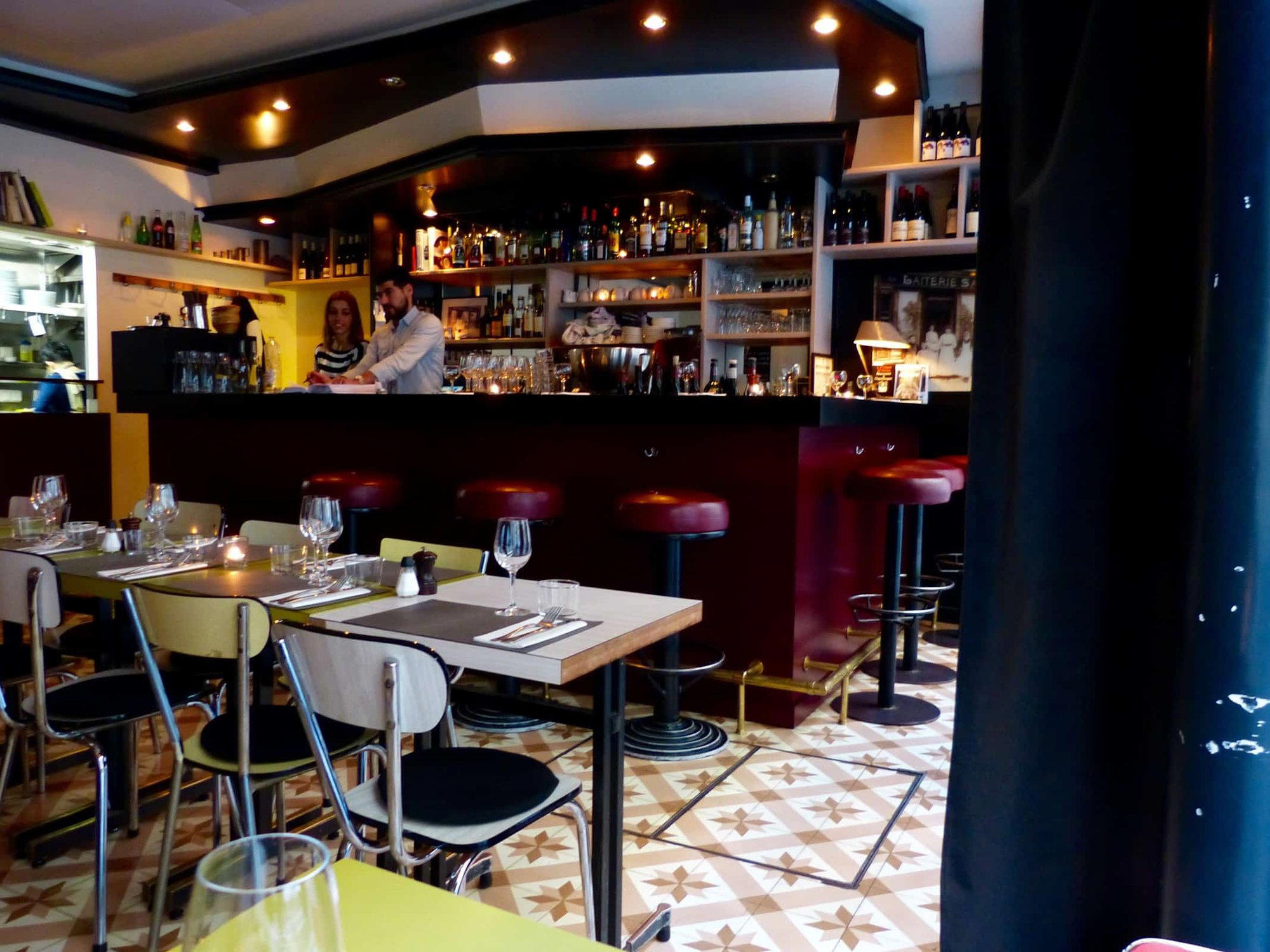
A Dairy Address in the 7th
Rue de Bellechasse runs through one of Paris's most architecturally composed arrondissements, where the Musée d'Orsay anchors the Seine end and the neighbourhood thins into residential calm as you move south toward Saint-François-Xavier. This is not a street that accumulates restaurants the way the Marais or Saint-Germain-des-Prés do. It accumulates embassies, government ministry annexes, and the kind of stone-fronted buildings that have changed function many times without changing face. Laiterie Sainte-Clotilde, at number 64, reads immediately in that context: a former dairy whose name alone signals that what happened here before the dining room arrived was the sourcing and selling of primary produce.
That history of provenance matters in a city where ingredient sourcing has become the clearest fault line separating serious kitchens from decorative ones. Across the top end of Paris dining, from the tightly controlled supply chains behind Arpège to the produce-forward philosophy that distinguishes the market-locked side of Alléno Paris au Pavillon Ledoyen, the question of where the food comes from has displaced the question of what technique is applied to it. A space with dairy origins in the 7th is, at minimum, making a structural argument about that priority before a plate arrives.
The Room and What It Says
The physical environment at Laiterie Sainte-Clotilde does the work that heavy interior design spending tends to obscure in more self-conscious Paris addresses. Former dairy premises in Haussmann-era Paris were built to a particular functional logic: high ceilings to manage temperature, tiled or stone surfaces for hygiene, generous frontage for deliveries. When a kitchen takes over such a space without gutting it, the result is a room that reads as earned rather than assembled. The traces of commercial food history give a dining room a kind of authority that no amount of reclaimed timber or artisan ceramic can fully replicate.
In the 7th, where neighbours include the more formal registers of institutions like L'Ambroisie in the nearby 4th and the hotel-dining formality of addresses like Le Cinq at the Four Seasons George V, a room that reads as unpretentious carries specific weight. The neighbourhood's dining register has historically skewed formal, suited to ministry lunches and diplomatic dinners. Laiterie Sainte-Clotilde sits at a different point on that register, closer to the bistronomy tradition that French food culture has spent two decades learning to take seriously alongside its three-Michelin-star institutions.
Sourcing as the Central Argument
The bistronomy model that restructured Paris dining from roughly the early 2000s onward was built on a specific proposition: that the discipline of ingredient sourcing, practiced with the rigour previously reserved for haute cuisine kitchens, could generate cooking of equivalent seriousness at a different price point and with a different level of formality. The leading practitioners of this model, across Paris and extending to producers-first kitchens in France's regions from Mirazur in Menton to Bras in Laguiole, share an orientation toward the supply chain as the primary creative act.
A former dairy space reinforces that argument architecturally. Laiteries in Paris historically functioned as the final link in rural-to-urban food chains stretching to Normandy, Brittany, and the Loire valley, regions whose dairy and produce traditions remain central to French culinary identity. Kitchens that occupy these spaces inherit a provenance logic that is written into the walls. The sourcing question is not an add-on to the menu narrative; it is the foundational context that the room itself supplies.
This places Laiterie Sainte-Clotilde in a cohort of Paris addresses where the physical premises carry part of the editorial weight: kitchens that have chosen spaces with food histories, rather than neutral rooms onto which a concept is projected. That cohort includes some of the city's most produce-focused cooking, and it positions sourced, seasonal work as the natural cuisine for such a room.
Where It Sits in the Paris Dining Map
The 7th has its own internal spectrum. Rue de Varenne, a few blocks west, carries the density of formal tables you would expect near the Rodin Museum and the Matignon. Rue de Bellechasse, by contrast, is quieter in dining terms, which means that the addresses that do exist here hold a different kind of position: chosen rather than default, arrived at by some deliberate search rather than by pedestrian traffic.
French kitchens in the regions that supply Paris's leading ingredient networks have long operated with a sourcing discipline that the capital's restaurants are still catching up to. Addresses like Flocons de Sel in Megève, Troisgros in Ouches, and Auberge de l'Ill in Illhaeusern built their identities around geographical proximity to specific produce. Paris kitchens must construct that proximity through supply relationships rather than physical closeness, which is why the deliberate communication of sourcing has become so central to the city's most serious mid-register dining. You find the same produce-first argument operating internationally, at addresses like Le Bernardin in New York, where the discipline is applied to a single product category, or at Atomix, where sourcing specificity is built into the written format of service.
Planning a Visit
Laiterie Sainte-Clotilde is at 64 Rue de Bellechasse, in the 7th arrondissement, a short walk from the Solférino or Varenne metro stations. The 7th is a low-pedestrian-traffic neighbourhood outside of museum hours at the d'Orsay, which means the street is notably quieter in the evenings than comparable dining addresses in the 6th or the Marais. That quiet is part of what a visit here offers: a dining room that operates without the ambient noise of a tourist thoroughfare, in a space whose history as a food-supply premises gives it a context that more deliberately designed rooms often lack. For the broader Paris picture, our full Paris restaurants guide maps the city's dining registers across arrondissements and price tiers.
How Laiterie Sainte-Clotilde Paris compares with similar nearby venues.
| Venue | Cuisine | Price |
|---|---|---|
| ES | Modern Cuisine | €€€€ |
| Gaya par Pierre Gagnaire | Modern Cuisine | €€€ |
Continue exploring
More in Paris
Restaurants in Paris
Browse all →
Bars in Paris
Browse all →
Hotels in Paris
Browse all →

At a Glance
- Cozy
- Classic
- Intimate
- Date Night
- Casual Hangout
- Historic Building
- Extensive Wine List
- Organic
Current opening hours
- Monday
- 12–2:30 PM, 7:30–10:30 PM
- Tuesday
- 12–2:30 PM, 7:30–10:30 PM
- Wednesday
- 12–2:30 PM, 7:30–10:30 PM
- Thursday
- 12–2:30 PM, 7:30–10:30 PM
- Friday
- 12–2:30 PM, 7:30–10:30 PM
- Saturday
- 12–2:30 PM, 7:30–10:30 PM
- Sunday
- Closed
Hours can change for holidays and private events. Last verified .
Distinguished bistro ambiance with retro decor, art-filled warm environment, and nonchalant hospitality.
Know Before You Go
- Getting there
- 64 Rue de Bellechasse, 75007 Paris, France