
Tabelog 100 #63
Our verdict
LAS VEGAS puts Fukuoka’s gyoza culture into a more critically watched frame: a Daimyo izakaya-Chinese room selected for Tabelog 100 Dumplings 2024. The appeal is not ceremony but range, with pan-fried, boiled, and seasonal gyoza sitting inside a city that treats casual counters and taverns as serious dining territory.

Pearl is the En Primeur Club membership app — saves, bookings, and concierge access live there. Same editors, same standards.
- Address
- 1 Chome-2-15 Daimyo, Chuo Ward, Fukuoka, 810-0041, Japan
- Phone
- +81 92-707-3898
- Hours
- Mon–Fri 5–11 PMSat 4–11 PMSun 5–11 PM
- Website
- instagram.com
- Directions
- Get directions
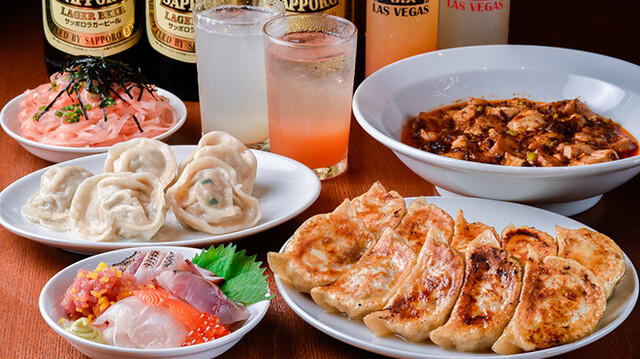
Fukuoka’s dining rhythm changes after dark: shopfronts glow, small groups move between izakaya rooms, and the line between dinner and drinking session becomes pleasantly thin. In that setting, gyoza is not a side order. It is a category with its own specialists, rankings, and repeat customers who judge dough, filling, heat, and pace with the same attention other cities reserve for sushi counters.
LAS VEGAS belongs to that Fukuoka mode: informal, social, and more closely watched than its casual format might suggest. Its selection for Tabelog 100 Dumplings 2024 places it inside a national conversation around gyoza rather than only a local tavern circuit. That matters because Japan’s gyoza field is crowded, price-sensitive, and fiercely regional; recognition in this category signals consistency more than theatre.
Gyoza as the main event in Fukuoka's tavern culture
Fukuoka’s food identity is often reduced to ramen, but the city’s stronger dining lesson is breadth at street level. Fukuoka rewards compact meals that can be built around a few rounds of drinks, a shared plate, and one sharply defined house speciality. Gyoza fits that pattern cleanly: fast enough for a second stop, substantial enough for dinner, and flexible enough to sit between Chinese, izakaya, and local bar food traditions.
The category positioning here is useful. LAS VEGAS is listed across dumpling, izakaya, and Chinese formats, which explains why the room reads less like a single-dish counter and more like a casual evening address. The broader point is format: this is a gyoza-led tavern rather than a tasting-menu restaurant pretending to be casual.
That distinction separates it from higher-spend Fukuoka rooms in the comparison set. Yorgo and MOMOTA Bar sit in a higher-spend lane, while KYuNii and Mashiko also belong to a different style of itinerary. LAS VEGAS operates in its own accessible range, where critical attention comes despite a low-key tavern structure. For travellers building a food itinerary, that makes it a useful counterweight to reservations built around more formal or higher-budget dining.
For a wider read on how this fits into the city, Our full Fukuoka restaurants guide is the natural next stop. The same city logic also explains why other dining in Fukuoka can sit close together in a serious eating plan: casual specialists, counter formats, and old-school local meals all have a place alongside more reserved destinations.
Recognition without the fine-dining costume
Tabelog’s Hyakumeiten lists can be especially revealing in casual genres because they pull attention away from expensive dining rooms and toward category specialists. Dumplings are a telling example. The measure is not linen, long-form service, or rare ingredients; it is repeatable execution in a food that leaves little room for disguise. A weak gyoza wrapper, greasy finish, or careless service rhythm is obvious quickly.
That is why the 2024 Tabelog 100 Dumplings selection carries weight here. It does not transform the room into a destination built around formality. It clarifies its competitive set. The relevant comparison is not a hotel dining room or a chef-counter splurge, but Japan’s stronger gyoza addresses: places where the category itself draws scrutiny. Within Fukuoka, that recognition helps explain why an izakaya-Chinese hybrid has broader relevance for visitors who usually plan around more famous local dishes.
The room’s public details reinforce the casual-use case: LAS VEGAS is listed in the dumpling, izakaya, and Chinese categories, with dinner pricing in the JPY 2,000 - JPY 2,999 range. Those are not decorative facts; they place the restaurant in the lived-in side of Japanese dining, where a serious plate of dumplings does not require a luxury frame.
Drink direction also matters as part of the broader tavern context, even when the exact order should be checked with the venue directly. Fukuoka’s casual dining strength often lies in looseness: rooms that can absorb early meals, later gatherings, and quick stops without changing identity. For visitors extending the night beyond dinner, Our full Fukuoka bars guide gives useful context; for broader trip planning, use Our full Fukuoka hotels guide, Our full Fukuoka wineries guide, and Our full Fukuoka experiences guide.
How to read it against a wider Japan itinerary
For travellers moving through Japan, LAS VEGAS works because it argues for category depth over trophy dining. A good itinerary should not be built only from expensive counters. It needs specialist rooms at accessible levels, places that reveal how cities actually eat between formal reservations. Fukuoka is particularly strong at that: other local dining rooms may belong to different registers, but they can share the same lesson about grounded, specific dining.
That logic travels well across Japan. Focused casual addresses, seafood rooms, compact cafes, and specialist counters can each show how narrow formats define a stop. The same applies outside the usual circuit, where regional dining often rewards travellers who look beyond marquee categories and treat everyday formats with the same seriousness as better-known reservations.
The editorial call is simple: treat this as a recognized gyoza specialist embedded in Fukuoka’s evening economy, not as a luxury detour. It suits travellers who want a credible casual meal, a shared-table rhythm, and a category that Fukuoka handles with more seriousness than its ramen reputation suggests. For international contrast, Japanese formats often change when transplanted; in Fukuoka, the lesson is more direct, accessible, and closer to daily use.
Frequently asked questions
Is LAS VEGAS suitable for children?
Check the venue's official channels for the latest details on family use and seating. LAS VEGAS is in Fukuoka.
What kind of setting is LAS VEGAS?
Expect a casual dumpling-focused venue listed in the dumpling, izakaya, and Chinese categories, with an average price of JPY 2,000 - JPY 2,999.
What price level is LAS VEGAS?
Pricing at LAS VEGAS is listed as JPY 2,000 - JPY 2,999.
When can I go to LAS VEGAS?
Check the venue's official channels for current opening days and hours.
Price Lens
Comparable venues to calibrate price, style, and recognition.
| Venue | Cuisine | Price | Awards | Notes |
|---|---|---|---|---|
| LAS VEGASThis venue — the venue you are viewing | Japanese Izakaya | Not listed | Tabelog 100 #63 | Not listed |
| Karo No Uron | Traditional Hakata udon | $1–10 | Tabelog 100 #76 | Hakata, Traditional Hakata udon |
| Hakata Gion Tetsu Nabe | Hakata izakaya & iron-pan gyoza | $10–20 | Tabelog 100 #94 | Hakata, Hakata izakaya & iron-pan gyoza |
| Fukuchan Ramen Taguma honten | Traditional Hakata-style tonkotsu ramen shop | $10–20 | Tabelog 100 #40 | Sawara, Traditional Hakata-style tonkotsu ramen shop |
| 鮨 唐島 | Kyushu-Style Edomae Omakase | $200–300 | Tabelog Bronze #165 | Chūō, Hakata Island Japanese |
| Bomber Kitchen Yakuin honten | Japanese-style Western set meals (yoshoku) | $10–20 | Tabelog 100 #22 | Chūō, Japanese-style Western set meals (yoshoku) |
Recognition history
Dated appearances from independent guides and award organizations, with the underlying list record or original source where available.
Tabelog 100 #63 · No. 63
Tabelog · Tabelog 100 - Dumplings - 2024
Details
Current opening hours
- Monday
- 5–11 PM
- Tuesday
- 5–11 PM
- Wednesday
- 5–11 PM
- Thursday
- 5–11 PM
- Friday
- 5–11 PM
- Saturday
- 4–11 PM
- Sunday
- 5–11 PM
Hours can change for holidays and private events. Last verified .