鮨 初島 sits in Fukuoka's Akasaka district, where a tight counter format and seafood-forward menu place it within the city's serious sushi tier. The restaurant draws from Kyushu's coastal ingredient base, with a menu architecture that reflects the restrained, sequence-driven logic common to Japan's top omakase houses. Booking ahead is advised.
Pearl is the En Primeur Club membership app — saves, bookings, and concierge access live there. Same editors, same standards.
- Address
- Japan, 〒810-0042 Fukuoka, Chuo Ward, Akasaka, 3 Chome−1−2 Ⅱ101
- Phone
- +81 80-6661-3999
- Directions
- Get directions
 Saves & bookings on Pearl
Akasaka's Sushi Counter and What the Menu Reveals
Fukuoka's Akasaka district operates at a different register from Tenjin's commercial density. The streets are quieter, the buildings lower, and the dining rooms smaller. It is the kind of neighbourhood where a counter restaurant can build a regular clientele without competing on visibility, and where the format of the meal itself does the work that signage and foot traffic do elsewhere. 鮨 初島 occupies this position, in a low-rise building on Akasaka 3-chome.
Sushi in this tier of Japanese dining is not primarily about fish. It is about sequence, pacing, and the logic that governs what arrives in what order. A counter that structures its menu around omakase principles is making an argument: that the chef's editorial control over the meal produces a more coherent experience than à la carte selection. This is the dominant model at Fukuoka's better sushi addresses, and 鮨 初島 operates within that convention. The meal unfolds as a series of decisions already made, and the guest's role is to receive them in order.
Menu Architecture and the Kyushu Ingredient Logic
Kyushu's seafood geography is among the more consequential in Japan. The Genkai Sea to the north and the Ariake Sea to the west deliver different product profiles: the Genkai is colder, producing leaner, firmer fish; the Ariake is shallower and warmer, with a higher proportion of shellfish and small flatfish. A Fukuoka sushi counter that draws from both has access to a range of ingredients that is broader than most coastal cities can offer from a single market. Fukuoka's Yanagibashi Rengo Market, one of the city's central wholesale nodes, concentrates this supply into a single sourcing point, and the better counters in Akasaka and Yakuin use it as their primary reference.
In menu architecture terms, this ingredient breadth allows a sequence that can move through multiple texture registers without repetition. The classical omakase structure in Japan distinguishes between tsumami (small dishes, often cooked or cured, served before the nigiri sequence) and the nigiri progression itself, which typically opens with lighter, whiter fish, builds through medium-bodied pieces, and closes with richer, fattier cuts before the ending courses. A counter that understands its local supply chain builds the sequence around what is at peak at a given point in the season, not around a fixed template. This is the distinction between a menu that is structured and a menu that is merely ordered.
For comparison, sushi houses such as Chikamatsu in Fukuoka or Harutaka in Tokyo demonstrate how seasonal calibration and sourcing specificity shape omakase counters. The editorial discipline in sequencing is what makes the meal cohere rather than accumulate.
Where 鮨 初島 Sits in Fukuoka's Sushi Scene
Fukuoka has developed one of western Japan's most coherent restaurant cultures, and its sushi tier reflects the city's proximity to both raw material supply and a well-travelled dining public. The city receives less international attention than Osaka or Tokyo, which means its better counters operate with a clientele that is predominantly Japanese and predominantly local, a dynamic that tends to reinforce quality discipline rather than relax it. Restaurants in this environment are accountable to regulars who return frequently and notice drift.
Within Fukuoka's broader dining context, sushi counters occupy a distinct position alongside the city's stronger categories: ramen, offal yakitori, and mentaiko-inflected regional cooking. Sushi here does not have the same cultural centrality it holds in Tokyo, which makes the counters that do exist at a serious level more deliberate in their positioning. They are not benefiting from category momentum; they are making a specific case for the format. This is worth noting when considering where 鮨 初島 fits.
For a sense of the range available across Fukuoka's restaurant scene, Goh (French) represents the city's French-inflected fine dining, while Asago and Bekk demonstrate the city's range across different format and price registers. Beef Taigen anchors the wagyu end of the market.
Japan's Counter Restaurant Model in Broader Context
Counter dining at this level is not distinctive to Fukuoka or even to sushi. The format, in which a small number of seats face a working kitchen and the menu is pre-set or guided by the house, has become a structural category across Japan's fine dining tier. Gion Sasaki in Kyoto and HAJIME in Osaka represent different expressions of the same underlying principle: that intimacy of scale and editorial control over the menu sequence produces a qualitatively different experience from larger, more open formats. akordu in Nara applies the same logic through a European lens.
Beyond Japan, the counter model has travelled. Le Bernardin in New York City and Lazy Bear in San Francisco demonstrate how the commitment-dining format operates in contexts where the cultural scaffolding is different but the guest expectation, that the restaurant will make decisions the guest cannot make for themselves, remains consistent. Across Japan, from aki nagao in Sapporo to Aji Arai in Oita and Abon in Ashiya, the counter format carries this logic across regions and categories.
Planning Your Visit
鮨 初島 is located in Akasaka 3-chome, Chuo Ward, Fukuoka, a ten-minute taxi ride from Hakata Station and accessible on foot from Akasaka subway station on the Kuko Line. The Akasaka neighbourhood is walkable and well-serviced; the immediate streets around the restaurant are quiet rather than commercial, and parking in the area is limited. For visitors arriving by Shinkansen, Hakata is the natural base, and Akasaka is close enough for a local dinner. Given the counter format standard in this category, a reservation is required, and lead times at comparably structured counters in Fukuoka range from several weeks to several months depending on the season. Reservations are essential.
Accolades, Compared
Comparable venues nearby, for context on price, style, and recognition.
| Venue | Cuisine | Price | Notes |
|---|---|---|---|
| 鮨 唐島This venue — the venue you are viewing | Hakata Island Japanese | Not listed | Not listed |
| Teuchi Soba Yabukin | Handmade Soba (Japanese Buckwheat Noodles) | $$ | Chūō |
| Dai 8 Yachiyo Maru | Traditional Japanese Izakaya & Live-Tank Seafood | $$ | Hakata |
| pain stock | Japanese Bakery Cafe | $$ | Higashi |
| Sabatarou | Traditional Japanese clay-pot rice breakfast & lunch | $$ | Chūō |
| Soba Ozaki | Traditional Soba Noodle Shop | $$ | Chūō |
At a Glance
- Quiet
- Minimalist
- Sophisticated
- Intimate
- Special Occasion
- Date Night
- Business Dinner
- Solo
- Chefs Counter
- Standalone
- Local Sourcing
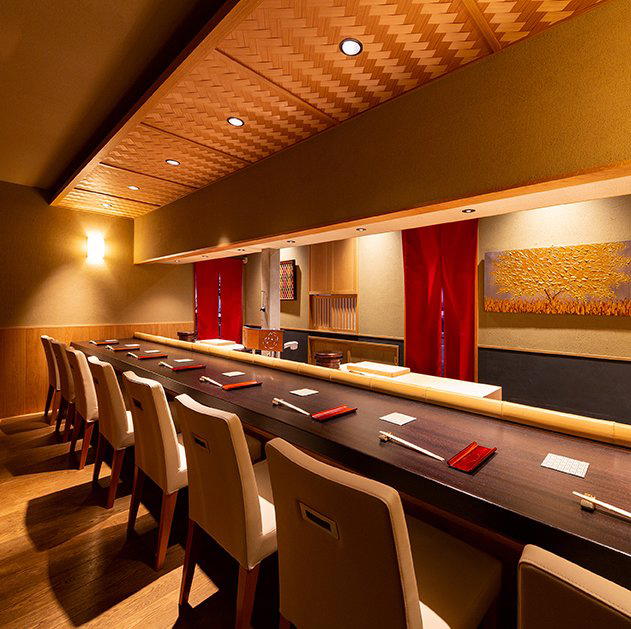
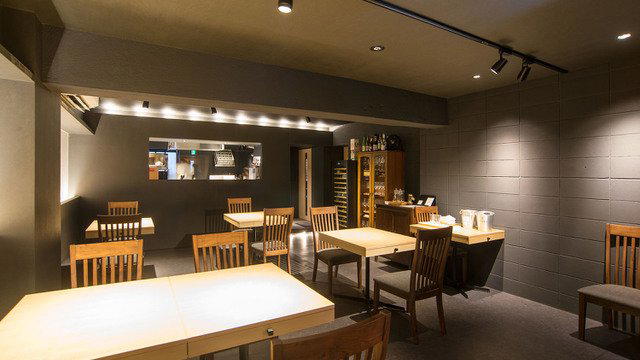
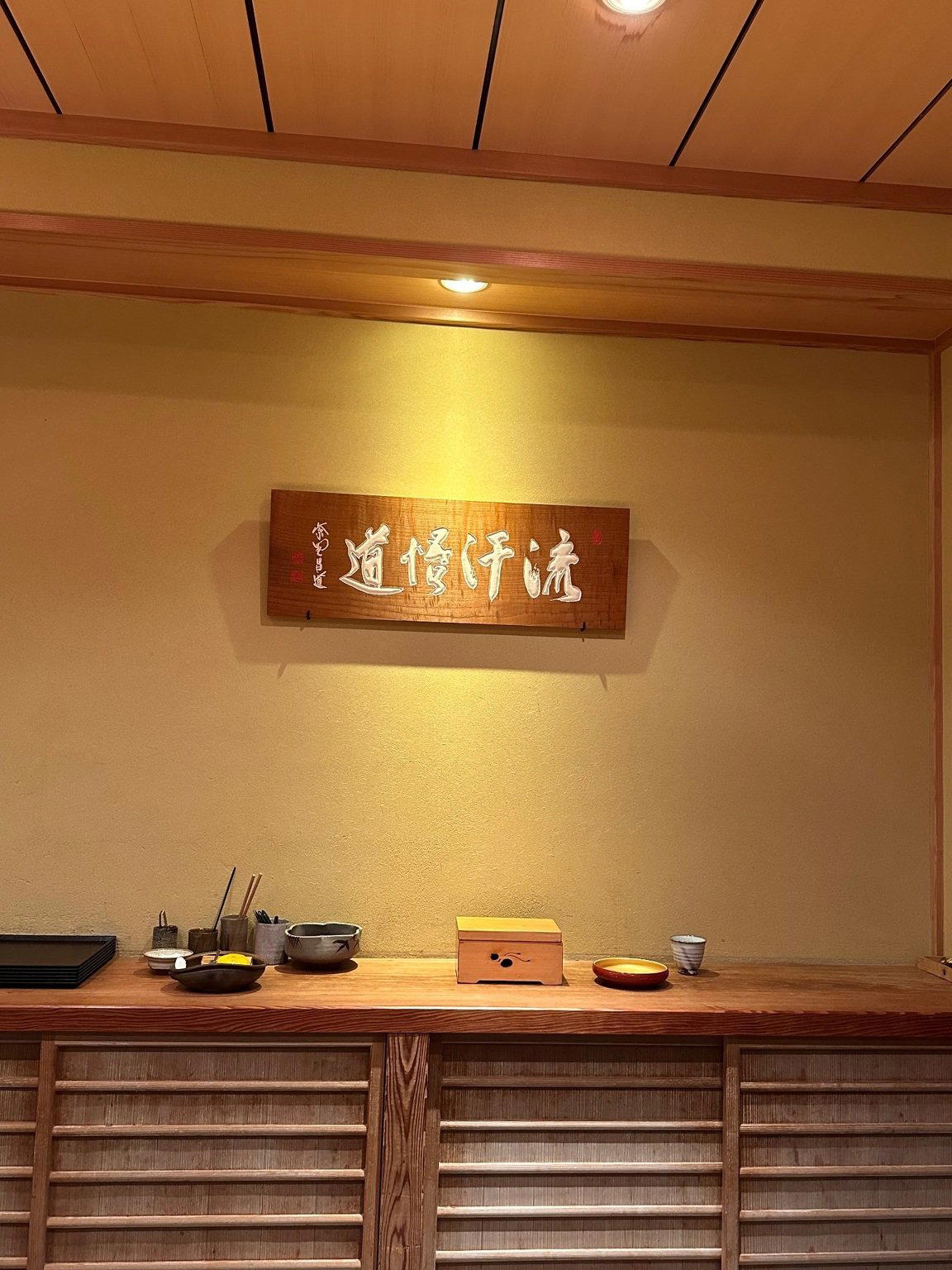
Quiet, restrained, and gallery-like, with a minimalist black-and-white interior, soft spotlighting, and an intimate counter-focused atmosphere.