
A low-cost udon address near Kushida Shrine, Karo No Uron sits in Fukuoka’s everyday noodle culture rather than its special-occasion dining circuit. Tabelog selected it for the 2024 Udon WEST 100, and the appeal is practical: wheat noodles, rice balls and soba in a small, cash-only room where the bill stays under JPY 999.
Pearl is the En Primeur Club membership app — saves, bookings, and concierge access live there. Same editors, same standards.
- Address
- 2-1 Kamikawabatamachi, Hakata Ward, Fukuoka, 812-0026, Japan
- Phone
- +81 92-291-6465
- Website
- karonouron.com
 Saves & bookings on Pearl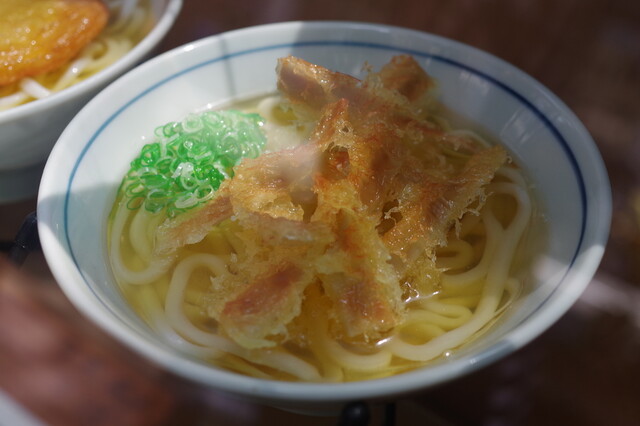
Approaching the Kushida Shrine side of Hakata, the dining register changes quickly: shopping-arcade foot traffic, shrine visitors, office workers and travelers cutting across Canal City territory all feed into a compact noodle circuit. This is where udon in Fukuoka makes the strongest argument for value. The meal is quick, the format is plain, and the spend sits closer to a transit-station lunch than to the city’s reservation-led restaurants.
Karo No Uron belongs to that older, functional category of Japanese dining where the room matters less than turnover, locality and repeat use. It is not trying to compete with Fukuoka’s evening restaurants such as Daitou en Honten, Seimon Barai or Jidoriya Amon, where dinner budgets move into several-thousand-yen territory. It occupies a different lane: a small noodle house with udon, onigiri and soba, recognised in the Tabelog Udon WEST 100 for 2024, and priced at a level that keeps it in the city’s everyday eating economy.
Fukuoka udon as value, not ceremony
Fukuoka is often reduced abroad to tonkotsu ramen, but udon has a deeper local claim. Hakata-style noodle eating tends to prize speed, warmth and accessibility over theatrical presentation. In that context, the value proposition is not simply that a bowl costs little. It is that the format gives a visitor a working view of how the city eats between errands, shrine visits and shopping-arcade detours.
The under-JPY 999 price band is meaningful in Fukuoka because it separates daily-use noodle shops from destination dining. A soba specialist such as Shinshu Soba Murata sits in a higher bracket, while Hakata Meidai Yoshizuka Unagiya occupies another category entirely, with unagi pricing that changes the occasion. Karo No Uron’s advantage is not luxury compressed into a small bill; it is cultural clarity at a low spend. The restaurant’s Tabelog 3.68 score and 2024 Udon WEST 100 selection give it a public quality signal without altering the basic proposition.
That distinction matters for travelers building a food itinerary. A city like Fukuoka rewards contrast: one serious reservation, one seafood or grilled-meat dinner, one local bar, and at least one inexpensive noodle meal that does not feel like a compromise. For broader planning, Our full Fukuoka restaurants guide maps the restaurant side of that equation, while Our full Fukuoka bars guide, Our full Fukuoka hotels guide, Our full Fukuoka experiences guide and Our full Fukuoka wineries guide cover the rest of the trip architecture.
A small Hakata room with strict practical logic
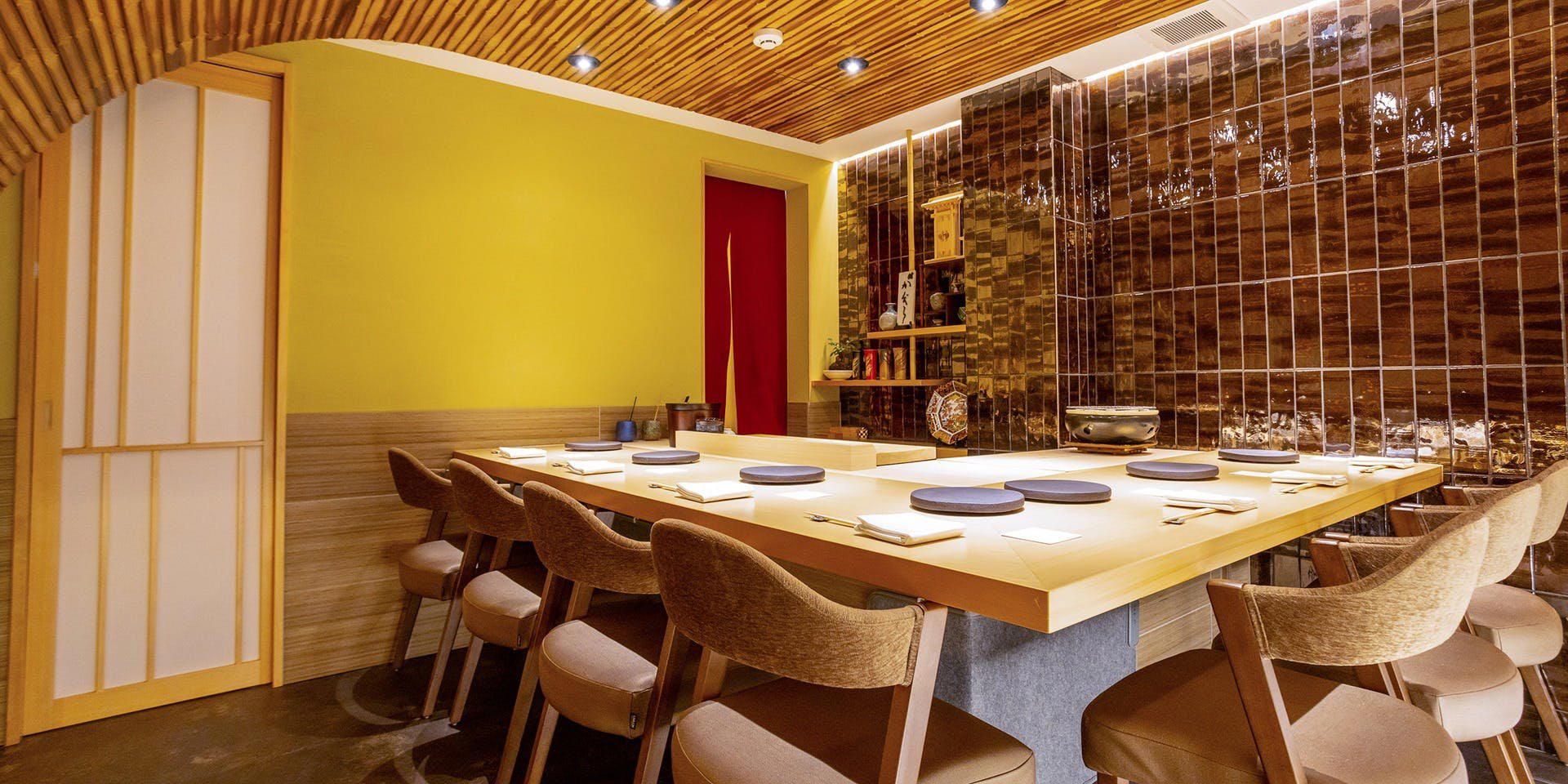
The room runs on scale rather than spectacle: 20 seats, with 17 table seats and three counter seats. Reservations are unavailable, private rooms are unavailable, and private use is unavailable, which places the experience firmly in walk-in territory. That format suits the food. Udon shops at this level depend on rhythm, not lingering, and the strongest move is to treat the meal as a precise stop rather than a long lunch.
There are practical consequences. Payment is cash only, with credit cards, electronic money and QR payments not accepted. The restaurant is non-smoking, school-age children are allowed, and there is no dedicated parking, though paid parking exists nearby. Photography inside the restaurant, including food photography, is prohibited. That last rule is useful editorial information rather than a quirk: it keeps the room aligned with eating, not content production.
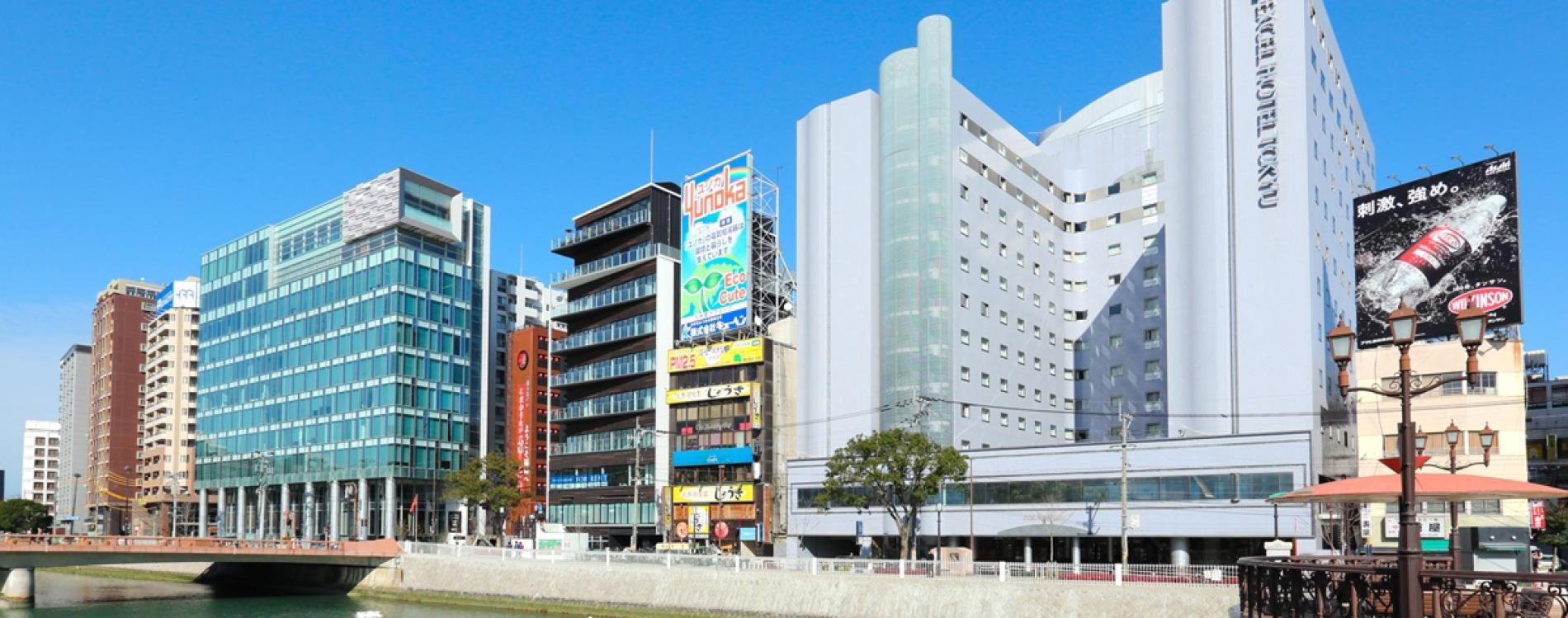
Access also reinforces its usefulness. The address places it at 2-1 Kamikawabatamachi in Hakata Ward, near Kushida Shrine and within reach of Gion and Nakasu-Kawabata stations. The location works especially well for travelers moving between Hakata Station, Kawabata Shopping Arcade and Canal City. In a city where short distances often define the quality of a day’s eating, this is the kind of stop that can sit between larger plans rather than requiring its own evening.
How to use it in a Fukuoka eating day
The strongest case for Karo No Uron is at lunch or as an early-day reset, especially when the rest of the itinerary is heavier. Fukuoka’s dining range is broad enough that not every meal should carry the same weight. A low-cost udon stop leaves room for a higher-spend dinner, a bar reservation, or a second neighborhood later in the day. That is value in the practical sense: the meal does a specific job and does not distort the rest of the schedule.
For travelers comparing casual Japanese formats across cities, it also belongs to a wider national pattern. Small specialists often reveal more about a neighborhood’s everyday appetite than restaurants built around tasting-menu progression. In Fukuoka, that might mean pairing this with local counters such as Aji no Katsueda, Aji Furai Shokudo Kaba, Aji Dokoro Taro Gen Sougyou ten, Afterglow or 106 South Indian Fukuoka tenjin ten, depending on whether the day is built around noodles, fried fish, curry or local set meals.
The same logic travels beyond Fukuoka. Japan’s casual dining culture is full of narrow-format places where the decision is less about grandeur than fit: -Grilled beef Sukiyaki- KAMAKURA TANUKIAN 鎌倉 たぬき庵 in Kamakura. 鮪と炭火焼き うお炭 秋葉原店 in Tokyo.cafe in Osaka.know in Kumamoto, (Shoku) Vietnam in Kawasaki and [Curry Senmon Ten] Maruyama Kyoju. in Sapporo each illustrate how a focused format can anchor a meal without turning it into an occasion. Outside Japan, that same appetite for compact, specific food culture appears in places such as Jōdo Saké Bar in Los Angeles and Onigiri Time in Pasadena.
The editorial verdict is simple: this is a low-spend Hakata udon stop with enough recognition to justify attention and enough practical constraint to demand a little planning. Bring cash, do not arrive expecting a reservation-based experience, and treat the no-photo policy as part of the room’s discipline. In a Fukuoka itinerary, it works because it gives the city’s noodle culture a clear, affordable slot.
Reputation Context
Nearby venues at a similar price tier for orientation.
| Venue | Cuisine | Price | Notes |
|---|---|---|---|
| Karo No UronThis venue — the venue you are viewing | Traditional Hakata udon | $ | Not listed |
| Tanakadashiki Seafood Shokudo Uochu | Tanakadashiki-style seafood set-meal diner | $ | Chūō |
| Bomber Kitchen Yakuin honten | Japanese-style Western set meals (yoshoku) | $ | Chūō |
| Hakata Gion Tetsu Nabe | Hakata izakaya & iron-pan gyoza | $ | Hakata |
| Miyake | Traditional Hakata Udon | $ | Hakata |
| SACHiA Beef stroganoff | Beef stroganoff-focused Yoshoku (Japanese-style Western) | $ | Higashi |
Recognition history
Dated appearances from independent guides and award organizations, with the underlying list record or original source where available.
Tabelog 100 #76 · No. 76
Tabelog · Tabelog 100 - Udon - WEST - 2024
At a Glance
- Classic
- Well Known
- Cozy
- Solo
- Family
- Casual Hangout
- After Work
- Historic Building
- Standalone
- Street Scene
Current opening hours
- Monday
- 11 AM–5 PM
- Tuesday
- Closed
- Wednesday
- Closed
- Thursday
- 11 AM–5 PM
- Friday
- 11 AM–5 PM
- Saturday
- 11 AM–5 PM
- Sunday
- 11 AM–5 PM
Hours can change for holidays and private events. Last verified .