
LAO PASA gives Nagoya’s Izumi district a compact Singaporean-and-curry address with a stronger editorial signal than its modest price band suggests. Its Tabelog Asian cuisine / Ethnic cuisine EAST “Tabelog 100” selections in 2022, 2023, and 2024 place it within Japan’s serious Asian-dining conversation rather than the casual expat-restaurant lane.
Pearl is the En Primeur Club membership app — saves, bookings, and concierge access live there. Same editors, same standards.
- Address
- Japan, 〒461-0001 Aichi, Nagoya, Higashi Ward, Izumi, 2 Chome−13−4 カスティロ泉 1B
- Phone
- +81 52-932-1710
- Website
- laopasa.shopinfo.jp
 Saves & bookings on Pearl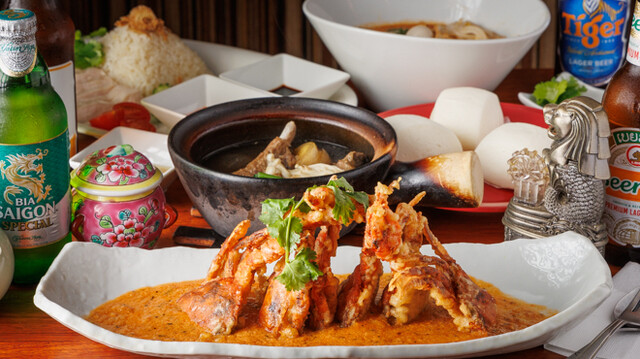
Izumi’s restaurant streets lack the theatre of Sakae or the station-side crush of Meieki. Their appeal is quieter: residential blocks, small dining rooms, and places asking diners to look beyond Nagoya’s better-known hits of miso katsu, hitsumabushi, and kishimen. In that setting, LAO PASA feels part of a subtler city shift, where Asian regional cooking is treated with the seriousness Nagoya diners already give sushi counters, kappo rooms, and price-led Italian tasting menus.
The useful lens is not novelty. Singaporean cooking is hybrid by design, shaped by Malay, Chinese, Indian, Peranakan, and colonial trade routes. In Japan, that hybridity can become simplified lunch food or a disciplined restaurant language. LAO PASA sits closer to the latter: Singaporean and curry categories, a health-and-wellness menu signal, drinks from shochu to wine and cocktails, and a compact 20-seat format with counter and table seating. Those facts show a restaurant working between imported technique and local dining habits, not simply reproducing a Southeast Asian template.
Singaporean cooking filtered through Nagoya's small-room dining culture
Nagoya has a practical, appetite-driven food identity. The city rewards richness, value, and repeatability, while its stronger small restaurants demand precision. Singaporean cooking becomes interesting here because its logic depends on layers: spice pastes, rice, curry, broth, grilled or stewed proteins, bright condiments, and heat calibrated for comfort rather than spectacle. A Japanese restaurant setting changes the frame; portions, pacing, alcohol pairings, and counter proximity all affect how the cuisine is read.
LAO PASA’s recognition on the Tabelog Asian cuisine / Ethnic cuisine EAST “Tabelog 100” list in 2022, 2023, and 2024 gives it a concrete credential in a category often flattened into casual dining. Tabelog scores can be conservative by international standards, so a 3.57 score in this genre is meaningful, especially with repeated Hyakumeiten selection. Awards do not settle taste, but they identify where Japanese diners have found consistency in a field with a wide quality range.
Pricing also frames the experience. Dinner sits at JPY 4,000 to JPY 4,999, with lunch at JPY 1,000 to JPY 1,999. Against Nagoya peers such as Bottegon at JPY 15,000 to JPY 19,999 for dinner, Ciotto Giotto at JPY 20,000 to JPY 29,999, or Mikan Kotohogi at JPY 30,000 to JPY 39,999, this is not a trophy-counter proposition. It is a different value: a specialist Asian table with enough recognition to plan around, without entering the city’s high-spend dinner tier. Gin no Kura Honten and Gyutei occupy different local categories and price positions, underlining Nagoya’s broad serious-dining range; the restaurant’s appeal is specificity at a moderate spend.
Why the award signal matters in Nagoya's Asian dining tier
Japan’s Asian and ethnic dining category is uneven. Some restaurants aim for familiarized flavors, others for diaspora comfort, and a smaller group works with regional technique while adapting to Japanese expectations of service and sourcing. The restaurant’s repeated Tabelog 100 selection places it in that smaller, more scrutinized group. It does not need the formal ceremony of a tasting-menu room to carry editorial weight; the evidence is category focus, seating scale, and sustained recognition.
The “local ingredients, global technique” angle matters in Nagoya because the city’s dining culture is not built on imported prestige alone. A Singaporean restaurant here must translate heat, coconut, curry spice, herbs, and rice-based comfort for a market used to Japanese seasonality, clean service rhythms, and precise lunch economics. That translation is the story. When it works, the cuisine feels less like an overseas import and more like a Nagoya neighborhood restaurant using Southeast Asian grammar.
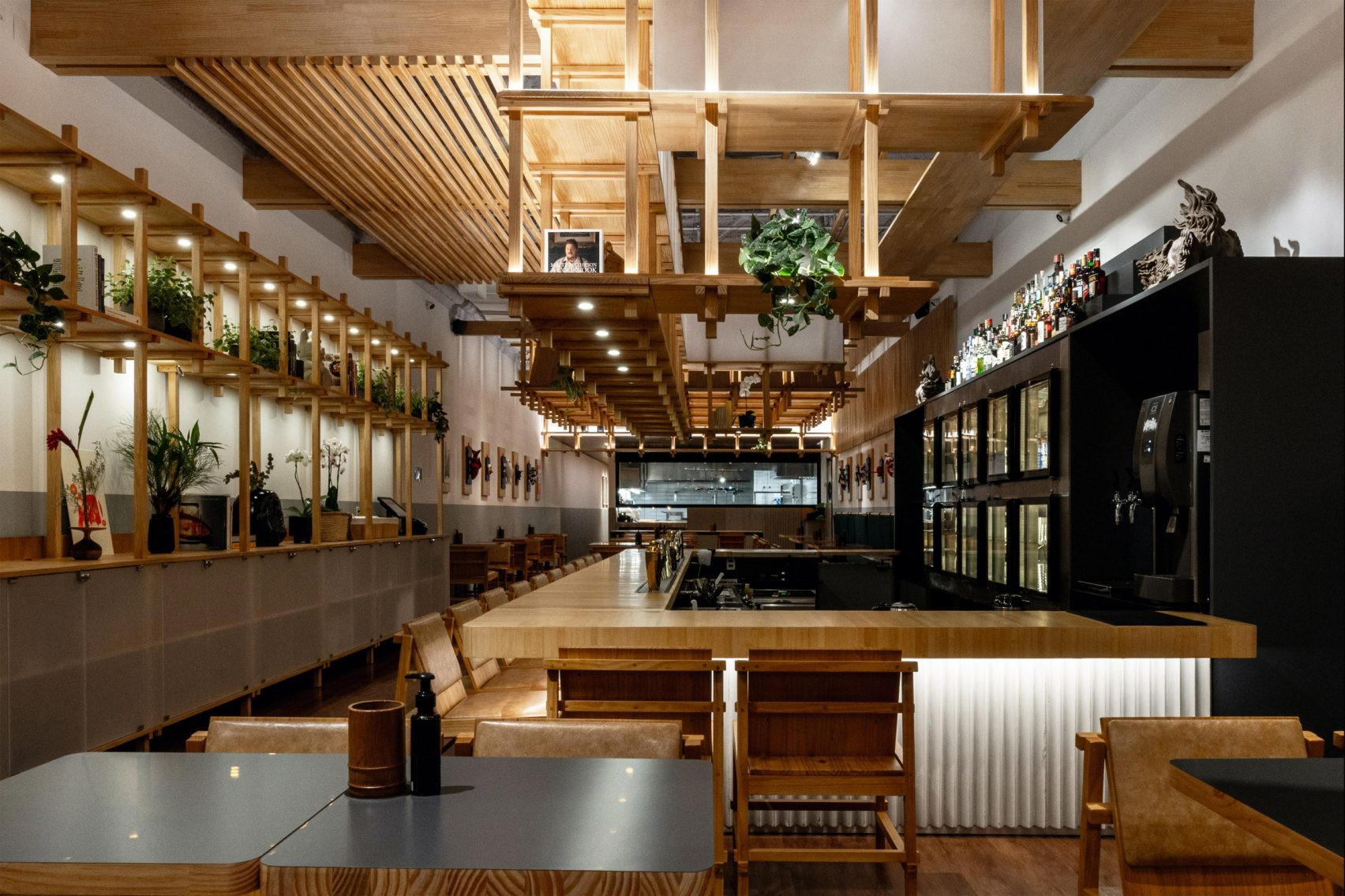
The 20-seat room reinforces that reading. Eight counter seats and 12 table seats create a format closer to the Japanese small-restaurant model than a high-volume Southeast Asian canteen. Private use is available for up to 20 people, making the whole room legible as a single social unit: friends, small groups, and diners who want the cooking without long-course formality. There are no private rooms, and the non-smoking policy keeps attention on the table rather than the old-school izakaya atmosphere still present in parts of the city.
Drinks add another clue. Shochu, wine, and cocktails point to a flexible Nagoya drinking pattern rather than a rigid imported pairing scheme. Singaporean food can handle several registers: spice with beer or cocktails, curry with carefully chosen wine, and Japanese spirits when the meal leans toward clean finishes rather than heavy sweetness. The category is Singaporean and curry, but its fit within the city is more nuanced than the label suggests.
How to place it within a Nagoya itinerary
The strongest case for the restaurant is not as a substitute for Nagoya classics, but as a counterpoint. A well-built city eating itinerary should include regional staples, one serious Japanese room, and at least one address showing how Nagoya absorbs outside cuisines without turning them into theme dining. The restaurant fills that last role with more credibility than a generic international option.
The location near Takaoka Station also explains the rhythm. Izumi is close enough to central Nagoya for an evening plan, but feels more residential and dining-led than the zones around major transit hubs. The area rewards reservations and timing; lunch can be a value play, while dinner gives the menu and drinks more space. Takeout is available, and the restaurant sells frozen products online, showing the cooking has a life beyond the dining room.
For broader planning, place it alongside Our full Nagoya restaurants guide, then build the rest of the trip through Our full Nagoya hotels guide, Our full Nagoya bars guide, Our full Nagoya wineries guide, and Our full Nagoya experiences guide. Related restaurant reading includes 1022, 451, Aaron, Alan., All Day Dining Montmartre, -Grilled beef Sukiyaki- KAMAKURA TANUKIAN 鎌倉 たぬき庵 in Kamakura. 鮪と炭火焼き うお炭 秋葉原店 in Tokyo.cafe in Osaka.know in Kumamoto, (Shoku) Vietnam in Kawasaki, [Curry Senmon Ten] Maruyama Kyoju. in Sapporo, Jōdo Saké Bar in Los Angeles, and Onigiri Time in Pasadena.
Cost Snapshot
Comparable venues to anchor price and recognition.
| Venue | Cuisine | Price | Notes |
|---|---|---|---|
| LAO PASAThis venue — the venue you are viewing | Higashi, Singaporean & Southeast Asian | $$ | Not listed |
| HAKUGA | Not listed | $$$ | Naka, Creative French-Japanese Fine Dining |
| Trattoria Tope | Higashi, Italian Trattoria | $$ | Not listed |
| Gyoza Sakaba Issei Ichidai Honten | Naka, Gyoza-focused Japanese Izakaya | $$ | Not listed |
| Shabushabu Creative Izakaya Butagin Sakae ten | Naka, Lettuce Shabu-Shabu & Pork Izakaya | $$ | Not listed |
| Toyo Ken Nagoya mitsukoshi ten | Not listed | $$ | Naka, Yoshoku (Japanese-style Western) & Black Curry |
Recognition history
Dated appearances from independent guides and award organizations, with the underlying list record or original source where available.
Tabelog 100 #55 · No. 55
Tabelog · Tabelog 100 - Asian cuisine / Ethnic cuisine - EAST - 2024
Continue exploring
More in Nagoya
Restaurants in Nagoya
Browse all →
At a Glance
- Cozy
- Intimate
- Group Dining
- Casual Hangout
- After Work
- Date Night
- Celebration
- Private Event
- Standalone
- Beer Program
Current opening hours
- Monday
- Closed
- Tuesday
- Closed
- Wednesday
- Closed
- Thursday
- 11:45 AM–2 PM, 5:30–10:30 PM
- Friday
- 11:45 AM–2 PM, 5:30–10:30 PM
- Saturday
- 11:45 AM–2 PM, 5:30–10:30 PM
- Sunday
- 5–10 PM
Hours can change for holidays and private events. Last verified .
A small basement "oasis" off a Nagoya side street, with a relaxed, intimate feel and the warm, casual atmosphere of a neighborhood Asian dining room rather than a formal restaurant.