La Poesía
La Poesía occupies a corner address in San Telmo at Chile 502, putting it squarely inside one of Buenos Aires's oldest dining neighbourhoods. The bar-restaurant has long served as a cultural anchor in the barrio, where peeling frescoes, marble tables, and an atmosphere of studied informality define the room. It belongs to the tier of porteño institutions that trade on longevity and neighbourhood identity rather than culinary spectacle.
Pearl is the En Primeur Club membership app — saves, bookings, and concierge access live there. Same editors, same standards.
- Address
- Chile 502, C1098AAL Cdad. Autónoma de Buenos Aires, Argentina
- Phone
- +54 43007340
- Website
- losnotables.com.ar
- Directions
- Get directions
 Saves & bookings on Pearl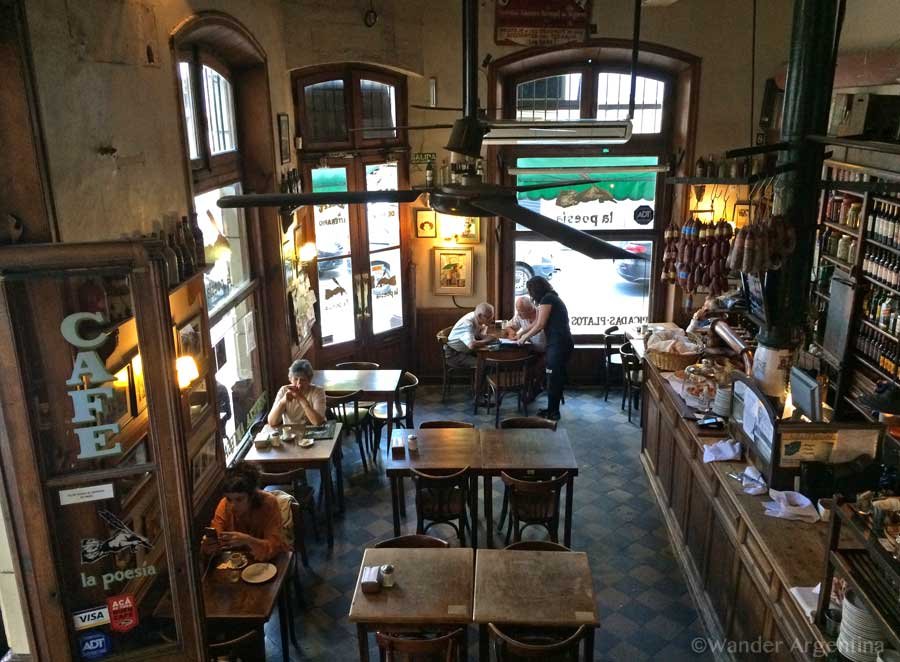
San Telmo's Slow-Food Ethic and the Corner Bar That Embodies It
San Telmo is the neighbourhood Buenos Aires turns to when it wants to remember what it looked like before the money moved north to Palermo and Recoleta. The cobblestone streets around Chile and Defensa still carry the physical memory of the city's 19th-century merchant class: high ceilings, iron balconies, plaster that has been painted over many times and is now peeling in layers that read like geological strata. Dining in this barrio has historically meant something different from the creative tasting-menu ambition you find at Aramburu or the premium-cut theatre of Don Julio. It has meant places that have been there longer than any critic has been writing about them.
La Poesía sits on the corner of Chile 502 in exactly that tradition. The address alone signals what to expect: a room that does not need to announce itself, in a part of the city where restaurants earn their reputation through repetition rather than reinvention. Corner bars of this type, called bodegones in local parlance, represent one of Buenos Aires's most enduring dining formats, and San Telmo holds more surviving examples per block than any other barrio.
What the Room Actually Looks Like
The physical environment at La Poesía is the argument the place makes for itself. Marble-topped tables, tiled floors, walls covered in framed photographs and handwritten poetry fragments, and the particular quality of afternoon light that falls through large windows onto a wooden bar — these are the material facts of the space. There is no designed atmosphere here in the contemporary hospitality sense. The atmosphere is the accumulated result of years of use, and it is recognisable as a type that Buenos Aires has largely stopped producing.
Arriving on a weekday afternoon, the room sits somewhere between café and restaurant without committing fully to either. That ambiguity is characteristic of the bodegón format, where a glass of Malbec and a plate of cheese can constitute the visit just as legitimately as a full meal. The comparison set for La Poesía is not Trescha or Crizia; it is El Preferido de Palermo and the dwindling stock of traditional porteño rooms that have not been converted into concept restaurants.
Sourcing, Tradition, and the Sustainability Question
Buenos Aires's broader dining conversation has shifted perceptibly toward sourcing transparency over the past decade. At the premium end, restaurants like Anafe have built reputations partly on supplier relationships and seasonal purchasing. The bodegón tier has always operated with a different logic: its sustainability has been social and economic rather than environmental, relying on tight menus, low waste through high-volume turnover, and direct relationships with neighbourhood suppliers built over years rather than seasons.
The traditional Argentine kitchen that places like La Poesía represent uses the whole animal as a matter of course, not as a contemporary ethical stance. Offal, lesser cuts, and slow-cooked preparations have been core to the porteño diet since the city's working-class immigrant communities built their food culture in the 19th century. That embedded nose-to-tail approach predates the modern sustainability movement by a century, and it remains visible in the menus of surviving bodegones in ways that more expensive restaurants sometimes have to perform deliberately.
The wine list at a room like this typically draws from Argentina's major producing regions without the sommelier-curated depth you find at Azafrán in Mendoza or the estate-specific selections at properties like Cavas Wine Lodge. The selection is practical and regional: Malbec from Mendoza, Torrontés from Salta, and pours that are meant to accompany food rather than be studied. That pragmatism is its own form of restraint.
San Telmo as Context
Understanding La Poesía requires understanding San Telmo's particular position in the city's food geography. The neighbourhood operates on a different tourist-to-local ratio than it did fifteen years ago, and the Sunday antiques market on Plaza Dorrego has brought enough foot traffic to push some original residents and businesses out. But the street-level restaurant stock along Chile, Balcarce, and the surrounding blocks still includes a higher proportion of traditional rooms than almost any other central barrio.
For visitors who have done the rounds of Buenos Aires's creative dining scene and want to understand what the city eats when it is not performing for outsiders, San Telmo remains the correct answer. The comparison is with cities that have lost equivalent neighbourhood institutions to rising rents and tourism pressure: Buenos Aires has been slower to that transformation than most, partly because of the economic cycles that have made rapid property development difficult, and partly because of a cultural attachment to the bodegón format that runs across class lines.
Travellers coming from experiences further afield in Argentina — from the estate restaurants of Agrelo or Entre Cielos in Luján de Cuyo, or from the remote elegance of Awasi Iguazú, will find San Telmo a useful landing point: accessible, historically layered, and genuinely representative of urban Argentine life in a way that designed-luxury environments are not.
Planning the Visit
Chile 502 is a ten-minute walk from the Plaza de Mayo and easily combined with a broader San Telmo afternoon that includes the market, the neighbourhood's antique dealers, and the cultural centres that have occupied several of the barrio's larger historic buildings. La Poesía does not require a reservation in the way that the city's more structured dining rooms do, the format is informal enough that the correct approach is simply to arrive. Lunch service is the traditional anchor for rooms of this type, and the early-afternoon hours tend to represent the room at its most characteristic. Evenings attract a different, younger crowd that uses the bar more than the tables.
For comparison against other parts of the Argentine dining spectrum, La Bamba de Areco and Las Balsas in Villa La Angostura offer the estancia and Patagonian lodge end of the country's hospitality range. La Poesía operates at the opposite pole: urban, low-ceremony, and priced to allow multiple visits rather than one occasion. The full Buenos Aires dining picture, from bodegones through to modern tasting menus and premium parrillas, is covered in our full Buenos Aires restaurants guide.
Cuisine and Awards Snapshot
| Venue | Cuisine | Price | Awards |
|---|---|---|---|
| La PoesíaThis venue — the venue you are viewing | This venue | Not listed | Not listed |
| Don Julio | Argentinian Steakhouse | $$$$ | Michelin 1 Star |
| Aramburu | Modern Argentinian, Creative | $$$$ | Michelin 2 Star |
| El Preferido de Palermo | Argentinian, Traditional Cuisine | Not listed | Argentinian, Traditional Cuisine, $$ |
| Elena | South American, Steakhouse | Not listed | South American, Steakhouse, $$$ |
| La Carniceria | Argentinian Steakhouse, Meats and Grills | Not listed | Argentinian Steakhouse, Meats and Grills, $$ |
Continue exploring
More in Buenos Aires
Restaurants in Buenos Aires
Browse all →
Bars in Buenos Aires
Browse all →
Hotels in Buenos Aires
Browse all →
Wineries in Buenos Aires
Browse all →
At a Glance
- Classic
- Cozy
- Intimate
- Bohemian
- Historic
- Casual Hangout
- Brunch
- Late Night
- Historic Building
Nostalgic atmosphere with traditional tiled floors, dark wood bar, bookshelves, and black-and-white portraits evoking bohemian San Telmo.
Know Before You Go
- Getting there
- Chile 502, C1098AAL Cdad. Autónoma de Buenos Aires, Argentina