
Michelin Plate
Our verdict
Set inside Beijing's 798 Art District, L. Bodhi (Guanghua Road) is a premium vegetarian restaurant that has held consecutive Michelin Plate recognition in 2024 and 2025. The address alone, inside one of Asia's most significant contemporary art zones, signals something deliberate about its positioning.

Pearl is the En Primeur Club membership app, where members save venues, book tables and use the concierge.
Vegetables as the Point, Not the Compromise
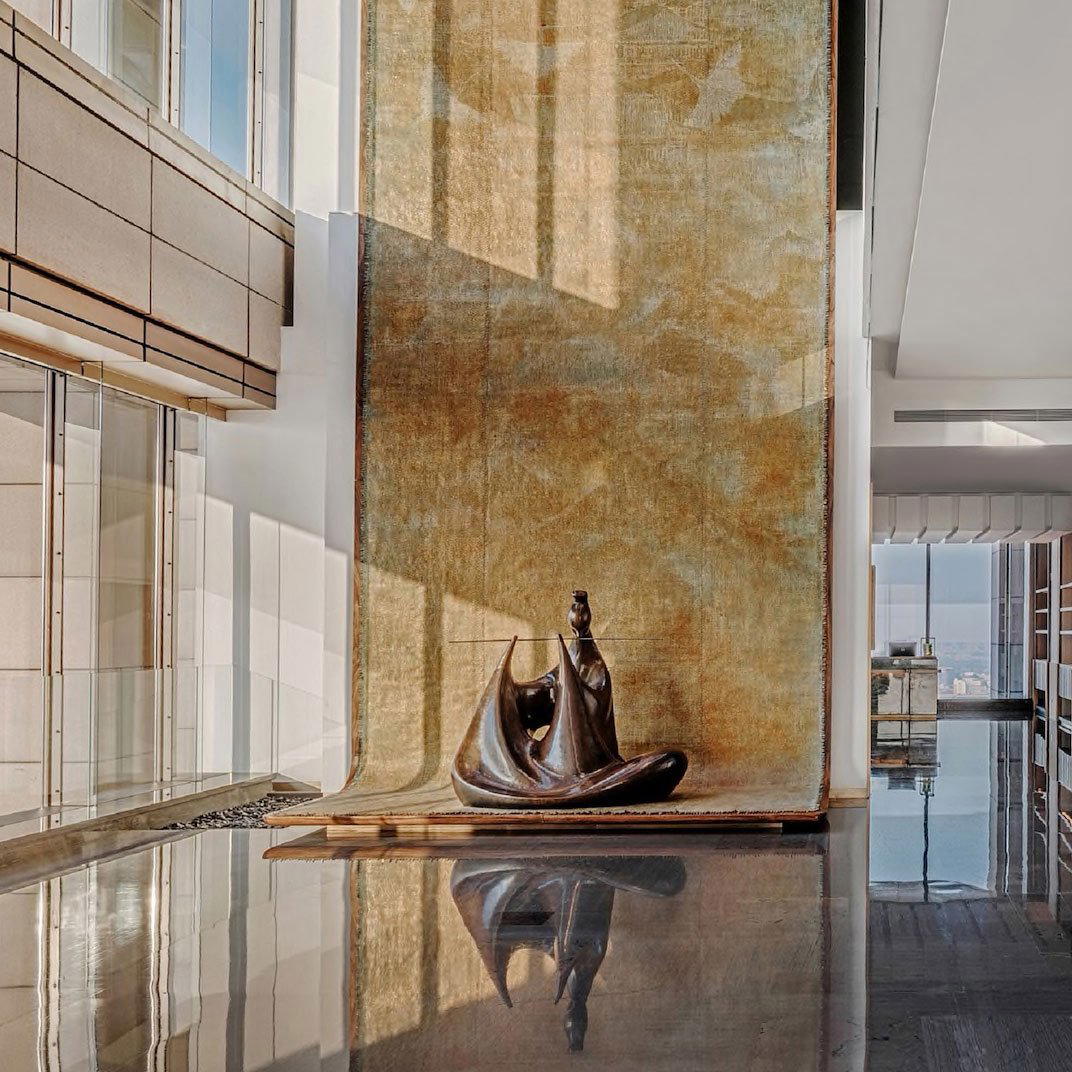
Chinese fine dining has long treated vegetables as structural support: the garnish around the protein, the palate reset between courses, the monks-only concession. A different argument has been gathering force in Beijing's premium tier over the past decade, and L. Bodhi, operating at ¥¥¥¥ inside the 798 Art District, is one of its clearest expressions. The kitchen here builds a case for plant-forward cooking not as an ethical substitution but as a distinct culinary language with its own logic, hierarchy, and ambition. Michelin's inspectors have agreed twice over, awarding the restaurant a Plate in both 2024 and 2025, the guide's signal that cooking quality justifies attention even where a star has not yet followed.
That distinction matters in Beijing's current fine-dining map. The city's Michelin-recognised vegetarian tier is thin. Lamdre holds a star in the same category at the same price bracket, making it the obvious peer comparison. L. Bodhi sits just below that formal recognition level while matching on price, which places the two in direct conversation for anyone spending seriously on plant-based dining in the capital. Across China, the vegetarian fine-dining cohort is growing but remains concentrated: Fu He Hui in Shanghai and Ru Yuan in Hangzhou represent the format at its most developed, with longer track records and stronger Michelin footing. L. Bodhi is Beijing's entry into that conversation.
The 798 Address and What It Implies
The restaurant sits inside the 798 Art District on Qixing East Street in Chaoyang, the former Bauhaus-influenced factory complex that became Beijing's contemporary art hub from the early 2000s onward. The physical environment is worth understanding before you arrive. 798 is not a backdrop; it is a context. The district's converted industrial buildings, exposed brickwork, and deliberate density of creative tenants create a specific kind of visitor. The clientele that moves through 798 on any given afternoon skews toward design-conscious, culturally engaged, and internationally travelled. A high-end vegetarian restaurant in this postcode is not an accident of real estate, it is a positioning decision.
The industrial aesthetic of the wider district typically bleeds into the dining rooms that operate within it. Expect warehouse proportions, considered material choices, and lighting that draws from the district's art-gallery standard rather than conventional restaurant warmth. The walk from the main 798 thoroughfare to the restaurant entrance is part of the arrival sequence: factory chimney stacks, sculpture installations, gallery façades. For diners arriving from central Beijing, the journey east along the Chaoyang corridor takes roughly 30 to 40 minutes depending on traffic, a commute that signals the visit is a destination choice rather than a convenience stop.
Where This Fits in Beijing's Wider Premium Table
At ¥¥¥¥, L. Bodhi prices against the capital's top-tier rooms regardless of protein category. Xin Rong Ji (Xinyuan South Road) holds three Michelin stars at the same price tier, as does Chao Shang Chao (Chaoyang). That the vegetarian format commands the same spend as the city's most formally decorated Chinese restaurants is significant: it suggests a kitchen confident in the value it offers and a customer base prepared to meet it. The comparison is instructive for anyone benchmarking value. Blossom Vegetarian (Dongcheng) and Gong De Lin operate in the same category at lower price points, offering a clear tier structure for plant-based dining across the city. L. Bodhi occupies the premium end of that range.
Beyond Beijing, the premium vegetarian format across Chinese cities has developed distinct regional personalities. Fu He Hui in Shanghai leans heavily into Zen aesthetics and elaborate technique. The Hangzhou school, represented by Ru Yuan, draws from temple cuisine traditions with more restrained presentation. Beijing's interpretation, as L. Bodhi represents it, sits within a city that has historically prioritised bold flavour and ceremonial occasion in its dining culture, a context that shapes what premium vegetarian cooking has to answer to here. For international comparison, Bonvivant in Berlin demonstrates what the format looks like when stripped of Asian culinary tradition entirely, useful for understanding how much of what L. Bodhi offers is specifically rooted in Chinese ingredient logic.
The Culinary Logic of Plant-Forward Chinese Cooking at This Level
Chinese vegetarian cuisine has deep structural roots that fine-dining formats can draw from directly. Buddhist temple cooking, particularly the caishipu tradition, developed sophisticated techniques for transforming tofu, gluten, mushrooms, and seasonal vegetables into dishes that required no protein reference point, no mock meat, no apology. At the premium end of the contemporary market, the leading kitchens in this category have moved beyond temple convention toward a more technically demanding format: fermentation, precise temperature control, ingredient sourcing that treats a Yunnan mushroom or a heritage-variety winter squash with the same procurement attention a protein-focused kitchen gives to its fish or meat supply.
The Michelin Plate recognition, held consecutively, places L. Bodhi in the bracket where cooking quality is verified by a credible external source even in the absence of a star. In the context of vegetarian fine dining specifically, where Michelin's historically slower recognition of the format is well documented, a Plate at this price tier carries more signal weight than it might in a category with denser starred coverage. The consecutive awards across 2024 and 2025 indicate consistency rather than a single strong year.
Planning a Visit
L. Bodhi is located at 2 Qixing East Street within the 798 Art District in Chaoyang, inside the large factory complex that gives the area its industrial character. The ¥¥¥¥ pricing bracket indicates a spend in line with Beijing's most formal dining rooms; factor accordingly for a full-table experience rather than a casual drop-in. The 798 district is leading reached by taxi or rideshare from central Beijing, and the visit pairs naturally with the galleries and installations in the wider complex, particularly on weekday afternoons when crowds are lighter.
For broader context on dining, accommodation, and cultural programming in the capital, see our full Beijing restaurants guide, our full Beijing hotels guide, our full Beijing bars guide, our full Beijing wineries guide, and our full Beijing experiences guide. For those extending across mainland China, the premium dining tier is well represented at 102 House in Shanghai, Chef Tam's Seasons in Macau, Xin Rong Ji in Chengdu, Imperial Treasure Fine Chinese Cuisine in Guangzhou, and Dai Yuet Heen in Nanjing.
Frequently asked questions
Bodhi (Guanghua Road)?
What the consecutive Michelin Plate awards across 2024 and 2025 confirm is that the cooking quality in the vegetarian format at this price tier has been independently assessed as meriting attention. In Chinese vegetarian fine dining at the ¥¥¥¥ level, the kitchen's handling of seasonal ingredients and fermented preparations tends to define the strongest courses. Given the cuisine type and the premium positioning, a full tasting format is likely the most coherent way to experience what the kitchen is arguing for, though confirmation of specific formats and current dishes should be sought directly with the restaurant before booking.
Reputation First
| Venue | Cuisine | Price | Awards | Notes |
|---|---|---|---|---|
| L. Bodhi (Guanghua Road)This venue (the venue you are viewing) | Vegan Fine Dining | Not listed | Michelin Plate | Not listed |
| Jing | Modern French with Asian Influences | $300–500 | 1 Michelin Star · Black Pearl 1 Diamond | French Contemporary |
| Xin Rong Ji (Xinyuan South Road) | Taizhou Chinese Fine Dining | $300–500 | 3 Michelin Stars · World's 50 Best #84 | Taizhou |
| Chao Shang Chao (Chaoyang) | Modern Chaoshan (Teochew) Fine Dining | $300–500 | Michelin Plate · La Liste Top Restaurants | Chao Zhou |
| Lamdre | Modern Plant-Based Chinese Vegetarian | Not listed | 2 Michelin Stars · World's 50 Best #17 | Vegetarian |
| Jingji | Imperial Beijing Royal Cuisine | $200–300 | 2 Michelin Stars · La Liste Top Restaurants | Beijing Cuisine |
Recognition history
Dated appearances from independent guides and award organizations, with the underlying list record or original source where available.
Michelin Plate
Michelin
Full recognition history (2 entries)
Michelin Plate
Michelin
Continue exploring
More in Beijing
Restaurants in Beijing
All restaurants in Beijing →
Bars in Beijing
All bars in Beijing →
Details
- Elegant
- Intimate
- Quiet
- Sophisticated
- Date Night
- Business Dinner
- Special Occasion
- Solo
- Organic
- Tasting Menu
- Vegan Options
- Vegetarian Friendly
- Organic Focus
Serene sanctuary with meditative calm, tranquil pacing, and unhurried conversation in a refined setting.