
A Michelin Bib Gourmand recipient for 2024, Blossom Vegetarian on Guijie Street in Dongcheng sits at the more accessible end of Beijing's recognised vegetarian dining tier, offering plant-based cooking at mid-range prices.It belongs to a small group of Beijing vegetarian addresses that have attracted formal Michelin attention alongside higher-priced peers like Lamdre.
Pearl is the En Primeur Club membership app — saves, bookings, and concierge access live there. Same editors, same standards.
- Address
- WCRG+7FC, Guijie St, Dongzhimen, Dongcheng, Beijing, China, 100010
- Phone
- +86 10 6401 2228
- Directions
- Get directions
 Saves & bookings on Pearl
Guijie Street and the Context of Plant-Based Dining in Beijing
Guijie Street, the so-called Ghost Street corridor in Dongcheng, is known as Beijing's late-night hot-pot and crayfish strip, a dense run of red lanterns and loud tables that stays busy well past midnight. Plant-based cooking is not what most visitors come here for, which makes the presence of a Michelin Bib Gourmand-recognised vegetarian address on this stretch a useful signal about how Beijing's vegetarian dining scene has matured. It is no longer confined to temple precincts and Buddhist-catering canteens in quieter neighbourhoods. Blossom Vegetarian, sitting at the Dongzhimen end of Dongcheng, holds its position inside a broader city movement: formal recognition of vegetarian cooking at multiple price points, from the mid-range tier where Blossom operates to premium addresses like Lamdre, which carries a Michelin Star and operates at the ¥¥¥¥ level.
Across Chinese cities, Buddhist-influenced vegetarian cooking has moved out of the margins. Fu He Hui in Shanghai represents the highest-profile end of that shift, with a multi-course format and significant international press coverage. Beijing's version is more dispersed and, in some cases, more pragmatic. Gong De Lin holds the historical anchor as one of China's oldest Buddhist vegetarian institutions. L. Bodhi on Guanghua Road occupies a design-conscious niche at higher price points. Blossom, at ¥¥, occupies a different position entirely: Michelin-recognised quality without the premium-tier pricing, which is precisely what the Bib Gourmand designation is designed to flag.
What the Bib Gourmand Means in This Context
The Michelin Bib Gourmand is awarded to restaurants where inspectors find cooking that merits attention at a price point below the full Star tier. In Beijing's 2024 guide, the designation places Blossom Vegetarian in a group of addresses the Michelin team considers worth a detour without the financial commitment of the city's starred tables. For reference, stronger examples from Beijing's recognised dining tier includes Xin Rong Ji on Xinyuan South Road at three Stars and Chao Shang Chao in Chaoyang also at three Stars, both operating at ¥¥¥¥. Blossom's recognition at ¥¥ signals something different: the inspectors are not measuring it against those rooms. They are identifying that within the accessible mid-range, the cooking clears a bar that most mid-price restaurants in the city do not reach.
, though the number of reviews (17) means the sample is still limited.
Sourcing and the Logic of Chinese Vegetarian Cooking
The editorial angle that matters most at a restaurant like Blossom is what the kitchen does with plant material. Chinese vegetarian cooking at its most considered draws on a deep pantry: fermented soy products in multiple forms, seasonal fungi that change with the calendar, pickled and preserved vegetables that carry real complexity, tofu preparations ranging from silken to aged, and grain-based dishes that reflect regional traditions rather than international plant-based trends. The sourcing question in this tradition is not the same as the local-farm-provenance conversation that drives European and American vegetarian cooking. It is about seasonality, fermentation craft, and the depth of flavour that comes from time-intensive preservation techniques rather than the provenance certificate attached to a single ingredient.
Dongcheng's position in central Beijing gives kitchens here access to a supply chain that reaches into the agricultural regions north and east of the city, where varieties of cabbage, beans, and root vegetables are grown specifically for urban markets. The seasonal logic of that supply shapes what appears on tables in this part of the city across different months. Winter menus in Beijing's vegetarian restaurants lean toward braised and preserved preparations; spring brings fresh shoots and lighter profiles. These rhythms are built into how Chinese vegetarian kitchens have always operated, and they are worth understanding before arriving.
How Blossom Sits in Beijing's Wider Dining Picture
Beijing's Michelin-recognised dining scene spans a wider range of cuisine types and price brackets than the city's international reputation as a roast duck destination might suggest. Xin Rong Ji in Chengdu and Imperial Treasure in Guangzhou illustrate how the same Michelin framework plays out across regional Chinese cuisines in different cities. Closer to home, Dai Yuet Heen in Nanjing and 102 House in Shanghai represent the kind of serious mid-tier and fine dining addresses the guide also tracks across the wider region.
Within Beijing specifically, Blossom's Bib Gourmand places it in recognisable company. The city's vegetarian tier now includes addresses at every price level, from Blossom at ¥¥ through to Lamdre at ¥¥¥¥ with its Star. That spread did not exist in the same form a decade ago, and it reflects both changing urban eating habits and a renewed interest in the deep classical roots of Chinese plant-based cooking. Across Chinese cities, Chef Tam's Seasons in Macau demonstrates how Chinese culinary tradition continues to draw significant critical attention in the broader regional context.
For visitors building a Beijing dining itinerary, Blossom sits in a practical position: it occupies the Bib Gourmand tier, carries independent critical validation, and operates in the mid-price range that makes a second or third visit within a single trip financially reasonable. It functions as a counterpoint to the heavier, meat-centred Beijing classics that occupy much of the city's dining attention. Exploring the full range of what Beijing tables currently offer, across cuisine types, price points, and neighbourhoods, is best approached through a full Beijing restaurants guide.
Blossom is located at WCRG+7FC on Guijie Street in Dongzhimen, Dongcheng. Reservations are recommended, particularly for weekend sittings when the Guijie corridor draws higher foot traffic from across the city.
What to Eat at Blossom Vegetarian (Dongcheng)
What should I eat at Blossom Vegetarian (Dongcheng)?
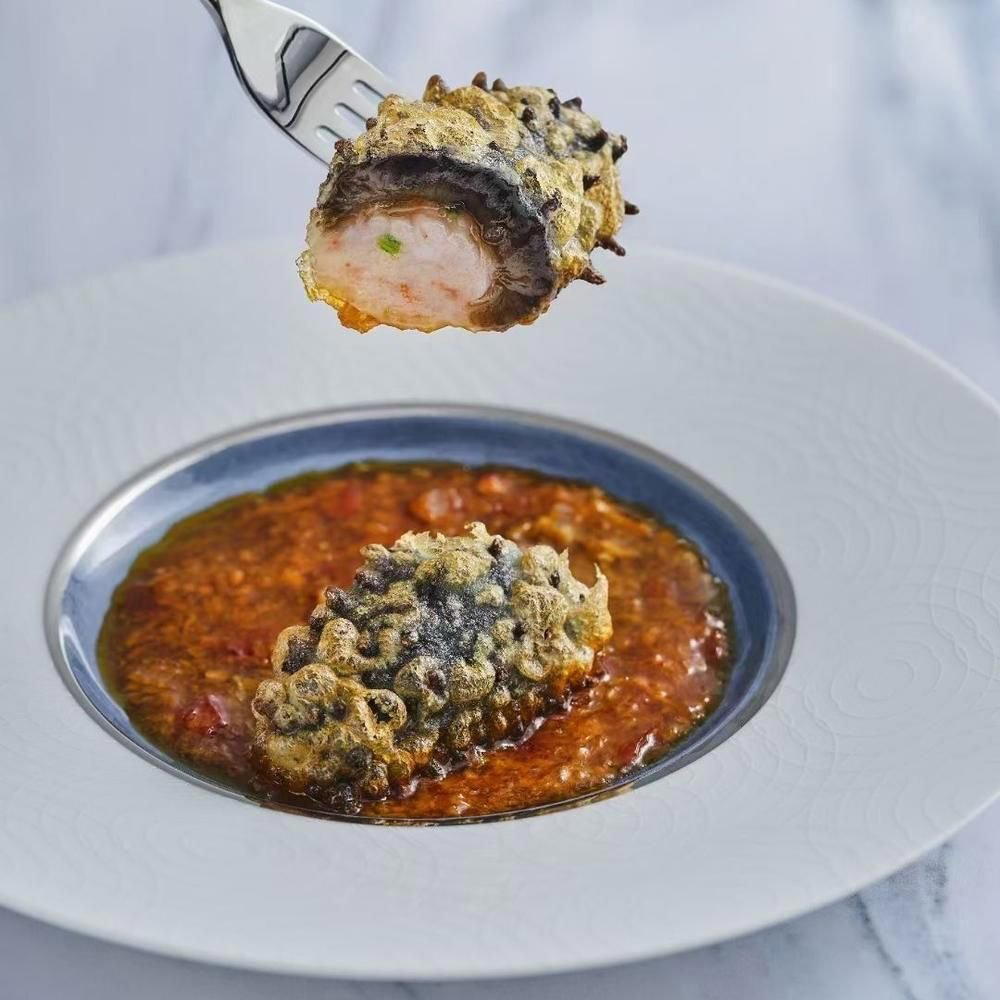
The kitchen operates in the Chinese vegetarian tradition, which means the menu draws on fermented soy, seasonal fungi, preserved vegetables, and tofu preparations rather than Western plant-based substitutes. The Michelin Bib Gourmand designation for 2024 confirms that the cooking clears a quality threshold across the menu rather than being anchored to one standout dish. Order according to the season and ask staff which preparations reflect the current market supply. In Chinese vegetarian cooking, the dishes that reward attention most are typically those built on time-intensive fermentation or multi-stage preparation, which produce complexity that simpler vegetable dishes do not. If you are building a comparison across Beijing's vegetarian addresses, Lamdre at the ¥¥¥¥ level and Gong De Lin as the city's historical Buddhist institution offer two different reference points for what the cuisine looks like at higher and more traditional registers.
Reputation Context
Comparable venues nearby, for context on price, style, and recognition.
| Venue | Cuisine | Price | Awards | Notes |
|---|---|---|---|---|
| Blossom Vegetarian (Dongcheng)This venue — the venue you are viewing | Modern Chinese Vegetarian | $$ | Bib Gourmand | Not listed |
| Mingyuan Restaurant | Authentic Beijing Cuisine | $$ | Bib Gourmand | Chaowai |
| Gongyuan Shulou | Authentic Sichuan | $$ | Bib Gourmand | Chaowai |
| Beef & Dumplings (Chaoyang) | Beef & Dumplings | $$ | Michelin Plate | Xiangheyuan |
| Bad Ass Lamb Hot Pot (Maizidian West Street) | Lamb Hot Pot | $$ | Michelin Plate | Sanlitun |
| Qian Li | Traditional Peking Duck | $$ | Michelin Plate | Zhengyilu |
Recognition history
Dated appearances from independent guides and award organizations, with the underlying list record or original source where available.
Michelin Bib Gourmand
Michelin




At a Glance
- Elegant
- Modern
- Cozy
- Special Occasion
- Group Dining
- Private Dining
- Local Sourcing
Current opening hours
- Monday
- 9:30 AM–10 PM
- Tuesday
- 9:30 AM–10 PM
- Wednesday
- 9:30 AM–10 PM
- Thursday
- 9:30 AM–10 PM
- Friday
- 9:30 AM–10 PM
- Saturday
- 9:30 AM–10 PM
- Sunday
- 9:30 AM–10 PM
Hours can change for holidays and private events. Last verified .
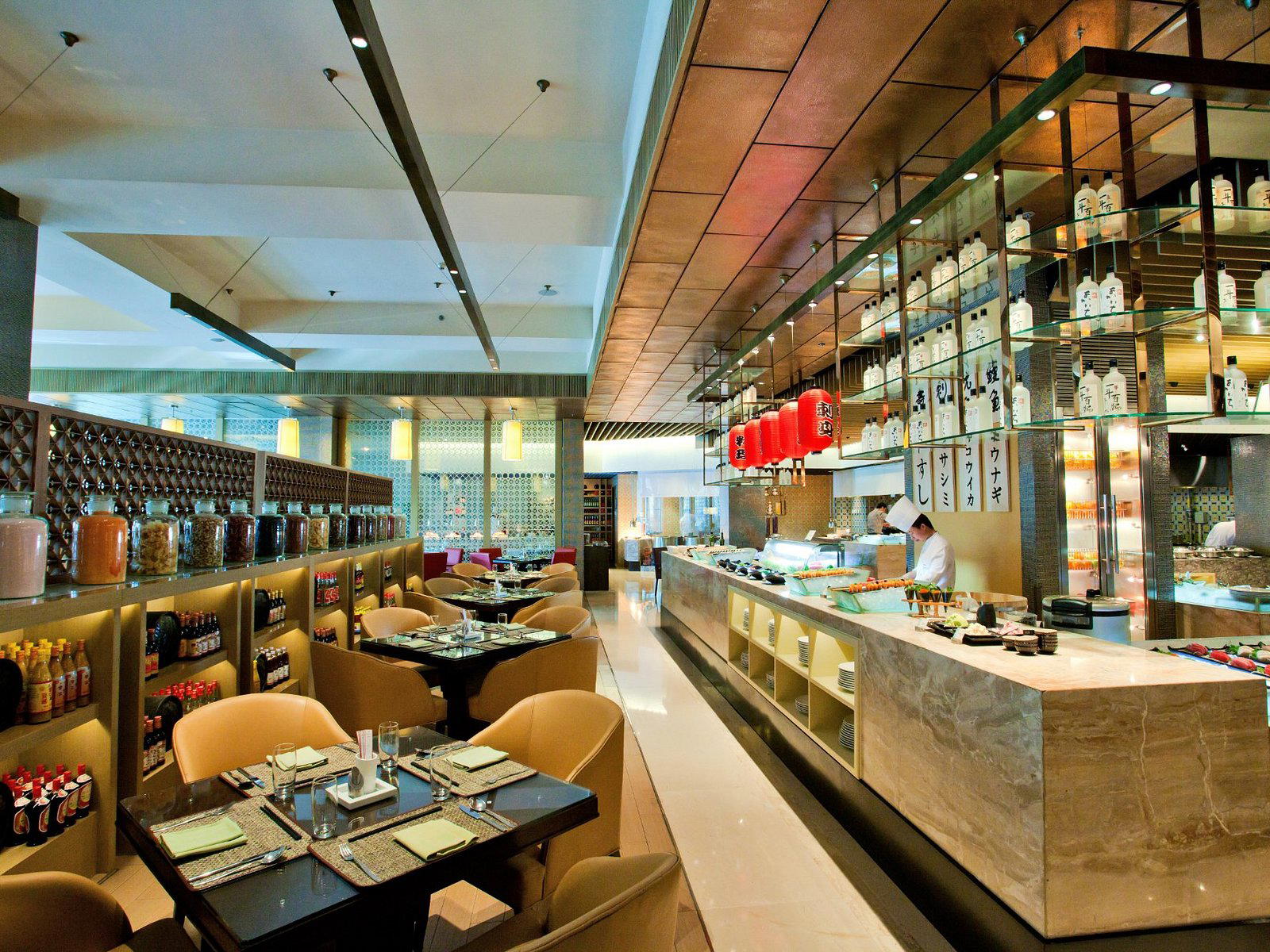
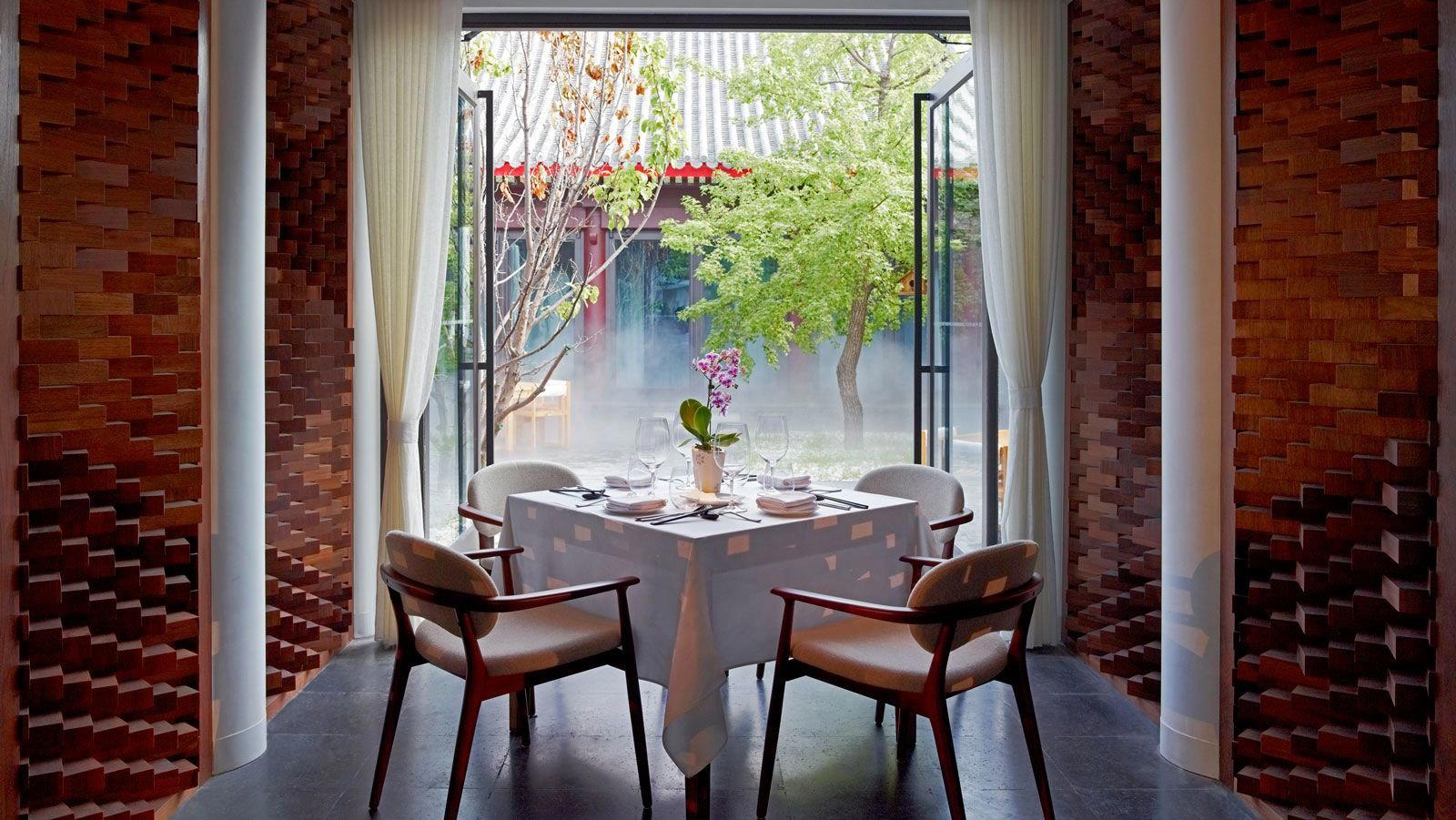
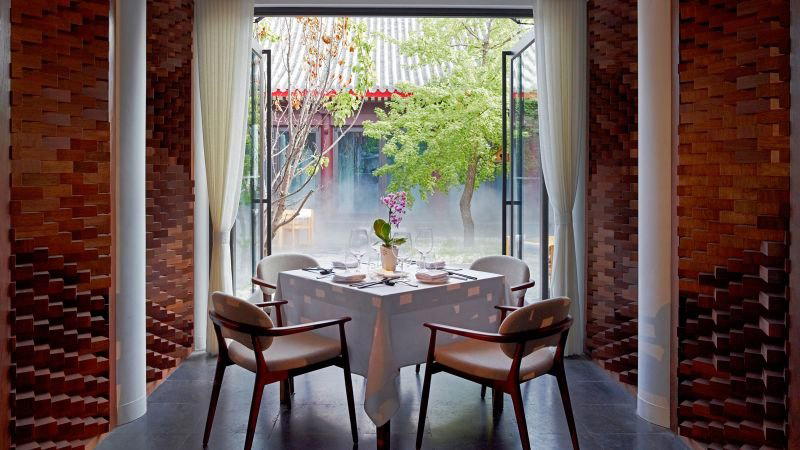
Bright, airy ground-floor dining room with lotus motifs, neutral color scheme, elegant modern decor, and warm inviting atmosphere.