Konoba Hibernicia sits in Lubenice, among the more dramatically positioned villages on the island of Cres, where the stone settlement hangs 378 metres above the Kvarner Gulf. The konoba format here follows the Adriatic tradition of cooking close to the source, drawing from the surrounding karst, sea, and island livestock. For anyone willing to make the ascent, it offers a direct argument for why location shapes what ends up on the plate.
- Address
- Lubenice 17, Lubenice, 51557, Cres, Croatia
- Phone
- +38551525040
- Directions
- Get directions
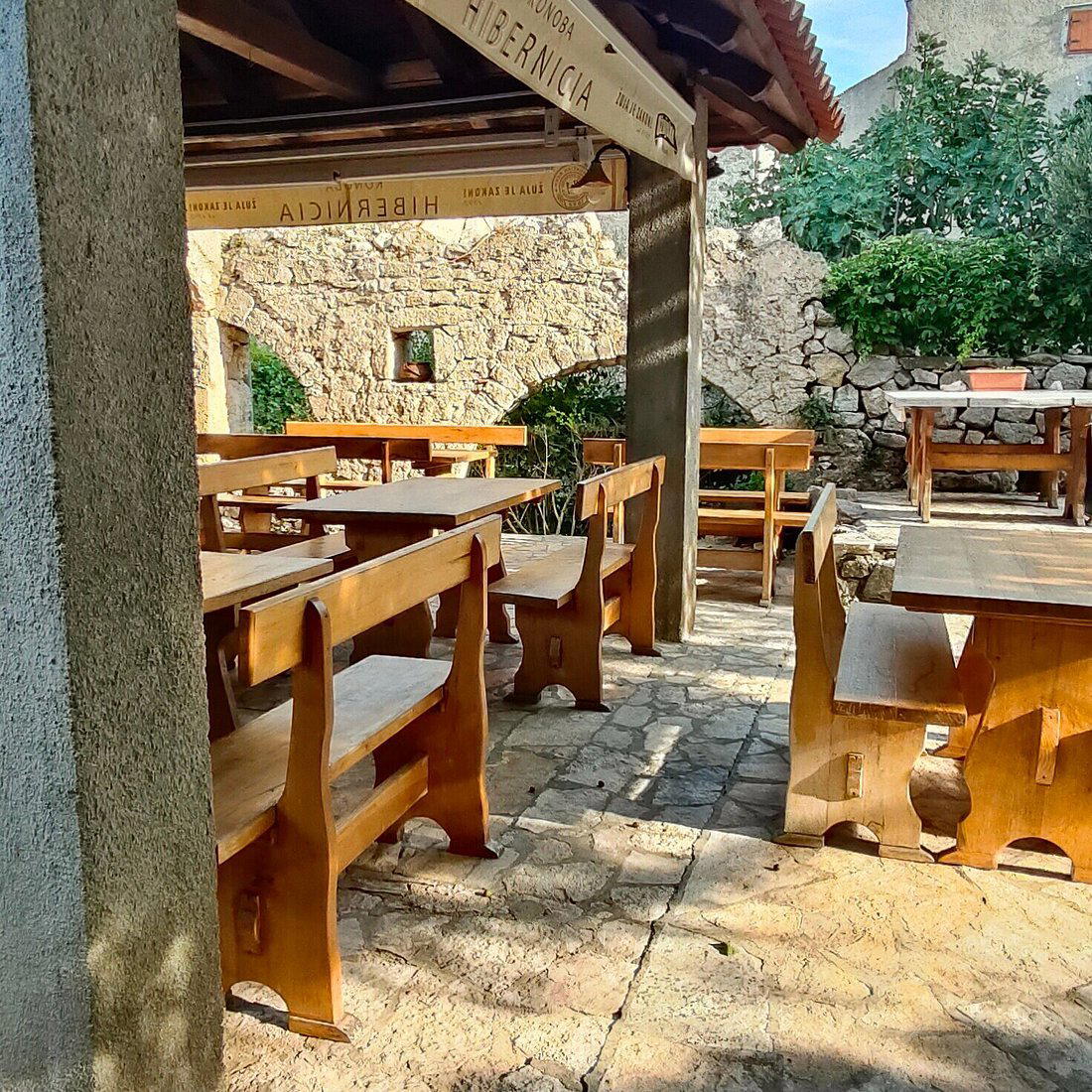
A Village at the Edge of the Kvarner Gulf
Lubenice is not a place you arrive at by accident. The village occupies a limestone ridge on the western coast of Cres, rising 378 metres above a sea that changes colour with the light, from grey-green in the morning to a hard cobalt by midday. The road up is narrow and unsignposted in places. Most visitors who find the village come for the view or for the beach below, reached by a path that descends through scrub and rock. Konoba Hibernicia, a Croatian Lamb Specialist at Lubenice 17 in Lubenice, Cres, is one of the few reasons to linger rather than simply photograph and leave. The stone buildings here have the density of a place that has not been renovated for tourism, and the konoba sits within that fabric rather than apart from it.
Konobas in Dalmatia and Kvarner occupy a specific register of Croatian dining. They are not fine-dining establishments angling for recognition in the international press. They operate closer to the logic of a family kitchen that has opened its door to guests, where the sourcing radius is measured in walking distance and the menu shifts with what the land and sea are producing. At the level of ingredient sourcing, few locations on the Croatian coast create as direct a relationship between geography and plate as the interior of Cres island, where the lamb grazes on aromatic herbs growing wild across the karst plateau, and the fish comes from waters that remain among the least industrial in the northern Adriatic. For context on how Croatia's more formal dining tier handles similar ingredients, see Pelegrini in Sibenik or LD Restaurant in Korčula, both of which work Croatian produce through a modernised Mediterranean lens. Hibernicia operates in a different register entirely, closer to the source and without the structural ambition of a tasting menu.
The Ingredient Logic of the Cres Karst
Cres lamb has a documented regional reputation built on the specific character of the island's pasture. The karst terrain supports low-yield grazing across aromatic scrubland, sage, rosemary, wild carrot, and broom among other species, and the result is meat with a flavour intensity that more intensively farmed lamb does not produce. This is not a marketing claim; it is the same principle applied to Pag lamb, which has comparable appellation-level recognition in Croatian gastronomy. The lamb of Cres operates in that same tradition of place-specific flavour, and a konoba on the island with direct access to that supply chain is positioned differently from a restaurant in Rijeka or Zagreb serving Cres lamb as an imported ingredient.
The Adriatic waters visible from Lubenice support a fishing ecology that includes dentex, sea bass, bream, and various shellfish, caught at a scale that remains predominantly artisanal along this stretch of the coast. The Kvarner Gulf more broadly is associated with scampi of notable quality, and Cres fishing communities have historically supplied markets up the coast through Mali Lošinj. Alfred Keller in Mali Losinj represents what happens when Kvarner seafood meets a more technically oriented kitchen; Hibernicia, working within the konoba tradition, applies less intervention and relies on proximity as its primary argument. Both approaches have merit, but they address different reader priorities.
Croatian olive oil from Cres and the neighbouring Kvarner islands is produced in small quantities from Leccino and Oblika varieties adapted to the local climate. Wine on the island draws from Žlahtina and other indigenous varieties grown across the Kvarner archipelago, though the production volumes from Cres specifically are small relative to better-known Croatian wine regions. Compare this to what Boskinac in Novalja has built on Pag island around its estate production, and the difference in scale becomes clear. At Hibernicia, house wine is more likely to arrive from a local cooperative or a small Kvarner producer than from a cellar with export credentials, which suits the format.
Konoba as Format, Not Just Category
The konoba is a specific hospitality format that has survived Croatia's tourism expansion without disappearing entirely, though the pressures are real. In popular coastal towns, many businesses labelled konoba now operate at price points and with service styles indistinguishable from standard restaurants. In a village like Lubenice, with a permanent population of fewer than twenty people and no capacity for large-scale tourism infrastructure, the format retains its original logic: limited covers, cooking tied to household supply chains, and a pace set by production rather than demand. For readers accustomed to the formal dining tier represented by Restaurant 360 in Dubrovnik or Agli Amici Rovinj in Rovinj, the adjustment required is significant. The konoba does not perform for the guest in the same way. It absorbs them into a routine that was running before they arrived.
This quality, which Croatia's tourist economy has repeatedly tried to commodify and rarely succeeded at reproducing artificially, is most intact in places with geographic barriers to mass access. Lubenice qualifies. The combination of altitude, road condition, and small scale limits the daily throughput of visitors in a way that more accessible villages cannot replicate. The view from the ridge is the draw; the konoba is the reason to stay for a meal.
Getting There and Practical Considerations
Cres is reached by ferry from Valbiska on Krk island or from Brestova on the Istrian peninsula, with the crossing taking roughly twenty minutes from Brestova to Porozina. Lubenice is located on the western coast of Cres, roughly halfway down the island. The road from Cres Town to Lubenice runs approximately 30 kilometres through the island interior and requires a car; there is no regular public transport to the village. The timing of a visit matters: Lubenice at midday in high summer draws day-trippers from the beach below, and the konoba's capacity is small enough that a midday arrival without any form of reservation is a speculative exercise. Late afternoon, as the day-trip traffic thins, is a more reliable window. Reservations are recommended. Comparable planning logic applies to other small-island dining destinations in the Kvarner and Dalmatian zones, including Bodulo in Pag and Burin in Crikvenica, where local knowledge of seasonal hours is more reliable than published listings.
For those building a longer Croatian itinerary that moves between island informality and urban dining ambition, useful reference points on the mainland include Nebo by Deni Srdoč in Rijeka, Dubravkin Put in Zagreb, and Krug in Split. At the opposite end of the formality register, Korak in Jastrebarsko and Cantilly Garden Restaurant in Samobor offer continental Croatian cooking with similar proximity-to-source arguments. And for readers who regularly benchmark against international reference points, Le Bernardin in New York City and Atomix in New York City represent what the sourcing-led and technique-led ends of serious dining look like at a global scale.
A Quick Peer Check
Comparable venues nearby, for context on price, style, and recognition.
| Venue | Cuisine | Price | Notes |
|---|---|---|---|
| Konoba HIBERNICIAThis venue — the venue you are viewing | Croatian Lamb Specialist | $$ | Not listed |
| Don Dino Restaurant | Modern Dalmatian Seafood | $$ | Trogir Old Town |
| Vela Vrata | Traditional Istrian | $$ | Beram |
| Karaka | Croatian Mediterranean Seafood | $$ | Krk |
| Konoba Daniela | Croatian Coastal Grill | $$ | Veleniki |
| Ružmarin | Mediterranean Pizza & Grill | $$ | Slatina |
Continue exploring
More in Lubenice
Restaurants in Lubenice
Browse all →
Bars in Lubenice
Browse all →


Hotels in Lubenice
Browse all →
At a Glance
- Rustic
- Cozy
- Scenic
- Intimate
- Special Occasion
- Family
- Terrace
- Historic Building
- Local Sourcing
- Waterfront
- Street Scene
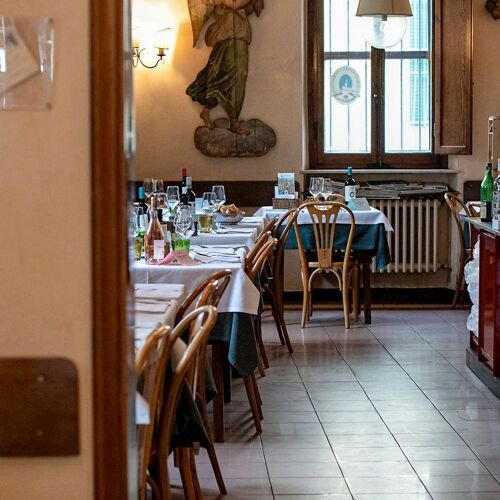
Rustic stone-walled interior with quaint charm and pleasant outdoor terrace seating under a fig tree, enhanced by scenic sunset views.