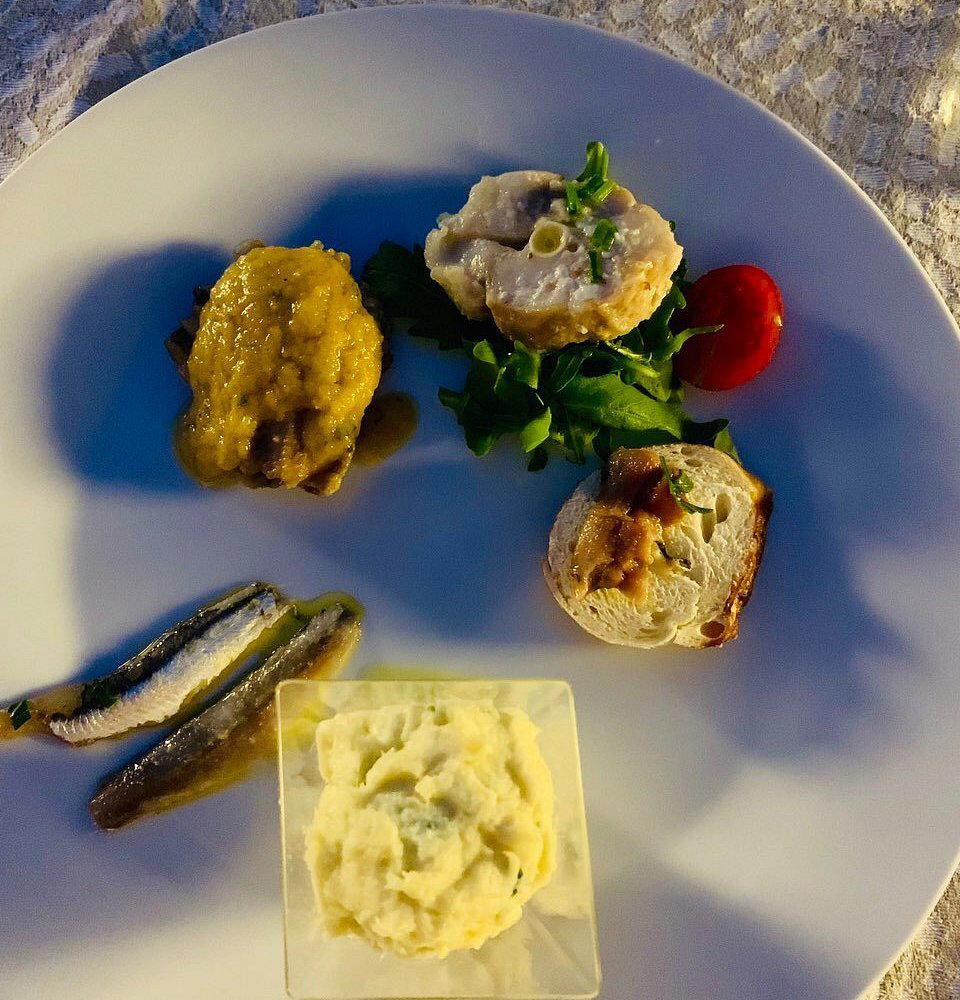
A village konoba outside Poreč, Konoba Daniela operates within Istria's deep tradition of hyper-local ingredient sourcing, where the farm, the forest, and the sea set the menu rather than the kitchen. The address, Veleniki 15a, places it well off the coastal circuit favoured by tourists, making it a fixture for those who track Croatian inland dining seriously.
Pearl is the En Primeur Club membership app — saves, bookings, and concierge access live there. Same editors, same standards.
- Address
- Veleniki 15a, 52440, Poreč, Croatia
- Phone
- +38552759175
- Website
- konobadaniela.com
- Directions
- Get directions
 Saves & bookings on Pearl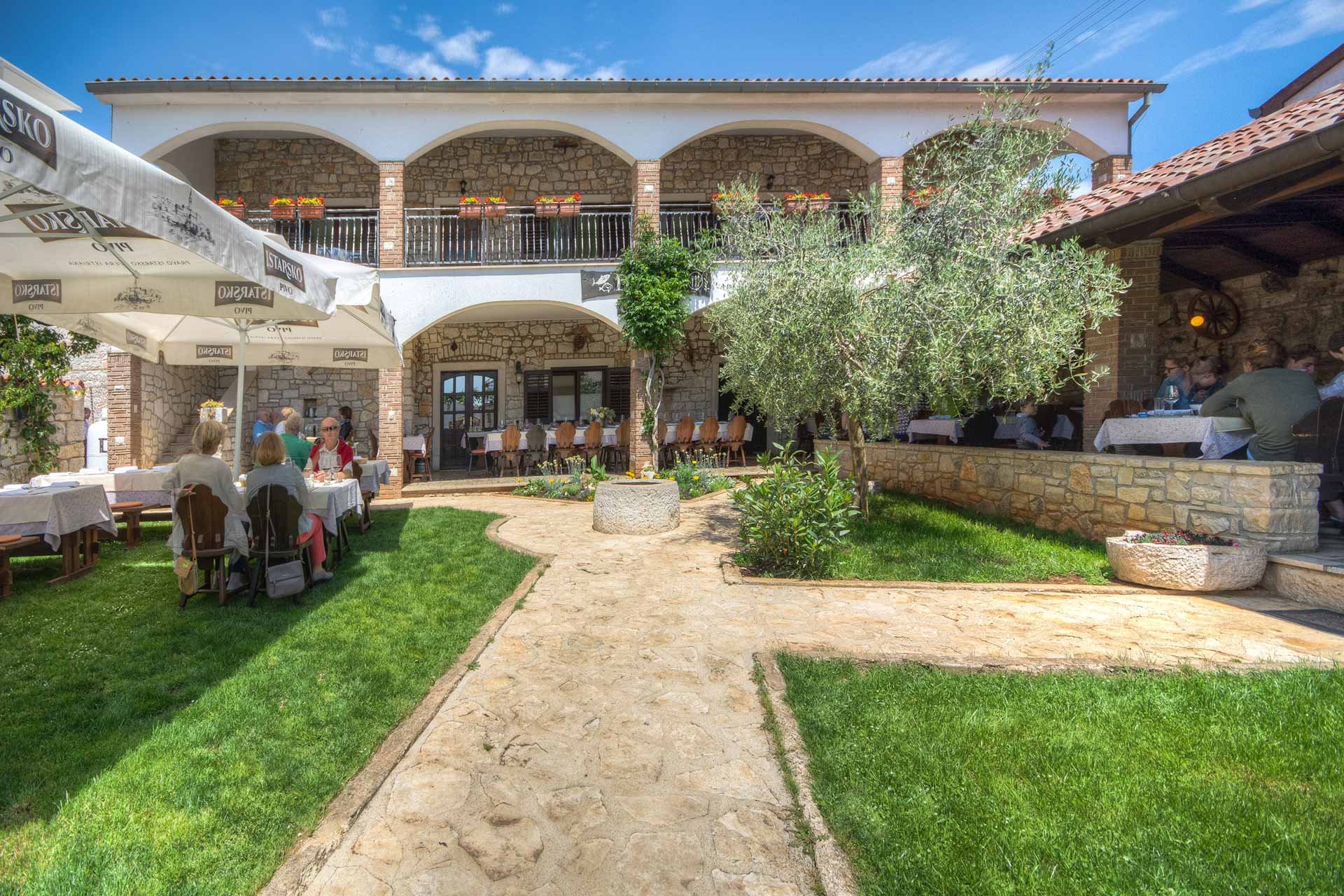
Where the Istrian Interior Sets the Table
The road into Veleniki, a small settlement in the Poreč hinterland, narrows as it leaves the main coastal artery. Stone walls line the verges, olive groves alternate with patches of oak forest, and by the time the address resolves into a konoba, the Dalmatian and Istrian term for a traditional, often family-run tavern, the coastal Croatia of crowded harbour restaurants feels like a different country. This is the context for Konoba Daniela: it belongs to a category of Croatian inland dining that prioritises proximity to ingredients over proximity to tourists, and that distinction shapes everything from the menu logic to the pace of the meal.
Istria has a dual dining identity. Along the coast and in promoted towns like Rovinj and Poreč itself, restaurants have moved toward refined Mediterranean formats, Agli Amici Rovinj represents the Italian-contemporary pole of that spectrum at the €€€€ tier. Inland, a parallel tradition persists: konobas rooted in the agricultural and foraging rhythms of the Istrian peninsula, where the sourcing radius is measured in kilometres rather than supply-chain abstractions. Konoba Daniela at Veleniki 15a, 52440, Poreč, sits firmly in that inland category.
The Logic of Hyper-Local Sourcing in Istrian Cooking
Istria's ingredient geography is unusually concentrated. Truffles from the Motovun forest, particularly commercially significant in Europe, grow within easy reach of the peninsula's interior villages. Istrian prosciutto, dry-cured in the bora wind, comes from farms scattered across the same terrain. Wild asparagus appears in spring roadside ditches. Olive oil from Istrian Bjelica and Buža cultivars carries a distinctive grassy bitterness that distinguishes it from Dalmatian or Greek alternatives. For a konoba operating in this geography, the sourcing question is less about ambition than about what's available at the right moment, a supply logic that produces menus driven by season and locality rather than by a fixed kitchen repertoire.
This model contrasts with how premium Croatian restaurants further along the coast frame their identity. Pelegrini in Sibenik and Restaurant 360 in Dubrovnik both operate at the €€€€ tier with modern cuisine frameworks that interpret local ingredients through a fine-dining lens. The konoba format inverts that hierarchy: the ingredient is the point, and technique exists to serve it rather than to showcase it. Neither approach is superior, they address different reader intentions entirely.
Across Croatia's restaurant spectrum, the sourcing-first approach has gained critical attention. Boskinac in Novalja has built its reputation on Pag island's specific terroir. Korak in Jastrebarsko applies a similar inland logic in the Zagreb county wine region. The pattern across these venues is consistent: the further a Croatian restaurant sits from the tourist coast, the more directly it tends to reflect the ingredient realities of its immediate surroundings.
The Konoba Format and What It Signals
A konoba, structurally, is defined less by price or ambition than by its relationship to domestic cooking traditions. The format typically involves a limited menu that changes with availability, a dining room that reads as an extension of a family home rather than a designed hospitality space, and a pace that assumes guests are not in a hurry. These are not limitations, they are the format's operating principles, and readers who arrive expecting the service choreography of a coastal fine-dining room will misread what's on offer.
Croatia's interior konoba circuit occupies a different comparable set from the recognised fine-dining addresses. Where Nebo by Deni Srdoč in Rijeka or Dubravkin Put in Zagreb signal through awards and formal recognition, konobas like Daniela signal through local reputation and repeat custom from people who know the area. These are parallel trust systems, not a hierarchy.
For visitors to the Poreč region, the inland konoba option is worth the drive. The coastal town itself is well-serviced with restaurants at multiple price points, but the ingredient sourcing narrative that defines Istrian cuisine at its most direct is found in the villages, which is what makes the drive to Veleniki a meaningful detour rather than a compromise.
Placing Veleniki in the Broader Croatian Dining Circuit
Croatia's dining geography rewards readers who look past the headline destinations. The island restaurants, LD Restaurant in Korčula, Bodulo in Pag, have developed strong identities rooted in island-specific produce. The coastal cities have their anchor addresses. The interior of Istria and the Kvarner hinterland represent a third register: less documented, more variable, and often more directly connected to the agricultural character of the region.
Venues like BioMania Bistro Bol in Bol and Burin in Crikvenica reflect the same appetite for ingredient-led Croatian cooking at a mid-range price point. Cubo in Opatija and Cantilly Garden Restaurant in Samobor approach the same question from different regional angles. What connects them is a Croatian dining movement that has shifted attention from imitation of international formats toward serious engagement with local sourcing, a shift that konobas in the Istrian interior anticipated by decades. For comparison's sake, the distance between this tradition and the technically rigorous, internationally referenced cooking at venues like Le Bernardin or Atomix in New York is a useful measure of how different the category priorities are, both are serious, neither is interchangeable. See our full Veleniki restaurants guide for additional context on where Konoba Daniela fits within the local dining options.
Planning Your Visit
The restaurant is located at Veleniki 15a, 52440, Poreč, in the Istrian interior. The village sits inland from the Poreč coastal strip, reachable by car, public transport connections to settlements of this size in rural Istria are limited, so driving is the practical approach for most visitors. Dress code is casual, and reservations are recommended.
Quick Comparison
Comparable venues nearby, for context on price, style, and recognition.
| Venue | Cuisine | Price | Notes |
|---|---|---|---|
| Konoba DanielaThis venue — the venue you are viewing | Croatian Coastal Grill | $$ | Not listed |
| Bukaleta | Traditional Croatian Grill & Seafood | $$ | Murine |
| Konoba Ćakula | Istrian Seafood & Mediterranean | $$ | Poreč |
| Marino | Traditional Istrian Truffle Specialties | $$ | Momjan |
| Amfiteatar Restaurant | Mediterranean and Istrian with Modern Twist | $$ | Pula Arena |
| Konoba Jure | Traditional Croatian Seafood | $$ | Cademia |
Continue exploring
More in Veleniki
Restaurants in Veleniki
Browse all →
Bars in Veleniki
Browse all →


Hotels in Veleniki
Browse all →


At a Glance
- Rustic
- Cozy
- Classic
- Family
- Group Dining
- Casual Hangout
- Terrace
- Beer Program
Cozy rustic charm with a homely, welcoming atmosphere in a traditional tavern setting.