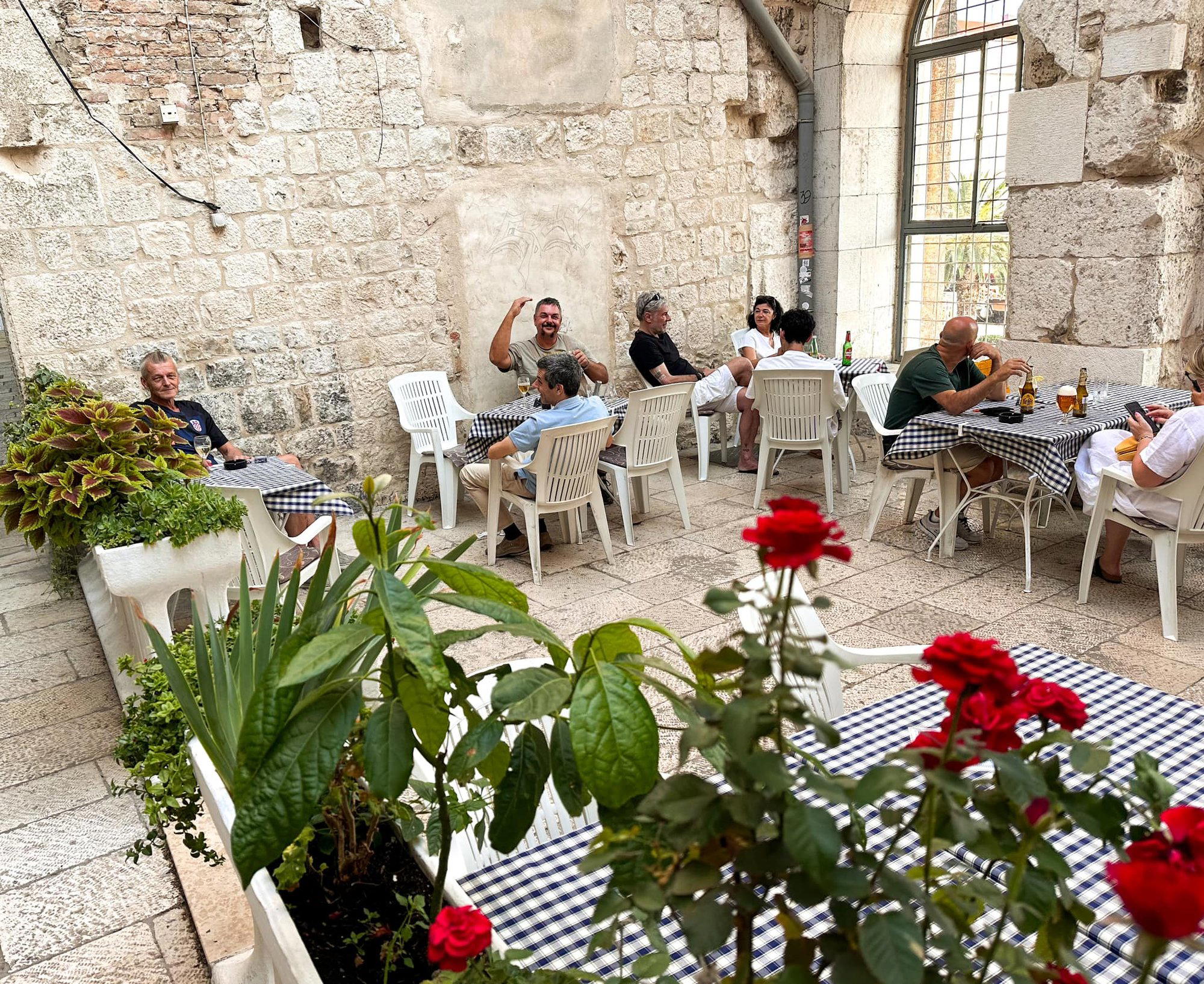
Konoba Fratelli serves Italian-Croatian Mediterranean food at Siriščevića ul. 1 in Split, with waterfront terrace seating and a conversational, casual setup.
Pearl is the En Primeur Club membership app — saves, bookings, and concierge access live there. Same editors, same standards.
- Address
- Siriščevića ul. 1, 21000, Split, Croatia
- Phone
- +385994753404
- Website
- konobafratelli.shop
- Directions
- Get directions
 Saves & bookings on Pearl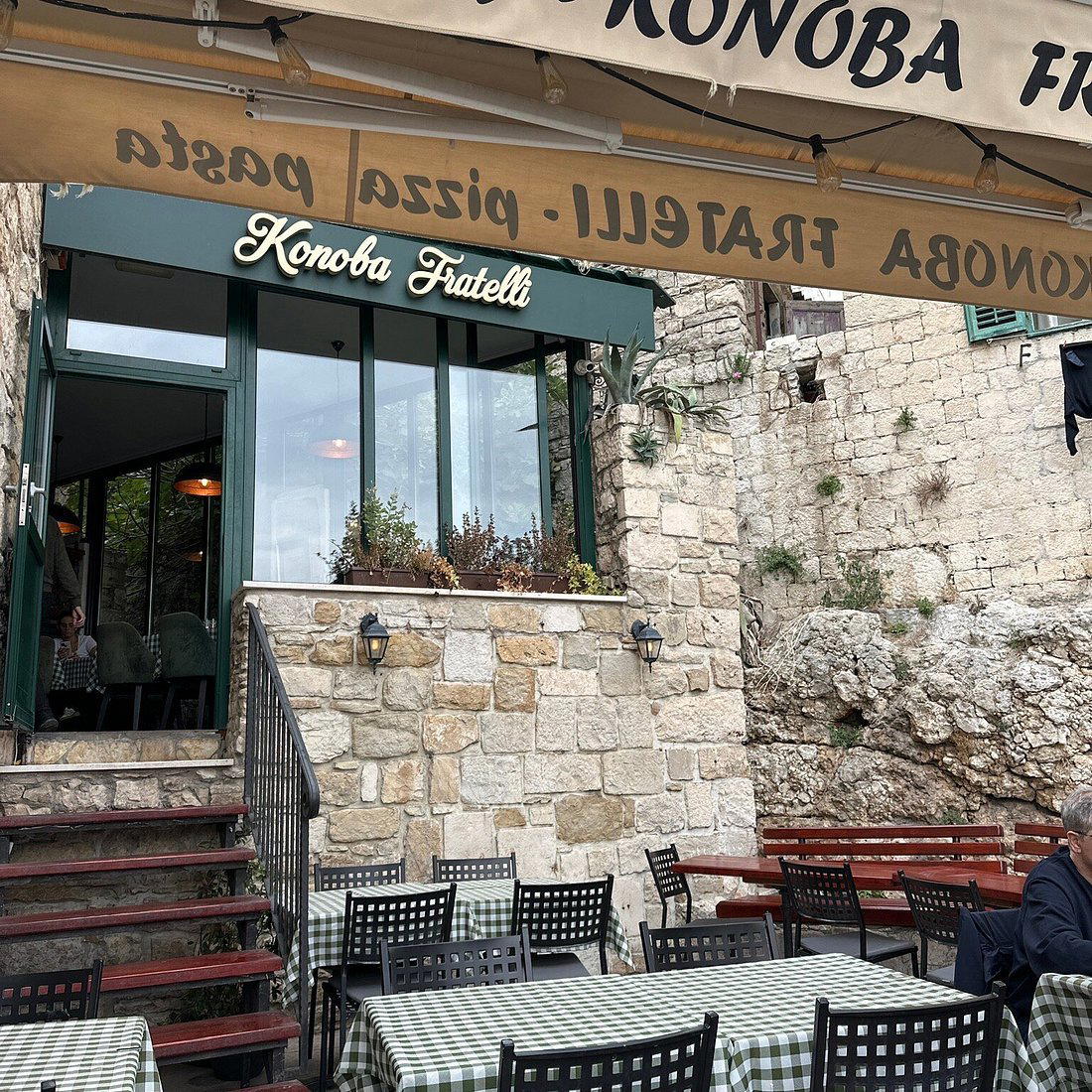
Stone Walls, Open Kitchens, and the Konoba Tradition
Dalmatia's dining culture has long organised itself around the konoba: a format somewhere between tavern and family kitchen, where the boundaries between host and cook dissolve and the menu follows the market rather than the other way around. In Split's Old Town, where Roman stone and medieval overlay coexist in the same street facade, the konoba format feels less like nostalgia and more like the natural order of things. Konoba Fratelli, at Siriščevića ul. 1, operates inside that tradition at a point in the city's dining evolution where the format is being tested by tourist demand on one side and a new generation of technically trained local chefs on the other.
The address places it within walking distance of the Peristyle and the warren of lanes that define Diocletian's Palace, a neighbourhood where foot traffic is dense in summer and the dining scene divides sharply between places built for throughput and places built for return visits. Fratelli sits in the second category, at least by reputation among residents who treat the Old Town's konoba circuit with the same loyalty that regulars bring to a neighbourhood bistro in Lyon or a trattoria in a Roman rione.
What the Konoba Format Means at This Price Point
Across Dalmatia, the konoba operates on a spectrum. At one end, it is a bare-bones room with grilled fish and house wine; at the other, it approaches something closer to a serious restaurant that happens to call itself a konoba because the hospitality ethos demands informality. Split's mid-tier dining scene, which comparison venues like Bokamorra and Bajamonti POP occupy in different ways, reflects a city that has moved beyond the binary of tourist trap or local secret. Konoba Fratelli fits within that mid-tier evolution, offering a format rooted in Dalmatian domestic cooking without the pretension of a tasting-menu format or the impersonality of a large-scale operation.
The core currency of a Dalmatian konoba menu is seafood from the Adriatic, complemented by cured meats, aged cheeses, and slow-cooked meat dishes that reflect the broader Dalmatian interior as much as the coast. Octopus prepared under a peka (the cast-iron dome used for slow cooking over embers), black risotto with cuttlefish ink, and fresh pasta dressed with seafood reductions are the structural grammar of this cuisine. These dishes do not require innovation to be compelling; they require good sourcing and execution. That is the standard against which a konoba earns its standing in the local dining conversation.
Split's Dining Terrain and Where Fratelli Sits
Split has developed a more considered dining scene than its status as a cruise-ship port might suggest. The city's restaurant offer now includes Krug at the higher end of Mediterranean cuisine and Adriatic as another reference point in the broader coastal dining category, while Bistro Noir represents the more European bistro register. Against that range, a konoba like Fratelli occupies a culturally specific slot: it is the format that most directly expresses Dalmatian cooking as a living tradition rather than a curated product.
Croatia more broadly has been building dining credibility across its coast and islands. Pelegrini in Sibenik and Restaurant 360 in Dubrovnik anchor the premium coastal tier, while Agli Amici Rovinj and Nebo by Deni Srdoč in Rijeka signal the country's wider ambition. Boskinac in Novalja and LD Restaurant in Korčula reinforce the point that quality dining is distributed across the Adriatic rather than concentrated in one city. Alfred Keller in Mali Lošinj extends the conversation to the Kvarner islands. For visitors building a Croatian itinerary, the konoba tier in Split represents an accessible and culturally grounded counterpoint to those headline names.
Further inland, Dubravkin Put in Zagreb and Korak in Jastrebarsko show how Continental Croatian cooking diverges from the coastal tradition, making the case that the konoba format is specifically a coastal and island phenomenon, not a national one. For diners arriving in Split after time in Zagreb, the shift from Continental to Dalmatian cooking is a genuine register change worth paying attention to.
The Cultural Roots of the Konoba Menu
Dalmatian cooking draws on Venetian, Ottoman, and Slavic layers, filtered through geography: a narrow coastal strip backed by karst mountains, with islands close enough to define the cuisine as maritime but hinterland ingredients always present. The result is a kitchen that prizes simplicity and quality of raw material over technique complexity. Olive oil from the islands, wine from Plavac Mali or Pošip grapes grown on sun-exposed slopes, and fish pulled from what remains one of Europe's cleaner stretches of sea: these are the building blocks.
The konoba's cultural role is to make this cooking feel domestic rather than performed. In a city that receives significant tourist volume through spring and summer, that domesticity is genuinely hard to sustain. The addresses that manage it tend to do so by keeping the room small, the menu seasonal, and the service direct rather than choreographed. Fratelli's position in the Old Town, at an address that rewards the kind of deliberate navigation that keeps passing trade to a minimum, suggests an operation more oriented to repeat custom than to first-time visitors moving through on a fixed itinerary.
For readers who have eaten at technically demanding restaurants in other cities, whether at Le Bernardin in New York or Atomix, the konoba register operates on entirely different terms. The measure here is not technique complexity or menu ambition but fidelity to a local culinary vernacular. That is a different and equally demanding standard. See our full Split restaurants guide for the wider context.
Seasonality matters more at a konoba than at most restaurant formats. Summer brings the Adriatic's most productive fishing months but also the tourist pressure; spring and autumn offer better value and more considered service in most Old Town addresses. For visitors with flexibility, arriving outside July and August tends to produce a more honest version of the konoba experience.
Island dining provides useful comparison: BioMania Bistro Bol in Bol on Brač (accessible by ferry from Split in roughly an hour) represents the island inflection of the same Dalmatian tradition, where the distance from mainland supply chains tends to sharpen ingredient sourcing decisions.
Planning Your Visit
Konoba Fratelli is located at Siriščevića ul. 1 in Split's Old Town, within the Diocletian's Palace perimeter. The area is pedestrianised, so arrival on foot from central Split is the practical approach; the nearest parking is outside the palace walls. Bookings are walk-in friendly, and the restaurant is open daily from 11 AM to 12 AM. Contacting the venue directly before visiting in shoulder or low season is advisable. Dress code expectations at this format are informal by convention.
Budget Reality Check
Comparable venues nearby, for context on price, style, and recognition.
| Venue | Cuisine | Price | Notes |
|---|---|---|---|
| Konoba FratelliThis venue — the venue you are viewing | Not listed | $$ | Not listed |
| Fig POP | Not listed | $$ | Diocletian Palace, Modern Fusion with Indian-Inspired Dishes |
| Bajamonti POP | Trg Republike, Dalmatian Coastal | $$$ | Not listed |
| Marulićeva ul. 1 | Old Town, Modern Dalmatian Bistro | $$ | Not listed |
| Bokeria Kitchen & Wine | Old Town, Modern Mediterranean Dalmatian | $$$ | Not listed |
| Leonis | Not listed | $$$ | Diocletian's Palace, Fresh Seafood in Diocletian's Palace |
Continue exploring
More in Split
Restaurants in Split
Browse all →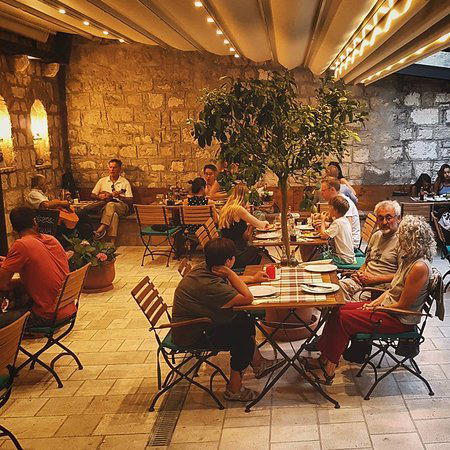
Bars in Split
Browse all →
Hotels in Split
Browse all →

At a Glance
- Rustic
- Cozy
- Casual Hangout
- Family
- Terrace
- Waterfront
- Waterfront
Current opening hours
- Monday
- 11 AM–12 AM
- Tuesday
- 11 AM–12 AM
- Wednesday
- 11 AM–12 AM
- Thursday
- 11 AM–12 AM
- Friday
- 11 AM–12 AM
- Saturday
- 11 AM–12 AM
- Sunday
- 11 AM–12 AM
Hours can change for holidays and private events. Last verified .
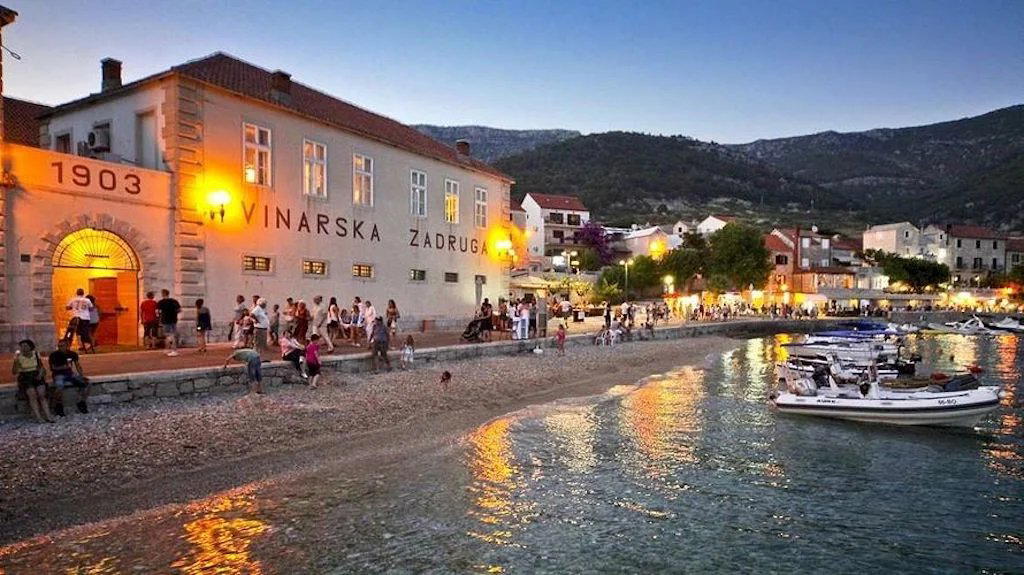
Charming terrace with bay views, serene coastal atmosphere, enchanting in evenings.