

1 Michelin Star · Tabelog 100 #85 · World's Best Wine Lists Awards WBWL 3-Star
Our verdict
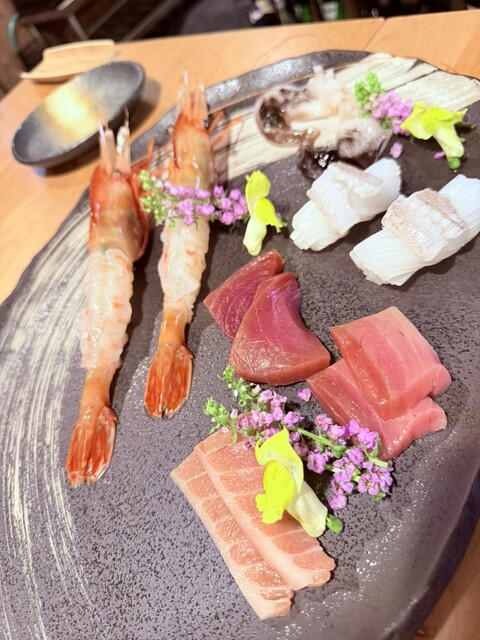
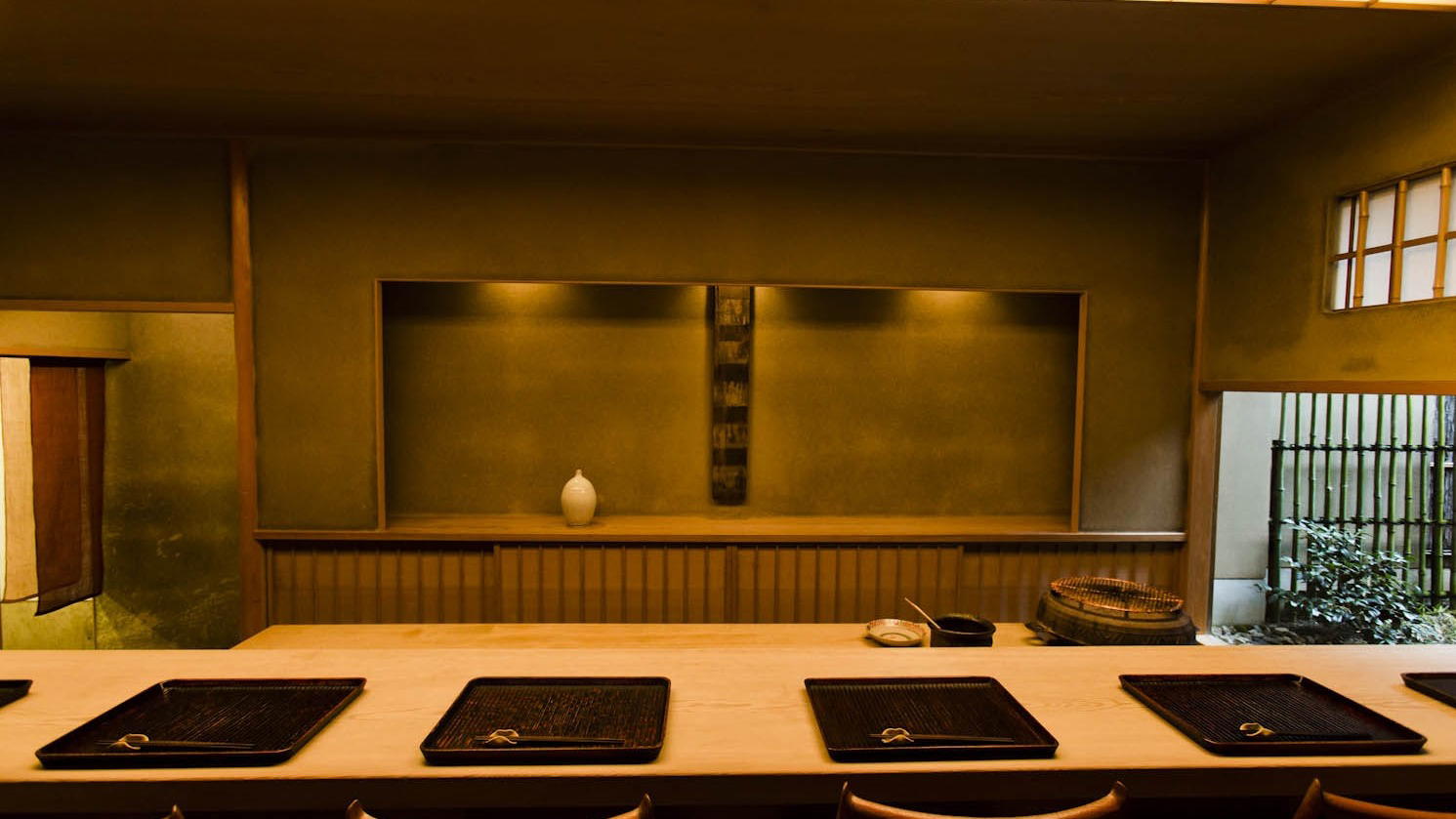
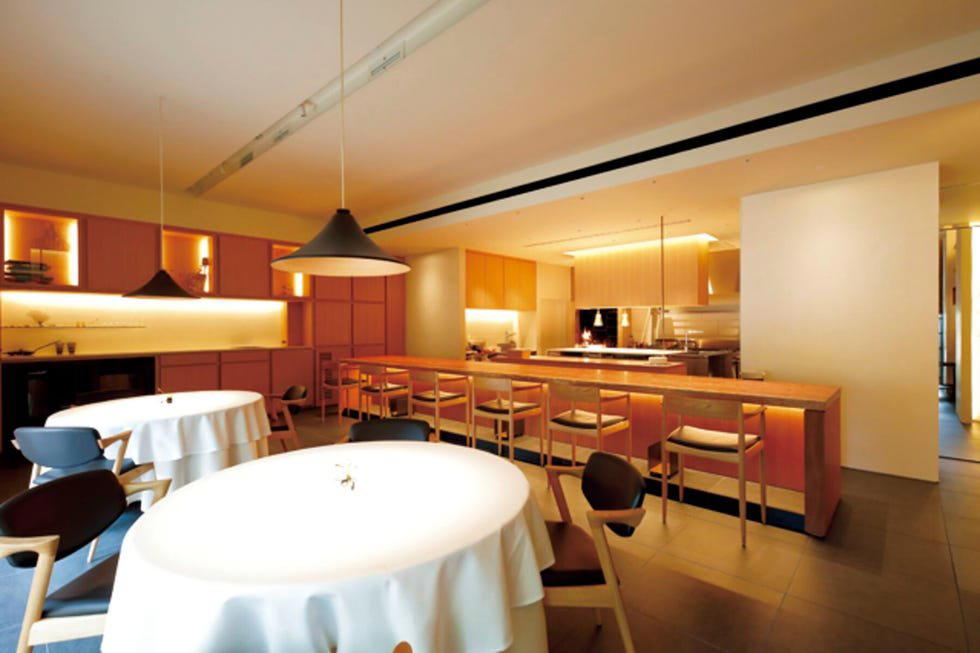
Chef Yusaku Nakamura arranges dishes from the Ryukyu royal court on Yachimun pottery and Ryukyu lacquer trays, grilling over wood and charcoal in a stone oven. The result is a menu architecture that reads as biography rendered in food, priced at ¥¥¥.

Pearl is the En Primeur Club membership app, where members save venues, book tables and use the concierge.
A Menu Built Like an Argument
The structure of the menu at KOKE is the clearest signal of what the kitchen is doing. Spanish and French techniques, specifically in the use of purees, sauces, and asado-style grilling over wood or charcoal in a stone oven, are not deployed as a statement of European aspiration.
This distinction matters when reading the menu against its context. Most of Kyoto's Michelin-starred dining sits inside the kaiseki tradition: seasonal, sequenced, rooted in the aesthetics of restraint that define the city's culinary identity. Gion Sasaki holds three Michelin stars within that framework. Hyotei and Isshisoden Nakamura operate in the same tradition at ¥¥¥¥ pricing. KOKE, priced at ¥¥¥, does not enter that competition. It runs a parallel course: it uses the precision and plating discipline that Kyoto diners expect, but routes it through material that carries its own historical weight.
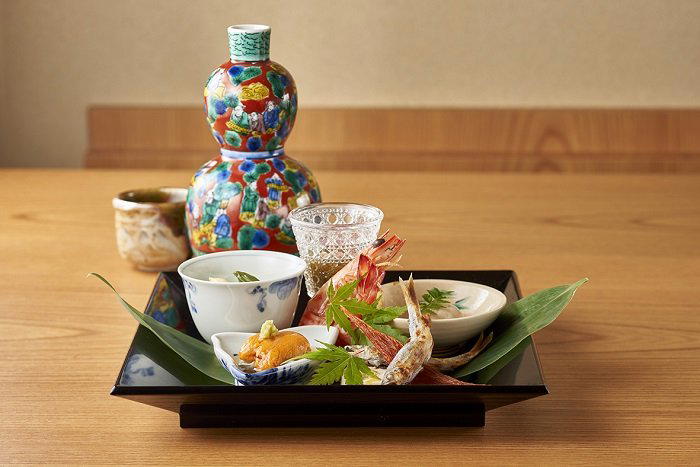
The dish named 'Ryukyubon' makes the logic explicit. A tapa in form, it draws on Ryukyu royal court recipes and arrives on Yachimun pottery (the hand-thrown ceramic tradition native to Okinawa's Yomitan Village) placed on a Ryukyu lacquer tray. The presentation is not decoration for its own sake. The combination of vessel, tray, and recipe constitutes a coherent cultural argument: that Okinawan food history is serious material, capable of holding its own in a fine-dining room without being simplified or romanticised.
The word 'tapa' in this context is also doing work. It signals that the menu is structured in smaller, discrete pieces rather than a single continuous kaiseki procession, and that the European technique involved is the Spanish tradition of small, ingredient-driven bites rather than classical French plating. Purees and sauces appear as drawn lines across dishes grilled in a stone oven, a presentation method that would be recognisable in a serious contemporary Spanish kitchen. Restaurants in this tier are operating in a different competitive frame from the great kaiseki houses or the serious sushi counters.
The answers have been varied and, in many cases, significant. HAJIME in Osaka operates at three Michelin stars in this category. Goh in Fukuoka and MAZ in Tokyo represent different approaches to the same fundamental question of how non-European cuisine can be framed in an international fine-dining language without losing its specificity. Domestically, 6 in Okinawa works closer to the source material. alla prima in Seoul and 1000 in Yokohama represent how the innovative category plays out in nearby cities.
KOKE Within Kyoto's Broader Scene
Kyoto's dining culture is not uniform across price tiers. The ¥¥¥ bracket in the city contains a range of approaches: ORTO represents Italian-influenced work in this range; Harutaka in Tokyo, illustrates the kind of tight-counter format that characterises the broader category. The restaurant holds a Michelin star, which in Kyoto at the ¥¥¥ price point typically means advance booking is required.
Frequently asked questions
Is KOKE child-friendly?
KOKE is a Michelin-starred counter restaurant in Nakagyo Ward built around a structured, technique-driven menu that draws on Ryukyuan and European culinary traditions. That format suits guests who can engage with a deliberate tasting progression. Families with younger children may find the setting better suited to older or particularly food-curious kids.
Is KOKE better for a quiet night or a lively one?
KOKE is the kind of restaurant where the food carries the evening. Chef Yusaku Nakamura's menu architecture, moving from Okinawan-rooted recipes through Spanish and French technique, rewards attention rather than background noise. Expect a focused atmosphere aligned with the counter format rather than a convivial dining-room buzz.
What's KOKE known for in terms of accolades?
KOKE has received recognition including: This creative cuisine reflects the chef’s gastronomic journey. Spanish and French techniques find application in recipes from Okinawa, where the chef was born and raised. A tapa named ‘Ryukyubon’ is one example. This version of a dish from ….
What do people recommend at KOKE?
The 'Ryukyubon' tapa draws consistent attention: a dish from the Ryukyu royal court tradition, plated on Yachimun pottery and served on a Ryukyu lacquer tray. The asado preparations, grilled over wood or charcoal in a stone oven and finished with puree and sauce tracks, are the kitchen's other structural signature. KOKE ranked 360th on Opinionated About Dining's 2025 Japan list, which gives some sense of where serious diners place it.
What's the cuisine at KOKE?
What price level is KOKE?
Pricing at KOKE is listed as ¥¥¥.
Cuisine and Recognition
A quick snapshot of similar venues for side-by-side context.
| Venue | Cuisine | Price | Awards | Notes |
|---|---|---|---|---|
| KOKEThis venue (the venue you are viewing) | Modern Okinawan Fine Dining | $150–200 | 1 Michelin Star · Tabelog 100 #85 | Not listed |
| Gion Sasaki | Modern Kaiseki | $300–500 | 3 Michelin Stars · La Liste Top Restaurants | Kaiseki, Japanese |
| cenci | Innovative Italian-Japanese Fusion | $100–150 | 1 Michelin Star · World's 50 Best #76 | Italian |
| Ifuki | Sumibi Kappo Kaiseki | $200–300 | 2 Michelin Stars · La Liste Top Restaurants | Kaiseki |
| Kyokaiseki Kichisen | Kyoto Kaiseki | $200–300 | 2 Michelin Stars · La Liste Top Restaurants | Japanese |
| Kyo Seika | Modern Chinese Fine Dining | $150–200 | 1 Michelin Star · Tabelog Bronze #216 | Chinese |
Recognition history
Dated appearances from independent guides and award organizations, with the underlying list record or original source where available.
Michelin 1 Star
Michelin
Opinionated About Dining Top Restaurants in Japan Recommended
Opinionated About Dining
Tabelog 100 #85 · No. 85
Tabelog · Tabelog 100 - Innovative / Creative cuisine - 2025
World's Best Wine Lists Awards WBWL 3-Star
World's Best Wine Lists Awards
Full recognition history (6 entries)
Opinionated About Dining Top Restaurants in Japan Ranked #360
Opinionated About Dining
Michelin 1 Star
Michelin