
Macarfi 7 Food Rating
Our verdict
An izakaya operating in the shadow of Mercat de Santa Caterina, IKOYA brings the unhurried, communal pacing of Japanese pub dining to Ciutat Vella. The format sits apart from Barcelona's Michelin-chasing tasting-menu circuit, trading length and ceremony for repetition and ease, the kind of place you return to on a Tuesday rather than save for a birthday.

Pearl is the En Primeur Club membership app, where members save venues, book tables and use the concierge.

The Izakaya Ritual, Transplanted to Ciutat Vella
Japanese izakaya culture was never built around a single defining dish or a chef's biography. It was built around a rhythm: arrive, order a round of small plates, order another, keep drinking, repeat. That rhythm, loose, cumulative, governed by appetite rather than a printed sequence, is what separates the izakaya format from the omakase counter and the kaiseki progression. In Barcelona, where the tasting menu has become the dominant formal register for ambitious restaurants, the izakaya occupies a different social frequency entirely.
IKOYA Izakaya sits across from the Mercat de Santa Caterina on Avinguda de Francesc Cambó, in the Ciutat Vella district. The market's Gaudí-influenced mosaic roof is visible from the street outside, a landmark that places the restaurant firmly inside Barcelona's densest historic quarter, where Gothic lanes give way to Born's more polished blocks and the old working-class fabric of Sant Pere persists underneath waves of renovation. It is a neighbourhood that has absorbed considerable restaurant energy over the past decade, but the izakaya format remains a relative rarity within it.
What the Format Actually Demands of You
The dining ritual at an izakaya requires a different kind of attention than a structured tasting menu. There is no arc to follow, no sommelier pairing each course to a preset narrative. The intelligence of the meal is in how you order across rounds: heavier proteins after lighter vegetables, a pause for another drink before the table decides whether to continue. Regulars at izakayas in Tokyo or Osaka develop fluency in this pacing over dozens of visits. For diners arriving from Barcelona's tasting-menu circuit, where Disfrutar, Enigma, and Lasarte dictate both sequence and duration, the izakaya's open structure can feel unfamiliar at first. That unfamiliarity is the point.
Spain's most technically sophisticated dining rooms, from El Celler de Can Roca in Girona to Mugaritz in Errenteria, are built on the idea that the chef controls the experience from first bite to last. The izakaya inverts that contract. The kitchen provides a menu of possibilities; the table assembles its own evening. That shift in agency changes how a meal feels, less like attending a performance, more like inhabiting a room.
Barcelona's Japanese Dining Register
Barcelona has developed a credible Japanese dining scene over the past fifteen years, concentrated largely around the Eixample and Gràcia districts. Much of that scene has tilted toward sushi bars and ramen houses that cater to tourist throughput. The izakaya occupies a narrower, more sociable segment of that spectrum, closer in spirit to the Catalan tradition of sharing plates over a long table than to the solitary discipline of a ramen bowl or an omakase counter.
That adjacency to local dining customs is not coincidental. The cities that have absorbed izakaya culture most successfully tend to be those where communal, extended table meals already exist in the civic DNA. Barcelona's tradition of late dining, long lunches, and table-sharing tapas culture creates conditions where the izakaya format arrives with less of a learning curve than it might in, say, London or New York. Atomix in New York City represents what happens when Korean fine dining is transposed into a high-control tasting format for a Western audience. The izakaya moves in the opposite direction: it absorbs the local social pace rather than asking diners to adopt a foreign one.
For comparison across Spain's broader fine-dining map, the restaurants that draw international attention, Aponiente in El Puerto de Santa María, Azurmendi in Larrabetzu, Quique Dacosta in Dénia, operate within a highly controlled, chef-authored format. IKOYA exists in a different tier and category entirely, which is not a limitation so much as a statement of intent about what kind of evening it is built to produce.
The Neighbourhood as Context
Avinguda de Francesc Cambó connects the Barri Gòtic to the Sant Pere neighbourhood, running along the edge of the Born. The Mercat de Santa Caterina, which anchors the block, underwent a major renovation in the early 2000s under the architect Enric Miralles and now draws both local shoppers and visitors. The surrounding streets carry a mix of everyday commerce, residential buildings, and a growing concentration of independent restaurants that serve the neighbourhood rather than the tourist circuit.
That positioning matters for understanding who IKOYA is likely serving on any given evening. Unlike the Eixample restaurants that draw reservation-holders from across the city and beyond, a Ciutat Vella izakaya operates closer to the neighbourhood-local model, the kind of place that fills through word of mouth and repeat custom rather than guidebook placement. Barcelona's creative-end tasting rooms, including Cocina Hermanos Torres and ABaC, draw from a metropolitan and international visitor pool. The izakaya format, at its finest, draws from a smaller, more regular radius.
Planning a Visit
IKOYA Izakaya's address, facing Mercat de Santa Caterina at Avinguda de Francesc Cambó, 23, places it within walking distance of the Born, the Barri Gòtic, and Arc de Triomf. Public transport access is practical from the Jaume I or Barceloneta metro stations. Given that the venue data currently available does not include confirmed hours, booking methods, or pricing, the most reliable approach before visiting is to check current listings directly, as izakaya formats in European cities often operate evening-only hours with a mix of walk-in and reservation capacity. If Barcelona's broader dining patterns hold, tables are typically easier to secure on weeknights, with weekend demand peaking sharply after 9pm. For a wider view of where IKOYA sits within the city's restaurant mix, our full Barcelona restaurants guide maps the range from neighbourhood staples to Michelin-level tasting rooms.
Frequently asked questions
Where is IKOYA Izakaya in Barcelona?
IKOYA Izakaya is located at Al davant del Mercat de, Av. de Francesc Cambó, 23, Ciutat Vella, 08003 Barcelona, Spain, Barcelona.
Is IKOYA Izakaya a good option for Japanese dining near the Born in Barcelona?
IKOYA sits directly opposite Mercat de Santa Caterina on Avinguda de Francesc Cambó, placing it within a short walk of the Born and the Barri Gòtic. Barcelona's Japanese dining scene has grown considerably over the past fifteen years, concentrated mainly in Eixample and Gràcia, making a credible izakaya in Ciutat Vella a less common find in that neighbourhood. The izakaya format, drinks, shared small plates, no fixed menu arc, suits the informal pace of the area.
What dish is IKOYA Izakaya famous for?
No single dish defines an izakaya, and IKOYA is no exception. The format is built around a rotating sequence of small plates, ordered across the table at the group's own pace, alongside drinks. What draws repeat visitors to izakayas in Barcelona's Japanese dining scene is precisely that flexibility, not a signature plate.
How hard is it to get a table at IKOYA Izakaya?
IKOYA operates in a different booking tier than Barcelona's high-demand tasting-menu rooms. Facing Mercat de Santa Caterina on Avinguda de Francesc Cambó, the venue is well-positioned for walk-ins from the Born and Barri Gòtic, particularly on weeknights. Weekend evenings near the market draw higher foot traffic, so earlier arrivals or advance contact are advisable.
Cuisine and Credentials
Comparable venues nearby, for context on price, style, and recognition.
| Venue | Cuisine | Price | Awards | Notes |
|---|---|---|---|---|
| IKOYA IzakayaThis venue (the venue you are viewing) | Japanese Izakaya with Robata Grill | $30–50 | Macarfi 7 Food Rating | Not listed |
| Nomo Galvany | Modern Japanese Sushi | $30–50 | Not listed | Sant Gervasi - Galvany |
| Monster Sushi | Modern Japanese Sushi & Izakaya | $30–50 | Not listed | la Vila de Gracia |
| Asador de Aranda - Paralelo | Traditional Castilian Asador | $30–50 | Not listed | el Raval |
| Sagardi Centre | Basque Grill & Seafood | $50–100 | Not listed | l'Antiga Esquerra de l'Eixample |
| konkai sushi House | Japanese Sushi with Asian Fusion | $20–30 | Not listed | la Dreta de l'Eixample |
Recognition history
Dated appearances from independent guides and award organizations, with the underlying list record or original source where available.
Macarfi 7 Food Rating
Macarfi
Continue exploring
More in Barcelona
Restaurants in Barcelona
All restaurants in Barcelona →
Bars in Barcelona
All bars in Barcelona →


Details
- Lively
- Trendy
- Modern
- Group Dining
- Casual Hangout
- Date Night
- Open Kitchen
- Sake Program
- Local Sourcing
- Street Scene
- Small Plates
- A La Carte
- Sake Program
- Vegetarian Friendly
Current opening hours
- Monday
- 1–4 PM, 7 PM–12 AM
- Tuesday
- 1–4 PM, 7 PM–12 AM
- Wednesday
- 1–4 PM, 7 PM–12 AM
- Thursday
- 1–4 PM, 7 PM–12 AM
- Friday
- 1–5 PM, 7 PM–12 AM
- Saturday
- 1–5 PM, 7 PM–12 AM
- Sunday
- 1–5 PM, 7 PM–12 AM
Hours can change for holidays and private events. Hours as of .
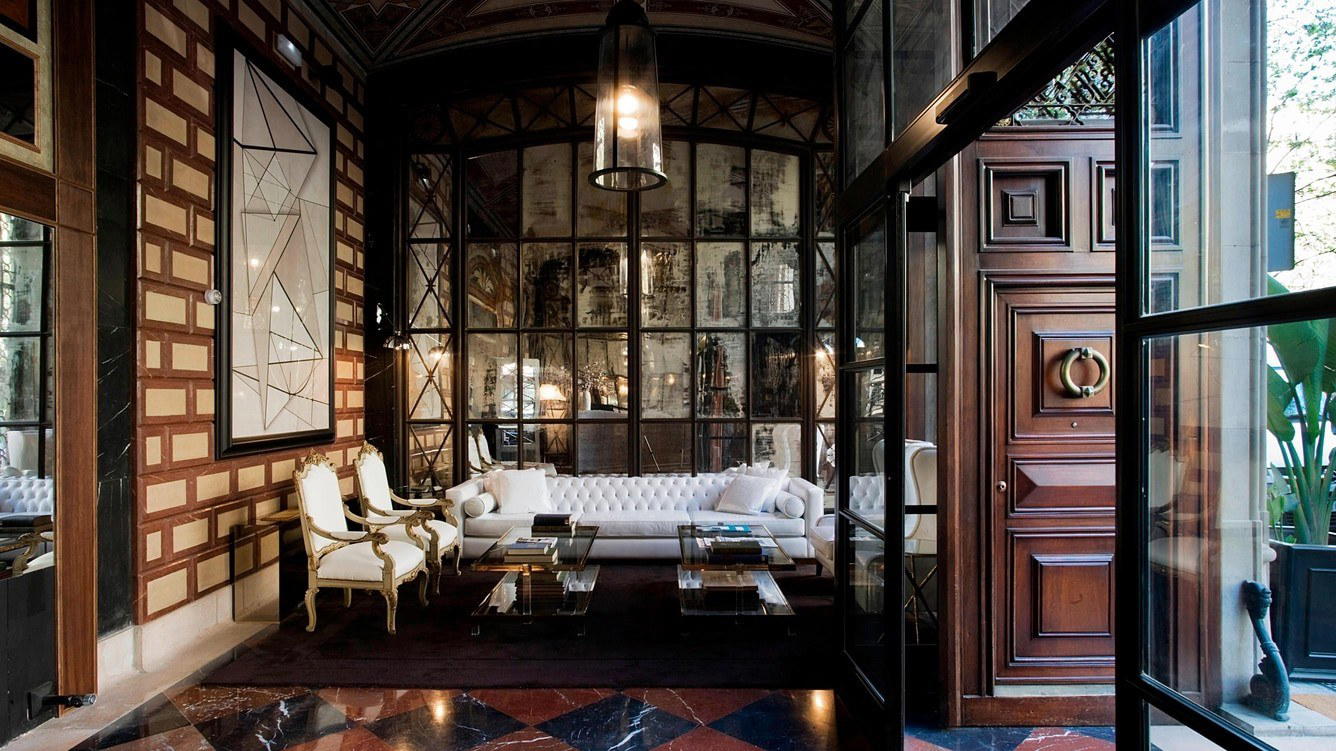
Informal and up-to-date atmosphere with central open kitchen, wood elements, Japanese murals, and lively revelry.