On Avinguda del Paral·lel, Ikibana brings a Japanese-Brazilian fusion sensibility to one of Barcelona's most underrated dining corridors. The format draws on nikkei culinary tradition, blending Peruvian and Japanese technique in a room that reads as a serious occasion venue rather than a casual crossover experiment. For a city that runs deep on creative European cooking, it offers a genuinely different register.
- Address
- Avinguda del Paral·lel, 148, Eixample, 08015 Barcelona, Spain
- Phone
- +34934244648
- Website
- ikibana.com
- Directions
- Get directions
A Different Register on Paral·lel
Barcelona's dining conversation tends to start and end in the Eixample's upper reaches or the Gràcia foothills, where the city's most decorated tables, Disfrutar, Cocina Hermanos Torres, ABaC, anchor a competitive cluster of creative European cooking. Avinguda del Paral·lel, running through the southern edge of the Eixample toward the old working-class neighbourhood of El Poblesec, has historically been the city's theatre strip rather than its gastronomic one. That context matters. Ikibana sits here at number 148, and the address alone signals something about its positioning.
The nikkei tradition that underpins Ikibana's format is itself a layered thing. Nikkei cooking emerged from the Japanese diaspora in Peru during the late nineteenth and early twentieth centuries, and the fusion that resulted was not a designed concept but a lived negotiation between Japanese technique and South American ingredients. By the time nikkei reached European cities as a dining category, it carried enough culinary credibility, and enough distance from gimmick fusion, to anchor serious restaurants. In Barcelona, a city more accustomed to Japanese-Brazilian crossover being handled lightly in sushi-casual formats, a room that treats the tradition with structural seriousness occupies a relatively clear space.
The Room and the Occasion
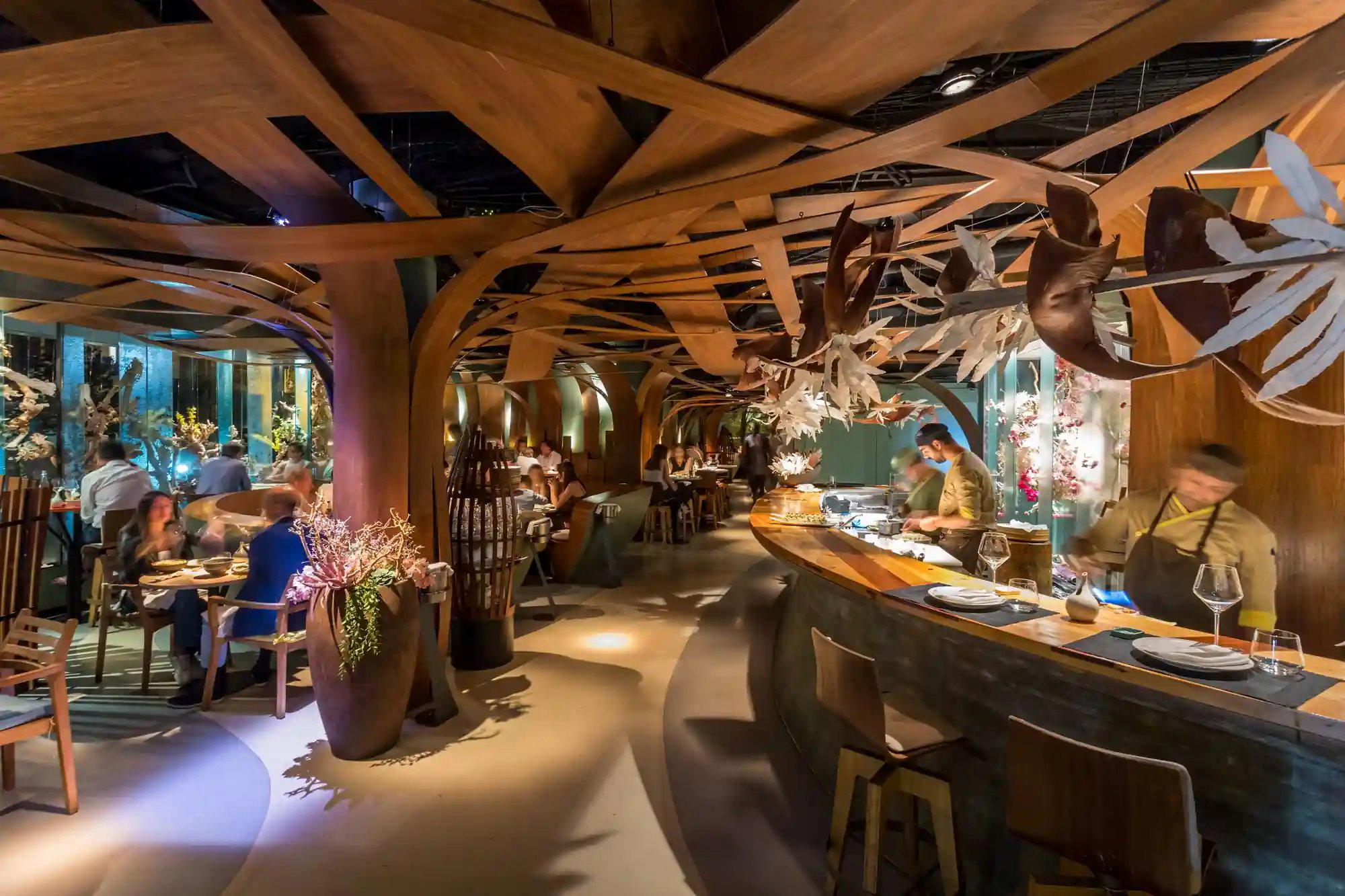
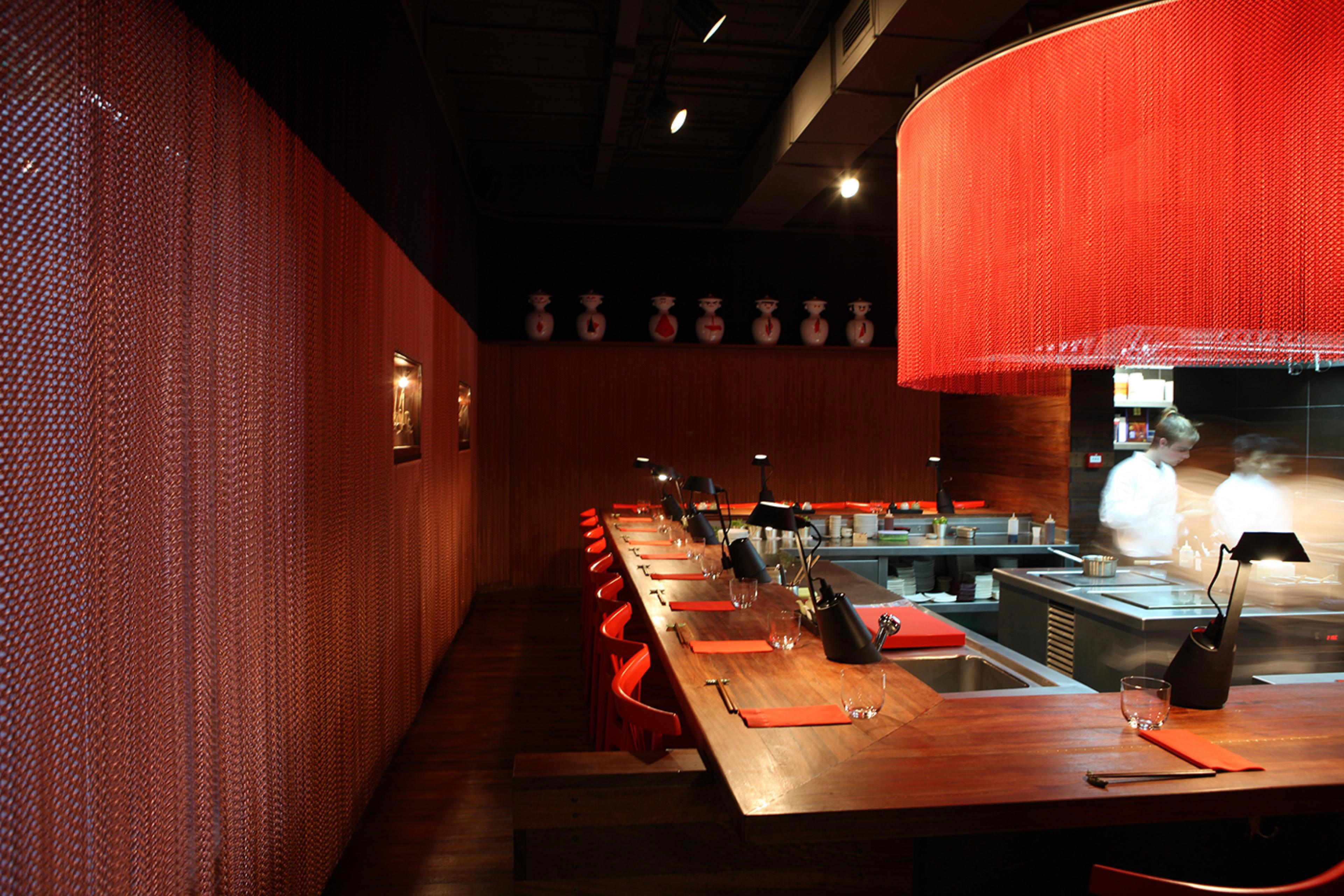
Approaching along Paral·lel in the early evening, when the avenue's theatres begin pulling pre-show crowds and the light hits the wide boulevard at a low angle, the contrast between the street's entertainment energy and Ikibana's interior register is the first thing that orients you. The space reads as designed for occasion rather than impulse: the kind of room where a group arrives with a reason. Anniversary dinners, professional celebrations, milestone birthday tables, the format suits gatherings that want something considered rather than merely good.
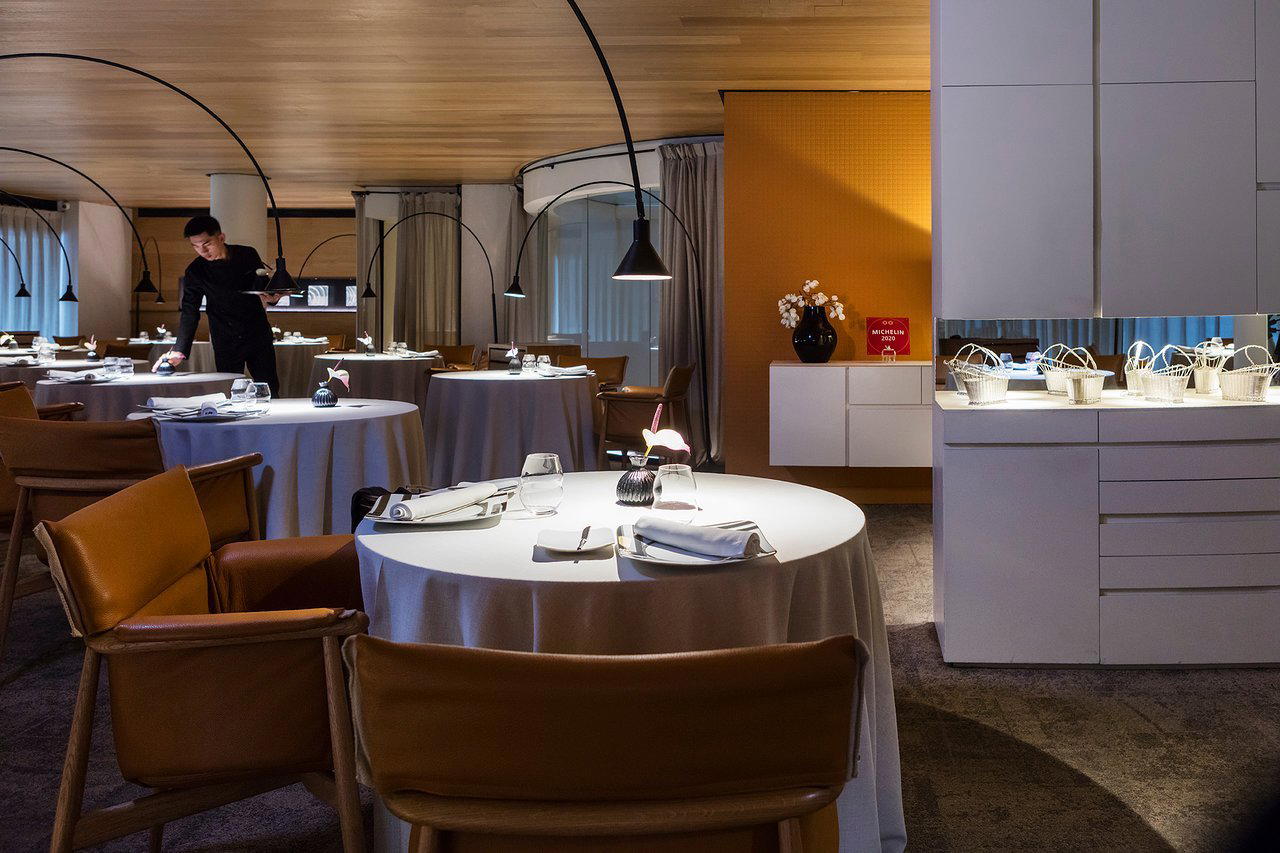
Barcelona's occasion-dining tier has expanded in recent years, partly because the city's creative-tasting-menu circuit has become so compressed at the leading end. Tables at Disfrutar or Cocina Hermanos Torres require advance planning of months, not weeks, and the price commitment is significant. That leaves a middle tier of occasion-appropriate venues that offer ceremony and quality without the full tasting-menu infrastructure. Ikibana operates in this space, a place where the evening feels deliberate without demanding the kind of pre-booking effort that defines the city's three-star circuit.
The physical environment reinforces this. Japanese-Brazilian design vocabularies share an interest in natural materials, clean lines, and controlled density, with bamboo, warm wood, and considered lighting giving each table a contained world. These are design choices that happen to serve occasion dining well: the room recedes enough to make the table the centre of attention, which is precisely what a celebration meal requires.
Where Nikkei Sits in the Broader Spanish Scene
Spain's restaurant culture has generated particularly technically ambitious cooking in the world over the past three decades. The lineage runs from the Basque Country, Arzak, Mugaritz, Martin Berasategui, through Andalucía's coastal laboratories like Aponiente, and into Valencia's ingredient-led precision at Ricard Camarena and the baroque conceptualism of DiverXO in Madrid. Girona's El Celler de Can Roca, Quique Dacosta in Dénia, and Azurmendi in Larrabetzu fill out a scene that is relentlessly Iberian in its reference points.
Within that context, a Japanese-Peruvian kitchen operating in Barcelona is not a local dialect of the national conversation, it is a different conversation altogether. The comparison point is not Catalan creative cooking but the global nikkei circuit, where restaurants like Atomix in New York demonstrate how Asian-diaspora culinary traditions can carry serious fine-dining weight when handled with rigour. Barcelona, with its port history and openness to non-European culinary influence, is a more natural home for this kind of cooking than Madrid or the Basque Country would be.
The city also has its own precedent for ambitious international-origin cooking. The same Eixample corridor that houses Lasarte and Enigma has absorbed Japanese, Peruvian, and Middle Eastern influences into its dining fabric without treating them as novelty. What Ikibana represents is the more formal version of that absorption: a room that asks the nikkei tradition to carry full occasion-dining weight, not just provide a casual departure from Catalan convention.
Planning Your Visit
Ikibana is located at Avinguda del Paral·lel, 148, in the Eixample district, close enough to central Barcelona to be reachable on foot from most of the city's major hotel clusters, and well-served by the Paral·lel metro stop on Lines 2 and 3. For occasion dining, this is a meaningful practical point: arriving by metro rather than taxi keeps the approach low-stress, and the Paral·lel avenue itself is active enough in the early evening to make the walk from the station feel like part of the outing rather than a logistical obligation.
For groups planning a celebration meal, the Paral·lel location also opens up an itinerary logic that the city's more Gràcia-centric or Sagrada Família-adjacent tables do not: the neighbourhood connects naturally to the waterfront and the old city, making a dinner at Ikibana a workable centrepiece for an evening that begins or ends with Barcelona's lower city. Those looking for a broader frame of reference for the city's dining scene can explore our full Barcelona restaurants guide, which covers the range from the tasting-menu elite to neighbourhood-level value. For comparable occasion-dining weight at the seafood end of the creative spectrum, Le Bernardin in New York offers a useful benchmark for how a single culinary tradition can anchor a full occasion-dining experience. And for those curious about the Extremaduran end of Spain's serious restaurant circuit, Atrio in Cáceres demonstrates how occasion dining operates in a different Spanish register.
Comparable Venues
Comparable venues nearby, for context on price, style, and recognition.
| Venue | Cuisine | Price | Notes |
|---|---|---|---|
| IkibanaThis venue — the venue you are viewing | Japanese-Brazilian Fusion | $$$ | Not listed |
| Robata | Modern Japanese Robatayaki with Mediterranean Fusion | $$$ | l'Antiga Esquerra de l'Eixample |
| Can Kenji | Japanese Izakaya with Mediterranean Fusion | $$ | la Dreta de l'Eixample |
| Nomo | Modern Japanese Sushi & Tapas | $$$ | Sarria |
| Monster Sushi | Modern Japanese Sushi & Izakaya | $$$ | la Vila de Gracia |
| Kak Koy | Japanese-Catalan Fusion Robatayaki | $$$ | Barri Gotic |
Continue exploring
More in Barcelona
Restaurants in Barcelona
Browse all →
Bars in Barcelona
Browse all →
Hotels in Barcelona
Browse all →
At a Glance
- Trendy
- Elegant
- Modern
- Sophisticated
- Date Night
- Group Dining
- Special Occasion
- Open Kitchen
- Design Destination
- Extensive Wine List
- Craft Cocktails
Elegant yet welcoming atmosphere with creative, immersive design blending minimalist Japanese and exuberant Brazilian elements.