
Tabelog 100
Our verdict
Kissa Ichi belongs to Osaka’s kissaten tradition: compact coffee shops where breakfast, sandwiches, counter seats, and solo dining form a daily ritual rather than a special-occasion performance. Its Tabelog 100 Kissaten selections in 2021 and 2022 place it in a documented group of old-school Japanese cafés that still matter to serious eaters.

Pearl is the En Primeur Club membership app — saves, bookings, and concierge access live there. Same editors, same standards.
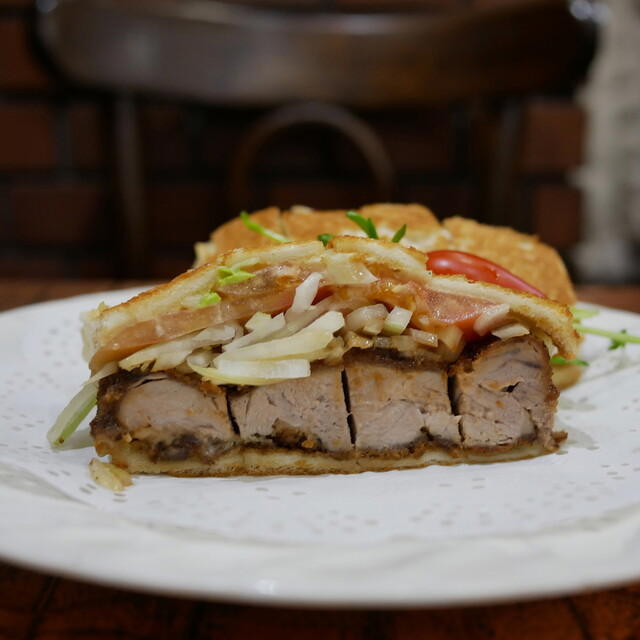
The approach to a kissaten is rarely theatrical: signboard, counter, table, coffee, toast, newspaper, brief conversation, then the next regular sits down. In Osaka, that modest sequence carries more cultural weight than many tasting menus. Kissa Ichi sits inside that tradition: a Japanese coffee shop and sandwich room built around pace, repetition, and low ceremony, not spectacle.
Osaka’s dining identity is often reduced to street food and late-night appetite, but its daytime café culture tells a quieter story. Kissaten are not modern specialty-coffee bars. The format belongs to an urban routine: a sandwich at midday, a solitary cup, and a room serving as everyday infrastructure. That is the lens for Kissa Ichi. It is not chasing third-wave coffee or brunch excess; it belongs to a category where the habit of eating matters as much as the order.
Sandwiches and the discipline of the kissaten ritual
The useful distinction is format. A contemporary café often sells lifestyle first and refreshment second; a kissaten sells continuity. Kissa Ichi’s menu categories, Japanese coffee shop and sandwich, point to that older grammar. The room is best understood through everyday pauses rather than spectacle. A sandwich order also fits the format, giving the shop a practical role without turning the experience into a grab-and-go chain.
Recognition gives the modest format sharper context. Selection for Tabelog’s Kissaten 100 in 2022 is not the same signal as a Michelin star, but it is useful because it isolates coffee-shop culture rather than fine dining. The listed score of 3.67 sits in the Japanese review ecosystem where small, everyday venues can gather serious attention without luxury cues. That makes the award more interesting than a generic café accolade: it places the room among kissaten diners actively seek out for a specific tradition.
The ritual is compact. A kissaten format changes the meal’s psychology. It suits the diner who wants coffee and food without negotiation, and it also suits a modest pause with company. This is not long-lunch architecture. It is a setting for measured stops, a sandwich and conversation, a modest meal that does not announce itself. Osaka has louder food experiences; this one belongs to daily use.
Osaka gives the café an everyday accent
Location matters more than romance here. Osaka is not only theatre, polish, or visitor-facing food districts. It is also shaped by movement, density, and routine errands. That explains the appeal of a kissaten that keeps the format narrow and rewards diners who understand Japan’s smaller food rituals. The setting reads as lived-in Osaka, not a purely destination-driven dining scene.
That everyday context separates the experience from the city-centre queue economy. Comparison venues show how varied Osaka’s middle tier can be: New Astoria trades in everyday eating, Sakura Grill occupies a different dining bracket, Soba-ya Kida brings soba into the picture, AT THE 21 sits in a casual register, and Nick&Renée Toyonaka honten operates in a burger-shop bracket. Kissa Ichi belongs to the café side of that map, where the point is not escalation but precision within a familiar format.
For travellers building a broader Osaka itinerary, this stop pairs well with category contrast. A serious day can move from kissaten coffee and sandwiches to other Osaka dining rooms, casual local coffee, quick local snacks, or other cooking elsewhere in the city. That range makes Osaka rewarding: the city does not force every meal into the same register.
How to place it in an Osaka food day
The editorial case for Kissa Ichi is strongest as a dining ritual rather than a destination meal. Its value lies in showing the mechanics of the Japanese coffee shop: sandwiches, coffee-shop pace, small-format service, and a room where solo dining feels normal. For visitors used to reservation-led restaurants, that ordinariness can be the lesson. Not every significant Japanese food experience arrives as omakase, kaiseki, or a chef’s-counter set menu.
The older kissaten world may shape the decision for some diners. So will the practical rhythm of a small café, where the format is narrower than a full-service restaurant. Those details are not isolated inconveniences; they signal a shop operating by familiar everyday norms. The same applies to expectations around private dining or highly customised hospitality, which do not fit the format. This is a café, not a flexible hospitality shell.
Within Osaka planning, use it as a cultural calibration point. The city’s shorthand points toward takoyaki, okonomiyaki, ramen, and department-store dining halls, but the kissaten meal gives another reading of urban appetite: quieter, earlier, less performative. After that, the itinerary can widen. Other Osaka dining says something different about the city’s range, while the broader map belongs in Our full Osaka restaurants guide. For stays and evenings, keep Our full Osaka hotels guide, Our full Osaka bars guide, Our full Osaka wineries guide, and Our full Osaka experiences guide in the same planning stack.
Even comparisons with Japanese-food diaspora scenes can make the contrast useful. Kissa Ichi’s value is not that it represents every version of Japanese dining, but that it clarifies one specific, everyday form.
The verdict is plain: this is for diners who care about everyday Japanese food culture and know small formats can carry serious meaning. The Tabelog Kissaten 100 selection provides the external signal; the rest is about reading the room correctly. Come for the kissaten cadence, not for a chef narrative or luxury theatre.
Frequently asked questions
What time does Kissa Ichi open and close?
Current opening hours are not provided here. Check the venue's official channels before going.
What's the price range at Kissa Ichi?
Pricing at Kissa Ichi is listed as JPY 1,000 - JPY 1,999 JPY 1,000 - JPY 1,999.
Where do I go for Kissa Ichi?
Osaka.
What's the signature at Kissa Ichi?
The main draw is the kissaten format itself: a Japanese coffee shop with sandwiches on the menu. Tabelog also selected Kissa Ichi for its Kissaten "Tabelog 100" list in 2022.
Can Kissa Ichi adjust for dietary needs?
The public record points to a simple kissaten setup, with Japanese coffee shop and sandwich listed as the main categories. For any dietary request, the sensible move is to keep the order simple and confirm before choosing from the available offering. Check the venue's official channels for the latest details.
Does Kissa Ichi work for a family meal?
It can, if the family is comfortable with a compact kissaten rather than a full-service restaurant. The format is centred on Japanese coffee shop culture and sandwiches in Osaka.
Cuisine and Recognition
Side-by-side context: comparable cuisine and price.
| Venue | Cuisine | Price | Awards | Notes |
|---|---|---|---|---|
| Kissa IchiThis venue (the venue you are viewing) | Japanese Kissaten | Not listed | Tabelog 100 | Not listed |
| DINING | Japanese Kaiseki and Teppanyaki | Not listed | Not listed | Osaka |
| Soba-ya Kida | Traditional Soba Noodle House | $20–30 | Tabelog 100 #94 | Toyonaka |
| Stand Tiger Lily | Standing Teppan Izakaya & Bar | $20–30 | Tabelog 100 #45 | Kita |
| Sangourmand | A5 Wagyu Hamburger Steak & Omurice Yoshoku | $20–30 | Tabelog 100 #38 | Kita |
| OXYMORON Kitahama | Japanese Curry Cafe | Not listed | Tabelog 100 #8 | Chūō |
Recognition history
Dated appearances from independent guides and award organizations, with the underlying list record or original source where available.
Tabelog 100
Tabelog · Tabelog 100 - Kissaten - 2026
Full recognition history (2 entries)
Tabelog 100 #84 · No. 84
Tabelog · Tabelog 100 - Kissaten - 2022
Continue exploring
More in Osaka
Restaurants in Osaka
All restaurants in Osaka →

Bars in Osaka
All bars in Osaka →


Hotels in Osaka
All hotels in Osaka →



Wineries in Osaka
Browse all →
Details
- Classic
- Cozy
- Lively
- Solo
- Casual Hangout
- Brunch
- Standalone
- Counter Dining
- Set Menu
Current opening hours
- Monday
- 8 AM–5 PM
- Tuesday
- 8 AM–5 PM
- Wednesday
- 8 AM–5 PM
- Thursday
- 8 AM–5 PM
- Friday
- 8 AM–5 PM
- Saturday
- 8 AM–5 PM
- Sunday
- 8 AM–5 PM
Hours can change for holidays and private events. Last verified .
Traditional kissaten atmosphere with a lively, tobacco-tinged feel and a classic neighborhood coffee-shop character.