Tabelog 100 #45
Our verdict
Stand Tiger Lily belongs to Osaka’s tachinomi culture: compact, social, and built around quick decisions rather than ceremony. Its 2025 Tabelog 100 selection for tachinomi, stand-up format, counter-heavy seating, and drink program place it in a sharper category than a casual Umeda pit stop.

Pearl is the En Primeur Club membership app, where members save venues, book tables and use the concierge.
The menu
What to order
- Teppan offal dishes
- Creative teppanyaki small plates
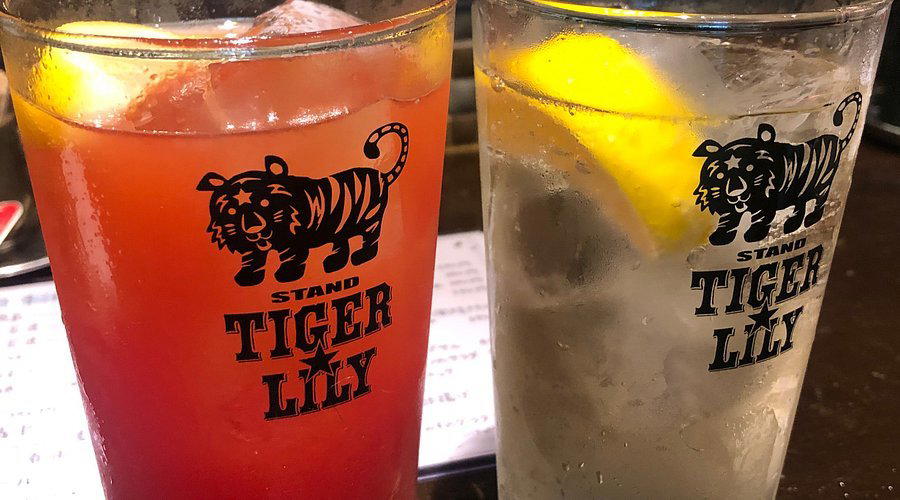
- Lemon sour cocktails
The Osaka setting matters for Stand Tiger Lily. The city’s everyday dining culture rewards places that can absorb office workers, solo drinkers, and small groups without turning the evening into a formal reservation exercise. Stand-up bars sit at the useful end of that spectrum: easy enough to catch impulse traffic, but structured enough to make a short stop feel deliberate. Stand Tiger Lily fits that rhythm, with a standing-bar format that keeps the room moving and gives the drinking session more weight than a simple snack counter.
Osaka tachinomi with a standing-bar backbone
Osaka’s tachinomi tradition is not just about standing with a glass. At its better addresses, the format compresses the city’s strengths: fast service, small portions, lively counter culture, and food and drink that work at close range. A stand-up bar is a natural partner for short orders, shared plates, and the theatre of a compact room without requiring a full restaurant arc. Stand Tiger Lily sits in this practical Osaka register rather than the more formal register represented by Osaka Teppanyaki Kobe Beef TATARA.
The distinction is useful for travellers. Osaka has plenty of late-day eating options, from casual specialists such as sumibi yaki tori kamo jin Ohatsu tenjin ten to other social dining rooms like Yakiniku fujimoto Umeda ohatsu tenjin ten. Stand-up bars occupy a different slot: less ceremony than some full-service restaurants, more social texture than a drink-only stop, and easier to fold into a wider night. That makes the category especially relevant in Osaka, where eating often happens in sequences rather than a single long sitting.
The 2025 Tabelog Hyakumeiten recognition is the clearest external signal here. Tabelog’s Hyakumeiten lists are category-led, and stand-up bars are a category where atmosphere alone is not enough; the room has to justify repeat use through price discipline and food and drink that can work in small increments. A Tabelog score of 3.58 puts Stand Tiger Lily in a credible bracket for this style, where local approval tends to matter more than international guidebook attention.
Small-portion drinking culture, and why waste matters
Sustainability angle in Osaka’s standing-bar culture is less about public declarations and more about format. Tachinomi naturally discourages over-ordering: portions are typically built for pacing, counters turn without elaborate table settings, and the evening can end after one round or continue through several dishes. That model rewards appetite management. It also suits casual cooking and drinking formats, which can make better use of ingredients and guest attention than a more rigid restaurant sequence.
Stand Tiger Lily’s standing-bar category places it inside that lower-waste tradition. The point is not to romanticise thrift. Osaka has long treated compact eating, quick service, and casual drinking as serious pleasures, not compromises. In a city famous for everyday food culture, the environmental intelligence often sits in the habits: order carefully, pace the evening, keep the setting flexible, and let guests decide whether one stop becomes the whole night.
The drink side also helps define the room, even when the most useful detail is the format rather than a long inventory. Across Japanese city drinking, casual venues have absorbed broader expectations without abandoning speed or affordability. For a reader mapping Osaka beyond formal restaurants, the same city logic makes casual local institutions, quick stops, and tighter full-meal restaurants feel like distinct expressions of one eating culture rather than separate itineraries.
How to use it in an Osaka night
Stand Tiger Lily works as a hinge: after shopping, before a later dinner, or as the main stop for a low-ceremony evening in Osaka. Its stand-up bar setup gives it the social compression that defines tachinomi while keeping the occasion flexible. The listed dinner budget of JPY 2,000 - JPY 2,999 also makes it easier to slot into a night without committing to the cost or duration of a more formal meal.
Compared with Sakaba Yamato, Stand Tiger Lily reads more specifically as a standing-bar proposition. Compared with Osaka Mentetsu, which operates in a different casual-dining lane, it offers a more drink-led arc. Those distinctions matter in Osaka because the city rewards choosing by occasion, not by cuisine label alone. A solo counter drink, a group graze, and a full dinner are different decisions.
For wider planning, place it inside an Osaka circuit rather than treating it as a destination detached from the city. Our full Osaka restaurants guide is the broader map for meals around the city, while Our full Osaka bars guide helps separate tachinomi, cocktail rooms, and late-night drinking. Travellers building a longer stay can pair that with Our full Osaka hotels guide, Our full Osaka experiences guide, and, for the small number of wine-focused listings attached to the city, Our full Osaka wineries guide.
The wider dining map shows how specific Osaka’s casual grammar is. Compare it generically with other cities’ quick counters, restrained dining rooms, casual international kitchens, seafood-and-charcoal drinking spots, or sake bars outside Japan. Even everyday formats such as snack shops, cafés, casual rooms, and group-friendly restaurants underline the same editorial point: format is often the clearest guide to how a meal will feel.
Frequently asked questions
Where is Stand Tiger Lily located?
Osaka.
Is Stand Tiger Lily open every day?
Check current opening hours directly with Stand Tiger Lily before visiting.
What price level is Stand Tiger Lily?
Pricing at Stand Tiger Lily is listed as JPY 2,000 - JPY 2,999.
What's Stand Tiger Lily best at?
Stand Tiger Lily is strongest as a stand-up bar with a clear tachinomi-style format. Its 2025 Tabelog Hyakumeiten recognition gives it a concrete credential, while its Osaka setting makes it practical for an early stop before dinner or a later night out.
In Context: Similar Options
Comparable options at the same price tier.
| Venue | Cuisine | Price | Awards | Notes |
|---|---|---|---|---|
| Stand Tiger LilyThis venue (the venue you are viewing) | Standing Teppan Izakaya & Bar | $20–30 | Tabelog 100 #45 | Not listed |
| Moeyo Mensuke (燃えよ麺助) | Duck & Shellfish Ramen | $10–20 | Tabelog 100 #71 | Fukushima |
| CHIKICHIKI Hanshin umeda ten | Modern yakitori in Hanshin Umeda | $30–50 | Tabelog 100 #61 | Kita |
| Satsuma | Traditional Yakiniku (Japanese BBQ) | $30–50 | Tabelog 100 #95 | Kita |
| Sumibi Yakitori Ikoka Nishitenma | Charcoal-Grilled Yakitori Izakaya | $30–50 | Tabelog 100 #99 | Kita |
| Horumon Nagaoka | Osaka yakiniku & horumon | $30–50 | Tabelog 100 #96 | Kita |
Recognition history
Dated appearances from independent guides and award organizations, with the underlying list record or original source where available.
Tabelog 100 #45 · No. 45
Tabelog · Tabelog 100 - Tachinomi - 2025