Michelin Plate
Our verdict
Kicho brings yakitori to Central Hong Kong with a seriousness that most of the format's regional outposts skip. Consecutive Michelin Plate recognitions in 2024 and 2025 place it inside a small group of Hong Kong yakitori rooms where the skewer counts as a considered dish rather than a drinking snack. Located on Queen's Road Central, it sits at the denser, more formal end of the city's Japanese grill scene.

Pearl is the En Primeur Club membership app, where members save venues, book tables and use the concierge.
The menu
What to order
- Yakitori skewers (comb to claw)
- Truffle Soboro Don
- Chicken soup ramen
Yakitori on Queen's Road: What the Address Tells You
Central is not where Hong Kong's yakitori culture took root. The format arrived here largely through Wan Chai and the mid-levels fringe, in narrow rooms that read as casual Japanese drinking venues. Queen's Road Central operates at a different register: the street runs through the commercial and financial core of the island, and the dining rooms along it tend to calibrate their offer to an audience that moves between deal lunches and considered evening meals. Kicho sits at first-floor level on that strip, which already signals something about its intended positioning. You are not walking into a standing-room izakaya; the address does part of the work of telling you that before you reach the door.
That context matters because yakitori in Hong Kong occupies an interesting middle ground. The format is Japanese in origin and deeply associated with the kind of informal, smoke-filled counters that cluster around train stations in Tokyo and Osaka. But the Hong Kong version has bifurcated. On one side are genuinely casual spots where chicken skewers arrive quickly and cheaply alongside cold beer. On the other is a smaller group of rooms that treat the grill and its output with the kind of attention that earns Michelin recognition. Kicho falls into that second group, with consecutive Michelin Plate acknowledgements in 2024 and 2025 confirming it holds a position above the format's entry tier in the city.
The Format in Regional Context
Yakitori as a serious dining category has a clear geography. Tokyo's reference addresses, including Yakitori Omino, 124. KAGURAZAKA, and Aramaki, represent the format at its most technically disciplined, where the grill is treated as a precision instrument and the menu reads like a counter tasting progression. The Osaka equivalents, among them Ichimatsu, Torisho Ishii, and Yakitori Torisen, tend toward a slightly more convivial register but still operate within the same framework of sourcing discipline and grill craft. Kyoto adds another variation, with rooms like Torisaki emphasising restraint and the quality of the bird above all else. In Tokyo, the premium yakitori room Aria di Takubo demonstrates how far the format can stretch when cross-cultural technique enters the picture.
Hong Kong's yakitori scene borrows from all of these reference points but doesn't map cleanly onto any of them. The city's dining culture tilts Cantonese in its assumptions about what a grill restaurant should deliver, and the Japanese expat population that sustains some of the more orthodox rooms remains smaller than in Singapore or Shanghai. The result is that the handful of Hong Kong addresses that take yakitori seriously, including Birdie, Toritama, and Yakitori Torisho, tend to adapt the format to local rhythms rather than replicate the Tokyo template wholesale. Kicho sits within this peer group while occupying the Queen's Road Central location that gives it a specific kind of regulars: professionals from the surrounding office towers for whom this is a neighbourhood spot, even if the neighbourhood is one of the most commercially intense in Asia.
What Michelin Plate Recognition Means Here
A Michelin Plate, awarded in both 2024 and 2025, is the Guide's signal that a restaurant produces consistently good cooking. It sits below starred status but above the general listings, and in a city as competitive as Hong Kong, it represents a genuine quality threshold rather than a participation credential. For a yakitori room, this kind of recognition carries particular weight because the format does not naturally lend itself to the criteria inspectors apply to French Contemporary rooms like Amber or the three-starred Italian benchmark set by 8½ Otto e Mezzo Bombana. To hold a Plate in this category in this city means the cooking meets an inspector standard even when the reference frame is less obvious.
The $$$-price tier positions Kicho in the mid-to-upper range of Hong Kong dining without entering the $$$$ bracket occupied by the city's starred European rooms. For yakitori specifically, that pricing sits above the casual end of the format but below the omakase-style tasting counters where per-head spend reflects a different set of ambitions. It is the price point of a room that takes the cooking seriously without building an event around the act of eating.
The Character of the Room
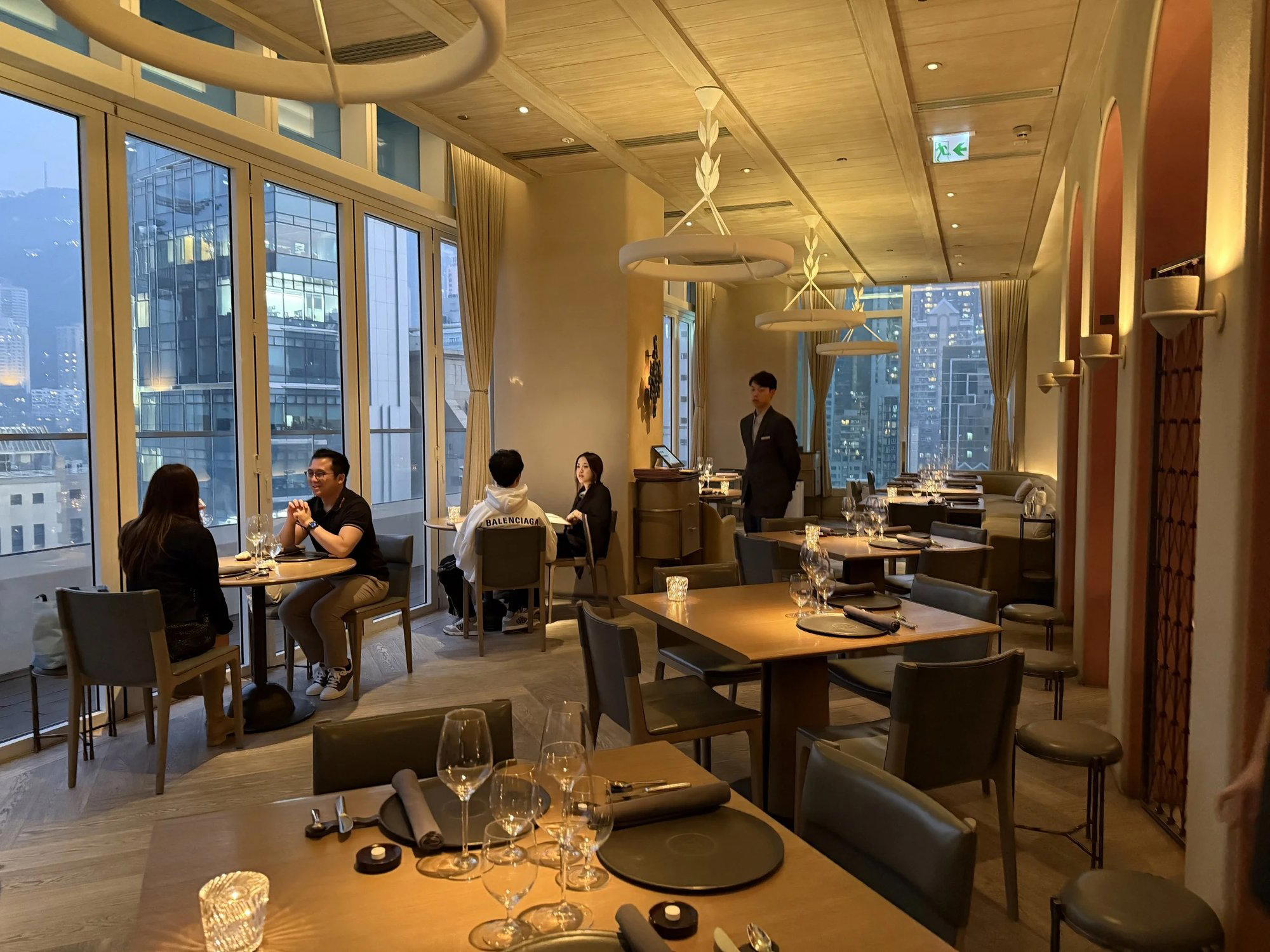
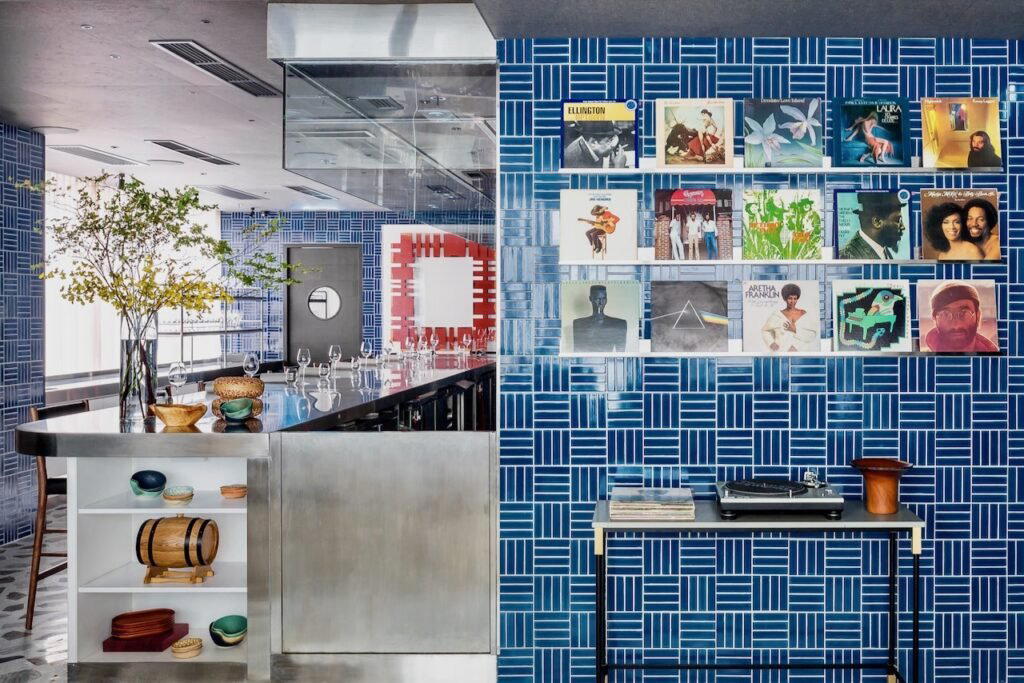
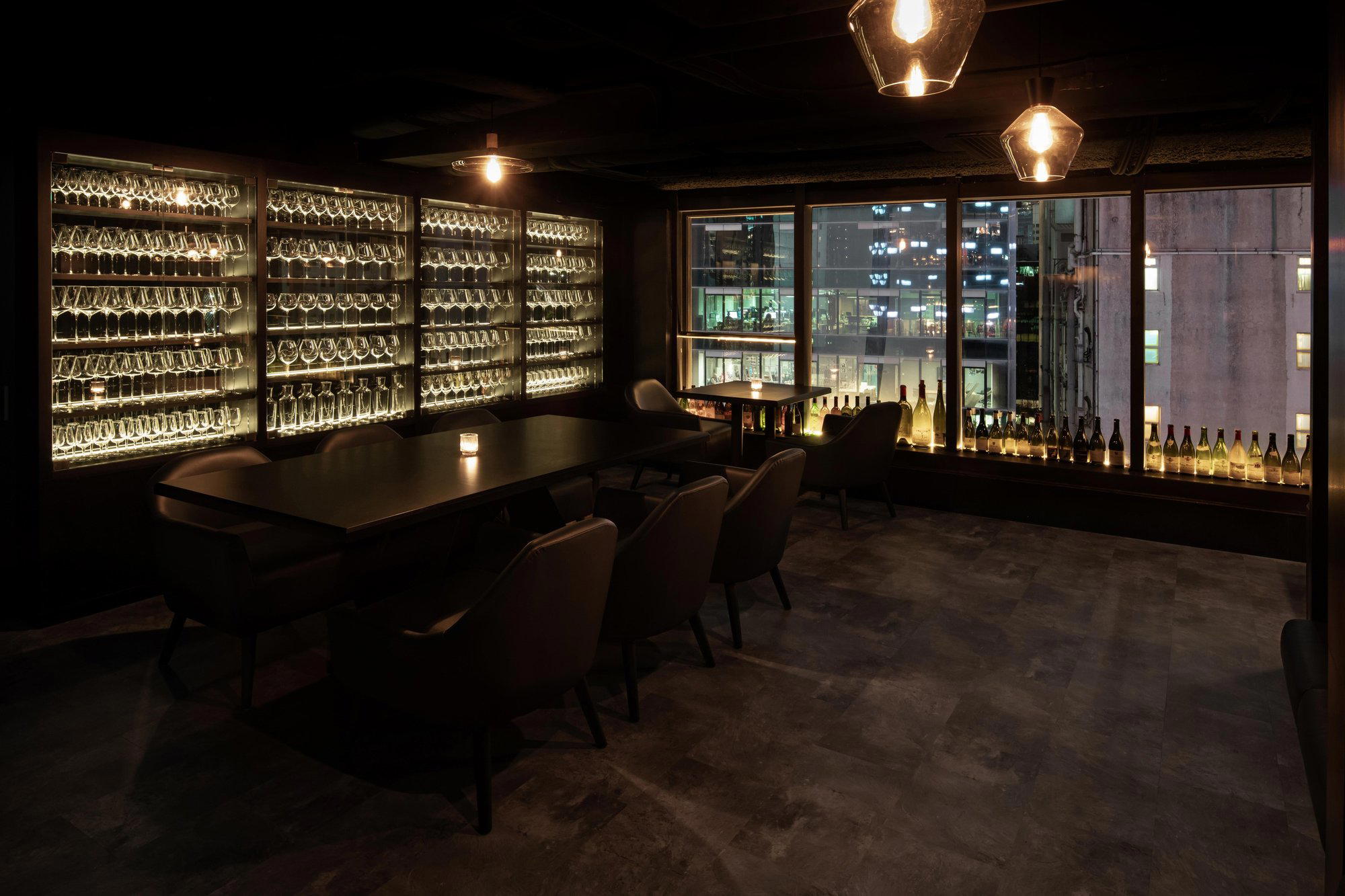
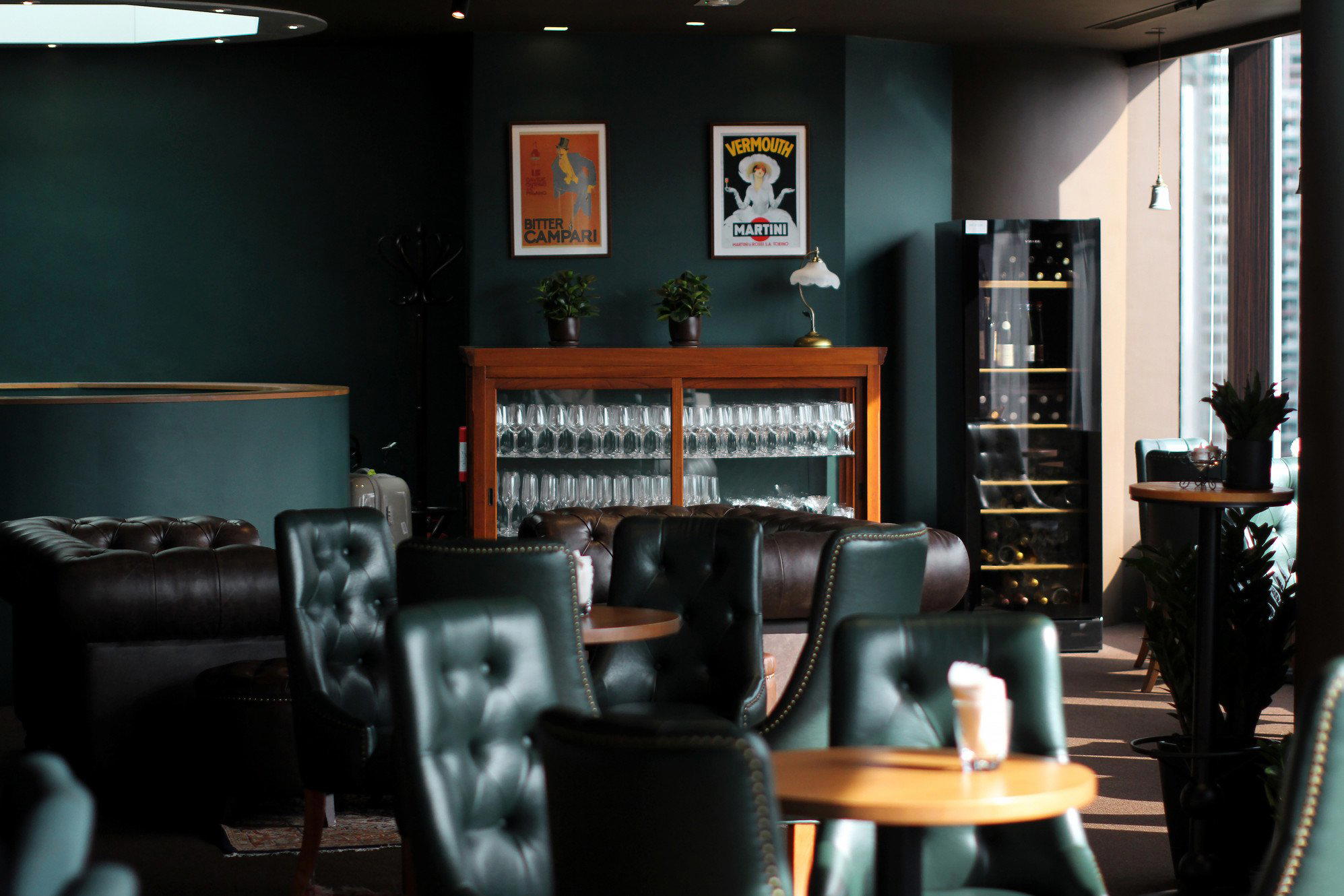
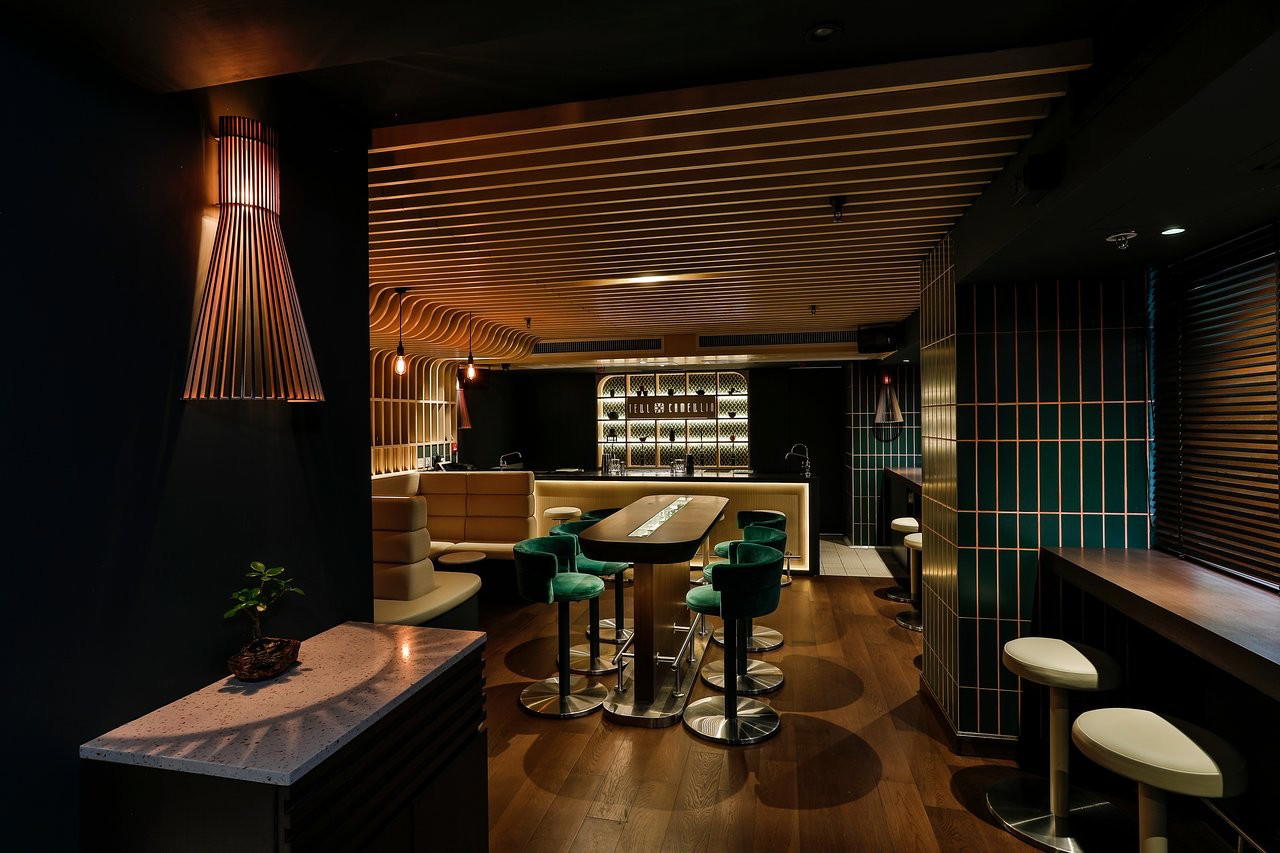
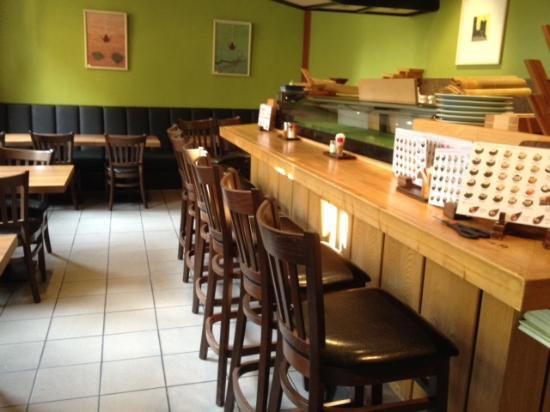
First-floor Central dining rooms share a particular quality in Hong Kong. The street-level energy of the city, the density of pedestrian traffic, the sound of trams and the weight of the financial district pressing in, drops away as you ascend. The setting creates a degree of separation from the pace outside without producing the hermetic quiet of a private dining room. For a yakitori format built on the interaction between grill and counter, that level of compression is appropriate. The smoke and the char require proximity; the counter format assumes a degree of attentiveness from both sides.
At that sample size, it suggests the room delivers reliably across a range of occasions and expectations.
Planning Your Visit
For a wider picture of where Kicho sits within Hong Kong's dining scene, our full Hong Kong restaurants guide maps the city's key addresses by category and price tier. The city's bar and drinking culture, increasingly intertwined with the dining scene around Central, is covered in our Hong Kong bars guide. For those building a longer itinerary, our Hong Kong hotels guide, wineries guide, and experiences guide cover the full range.
Know Before You Go
- Address: 2B, 1/F, 1 Queen's Road Central, Hong Kong
- Cuisine: Yakitori
- Price: $$$
- Awards: Michelin Plate 2024; Michelin Plate 2025
- Guest Rating:
- Phone: Not listed
- Website: Not listed
Frequently asked questions
Is Kicho better for a quiet night or a lively one?
The first-floor address on Queen's Road Central filters out much of the street-level noise, which tends to make the room feel contained rather than charged. Yakitori counters and small grill formats generally run at a measured pace, so Kicho reads more naturally as an occasion for conversation than as a high-energy evening out. The Michelin Plate recognition in both 2024 and 2025 points to a kitchen focused on consistency, not theatre.
What should I expect cuisine-wise at Kicho?
What distinctions does Kicho have?
Kicho has received recognition including: Michelin Plate (2025); Michelin Plate (2024).
What do people recommend at Kicho?
Kicho holds a Michelin Plate for 2024 and 2025, which reflects the Guide's assessment of consistently good cooking across the menu rather than one standout dish. In a yakitori format, the nature of the recommendation tends to fall on the progression of skewers rather than any single item.
What's the price range at Kicho?
Pricing at Kicho is listed as $$$.
What part of town is Kicho in?
Kicho is located at Hong Kong, Central, Queen's Road Central, 1樓2B號鋪, Hong Kong.
The Essentials
| Venue | Cuisine | Price | Awards | Notes |
|---|---|---|---|---|
| KichoThis venue (the venue you are viewing) | Omakase-style Tori Kappo | $100–150 | Michelin Plate | Not listed |
| 8 1/2 Otto e Mezzo Bombana (Hong Kong) | 3 Michelin-Star Italian Fine Dining | $200–300 | 3 Michelin Stars · World's 50 Best #94 | Italian |
| Ta Vie | Modern French-Japanese Fine Dining | $300–500 | 3 Michelin Stars · World's 50 Best #68 | Japanese - French, Innovative |
| Caprice | Contemporary French Fine Dining | $200–300 | 3 Michelin Stars · World's 50 Best #35 | French, French Contemporary |
| Feuille | Modern Vegetable-Forward French | $200–300 | 1 Michelin Star · World's 50 Best #93 | French Contemporary |
| Neighborhood | Modern French with Asian Influences | $50–100 | 1 Michelin Star · World's 50 Best #24 | International, European Contemporary |
Recognition history
Dated appearances from independent guides and award organizations, with the underlying list record or original source where available.
Michelin Plate
Michelin
Full recognition history (3 entries)
Michelin Plate
Michelin
Michelin Plate
Michelin